Genesis 10
Alkitab Terjemahan Sederhana Indonesia, Edisi Ketiga · Tap a verse to see its cross-references.
Daftar keturunan tiga anak Nuh
1Ketiga anak laki-laki Nuh adalah Sem, Yafet, dan Ham. Sesudah peristiwa banjir berlalu, mereka masing-masing memiliki banyak anak laki-laki.
Keturunan Yafet
2Anak-anak Yafet bernama Gomer, Magog, Madai, Yawan, Tubal, Mesek, dan Tiras. 3Anak-anak Gomer bernama Askenas, Rifat, dan Togarma. 4Anak-anak Yawan bernama Elisa, Tarsis, Kit, dan Dodan. 5Merekalah yang menjadi nenek moyang orang-orang yang tinggal di daerah pesisir dan pulau-pulau di Laut Tengah. Mereka tersebar dan menetap di daerah masing-masing menurut suku, bangsa, dan bahasa mereka.
Keturunan Ham
6Anak-anak Ham bernama Kus, Mesir, Put, dan Kanaan. 7Anak-anak Kus bernama Seba, Hawila, Sabta, Rama, dan Sabteka. Kedua anak Rama bernama Syeba dan Dedan.
8Kus mempunyai seorang anak bernama Nimrod. Dialah orang pertama yang terkenal di dunia sebagai orang yang sangat tangguh dalam berperang. 9TUHAN memberkati Nimrod sehingga dia menjadi seorang pemburu yang perkasa. Itulah sebabnya orang-orang sering mengatakan, “Semoga anakmu menjadi seperti Nimrod, pemburu yang gagah perkasa karena berkat TUHAN.” 10Nimrod menjadi raja dan memerintah di negeri Babel, yang juga disebut tanah Sinear. Ada empat wilayah penting dalam kerajaannya. Keempatnya mempunyai ibukota sendiri, yaitu: Babel, Erek, Akad, dan Kalne. 11Kemudian dia pergi ke tanah Asyur dan mendirikan kota Niniwe, Rehobot Ir, Kalah, 12dan Resen. Resen merupakan kota terbesar di antara kota Niniwe dan kota Kalah. 13Anak Ham yang kedua adalah Mesir. Dia menjadi nenek moyang dari orang-orang Lud, Anam, Lehab, Naftuh, 14Patrus, Kaftor, dan Kasluh. Orang-orang Kasluh adalah nenek moyang bangsa Filistin.
15Anak Ham yang bungsu adalah Kanaan. Kanaan memiliki dua anak bernama Sidon dan Het. 16Kanaan adalah nenek moyang orang-orang Yebus, Amori, Girgasi, 17Hewi, Arki, Sini, 18Arwadi, Semari, dan Hamat. Keturunan Kanaan tersebar luas. 19Tanah yang menjadi milik mereka terbentang mulai dari kota Sidon di utara dan meluas hingga ke kota Gaza di selatan. Di wilayah timur, mereka menempati kota Gerar, kemudian meluas ke kota Sodom, Gomora, Adma, Zeboim, hingga ke kota Lasa. 20Semuanya itu adalah keturunan Ham. Mereka tinggal dalam wilayahnya masing-masing menurut suku, bangsa, dan bahasa mereka.
Keturunan Sem
21Sem, kakak Yafet, adalah nenek moyang Eber. Keturunan Eber menjadi bangsa Ibrani. 22Nama anak-anak Sem adalah Elam, Asyur, Arpaksad, Lud, dan Aram. 23Nama anak-anak Aram adalah Us, Hul, Geter, dan Mas. 24Anak Arpaksad bernama Selah. Anak Selah bernama Eber. 25Eber memiliki dua anak. Yang pertama bernama Peleg dan yang kedua bernama Yoktan. Arti nama Peleg adalah ‘terbagi’. Dia diberi nama demikian karena pada zamannya orang-orang di bumi terpisah-pisah dan tersebar ke seluruh bumi. 26Yoktan adalah nenek moyang dari Almodad, Selef, Hazarmawet, Yerah, 27Hadoram, Uzal, Dikla, 28Obal, Abimael, Seba, 29Opir, Hawila, dan Yobab. Itulah keturunan Yoktan. 30Daerah-daerah tempat tinggal mereka terbentang mulai dari Mesa dan meluas ke Sefar, daerah perbukitan di sebelah timur. 31Semua suku itu adalah keturunan Sem. Mereka hidup dan tinggal dalam wilayahnya masing-masing menurut suku, bangsa, dan bahasa mereka.
32Itulah suku-suku keturunan anak-anak Nuh. Setiap suku memiliki daftar silsilahnya masing-masing. Sesudah peristiwa banjir berlalu, suku-suku bangsa tersebut tersebar luas di atas permukaan bumi.
Did you know?
The Nations after the Flood
- Genesis 10 follows the families of Noah’s three sons, Shem, Ham, and Japheth, and says that after the flood the nations of the earth spread out from them, grouped by clans, languages, lands, and nations. Japheth’s line is linked with peoples of eastern Europe and northern Asia: Gomer is generally regarded as an ancestor of the Celts and the Cimmerians, who in early times settled north of the Black Sea, and Javan became the Hebrew name that the peoples of the East used for the Greeks, especially those of Ionia.Sources: the Bible text itself · Japheth · Gomer (son of Japheth) · Javan
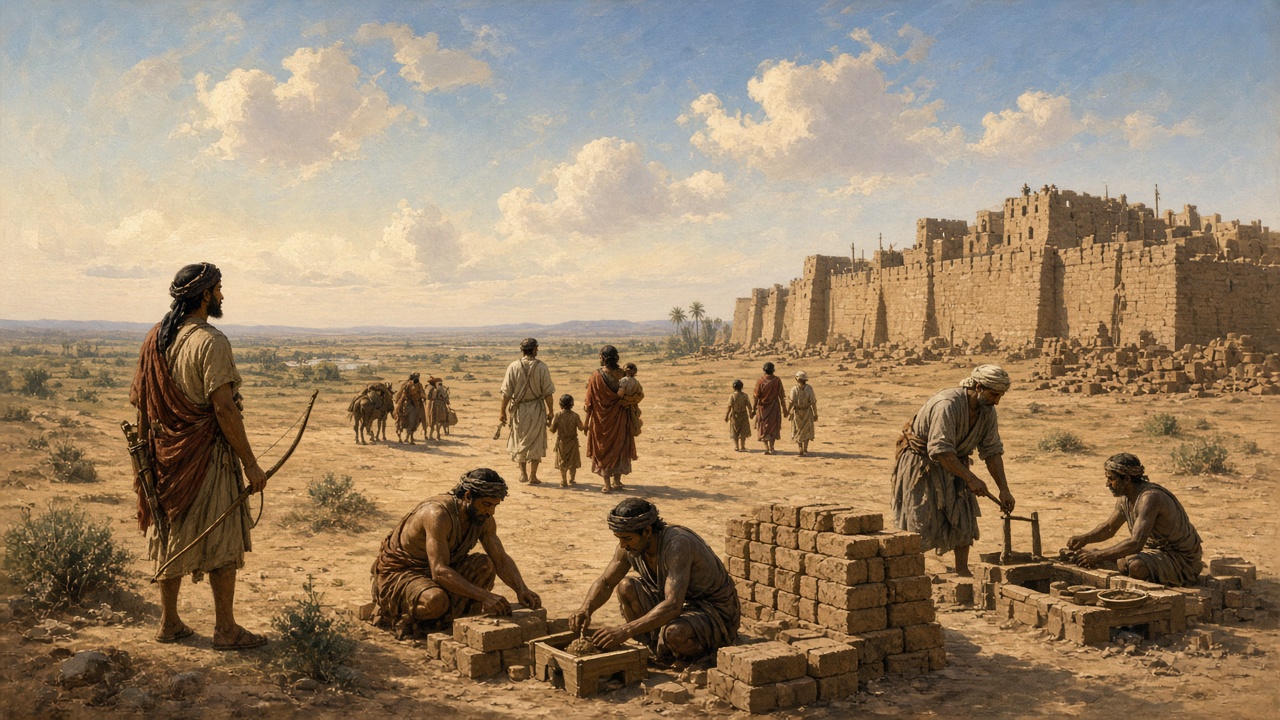
- Cush, a son of Ham, was the father of Nimrod, remembered as a mighty hunter before the Lord, whose kingdom began at Babylon, Erech, Accad, and Calneh in the land of Shinar, probably Babylonia or southern Mesopotamia. From that land he went into Assyria and built Nineveh, Rehoboth-Ir, Calah, and Resen; Calah’s site is probably the Nimrud ruins on the left bank of the Tigris.Sources: the Bible text itself · Shinar · Nineveh · Calah
- Mizraim, the dual form of a Hebrew word for a mound or fortress, may point to Upper and Lower Egypt and is the name the Hebrews usually gave that country; Arabic still calls it Muzr. Shem is called the older brother of Japheth and the forefather of all the sons of Eber, regarded as the founder of the Hebrew people, while an Arab tradition remembers Eber’s son Joktan, Kahtan in Arabic, as the ancestor of tribes of central and southern Arabia.Sources: the Bible text itself · Mizraim · Eber (Heber) · Joktan
Notes written with AI assistance from open sources (Theographic Bible Metadata, CC BY-SA 4.0; Easton’s Bible Dictionary, public domain) and reviewed before publishing.
Places in this chapter
- Erech · Today: Uruk · 31.322, 45.636 · verse 10
- Shinar · Today: Babylonia · 32.543, 44.422 · verse 10
- Assyria · 36.359, 43.153 · verse 11
- Calah · Today: Nimrud · 36.098, 43.329 · verses 11, 12
- Nineveh · 36.359, 43.153 · verses 11, 12
- Canaan · 32.767, 35.333 · verse 19
- Gaza · Today: Tell Harube · 31.504, 34.464 · verse 19
- Sidon · Today: Sandikli archaeological site in Sidon · 33.561, 35.372 · verse 19
Only places identified with high confidence are shown (90% or more according to the scholarly sources compiled by OpenBible). Period map: DARE (Digital Atlas of the Roman Empire), CC BY 4.0; modern map: © OpenStreetMap contributors; places: OpenBible.info (CC BY 4.0).
Credits and license for this translation
Alkitab Terjemahan Sederhana Indonesia, Edisi Ketiga
The New Testament in the Indonesian language, Perjanjian Baru dalam Terjemahan Sederhana Indonesia Edisi Kedua translation
copyright © 2021 oleh Yayasan Alkitab BahasaKita (Albata) dan Pioneer Bible Translators International
Language: bahasa Indonesia (Indonesian)
Translation by: Albata
Contributor: Pioneer Bible Translators
© 2021 oleh Yayasan Alkitab Bahasa Kita (Albata) dan Pioneer Bible Translators International
This translation is made available to you under the terms of the
Creative Commons Attribution Share-Alike license 4.0.
You have permission to share and redistribute this Bible translation in any format and to make reasonable revisions and adaptations of this translation, provided that:
You include the above copyright and source information.
If you make any changes to the text, you must indicate that you did so in a way that makes it clear that the original licensor is not necessarily endorsing your changes.
If you redistribute this text, you must distribute your contributions under the same license as the original.
Pictures included with Scriptures and other documents on this site are licensed just for use with those Scriptures and documents.
For other uses, please contact the respective copyright owners.
Note that in addition to the rules above, revising and adapting God's Word involves a great responsibility to be true to God's Word. See Revelation 22:18-19.
2025-05-03
Source: http://ebible.org/ind/ · eBible.org