Revelation 6
Ʉbhʉragɨ Ubhuhya Mʉkɨgambʉ chi Ikikiizʉ · Tap a verse to see its cross-references.
Ɨkɨngʼʉndu cha Mungu kɨramaamʉra zɨkaamʉ zʉ ʉbhʉnara
1Akʉmara nɨkarora Ɨkɨngʼʉndu cha Mungu, kɨramaamʉra ʉrʉkaamʉ rwe embere. Nikiigwa ikityɨnyi kɨmwɨ mwa bhene bhirya bhyʉ ʉbhʉhʉru, kɨrabhuga kwiraka ncha ryi ikirumo, “Nauzɨ!” 2Neho nɨkarora ɨfaraasi ɨnzɨrʉ ɨraaza ʉmʉʉtʉ ayitiirirɨku. Ʉmʉʉtʉ wuyo, aarɨ agwatiriirɨ ʉbhʉta mokobhoko, akahaabhwa nɨ ɨkɨrʉngʉ chu ubhuhiza. Akarwa mwisaarʉ arahiza riihɨ naatu angʼehe kuhiza.
3Ɨkɨngʼʉndu kɨkamaamʉra ʉrʉkaamʉ rwa kabhɨrɨ, nikiigwa ikityɨnyi chʉ ʉbhʉhʉru kirya cha kabhɨrɨ, kɨrabhuga, “Nauzɨ.” 4Ɨkahʉrʉka ɨfaraasi ɨyɨndɨ, imbiriiri. Na wʉnʉ atiirirɨku akahaabhwa umweya kuruusha omorembe mucharʉ. Akahaabhwa risabha nʉ ʉbhʉnaja bhwo okotemeranʼya abhaatʉ kʉʉsɨ, korereke bhiiyitɨ.
5Ɨkɨngʼʉndu kɨkamaamʉra ʉrʉkaamʉ rwa katatʉ, nikiigwa ikityɨnyi chʉ ʉbhʉhʉru kirya cha katatʉ, kɨrabhuga, “Nauzɨ!” Nɨkarekera amɨɨsʉ, nɨkarora ɨfaraasi inzirabhuru, na wʉnʉ atiirirɨku, aarɨ ane ekerengo mokobhoko. 6Nikiigwa ekegero ncha riraka kurwa gatɨgatɨ wa bhene bhyʉ ʉbhʉhʉru, rɨrabhuga, “Amarihi gu urusikʉ rugima garagʉra ɨkɨhʉʉzʉ kɨmwɨ chɨ ɨnganʉ hamwɨ bhɨhʉʉzʉ bhɨtatʉ bhyɨ ɨshayiri. Nawe ʉtasarya amaguta hamwɨ idivaayi.”
7Ɨkɨngʼʉndu kɨkamaamʉra ʉrʉkaamʉ rwa kane, nikiigwa chʉ ʉbhʉhʉru kirya cha kane, kɨrabhuga, “Nauzɨ!” 8Nɨkarora ɨfaraasi ikubhuusanu. Na wʉnʉ atiirirɨku, iriina ryazɨ ni‑Uruku, na Nyaari yaarɨ ɨramutunɨɨrɨra inyuma waazɨ. Nebho bhaarɨ bhahɨɨrwɨ ʉbhʉnaja bhwu ukwita yɨmwɨ ya kane ya abhaatʉ mʉʉsɨ, kwihɨ, ɨnzara, amarwɨrɨ ni ibhityɨnyi ɨbhɨhaari bhya mwitɨrɨgʉ.
9Ɨkɨngʼʉndu kɨkamaamʉra ʉrʉkaamʉ rwa kataanʉ. Nɨkarora iyaasɨ wa ahagero hu ukuhurukirya ikimweso, zekoro za abhaatʉ bhanʉ bhasinzirwɨ igʉrʉ wɨ ɨngʼana ya Mungu no obhomenyeekererya bhʉnʉ bhaarɨ nabhwɨ. 10Neho zekoro ziyo, zɨkatiirya riraka, zɨrabhuga, “Ʉmʉkʉrʉ wʉ Ʉbhʉnaja Bhwʉsi, ʉmʉrɨndu na we eheene, nangʉ ʉrarɨnda kuhika ryʉrɨ kʉtɨnɨra na kʉrɨha isiirɨ ya masaahɨ gɨɨtʉ, kʉbhaatʉ bha kʉʉsɨ bhanʉ bhatwitirɨ?” 11Neho bhanʉ bhiitirwɨ bhʉʉsi, bhakahaabhwa zɨkanzʉ zɨnzɨrʉ. Bhakabhuurirwa bharɨndɨ hasuuhu, abhahocha abhakɨndichabhʉ na abhahiiri bhaabhʉ bhanʉ bhariitwɨ chɨmbu ebho bhiitirwɨ endengo yaabhʉ ihikɨ.
12Akʉmara nɨkarora Ɨkɨngʼʉndu, kɨramaamʉra ʉrʉkaamʉ rwa kasaasabha. Kʉkabha ni ikirigitʉ ɨkɨkʉrʉ bhʉkʉngʼu chɨ ɨɨsɨ. Iryʉbha rikiirabhʉra, ncha amakara, nu umwɨri gʉkabhiriira kara, ncha amasaahɨ. 13Zenzota zɨkagwa mucharʉ nchi imisumʉ gɨnʉ gɨkɨɨrɨ kokongʼa, gikugwa ribhaga rɨnʉ ʉmʉtɨ gukusingisibhwa nʉ ʉmʉkama ʉmʉhaari. 14Risaarʉ rɨkabhʉra ncha ripapʉra rikuringwa. Ɨbhɨgʉrʉ bhyʉsi, na amaginga bhɨkaruusibhwa ahagero haabhyʉ.
15Neho abhatɨmi bhʉʉsi bha mʉʉsɨ, abhakangati, abhakʉrʉ bha riihɨ, abhaatʉ bhi imyeya ɨmɨkʉrʉ mʉkɨtaakɨ, abhaniibhi, hamwɨmwɨ na abhaatʉ abhandɨ, bhabhɨ bhambʉʉsa na abhiiyagaaruri, bhʉʉsi bhayo bhakiibhisa mʉmabhigi na mʉmabhwɨ ga mʉbhɨgʉrʉ. 16Bhayo bhʉʉsi, bhakabhʉʉrɨra ɨbhɨgʉrʉ na amabhwɨ, “Mutukundikiryɨ, mutubhisɨ, tʉtarorekana mʉmɨɨsʉ ga wʉnʉ ikɨɨrɨ kukitumbɨ chɨ ɨkɨtɨmi. Mutubhisɨ ʉbhʉrʉrʉ bhwɨ Ɨkɨngʼʉndu! 17Amaheene, atareeho wʉnʉ akʉtʉra kwigumirirya, kʉ kʉbha, urusikʉ urwene rwʉ ʉbhʉrʉrʉ kurwa kwa Mungu nɨ Ɨkɨngʼʉndu ruhikirɨ!”
Did you know?
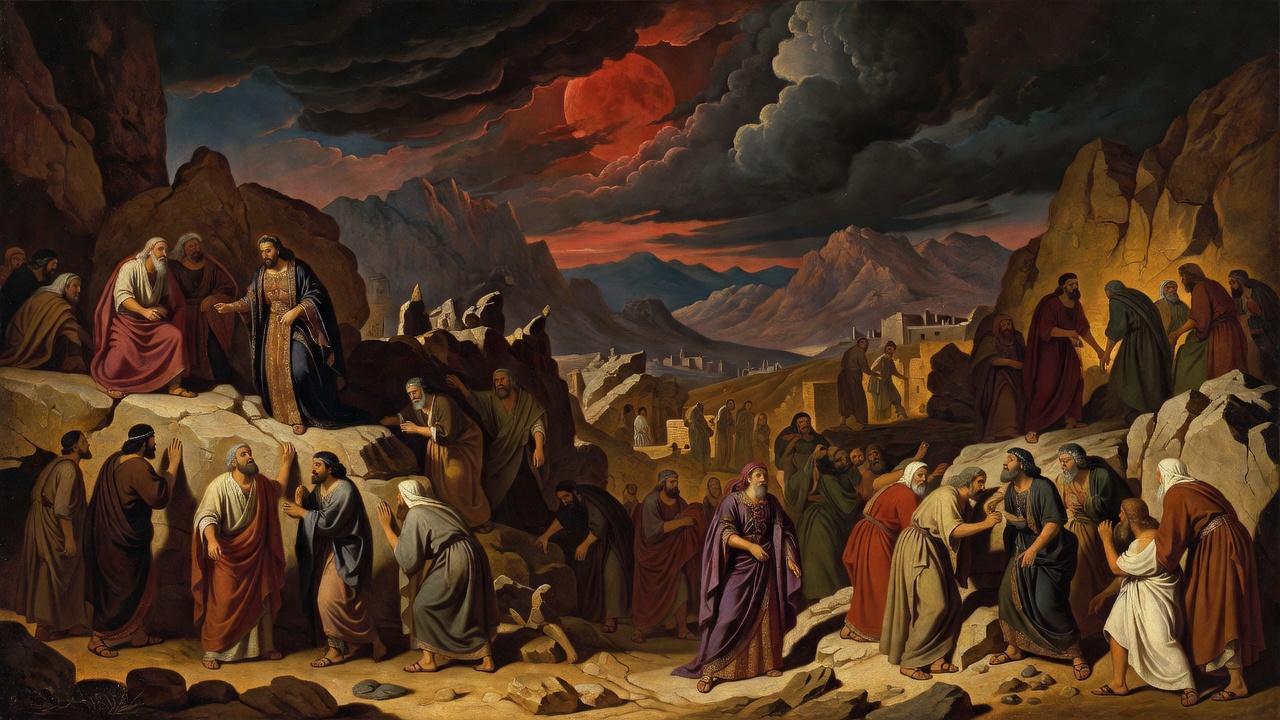
The Opening of the Six Seals
- The first four seals reveal four riders on white, bright red, black, and pale green horses, summoned one by one by the four living creatures. Each horseman brings a distinct affliction across the earth, ranging from conquest and the loss of peace to widespread famine, plague, and death.Sources: the Bible text itself
- The third horseman holds a pair of scales, accompanied by a proclamation setting the price of a quart of wheat or three quarts of barley at a denarius, reflecting severe inflation and food rationing while oil and wine are preserved.Sources: the Bible text itself
- When the fifth and sixth seals are opened, the focus shifts to the souls of slain believers waiting under the altar, followed by immense cosmic and earthly upheavals that lead people of every social station to hide in mountain caves.Sources: the Bible text itself
Notes written with AI assistance from open sources (Theographic Bible Metadata, CC BY-SA 4.0; Easton’s Bible Dictionary, public domain) and reviewed before publishing.
Credits and license for this translation
Ʉbhʉragɨ Ubhuhya Mʉkɨgambʉ chi Ikikiizʉ
Ikizu: Ʉbhʉragɨ Ubhuhya Mʉkɨgambʉ chi Ikikiizʉ (New Testament+) for Tanzania
copyright © 2024 Wycliffe Bible Translators, Inc.
Language: (Ikizu)
Contributor: Wycliffe USA
This translation is made available to you under the terms of the
Creative Commons Attribution Share-Alike license 4.0.
You have permission to share and redistribute this Bible translation in any format and to make reasonable revisions and adaptations of this translation, provided that:
You include the above copyright and source information.
If you make any changes to the text, you must indicate that you did so in a way that makes it clear that the original licensor is not necessarily endorsing your changes.
If you redistribute this text, you must distribute your contributions under the same license as the original.
Pictures included with Scriptures and other documents on this site are licensed just for use with those Scriptures and documents.
For other uses, please contact the respective copyright owners.
Note that in addition to the rules above, revising and adapting God's Word involves a great responsibility to be true to God's Word. See Revelation 22:18-19.
2025-05-03
Source: http://ebible.org/ikz/ · eBible.org