John 6
Tẹsitamenti Ikne n'Ọnu Ikwere · Tap a verse to see its cross-references.
Jizọsi nyernu pokwu // badnụ isne wiri
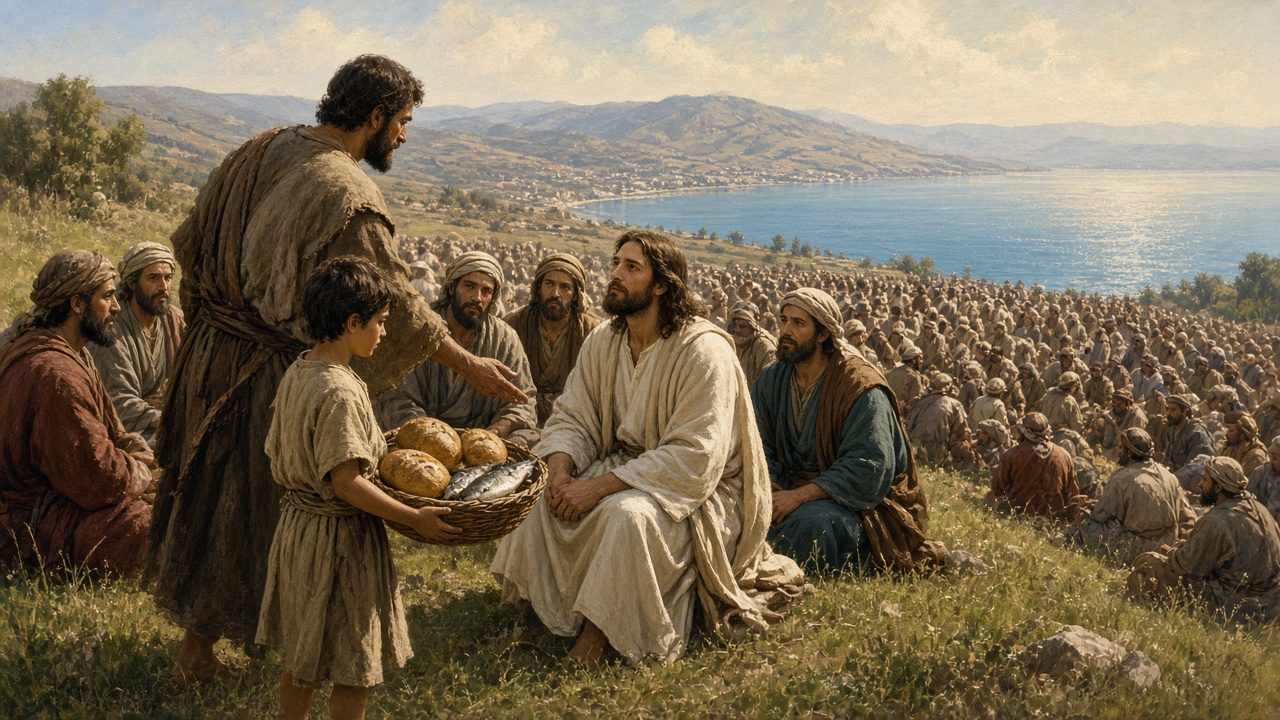
1Nga ka mekworu, Jizọsi whe aznụ Osimini Galili (ka bụ Osimini Taberasị). 2Agịda ele badnụ snornu a, kwnornu nụ be whnụrnu ẹrnu ndu-ẹhni ọ rnụrnu, nga ọ gwọru ele nrịria. 3Jizọsi pnezne n'olu rugwu dazịri ẹli, ya nụ ele sno apna a. 4Ige Iriri Ọgawhe ele Ju zị ndụndu.
5Nga Jizọsi lehnatarụ anya whnụ agịda ele badnụ naavakwnusi a, ọ kanụ Filipu, “Ndaa hne a jọozuya wiri a jeenye igbudu ele ka?” 6Ka bụ ma ọ kpa Filipu iru, kwnornu nụ ọ magwụ nhne o jeeme.
7Filipu sarụ a, “Ọ bụru nụ a zụ brẹdi riwhu mkpụru ịwai lawụru, o jéezu ma nye ọbula ri matị matị.” 8Otu nụ rime ele sno apna a, Anduru, nwene rukna Saịmoni Pita, kaa, 9“Otu wikoro matị zị hna nye ji ike brẹdi balị isne nụ aznụ matị matị lawụru. Ọ zá nhne kam bụ n'esilawụru igbudu ele badnụ ka.”
10Jizọsi kanụ be, “Anụ kanụ be dazịri ẹli.” Agịda achara zị pịi. Kpakara ele badnụ wam dazịri ẹli, be hna lele pokwu ele rukna isne. 11Jizọsi gweru brẹdi wam, tụ mmamma, nyee kpakara ele wam dazịgwu ẹli. O gweru aznụ wam mee kwno kpam. Be ri, riji rụwho be.
12Nga be rikworu, Jizọsi kanụ ele sno apna a, “Anụ tụtukota kpakara rụvnuruvnu ke gwnarnụ, ọ zá ke whu.” 13Be tụtukota kpakara rụvnuruvnu a, ke jiri nri nụ nkịta lawụru hite n'ike brẹdi balị isne wam ke ele badnụ riri.
14Ele zị nga Jizọsi rnụrnu ẹrnu ndu-ẹhni ka karụ, “N'ezi ọka, ka bụ nye ọwhnurninya wam ke jaava n'ọwa.” 15Nga Jizọsi whnụru nụ be noopio o chni a eze nụ rikne, o hi n'esilawụru be whọga, ya nụ nsnụnu a zne n'olu rugwu.
Jizọsi znernu izne // n'olu mini
16N'ogbednachi, ele sno apna a zne osimini. 17Be bna n'ọgbo neewhe aznụ osimini kịyari neezne Kapanọm. Jizọsi yáavage hne be zị tem dụ n'abalị. 18Okne ruwhere nụ abaka-mini neewhe n'olu mini. 19Ele sno apna a kwọ ọgbo nhne nụ lele maịli ẹto mọbu ẹno nga be whnụrnu Jizọsi naavakwnusi be, neezne izne n'olu mini. Be tụ ogwnu k'agịda. 20Kọvu Jizọsi kanụ be, “Anụ tụ́ko ogwnu, ọ bụ mawa.” 21Be kweru a, ọ bnakwnusi be nụ rime ọgbo, ngangam ọgbo be dụ n'ẹli wam be neezne.
Ele badnụ noopio Jizọsi
22N'ekile a, agịda ele badnụ ele zị n'aznụ osimini kịyari mahịaru nụ otu ọgbo matị zị pịi whọgalam vuru ele sno apna Jizọsi kpọi. Jizọsi snóge be. 23Ọgbo ele ke berere hiri nụ Taberasị va nụ ngeri hne ele badnụ wam riri brẹdi, nga Nyenwe aị tụkparu mmamma. 24Nga ele badnụ wam whnụrnu nụ Jizọsi zị́la pịi, ma ele sno apna a, be bna n'ọgbo wam zne Kapanọm noopio Jizọsi.
Jizọsi bụ Wiri ke Bụdnu
25Nga ele badnụ wam whnụrnu a n'aznụ osimini kịyari, be sịkwa a, “Nye-zni-nhne, ndaa nga ị varụ hna?”
26Jizọsi sarụ be, “Me kanụ anụ ezi ọka, anụ noopio m kwnornu nụ anụ rijiri rụwho nụ brẹdi me nyernu anụ, ọ bụ́o kwnornu nụ anụ whnụrnu ẹrnu ndu-ẹhni. 27Anụ dọ́gbu ẹhni anụ n'ẹrnu kwnornu nụ wiri ke nooro oro, tnụnuma, anụ dọgbu ẹhni anụ n'ẹrnu kwnornu nụ wiri ke jaazị tem dụ bụdnu kwó okwo, ke Nnwọ ke Badnụ neenye anụ. Ya bụ nye Chiokike nyernu rikne o mee kpam.”
28Be sịkwa Jizọsi, “Kịni bụ nhne a jeeme ma a rnụ ẹrnu Chiokike?”
29Jizọsi sarụ be, “Ka bụ ẹrnu Chiokike, anụ kweru nụ nye wam o ziyaru.”
30Be sịkwa a, “Kịni bụ ẹrnu ndu-ẹhni i jeeji gesi ma a whnụrnu, kweru? Kịni bụ nhne i jeeme? 31Ele nda aị ọknani riri mana n'ẹli chna chna chna, lele kpa ọkwukwo nsọ kwuru, ‘O nyernu be brẹdi ke hi n'oligwe va, be ri.’ ”
32Jizọsi kanụ be, “Me kanụ anụ ezi ọka, ọ bụ́o Mozizi nyernu anụ brẹdi ke hi n'oligwe va, kọvu Nda m neenye anụ ezi brẹdi ke hi n'oligwe va. 33Kwnornu nụ brẹdi ke Chiokike neenye bụ nye wam ke hi n'oligwe va, bụ nye neenye ele ọwa bụdnu.”
34Be kaa, “Nda-aị-kwu, neenye aị brẹdi ka kpakara ige.”
35Jizọsi kanụ be, “Mawa bụ brẹdi ke neenye bụdnu, nye vakwnusiri m, wiri jọ́ogwnu a rịa rịa, nye kweru nụ me, akpịri jọ́okpo a bẹkwnu rịa rịa. 36M karụ m, anụ whnụrnu m, kọvu anụ kwége. 37Nye ọbula ke Nda m nyernu m jaavakwnusi m, m jáachịhala a rịa rịa. 38Kwnornu nụ m hiri m n'oligwe hiedna mee echiche nye ziyaru m, ọ bụ́o o mee echiche m. 39Ka bụ echiche nye ziyaru m, me túwhu nye ọbula ke o nyernu m, kọvu me mee ma be hi n'ẹnwu lizọ n'ọbochi ipne-aznụ. 40Kwnornu nụ ka bụ nhne Nda m noopio, nye ọbula ke jọowhnu Nnwọ wam, kweru nụ a, jeenwe bụdnu kwó okwo, m jeeme nye wam hi n'ẹnwu lizọ n'ọbochi ipne-aznụ.”
41Ele Ju bete ọ takpo megidne a, kwnornu nụ ọ karụ, “Mawa bụ Brẹdi ke hiednarnụ n'oligwe.” 42Be kaa, “Nye ka ọ bụ́o Jizọsi nnwọ Josefu? A magwụ nda a nụ nne a, ndaa kpa ọ naakaa nụ o hi n'oligwe hiedna?”
43Jizọsi kanụ be, “Anụ tákpoma n'esilawụru ẹhni anụ. 44Ọ zá nye jaavakwnusi m okwolem ma Nda m nye ziyaru m jọodoru a vakwnusi m, m jeeme o lizọ n'ẹnwu n'ọbochi ipne-aznụ. 45Ele ọwhnurninya gbarụ a n'ọkwukwo nsọ, ‘Chiokike jeezni kpakara ele badnụ nhne.’ Nye ọbula ke bnoteru Nda nsnị mụhia nhne n'aka a, jaavakwnusi m. 46Ọ zá nye ọbula ke whnụleru Nda anya nụ mbọm, kwekọlam nye wam ke hi hne Chiokike zị whnụrnu Nda anya. 47Me kanụ anụ ezi ọka, nye ọbula ke kweru nwernu bụdnu kwó okwo. 48Mawa bụ wiri ke bụdnu. 49Ele nda anụ ọknani riri mana n'ẹli chna chna chna, be nwụ. 50Kọvu wiri ke hi n'oligwe hiedna, nye ọbula ke riri a, jọ́onwu ẹnwu. 51Mawa bụ wiri ke zị bụdnu ke hi n'oligwe hiedna. Ọ bụru nụ badnụ ọbula ri wiri ka, o jaazị bụdnu tim tọm. Anọ-ẹhni m bụ wiri ke me jeenye ọwa ma be zịri bụdnu.”
52Ka kpayarụ ọdogbuta whụyaru n'esilawụru ele Ju. Be kaa, “Nwerukna ka, o jeenye aị anọ-ẹhni a ma a ri?”
53Jizọsi kanụ be, “Me kanụ anụ ezi ọka, okwolem ma anụ riri anọ-ẹhni ke Nnwọ ke Badnụ, nwọ ọvnarna a, anụ jéenwe bụdnu nụ rime anụ. 54Nye ọbula ke jeeri anọ-ẹhni m, nwọ masị ọvnarna m nwernu bụdnu kwó okwo. 55Kwnornu nụ anọ-ẹhni m bụ wiri n'ezi, ọvnarna m bụ masị nhne be nwọ ọnwo n'ezi. 56Nye ọbula ke jeeri anọ-ẹhni m, nwọ ọvnarna m, wu nụ rime m, m wu masị m nụ rime a. 57Lele kpa Nda ke zị bụdnu ziyaru m, m zị m bụdnu kwnornu nụ Nda m, kpam masị, nye ọbula ke jeeri anọ-ẹhni m jaazị bụdnu kwnornu me. 58Ka bụ wiri wam ke hi n'oligwe hiedna, ọ bụ́o kpa nda anụ ọknani riri mana be nwụ. Nye ọbula ke jeeri wiri ka jaazị bụdnu tim tọm.” 59Ka bụ nhne Jizọsi kwuru nga o neezni nhne nụ ọro ọgbako ele Ju zị nụ Kapanọm.
Ikwu-ọnu ke bụdnu // kwó okwo
60Nga agịda ele sno apna a nụrnu ọka a, be kaa, “Ikwu-ọnu ka siri rikne, nyele jeemeli a?”
61Nga Jizọsi mahịaru nụ ele sno apna a naatakpo gbasịri ọka ka, ọ kanụ be, “Ka o mernu ovu we anụ ẹhni sa? 62Ndaa kpa ọ jọonu nga anụ jọowhnu Nnwọ ke Badnụ lahna hne ọ zị nụ mbọm? 63Enine neenye bụdnu, badnụ etekne nwée rikne mee nhne ọbula. Ọka me nookwunu anụ bụ enine bụ masị bụdnu. 64Kọvu agwna anụ kwége.” Jizọsi magwụ hite n'ọziri ele kwé ekwe nụ nye jeere a. 65Ọ kanụ be, “Ka kpayarụ me jiri kanụ anụ nụ ọ zá nye jaavakwnusi m, okwolem ma Nda m nyernu a rikne o mee kpam.”
66Hite nụ nhne Jizọsi kwuru, agịda ele sno apna a lahna aznụ kwnornu nụ ikwu-ọnu ka, be snóge a berere. 67Jizọsi sịkwa nri nụ badnụ lawụru wam ele sno apna a, “Anụ jaalahna masị?”
68Saịmoni Pita, kaa, “Nyenwe aị, a jaalakwnusi nyele? I nwernu ikwu-ọnu ke neenye bụdnu kwó okwo. 69Kịtna, a kweru, mahịa masị nụ ị bụ nye nsọ ke Chiokike.”
70Jizọsi kanụ be, “Me họhiaru anụ nri nụ ẹbo, kọvu otu nyenum nụ rime anụ bụ ekwensu.” 71O nookwu gbasịri Judasị, nnwọ Saịmoni Isikarịoti, kwnornu nụ Judasị jeere a, ọ bụ n'ezi nụ ọ bụ otu nụ rime nri nụ badnụ lawụru wam ele sno apna Jizọsi.
Did you know?
The Bread of Life
- In this chapter John calls the lake both the Sea of Galilee and the Sea of Tiberias. Easton's Bible Dictionary describes it as twelve and a half miles long and from four to seven and a half miles wide, with its surface 682 feet below the Mediterranean. Tiberias, on the western shore, is said to have been founded by Herod Antipas in A.D. 16 and named for the emperor Tiberius; some boats from that city landed near the place where the people had eaten the bread.Sources: the Bible text itself · Sea of Galilee · Tiberias
- That evening the disciples set out by boat for Capernaum, and the next day the crowd crossed and found Jesus there. He delivered the teaching about the bread of life in the synagogue at Capernaum. Easton's Bible Dictionary notes that the city, not mentioned in the Old Testament, became Jesus' own city after his expulsion from Nazareth and was the scene of many episodes in his ministry.Sources: the Bible text itself · Capernaum
- As the crowd drew near, Jesus asked Philip where they could buy bread, a question the narrative says was meant to test him, for Jesus already knew what he would do. Philip, like Andrew and Peter, was from Bethsaida; he answered that two hundred denarii would not buy enough for each person to have a small piece. Andrew, Peter's brother, then pointed out a boy with five barley loaves and two small fish, and Easton's Bible Dictionary, citing this exchange among other passages, says Philip seems to have held a prominent place among the apostles.Sources: the Bible text itself · Phillip the Apostle · Andrew · Simon Peter
Notes written with AI assistance from open sources (Theographic Bible Metadata, CC BY-SA 4.0; Easton’s Bible Dictionary, public domain) and reviewed before publishing.
Places in this chapter
Only places identified with high confidence are shown (90% or more according to the scholarly sources compiled by OpenBible). Period map: DARE (Digital Atlas of the Roman Empire), CC BY 4.0; modern map: © OpenStreetMap contributors; places: OpenBible.info (CC BY 4.0).
Credits and license for this translation
Tẹsitamenti Ikne n'Ọnu Ikwere
New Testament in Ikwere
copyright © 2010 Wycliffe
Language: Ikwere
Translation by: Wycliffe
Ikwerre – (ikw) Nigeria
The Iwerre language of Nigeria can also be spelled Ikwere and Ikwerri. This language is spoken primarily by the Ikwerre people who live in the Rivers State of Nigeria and is one of the many ethnic groups in the Niger Delta. There were more than 23,000 speakers of this language in 1973. There is also a considerable local interest in literacy and grammar.
Copyright Information
© 2010, The Nigeria Bible Translation Trust. All rights reserved.
This translation text is made available to you under the
terms of the Creative Commons License: Attribution-Noncommercial-No Derivative Works.
( http://creativecommons.org/licenses/by-nc-nd/3.0/ )
In addition, you have permission to port the text to different file formats, as long as you
do not change any of the text or punctuation of the Bible.
You may share, copy, distribute, transmit, and extract portions
or quotations from this work, provided that you include the above copyright
information:
You must give Attribution to the work.
You do not sell this work for a profit.
You do not make any derivative works that change any of the actual words or punctuation of the Scriptures.
Permissions beyond the scope of this license may be
available if you contact
us with your request.
Printed book ISBN 9789789076369
New
The New Testament
in Ikwere
© 2010, The Nigeria Bible Translation Trust. All rights reserved.
This translation is made available to you under the terms of the
Creative Commons Attribution-Noncommercial-No Derivatives license 4.0.
You may share and redistribute this Bible translation or extracts from it in any format, provided that:
You include the above copyright and source information.
You do not sell this work for a profit.
You do not change any of the words or punctuation of the Scriptures.
Pictures included with Scriptures and other documents on this site are licensed just for use with those Scriptures and documents.
For other uses, please contact the respective copyright owners.
2019-08-09
Source: http://ebible.org/ikwNT/ · eBible.org