John 3
Tẹsitamenti Ikne n'Ọnu Ikwere · Tap a verse to see its cross-references.
Jizọsi nụ Nikodimọsi
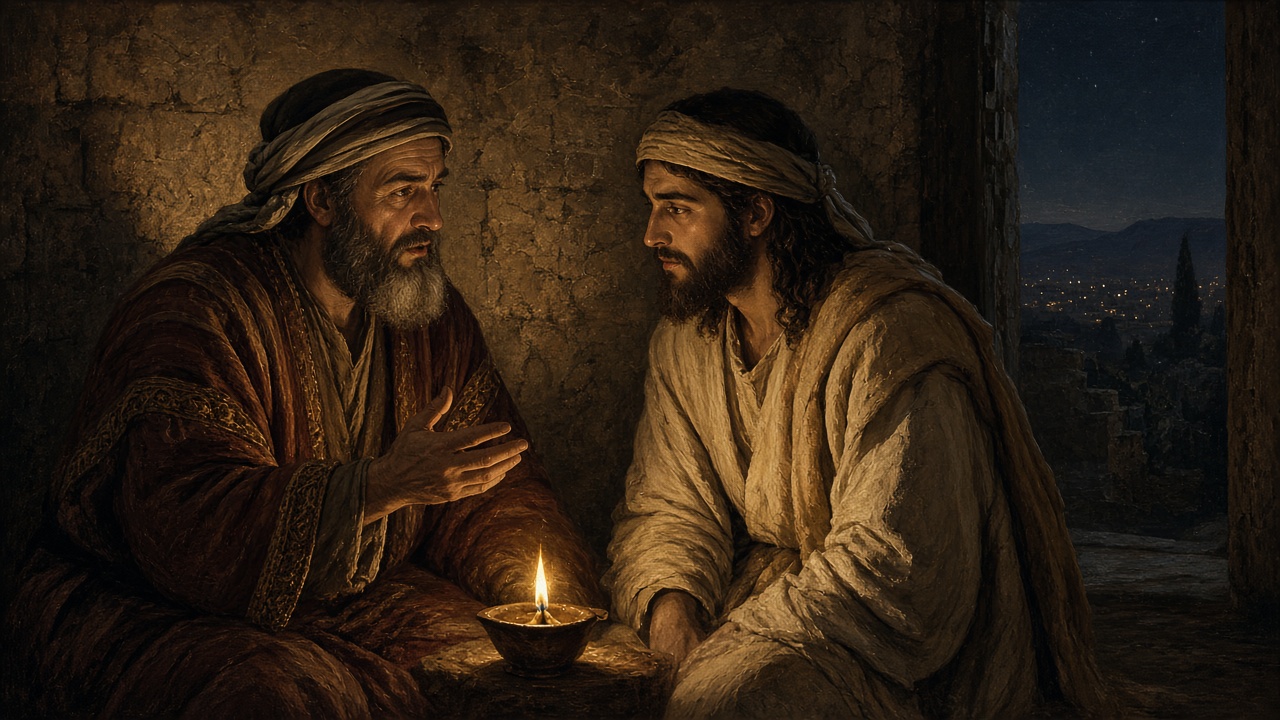
1Otu nwerukna be kwu Nikodimọsi, otu nụ rime ele Farisi, nye risi ele Ju, 2vakwnusiri Jizọsi n'abalị. Ọ kaa, “Rabaị, a magwụ nụ ị bụ Nye-zni-nhne ke Chiokike ziyaru, kwnornu nụ ọ zá nye jọornuli ẹrnu ndu-ẹhni ị nọornu okwolem ma Chiokike dagwụnu a.”
3Jizọsi sarụ, “Me kanụ ị ezi ọka, ọ zá nye jọowhnu n'ẹli-eze Chiokike anya, ọ bụru nụ be mụ́gele a berere.”
4Nikodimọsi sịkwa a, “Ndaa kpa be jọomu badnụ berere nga o mernu okno badnụ? Ọ jaabna nụ rụwho nne a berere, be mụ a?”
5Jizọsi sarụ a, “Me kanụ ị ezi ọka, ọ zá nye jaabna n'ẹli-eze Chiokike ọ bụru nụ be mụ́gele a hite nụ mini nụ Enine. 6Nye ke badnụ etekne mụrnu bụ anọ-ẹhni, nye Enine mụrnu bụ enine. 7Ọ gbágwoji ị anya nụ m karụ m nụ be jọomuriri anụ berere. 8Ruwhere neewhe hne ọ masịgwu a, ị nọonu imerne a, kọvu ị máa hne o hi mọbu hne o neezne. Nye ọbula ke be mụrnu hite n'Enine nụ kpam.”
9Nikodimọsi sịkwa a, “Ndaa kpa be jeeme nhne nụ kpa?”
10Jizọsi sarụ a, “Ị bụ nye-zni-nhne n'ẹli Izirẹli, kọvu ị máa nhne ka. 11Me kanụ ị ezi ọka, a nookwu nhne a magwụ, a naagba akebne nhne ke a whnụrnu, kọvu anụ kwé ọ nahọru akebne aị. 12Anụ kwé nhne me kwuru gbasịri nhne k'ọwa. Ndaa kpa anụ jeekweru ọ bụru me kanụ anụ nhne k'oligwe? 13Ọ zá badnụ ọbula ke znernu oligwe nụ mbọm, okwolem Nnwọ ke Badnụ nye hiri n'oligwe hiedna. 14Lele kpa Mozizi gwelizọru agwọ n'olu isisi n'ẹli chna chna chna, ọ bụ kpa be jeegwelizọ Nnwọ ke Badnụ olu, 15ma nye ọbula ke kweru nụ ya jeenwe bụdnu kwó okwo. 16Kwnornu nụ Chiokike whnụrnu ọwa n'anya kpa, o gweru Nnwọ ọ mụrnu ya nụ nsnụnu a kpọi nyega, ma nye ọbula ke kweru nụ ya jọ́onwu ẹnwu, kọvu o jeenwe bụdnu kwó okwo. 17Kwnornu nụ Chiokike zíyage Nnwọ a n'ọwa ọ bụru nye kpe k'ọwa, kọvu ma ọ bụru Nye Ọznohia k'ọwa. 18Be jéekpe nye ọbula ke kweru nụ Nnwọ wam ikpe, kọvu nye ọbula ke kwége bụ nye be kperu ikpe, kwnornu nụ o kwége nụ Nnwọ Chiokike mụrnu ya nụ nsnụnu a. 19Ka bụ ikpe wam be kperu ọwa, iwhne varụ n'ọwa, ele badnụ whnụrnu ọchichiri n'anya karụ iwhne, kwnornu nụ be nọornu ẹrnu ọjo. 20Nye ọbula ke nọornu ẹrnu ọjo bụ nye irno ke iwhne, ọ jáava nụ rime iwhne ọ zị iwhne kpume ẹrnu ọjo a. 21Kọvu nye ọbula ke nọornu ẹrnu ọma jaava nụ rime iwhne ma iwhne gesi nụ ẹrnu a bụ nhne ọ rnụrnu hite nụ Chiokike.”
Jizọsi nụ Jọni // Nye Wụ Mini
22Nga ka mekworu, Jizọsi nụ ele sno apna a znernu n'ẹli Judiya, ya nụ be dazịri ige matị, ọ wụ ele badnụ mini. 23Jọni masị zị nọowu mini n'Enọni ke zị Salịm ndụndu, kwnornu nụ agịda mini zị pịi. Ele badnụ neeznekwnusi a, ọ nọowu be mini. 24(Be yéeyisige Jọni n'ọro ikelu n'ige ka.) 25Agwna ele sno apna Jọni nụ otu nye Ju nọodogbuta nhne gbasịri ọsnusnu nhne lele kpa omen'ẹli ele Ju jiri zịri. 26Be vakwnusi Jọni kanụ a, “Nye-zni-nhne, nwerukna wam jị nụ a zị n'aznụ Osimini Jọdani kịyari, nye ị gbarụ akebne gbasịri a, ọ nọowu ele badnụ mini, agịda ele badnụ neeznekwnusi a.”
27Jọni sarụ be, “Ọ zá nye ọbula ke jeenwe nhne ke Chiokike késile a. 28Anụ bụ ele akebne m nụ m karụ m, ‘M bụ́o m Karaịsi, kọvu be beru ọsno ziya m nụ ruwhnu a.’ 29Nye nọolu nnwerne ikne bụ nye nwe nnwerne ikne, kọvu enyi nye noolu nnwerne ikne, nye noogwuzo noobno nsnị, mkpọma nọoso a n'ọnu nụ ọ nụrnu nkọli nye wam nọolu nnwerne ikne. Ọ bụ kpa snarnịma m jiri zu ozu kịtna. 30Ọ jaazị naaba aba, kpa me jaazị naaya ẹli ẹli.”
Nye ke hiri n'oligwe va
31Nye wam ke hiri n'oligwe va kakwo kpakara badnụ, nye hi n'ọwa bụ nye ke ọwa, o nookwu nhne ke ọwa. Nye hiri n'oligwe kakwo kpakara badnụ. 32O nookwu nhne ọ whnụrnu nụ nhne ọ nụrnu, kọvu ọ zá nye neekweru izi a. 33Nye ọbula ke jeegweru izi a naakahịa nụ Chiokike bụ nye ezi ọka. 34Nye Chiokike ziyaru nookwu ikwu-ọnu Chiokike, kwnornu nụ Chiokike nyéne a Enine a n'apna zị matị. 35Nda whnụrnu Nnwọ a n'anya, gweru kpakara nhne yisi n'aka a. 36Nye ọbula ke kweru nụ Nnwọ wam nwernu bụdnu kwó okwo, nye ọbula ke zá noobnonu Nnwọ wam nsnị, jéenwe bụdnu, kọvu ovu owe ẹhni Chiokike jaazị nụ risi a ọkwnukokwnu.
Did you know?
New birth and John's witness
- Nicodemus, whose name means "the people is victor," was a Pharisee and a member of the Sanhedrin. He came to Jesus at night to learn more of his teaching, and the Gospel calls him a leader of the Jews; Jesus addresses him as Israel's teacher.Sources: Nicodemus · the Bible text itself
- After this conversation, Jesus and his disciples went into the Judean countryside, under the Romans the southernmost of the three divisions of Palestine. John was also baptizing at Aenon near Salim, because water was plentiful there; Salim, whose name means "peaceful," lay west of the Jordan. Aenon means "springs," and Easton's Bible Dictionary (1897) places it probably near the upper source of the Wady Far'ah, an open valley full of springs running from Mount Ebal to the Jordan.Sources: the Bible text itself · Judea · Aenon · Salim
- In this chapter John tells his disciples that he is not the Christ but was sent ahead of him, and the narrative notes that he had not yet been thrown into prison. Easton's Bible Dictionary (1897) describes him as the forerunner of Jesus, of priestly descent, and says that his mission was the subject of prophecy.Sources: the Bible text itself · John the Baptist
Notes written with AI assistance from open sources (Theographic Bible Metadata, CC BY-SA 4.0; Easton’s Bible Dictionary, public domain) and reviewed before publishing.
Places in this chapter
- Jerusalem · 31.777, 35.234 · verse 22
- Judea · Today: Judea 1 · 31.777, 35.234 · verse 22
- Jordan · Today: Jordan River · 31.761, 35.558 · verse 26
Only places identified with high confidence are shown (90% or more according to the scholarly sources compiled by OpenBible). Period map: DARE (Digital Atlas of the Roman Empire), CC BY 4.0; modern map: © OpenStreetMap contributors; places: OpenBible.info (CC BY 4.0).
Credits and license for this translation
Tẹsitamenti Ikne n'Ọnu Ikwere
New Testament in Ikwere
copyright © 2010 Wycliffe
Language: Ikwere
Translation by: Wycliffe
Ikwerre – (ikw) Nigeria
The Iwerre language of Nigeria can also be spelled Ikwere and Ikwerri. This language is spoken primarily by the Ikwerre people who live in the Rivers State of Nigeria and is one of the many ethnic groups in the Niger Delta. There were more than 23,000 speakers of this language in 1973. There is also a considerable local interest in literacy and grammar.
Copyright Information
© 2010, The Nigeria Bible Translation Trust. All rights reserved.
This translation text is made available to you under the
terms of the Creative Commons License: Attribution-Noncommercial-No Derivative Works.
( http://creativecommons.org/licenses/by-nc-nd/3.0/ )
In addition, you have permission to port the text to different file formats, as long as you
do not change any of the text or punctuation of the Bible.
You may share, copy, distribute, transmit, and extract portions
or quotations from this work, provided that you include the above copyright
information:
You must give Attribution to the work.
You do not sell this work for a profit.
You do not make any derivative works that change any of the actual words or punctuation of the Scriptures.
Permissions beyond the scope of this license may be
available if you contact
us with your request.
Printed book ISBN 9789789076369
New
The New Testament
in Ikwere
© 2010, The Nigeria Bible Translation Trust. All rights reserved.
This translation is made available to you under the terms of the
Creative Commons Attribution-Noncommercial-No Derivatives license 4.0.
You may share and redistribute this Bible translation or extracts from it in any format, provided that:
You include the above copyright and source information.
You do not sell this work for a profit.
You do not change any of the words or punctuation of the Scriptures.
Pictures included with Scriptures and other documents on this site are licensed just for use with those Scriptures and documents.
For other uses, please contact the respective copyright owners.
2019-08-09
Source: http://ebible.org/ikwNT/ · eBible.org