John 17
Tẹsitamenti Ikne n'Ọnu Ikwere · Tap a verse to see its cross-references.
Jizọsi kpennu ele sno apna a // okpukpe
1Nga Jizọsi kwukworu ọka ele ka, o lelizọ anya n'oligwe, kaa,
“Nda m, ige wam valẹm, nyee Nnwọ ị igwugwu, ma Nnwọ ị nyee i igwugwu. 2I nyernu a iknernema nụ hne kpakara ele badnụ zị, ma o kesi kpakara ele ke i nyernu a bụdnu kwó okwo. 3Ka bụ bụdnu kwó okwo, ma ele badnụ mahịa ị, ị bụ otu Chiokike ke bụ ezi, nụ Jizọsi Karaịsi nye i ziyaru. 4M nyernu m ị igwugwu n'ọwa hite n'ọrnukpa ẹrnu i nyernu m me rnụ. 5Kịtna Nda m, nyee m igwugwu nụ ruwhnu ị, bụ igwugwu ke me nwernu sụ ị kpụru ọwa.
6“M mernu ele badnụ mahịa rẹwhna ị bụ ele i nyernu m hite n'ọwa. Be bụ ele ke i. Jị nyernu m be. Be bịtaru ikwu-ọnu ị. 7Kịtna, be magwụ nụ kpakara nhne i nyernu m hi n'aka ị va. 8M nyernu m be ikwu-ọnu ke i nyernu m. Be gweru a, be magwụ n'ezi nụ m hi m hne ị zị whụya, be kweru nụ jị ziyaru m. 9M neekpenu be okpukpe. M zá m neekpenu ọwa okpukpe, kọvu ele wam i nyernu m, kwnornu nụ be bụ ke i. 10Kpakara nhne me nwernu bụ ke i, kpakara nhne i nwernu bụ ke m masị, be bụ igwugwu m. 11M zị́ma m n'ọwa berere, kọvu be zị n'ọwa, m naavakwnusi ị, Nda zị nsọ, bịkwata be hite nụ rikne ke rẹwhna ị, rẹwhna ke i nyernu m, ma be zịri n'otu lele kpa a zị n'otu. 12Nga me nụ be zị, m bịtaru m be nụ rẹwhna ị, bụ rẹwhna ke i nyernu m, m segidnernu m be. Ọ zá nye whuru owhu nụ rime be, okwokọlam nye wam whuzne owhuzne, ma nhne be gbarụ n'ọkwukwo nsọ mezu.
13“M naavakwnusi ị kịtna, m nookwu nhne ka n'ọwa ma be nwernu ovu ọso n'ọnu m, ma ovu ọso n'ọnu be zu ozu. 14M nyernu m be ikwu-ọnu ị, ọwa snornu be irno kwnornu nụ be bụ́o ke ọwa, lele kpa me bụ́o ke ọwa. 15M zá m naakaa jị gweme be n'ọwa. Kọvu m nọorio ị ma ị bịta be zọma n'aka nye ọjo wam. 16Be bụ́o ke ọwa, lele kpa me bụ́o ke ọwa. 17Bịta be nsọ hite n'ezi ọka ị, ikwu-ọnu ị bụ ezi ọka. 18Lele kpa i ziyaru m n'ọwa, bụ kpa me neezizne be n'ọwa. 19M kwnornu be bịta ẹhni m nsọ, ma be bịta be nsọ n'ezi ọka.
20“M zá m neekpenu be okpukpe kpọi, kọvu m neekpekọtanu ele jeekweru nụ me hite n'ikwu-ọnu be. 21M neekpe ma kpakara be zịri n'otu, Nda m, lele kpa ị zị nụ rime m, me nụ rime i. Kpakara be zịri n'otu ma ọwa kweru nụ jị ziyaru m. 22M nyernu m be igwugwu ke i nyernu m, ma be zịri n'otu lele kpa a zị n'otu. 23Me zịri nụ rime be, jị nụ rime m, ma be zu ozu n'ọzi n'otu, ma ọwa mahịa nụ jị ziyaru m, nụ ị whnụrnu be n'anya lele kpa ị whnụrnu m n'anya.
24“Nda m, jị nyernu m be, m noopio be dazịri hne me zị, ma be whnụ igwugwu m, ka bụ igwugwu ke i nyernu m kwnornu nụ ị whnụrnu m n'anya sị ị kpụru ọwa.
25“Nda ke mee mma, ọwa máa nye ị bụ, kọvu m magwụ m nye ị bụ, ele ka magwụ masị nụ jị ziyaru m. 26M mernu m be mahịa ị, m jaazị neeme kpam ma ọwhnun'anya ke ị whnụrnu m zịri nụ rime be, ma me nụ be bụru otu.”
Did you know?
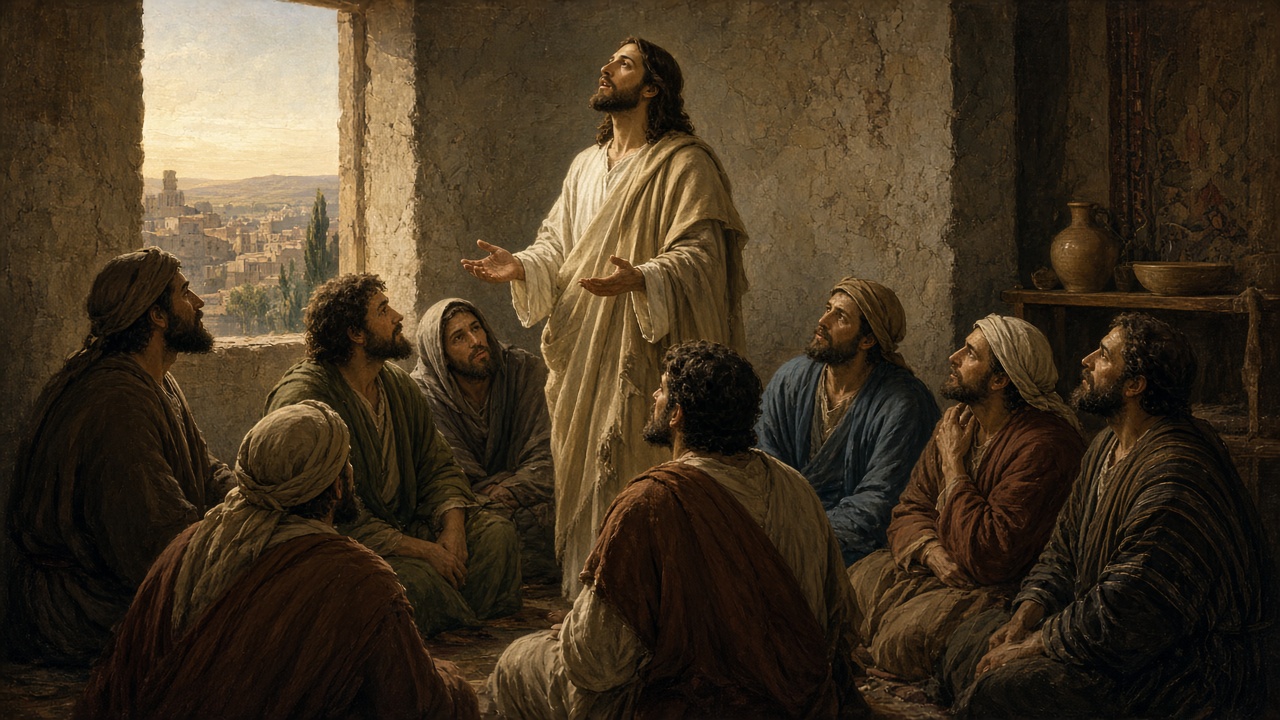
John 17: the hour has come
- The prayer opens when Jesus, having spoken these things, lifts his eyes to heaven and says that the hour has come. It is associated with the Upper Room Discourse, listed as lasting one day, and with Holy Week, listed as lasting eight days.Sources: the Bible text itself · Upper Room Discourse · Holy Week
- Here eternal life is knowing the only true God and Jesus Christ, whom the Father sent. Jesus also speaks of the glory he had with the Father before the world existed, and of the Father's love for him before the foundation of the world.Sources: the Bible text itself
- He prays for those the Father gave him out of the world, who have kept the word, and also for people who will believe through their message, asking that they may be one. He does not ask that they be taken out of the world, but that they be kept from the evil one and sanctified by the truth, which he identifies as the Father's word.Sources: the Bible text itself
Notes written with AI assistance from open sources (Theographic Bible Metadata, CC BY-SA 4.0; Easton’s Bible Dictionary, public domain) and reviewed before publishing.
Credits and license for this translation
Tẹsitamenti Ikne n'Ọnu Ikwere
New Testament in Ikwere
copyright © 2010 Wycliffe
Language: Ikwere
Translation by: Wycliffe
Ikwerre – (ikw) Nigeria
The Iwerre language of Nigeria can also be spelled Ikwere and Ikwerri. This language is spoken primarily by the Ikwerre people who live in the Rivers State of Nigeria and is one of the many ethnic groups in the Niger Delta. There were more than 23,000 speakers of this language in 1973. There is also a considerable local interest in literacy and grammar.
Copyright Information
© 2010, The Nigeria Bible Translation Trust. All rights reserved.
This translation text is made available to you under the
terms of the Creative Commons License: Attribution-Noncommercial-No Derivative Works.
( http://creativecommons.org/licenses/by-nc-nd/3.0/ )
In addition, you have permission to port the text to different file formats, as long as you
do not change any of the text or punctuation of the Bible.
You may share, copy, distribute, transmit, and extract portions
or quotations from this work, provided that you include the above copyright
information:
You must give Attribution to the work.
You do not sell this work for a profit.
You do not make any derivative works that change any of the actual words or punctuation of the Scriptures.
Permissions beyond the scope of this license may be
available if you contact
us with your request.
Printed book ISBN 9789789076369
New
The New Testament
in Ikwere
© 2010, The Nigeria Bible Translation Trust. All rights reserved.
This translation is made available to you under the terms of the
Creative Commons Attribution-Noncommercial-No Derivatives license 4.0.
You may share and redistribute this Bible translation or extracts from it in any format, provided that:
You include the above copyright and source information.
You do not sell this work for a profit.
You do not change any of the words or punctuation of the Scriptures.
Pictures included with Scriptures and other documents on this site are licensed just for use with those Scriptures and documents.
For other uses, please contact the respective copyright owners.
2019-08-09
Source: http://ebible.org/ikwNT/ · eBible.org