Galatians 6
Tẹsitamenti Ikne n'Ọnu Ikwere · Tap a verse to see its cross-references.
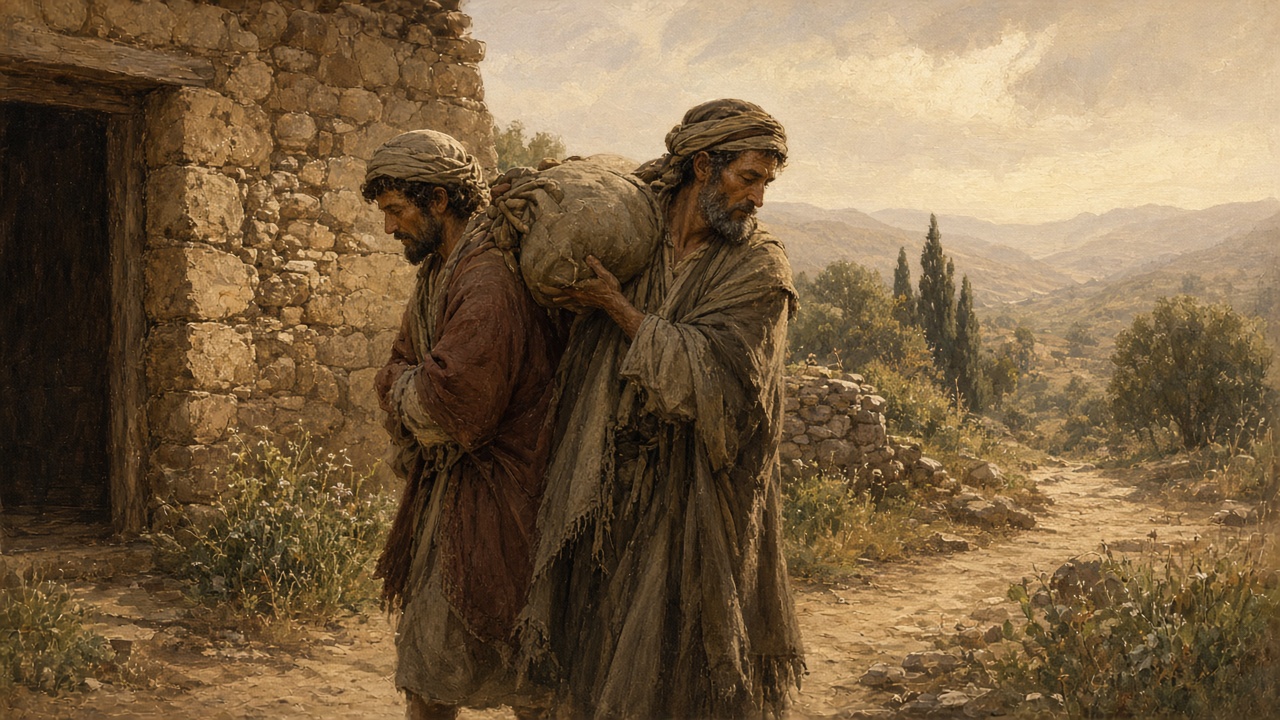
A vurita ivu ibne aị
1Rụmu nda m, ọ bụru nụ badnụ ọbula mee mmehie, anụ ele gwuzosiri rikne nụ rime enine gweru wọhnernerne znikwata a nkarị. Anya dụ masị anụ ẹli, ọ zị anụ dnabna n'ọrnurna. 2Anụ vurita ivu ibne anụ. Ọ bụru nụ anụ neeme kpam, anụ jeemezu iwu Karaịsi. 3Ọ bụru nụ badnụ ọbula neeche nụ ọ bụ nhne nga ọ zá nhne ọ bụ, o nooduwhu ẹhni a. 4Nye ọbula tule ẹrnu a, ige wam, o jeenwe rikne mee oknomokno n'ẹrnu a. Ọ zá nye ji ẹrnu a tụ n'ẹrnu nye berere, 5kwnornu nụ nye ọbula jọornu ẹrnu zịnu a.
6Nye ọbula be znirni izi ọma ke Karaịsi whnụ nụ ya nụ nye znirni a nhne kehịaru nhne bụru ọma.
7Anụ dúwhu ẹhni anụ. Kwnornu nụ ọ zá nye jọokpoli Chiokike mgbaị. Mkpụru ọbula badnụ kpasịri bụ nhne ọ jọoghoru. 8Nye ọbula ke kparụ mkpụru n'anọ-ẹhni a, jeehite n'anọ-ẹhni a ghọru ẹnwu, kọvu nye kparụ mkpụru n'Enine, jeehi n'Enine a ghọru bụdnu kwó okwo lele mkpụru.
9Anụ kwékọ rikne gwụ anụ n'ome nhne bụru ọma, kwnornu nụ ige vawa nga a jọoghoru mkpụru, ọ bụru nụ rikne gwụ́ge aị. 10Kam kpayarụ, lele kpa a nwernu oghere, a zịri neemenu kpakara ele badnụ nhne bụru ọma, ke kakwo, ele zị n'ezi-nụ-ọro ke ọkwnata mkpọma.
Ọdo aka nụ nsnị ipne-aznụ
11Kịtna, m ji m aka m naagba ọkwukwo izi. Le kpa mkpụru ọkwukwo me naagba hna ezi.
12Ele neeme oknomokno n'anọ-ẹhni bụ ele naakaa be kpa anụ nka. Ka bụ ma be gharụ ọ kpakna be ẹhni kwnornu ẹnwu n'ọgba Karaịsi. 13Ọ bụbedi be ele be kparụ nka zá naabịta iwu. Be noopio be kpa anụ nka ma be mee oknomokno nụ nhne zị n'anọ-ẹhni anụ. 14Chiokike kwékọ me mee oknomokno hne ọ bụ́o n'ọgba Nyenwe aị Jizọsi Karaịsi, nye be kwnornu ẹhni a kpọgidne ọwa n'ọgba hne me zị, kpọgidne masị m n'ọgba hne ọwa zị. 15Kwnornu nụ ọkpa nka nụ ọkpáge nka bụ́o nhne. Nhne bụ nhne bụ bụdnu ikne. 16Udno nụ obirizi zịnu kpakara ele noosno iwu ka nụ bụdnu be, be nụ kpakara ele bụ Izirẹli ke Chiokike.
17Hite kịtna zne ruwhnu, ọ zá nye kpakna m ẹhni berere, kwnornu nụ m vu m n'ẹhni m ẹnya ke neegesi nụ m bụ m nye izi Jizọsi.
18Rụmu nda m, oru ke Nyenwe aị Jizọsi Karaịsi dazịnu enine anụ. Amịm.
Did you know?
Burdens, the Harvest, and the Cross
- The chapter sets two duties side by side. Those who are spiritual should restore with gentleness someone caught in a trespass, and carry one another's burdens, which the letter calls fulfilling the law of Christ. Each person, however, should test his own work and carry his own load, rather than think he is something when he is nothing and boast by comparing himself with someone else.Sources: the Bible text itself
- The writer uses the image of sowing and reaping: God is not to be mocked, and a person reaps what he sows. The one who sows to please the flesh reaps destruction from the flesh; the one who sows to please the Spirit reaps eternal life from the Spirit. Readers are urged not to grow weary in doing good, for in due time they will reap a harvest if they do not give up, and to do good to all, especially to the family of faith.Sources: the Bible text itself
- The writer calls attention to the large letters he is using as he writes with his own hand. He says that some try to compel circumcision in order to make a good outward impression, to avoid persecution for the cross of Christ, and to boast in the flesh of others, though the circumcised do not themselves keep the law. He asks never to boast except in the cross of our Lord Jesus Christ, says that neither circumcision nor uncircumcision means anything and that what counts is a new creation, and states that he bears on his body the marks of Jesus.Sources: the Bible text itself
Notes written with AI assistance from open sources (Theographic Bible Metadata, CC BY-SA 4.0; Easton’s Bible Dictionary, public domain) and reviewed before publishing.
Credits and license for this translation
Tẹsitamenti Ikne n'Ọnu Ikwere
New Testament in Ikwere
copyright © 2010 Wycliffe
Language: Ikwere
Translation by: Wycliffe
Ikwerre – (ikw) Nigeria
The Iwerre language of Nigeria can also be spelled Ikwere and Ikwerri. This language is spoken primarily by the Ikwerre people who live in the Rivers State of Nigeria and is one of the many ethnic groups in the Niger Delta. There were more than 23,000 speakers of this language in 1973. There is also a considerable local interest in literacy and grammar.
Copyright Information
© 2010, The Nigeria Bible Translation Trust. All rights reserved.
This translation text is made available to you under the
terms of the Creative Commons License: Attribution-Noncommercial-No Derivative Works.
( http://creativecommons.org/licenses/by-nc-nd/3.0/ )
In addition, you have permission to port the text to different file formats, as long as you
do not change any of the text or punctuation of the Bible.
You may share, copy, distribute, transmit, and extract portions
or quotations from this work, provided that you include the above copyright
information:
You must give Attribution to the work.
You do not sell this work for a profit.
You do not make any derivative works that change any of the actual words or punctuation of the Scriptures.
Permissions beyond the scope of this license may be
available if you contact
us with your request.
Printed book ISBN 9789789076369
New
The New Testament
in Ikwere
© 2010, The Nigeria Bible Translation Trust. All rights reserved.
This translation is made available to you under the terms of the
Creative Commons Attribution-Noncommercial-No Derivatives license 4.0.
You may share and redistribute this Bible translation or extracts from it in any format, provided that:
You include the above copyright and source information.
You do not sell this work for a profit.
You do not change any of the words or punctuation of the Scriptures.
Pictures included with Scriptures and other documents on this site are licensed just for use with those Scriptures and documents.
For other uses, please contact the respective copyright owners.
2019-08-09
Source: http://ebible.org/ikwNT/ · eBible.org