1 Corinthians 15
Tẹsitamenti Ikne n'Ọnu Ikwere · Tap a verse to see its cross-references.
Olizọ n'ẹnwu Karaịsi
1Kịtna, rụmu nda m, m neechenwanyanụ anụ izi ọma wam me znirni anụ, ke anụ nahịaru, bụ ke anụ gwuzogwu n'olu a. 2Chiokike znọhiaru anụ hite n'izi ọma ka, ọ bụru nụ anụ bịta nhne me znirni anụ, okwolem ma anụ kweru n'etekne.
3M nyernu m anụ nhne me nahịaru, ke zị okne mkpa, nụ Karaịsi nwụrnu kwnornu mmehie aị, lele kpa be gbarụ a n'ọkwukwo nsọ. 4Be liri a, Chiokike mernu o hi n'ẹnwu lizọ n'ọbochi ke ẹto, lele kpa be gbarụ a n'ọkwukwo nsọ. 5O mernu Pita whnụ a anya, omekwo, ele izi nri nụ ẹbo wam whnụ a anya. 6Omekwo, o mernu nhne nụ lele ele kakwo riwhu badnụ isne whnụ a anya otu mgba, ele bụ rụmu nda aị. Agwna be zị bụdnu dụ tna, kọvu agwna be dnarnụ n'anyarna ẹnwu. 7Omekwo, Jemisi whnụ a anya, nụ kpakara ele izi.
8N'ipne-aznụ, o mernu m m whnụ a anya, me nye be mụrnu lele nnwọ ká aka. 9M bụ m nye zịkakworu matị n'esilawụru ele izi, m kwésile m be sukwu m nye izi, kwnornu nụ m mekparụ m ọgbako Chiokike ẹhni. 10Kọvu hite n'oru Chiokike, m bụ m nhne me bụ. Oru o nyernu m bụ́o n'etekne. Kọvu m dọligburu m ẹhni m n'ẹrnu kakwo kpakara ele izi, ọ bụ n'ezi nụ ọ bụ́o me nọornu, kọvu oru Chiokike nọornu ẹrnu nụ rime m. 11Kam kpayarụ, ọ bụ me, mọbu be, a znirni izi ọma, kam bụ nhne anụ kweru.
Olizọ n'ẹnwu ele // nwụrnu ẹnwu
12Ọ bụru nụ izi ọma aị bụ nụ Karaịsi hiri n'ẹnwu lizọ, ndaa kpa agwna anụ naakaa nụ ele nwụrnu ọnwu zá neelizọ n'ẹnwu? 13Ọ bụru nụ ele nwụrnu ọnwu zá neelizọ n'ẹnwu, o neegesi nụ Karaịsi híge n'ẹnwu lizọ. 14Ọ bụru nụ Karaịsi híge n'ẹnwu lizọ, izi ọma a znirni anụ bụ nhne etekne, ọkwnata ovu anụ bụ masị nhne etekne. 15Tụkwasi n'olu a, a bụ ele akebne aghalaghala megidne Chiokike, a naagba akebne megidne Chiokike nụ o mernu Karaịsi hi n'ẹnwu lizọ, nye o méne o hi n'ẹnwu lizọ, ọ bụru nụ ele nwụrnu ọnwu jéelizọ n'ẹnwu. 16Kwnornu nụ ọ bụru nụ ele nwụrnu ọnwu jéelizọ n'ẹnwu, Karaịsi híge n'ẹnwu lizọ. 17Ọ bụru nụ Karaịsi híge n'ẹnwu lizọ, ọkwnata ovu anụ bụ nhne etekne, anụ zị kọriri nụ mmehie anụ. 18Kam neegesi nụ ele dnarnụ n'anyarna ẹnwu bụ ele kweru nụ Karaịsi whuru etekne. 19Ọ bụru nụ okwokọlam nụ bụdnu ka a zị bụ hne a nwernu ọkwnata ovu nụ Karaịsi, a bụ ele be kwesiri ọ dọnu obirizi kakwo kpakara ele wu n'ọwa.
20N'ezi ọka, Chiokike mernu Karaịsi hi n'ẹnwu lizọ, bụ mkpụru mbọm ke ele nwụrnu ọnwu. 21Kpa ẹnwu hiri n'aka badnụ va, kpam masị, olizọ n'ẹnwu hiri n'aka badnụ va. 22Kwnornu nụ kpakara badnụ nwụrnu ẹnwu nụ rime Adam, kpam masị, Chiokike jeeme kpakara badnụ zịri bụdnu nụ rime Karaịsi. 23Kọvu nye ọbula n'ige ke a, Karaịsi bụ mkpụru mbọm, omekwo, kpakara ele kweru nụ Karaịsi nga ọ jaava. 24Omekwo, okwukwo kpakara nhne jaava, nga Karaịsi lụgburu kpakara rikne, nụ ele nẹechi ẹchi, nụ kpakara iknernema, o jeenyewhete Chiokike Nda ẹli-eze a. 25Kwnornu o jaachị tem ọ bịta kpakara ele irno nụ mkpururu ọchi a. 26Nye irno ipne-aznụ o joolulu bụ ẹnwu. 27Kwnornu nụ ọkwukwo nsọ kwuru, “Chiokike bịtaru kpakara nhne nụ mkpururu ọchi a.” A magwụ nụ Chiokike zá n'esilawụru kpakara nhne ka, nye bịtaru kpakara nhne nụ mkpururu Karaịsi. 28Nga kpakara nhne dazịri nụ mkpururu Karaịsi, Karaịsi jaadazị nụ mkpururu nye wam bịtaru kpakara nhne nụ mkpururu a, ma Chiokike bụru nye nẹechi kpakara nhne.
29Ọ bụru nụ ele nwụrnu ọnwu zá neelizọ n'ẹnwu, mbnarna kịni bụ nhne ele be nọowu mini kwnornu ele nwụrnu ọnwu jeenwe? Kịni kpayarụ be nọowu be mini kwnornu ele nwụrnu ọnwu? 30Ndaa nhne mernu a neeze bụdnu ige ọbula? 31M zị m n'ọnu ẹnwu kpakara ọbochi. Rụmu nda m, m nookwu ka kwnornu nụ m jị m anụ naanya risi, anụ zị nụ rime Karaịsi Jizọsi Nyenwe aị. 32Ọ bụru lele badnụ etekne me nụ anọhia ọjo lụru ọgwnu nụ Efesọsi, ndaa nhne me jeenwehịa? Ọ bụru nụ ele nwụrnu ọnwu zá neelizọ n'ẹnwu,
“Ngwa ma a ri, nwọ tna,
kwnornu ekile a jọonwu.”
33Anụ kwé be duwhu anụ. “Ele enyi ọjo noolulu agwa ọma.” 34Anya dno anụ nụ risi, anụ mée mmehie. Agwna anụ máa Chiokike. M nookwu ka ma iwhnerne tụ anụ.
Anọ-ẹhni a jeenwe
35Kọvu agwna anụ jaakaa, “Ndaa kpa ele nwụrnu ọnwu jeelizọ? Ndaa anọ-ẹhni be jeenwe?” 36Jị nye iwhnirniwhno. Nga ị kpasịri mkpụru n'ẹli, o jóofu okwolem ma ọ beru ọsno nwụ. 37Nhne ị kpasịri n'ẹli bụ mkpụru etekne, mkpụru ịkpa, mọbu mkpụru berere, ọ bụ́o isisi. 38Chiokike jeenye mkpụru wam ẹhni ke masịri a. O neenye mkpụru ọbula ẹhni ke a. 39Kpakara anọ-ẹhni bụ́o otu, badnụ nwernu anọ-ẹhni, anọhia nwernu anọ-ẹhni ke berere, ọnunu nwernu anọ-ẹhni ke berere, aznụ anọ-ẹhni berere. 40Anọ-ẹhni ke oligwe zị, anọ-ẹhni ke ọwa zị masị, ọma mma ke oligwe zị, ọma mma ke ọwa zị masị. 41Mma ke ẹhnam zị ichne, ẹnwa nwernu ọma mma ke a, mma ke mbọ zị ichne, mma ke mbọ zị ọdo n'ọdo.
42Kpam masị bụ kpa olizọ n'ẹnwu zị, anọ-ẹhni ke be kpasịri n'ẹnwu nwernu rikne ro oro, nga Chiokike gwelizọru a, o jóoro oro. 43Be kpasịri a n'iwhnerne, Chiokike gwelizọ a n'igwugwu, be kpasịri a n'inwe ọgwugwu, Chiokike gwelizọ a n'iknernema. 44Be kpasịri a anọ-ẹhni etekne, Chiokike gwelizọ a n'anọ-ẹhni ke enine. Anọ-ẹhni ke etekne zị, anọ-ẹhni ke enine zị masị. 45Kwnornu be gbarụ n'ọkwukwo nsọ, “Adam badnụ mbọm bụ badnụ ke zị bụdnu.” Kọvu Adam ke ipne-aznụ bụ Enine ke neenye bụdnu. 46Anọ-ẹhni ke enine bége ọsno, kọvu anọ-ẹhni etekne, omekwo, ke enine sno a. 47Adam ke mbọm bụ rịzna ke ọwa, Adam ke ẹbo hi n'oligwe va. 48Lele badnụ be jiri rịzna kpụ, bụ kpa ele ke rịzna bụ, ele ke oligwe nụ lele nye wam hi n'oligwe va. 49Lele kpa a vuru oyiyi ke badnụ ke rịzna, kpam masị bụ kpa a joovuru ke oligwe lele badnụ wam hi n'oligwe va.
50Rụmu nda m, ka bụ nhne me nookwu, kwnornu anọ-ẹhni nụ ọvnarna jéekehịa ẹli-eze Chiokike. Nhne jọonwu ọnwu jéekehịa nhne jọ́onwu ọnwu. 51Le, me kanụ anụ nhne miri emi, ọ bụ́o kpakara aị jọonwu ẹnwu, kọvu be jaagbanwo kpakara aị, 52n'ige matị, n'otu nsnabi anya, nga ọkwodu ipne-aznụ dnarnụ. Kwnornu nụ be jọogbu ọkwodu, ele nwụrnu ọnwu jeelizọ róge oro, be jaagbanwo aị. 53Kwnornu nụ anọ-ẹhni ke jooro oro jooworu anọ-ẹhni ke jóoro oro, anọ-ẹhni ke jọonwu ẹnwu jooworu anọ-ẹhni ke jọ́onwu ẹnwu. 54Nga anọ-ẹhni ke jooro oro wokparu anọ-ẹhni ke jóoro oro, anọ-ẹhni ke jọonwu ọnwu woru anọ-ẹhni ke jọ́onwu ọnwu, nhne be gbarụ n'ọkwukwo nsọ jeemezu, “Be megburu ẹnwu.”
55“Ẹnwu, ndaa hne mmeri ị zị?
Ẹnwu, ndaa hne nhne ọgbugba ị zị?”
56Nhne ọgbugba ẹnwu bụ mmehie, iknernema mmehie bụ iwu. 57Kọvu a nọotunu Chiokike mmamma nye neenye aị mmeri hite nụ Nyenwe aị Jizọsi Karaịsi.
58Rụmu nda m, ele me whnụrnu n'anya, anụ gwuzosi rikne, anụ kwékọ be whome anụ, anụ gweru kpakara mkpọma anụ nọornu ẹrnu Nyenwe aị ige ọbula, hne anụ magwụ nụ ẹrnu anụ nụ rime Nyenwe aị jóowhu etekne.
Did you know?
The Resurrection of the Dead
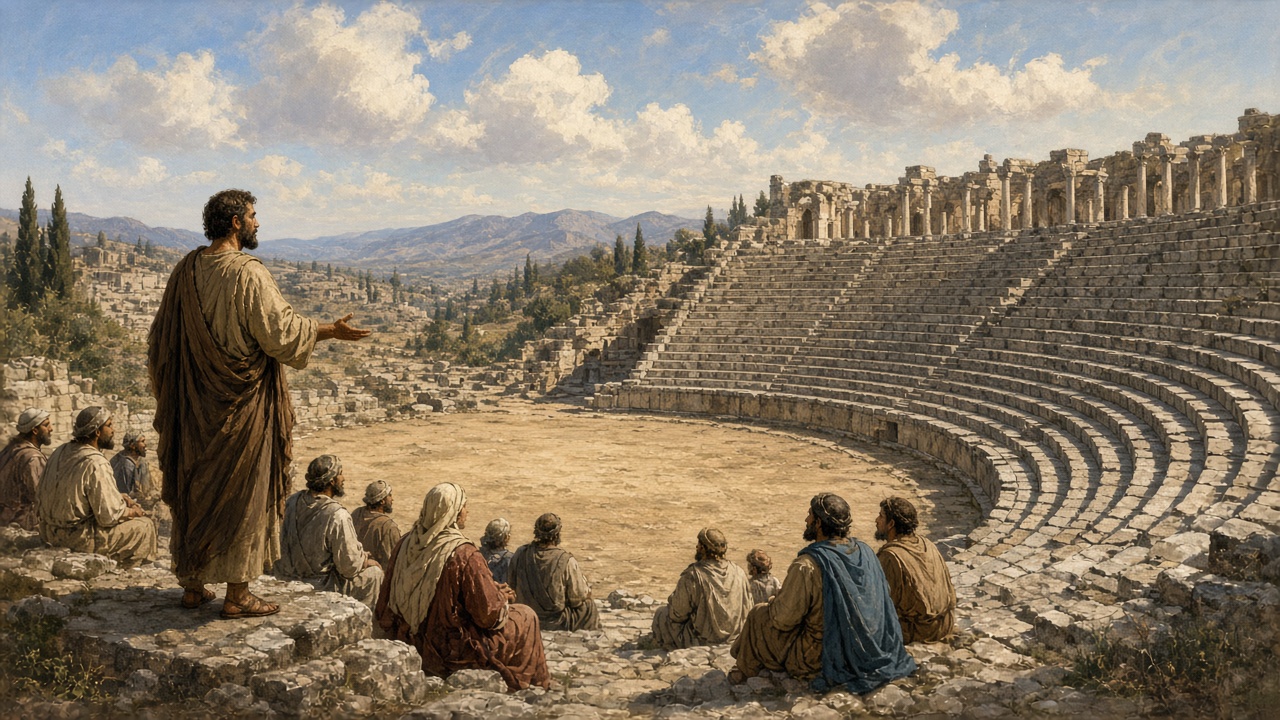
- When this chapter asks what was gained by fighting wild beasts in Ephesus, it names a city that Easton's Bible Dictionary calls the capital of proconsular Asia, known for an open-air theatre—the largest in the world, able to hold 50,000 spectators—where fights of wild beasts and of men with beasts were staged.Sources: Ephesus · the Bible text itself
- Easton's Bible Dictionary explains that Adam, a Babylonian word meaning red and the ordinary name for man in Hebrew and Assyrian, was the first man, formed from the dust of the earth, which is why he received that name. This chapter takes up that picture: death came through a man, the first man was of the dust, and the last Adam is a life-giving spirit.Sources: Adam · the Bible text itself
- Easton's Bible Dictionary (1897) identifies the James to whom Christ appeared after the resurrection, as this chapter records, as the brother or near kinsman of Jesus, also called James the Less, and says that he later headed the church in Jerusalem.Sources: James (Brother of Jesus) · the Bible text itself
Notes written with AI assistance from open sources (Theographic Bible Metadata, CC BY-SA 4.0; Easton’s Bible Dictionary, public domain) and reviewed before publishing.
Places in this chapter
- Ephesus · 37.939, 27.341 · verse 32
Only places identified with high confidence are shown (90% or more according to the scholarly sources compiled by OpenBible). Period map: DARE (Digital Atlas of the Roman Empire), CC BY 4.0; modern map: © OpenStreetMap contributors; places: OpenBible.info (CC BY 4.0).
Credits and license for this translation
Tẹsitamenti Ikne n'Ọnu Ikwere
New Testament in Ikwere
copyright © 2010 Wycliffe
Language: Ikwere
Translation by: Wycliffe
Ikwerre – (ikw) Nigeria
The Iwerre language of Nigeria can also be spelled Ikwere and Ikwerri. This language is spoken primarily by the Ikwerre people who live in the Rivers State of Nigeria and is one of the many ethnic groups in the Niger Delta. There were more than 23,000 speakers of this language in 1973. There is also a considerable local interest in literacy and grammar.
Copyright Information
© 2010, The Nigeria Bible Translation Trust. All rights reserved.
This translation text is made available to you under the
terms of the Creative Commons License: Attribution-Noncommercial-No Derivative Works.
( http://creativecommons.org/licenses/by-nc-nd/3.0/ )
In addition, you have permission to port the text to different file formats, as long as you
do not change any of the text or punctuation of the Bible.
You may share, copy, distribute, transmit, and extract portions
or quotations from this work, provided that you include the above copyright
information:
You must give Attribution to the work.
You do not sell this work for a profit.
You do not make any derivative works that change any of the actual words or punctuation of the Scriptures.
Permissions beyond the scope of this license may be
available if you contact
us with your request.
Printed book ISBN 9789789076369
New
The New Testament
in Ikwere
© 2010, The Nigeria Bible Translation Trust. All rights reserved.
This translation is made available to you under the terms of the
Creative Commons Attribution-Noncommercial-No Derivatives license 4.0.
You may share and redistribute this Bible translation or extracts from it in any format, provided that:
You include the above copyright and source information.
You do not sell this work for a profit.
You do not change any of the words or punctuation of the Scriptures.
Pictures included with Scriptures and other documents on this site are licensed just for use with those Scriptures and documents.
For other uses, please contact the respective copyright owners.
2019-08-09
Source: http://ebible.org/ikwNT/ · eBible.org