Revelation 7
Elu Ọhụn: Ẹkụkwọ-Nsọ (Azụụn Ọhụn rịn'a) · Tap a verse to see its cross-references.
Madụ Nnụ Ọgụn-mmẹsatọ Hụ
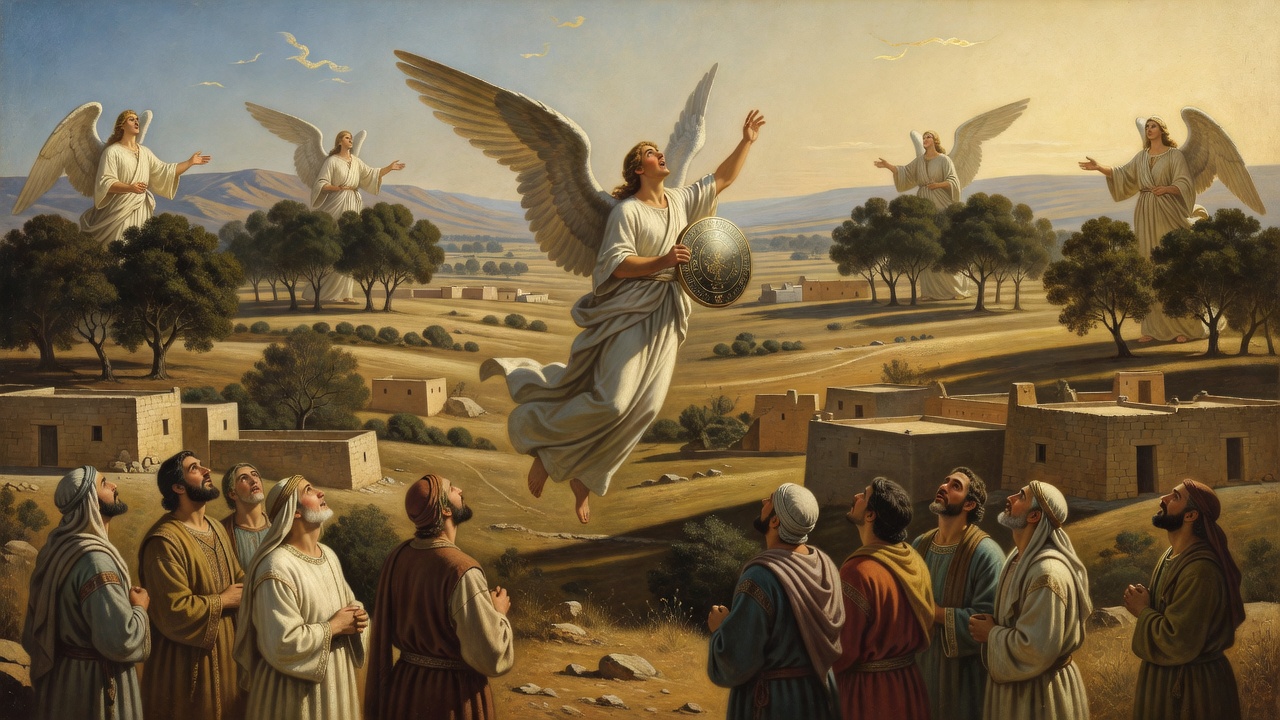
1Ọnwan e mẹgụụ, m nọ hụn mmọn-ozi ẹnọ kẹ wẹ turusọnmẹ ẹbamịn ẹnọ ụwa. Wẹ turusọnmẹ ebẹhụ e gbọndọn ufere ẹnọ hụn e fe imẹ ụwa, amamgbe ufere e fezi ụwa mọbụ ohimin mọbụ osisi ọwụlẹ. 2Ya m nọ hụn mmọn-ozi ọzọ k'ọ gha azụụn ọwụwa-ẹnya-anwụn pụha, shikọ elu; o gi ihiẹn Osolobuẹ rị ndụn gi e ye ahịma. Ọ nọ gi okẹn olu gwa mmọn-ozi ẹnọ hụ wẹ ye ikẹn nị wẹ gi wiwi ụwa lẹ ohimin oku, 3sị wẹ, “Ekewiwilẹ ni ụwa mọbụ ohimin mọbụ osisi ọwụlẹ; cheri ni nị ẹnyi yegụụ ndị idibo Osolobuẹ ẹnyi ahịma ezimezi-ihun wẹ.” 4M nọ nwan nụ madụ ole wẹ ye ahịma ahụn. Madụ nnụ ọgụn-mmẹsatọ kẹ wẹ ye ahịma hụ imẹ ikpun-ụlọ ile rị Izrẹlụ:
5nnụ iri-kwasị-ọgụn wụ ndị ikpun-ụlọ Juda;
nnụ iri-kwasị-ọgụn wụ ndị ikpun-ụlọ Rubẹni;
nnụ iri-kwasị-ọgụn wụ ndị ikpun-ụlọ Gadị;
6nnụ iri-kwasị-ọgụn wụ ndị ikpun-ụlọ Asha;
nnụ iri-kwasị-ọgụn wụ ndị ikpun-ụlọ Naf'talị;
nnụ iri-kwasị-ọgụn wụ ndị ikpun-ụlọ Manasẹ;
7nnụ iri-kwasị-ọgụn wụ ndị ikpun-ụlọ Simiọnụ;
nnụ iri-kwasị-ọgụn wụ ndị ikpun-ụlọ Livaị;
nnụ iri-kwasị-ọgụn wụ ndị ikpun-ụlọ Ịsaka;
8nnụ iri-kwasị-ọgụn wụ ndị ikpun-ụlọ Zẹbulọnụ;
nnụ iri-kwasị-ọgụn wụ ndị ikpun-ụlọ Josẹfụ;
nnụ iri-kwasị-ọgụn wụ ndị ikpun-ụlọ Bẹnjamini.
Igunrun Ịhịan Gha Alị Ile Rị Ichẹn-ichẹn Pụha
9Ọnwan e mẹgụụ, m nọ lee ẹnya, hụn igunrun hi-ogbe, hụn o mẹ ni o nwọnni onyẹ saẹka gụn wẹ. Wẹ gha alị ile, ebọn ile, ndị ile, lẹ asụsụ ile pụha. Igunrunni turu ihun ukpo-eze hụ lẹ ihun Nwa-ebulu hụ. Wẹ yisọnmẹ ẹwuru ọchan tueru anị. Onyẹ-onyẹ imẹ wẹ gisọnmẹ iguru ẹka. 10Wẹ hụ e gi okẹn olu e yi oro, a sị,
“Nzụọfụha gha ẹka Chuku ẹnyi
hụn nọdị enu ukpo-eze
lẹ Nwa-ebulu hụ a bịa”
11Ndị mmọn-ozi ile turusọnmẹ ebẹhụ, fihunmẹ ukpo hụ lẹ ndị-isi hụ lẹ ihiẹn ẹnọ hụ rị ndụn; wẹ nọ dan alị ihun ukpo hụ, ke isi alị, fe Osolobuẹ, 12a bụ ẹbụnị:
“Isẹẹ!
Ịja-mma lẹ ọghọ
lẹ amamihiẹn lẹ ekele
lẹ mgbaye lẹ ikẹn lẹ akwanran
wụ nke Chuku ẹnyi
jẹnrin ejẹn! Isẹẹ!”
13Ya onyẹ ohu imẹ ndị-isi hụ nọ sị m, “Elee ndị wụ ndịnị yi ẹkwa ọchan tueru alị? Elebe kẹ wẹ gha bịa?” 14M nọ sị a, “Di-ọkpa, ịyụ marịn ndị wẹ wụ.” Ya ọ nọ sị m, “Ndịnị wụ ndị hụn gha okẹn ukpokpo hụ pụha. E gigụọ wẹ ẹdeke Nwa-ebulu hụ sụ ẹwuru wẹ, ẹwuru wẹ e hẹnrinsọnmẹ nke ọchan. 15Ya haịn wẹ gi nwan rị ihun ukpo Osolobuẹ e fe ẹ uhinhin lẹ efinnaị imẹ Ụlọ-nsọ a. Osolobuẹ, Onyẹ hụn nọdị anị elu ukpo-eze, k'a nọyeni wẹ, chedọn wẹ. 16Ẹgụn ihiẹn-oriri lẹ ihiẹn-ọrịra agụnkọzị wẹ. Anwụn mọbụ ihiẹn ọwụlẹ a hụn ọkụn amakọzị wẹ. 17Makẹni Nwa-ebulu hụ hụn rị etintinnaị ebẹhụ ukpo hụ rị k'a wụrụ onyẹ-ndu wẹ; o k'e du wẹ nọkẹ onyẹ e du anụ, shi isi-mirin ndị hụ mirin e ye ndụn gha a bịa. Chuku jẹnkọ d'e finchanpụ ẹnya mirin ọwụlẹ rị wẹ ẹnya.”
Did you know?
The sealed tribes and the great multitude
- Revelation 7 numbers the sealed as 144,000, twelve thousand from each of the tribes of Israel named in the chapter. Israel was another name for Jacob, the second-born of the twin sons of Isaac and Rebekah; Easton's Bible Dictionary (1897) explains Jacob's name as someone who follows on another's heels, or a supplanter.Sources: the Bible text itself · Jacob (Israel)
- Although Reuben was the eldest son of Jacob and Leah, the list of the sealed begins with Judah and then names Reuben. The list also includes both Joseph and Manasseh; Manasseh was Joseph's elder son, and Jacob adopted him and his brother Ephraim as his own sons.Sources: the Bible text itself · Reuben · Manasseh (son of Joseph)
- After the sealing, the vision shows a multitude too large to count, from every nation, tribe, people, and tongue, standing before the throne and the Lamb, wearing white robes and holding palm branches. One of the elders says they have come out of the great tribulation and have washed their robes and made them white in the blood of the Lamb.Sources: the Bible text itself
Notes written with AI assistance from open sources (Theographic Bible Metadata, CC BY-SA 4.0; Easton’s Bible Dictionary, public domain) and reviewed before publishing.
Credits and license for this translation
Elu Ọhụn: Ẹkụkwọ-Nsọ (Azụụn Ọhụn rịn'a)
Revision of New Testament in Ika
copyright © 2010 Wycliffe
Language: Ika
Translation by: Wycliffe
Ika (ikk) Nigeria
In Nigeria the word Ika is not only the name of the Ika
people, but is also used to designate a local government area in the Akwa Ibom
State. The Ika people are a sub group of the Igbo people. It is interesting to note
that Ika is the name of a town in Croatia is one of the eight Annang local
government areas of the local government areas in Akwa Ibom State. An alternative
name for the Ika people is Ika-Annang. There appears to be another dialect of Ika
that is spoken in Delta State of Nigeria.
Copyright Information
© 2010, Wycliffe. All rights reserved.
This translation text is made available to you under the terms of the Creative
Commons License: Attribution-Noncommercial-No Derivative Works. ( http://creativecommons.org/licenses/by-nc-nd/3.0/ ) In addition, you have
permission to port the text to different file formats, as long as you do not change
any of the text or punctuation of the Bible.
You may share, copy, distribute, transmit, and extract portions or quotations from
this work, provided that you include the above copyright information:
You must give Attribution to the work.
You do not sell this work for a profit.
You do not make any derivative works that change any of the actual words or
punctuation of the Scriptures.
Permissions beyond the scope of this license may be available if you contact us
with your request.
Printed book ISBN 9789789037056
Revision
The New Testament
in Ika
© 2010, Wycliffe. All rights
reserved.
This translation is made available to you under the terms of the
Creative Commons Attribution-Noncommercial-No Derivatives license 4.0.
You may share and redistribute this Bible translation or extracts from it in any format, provided that:
You include the above copyright and source information.
You do not sell this work for a profit.
You do not change any of the words or punctuation of the Scriptures.
Pictures included with Scriptures and other documents on this site are licensed just for use with those Scriptures and documents.
For other uses, please contact the respective copyright owners.
2019-08-09
Source: http://ebible.org/ikkNT/ · eBible.org