Revelation 11
Elu Ọhụn: Ẹkụkwọ-Nsọ (Azụụn Ọhụn rịn'a) · Tap a verse to see its cross-references.
Ndị Ọshẹri Ẹbụọ Hụ
1Ya wẹ nọ ye m mkpịnsịn wẹ gi a ma ihiẹn. Mkpịnsịn hụ nọ kẹ ọkpọ. Wẹ nọ sị m, “Bịa d'a ma Ụnọ-nsọ Osolobuẹ lẹ ukpo nchụ-ẹjan, y'a gụnzịkwọ ndị hụn rị ebẹhụ e fe ofufe. 2Ka amalẹ ihun-ezi Ụlọ-nsọ, hapụ ọhụn—makẹni e wegụọ w'a ye ndị alị ndị ọzọ rị ichẹn-ichẹn. Wẹ k'a zọ obodo nsọ hụ ụkụ ọrọgbọ ifọn ẹbụọ kwasị ọgụnnaị.”
3“M k'e ye ndị-ọshẹri m ẹbụọ ikẹn bu-amụma, ku oku-Chuku, ọrọgbọ akpụ-ụhụọhịn ọgụn ẹtọ kwasị nnụ ẹtọ (ọgụn mmẹtọ kwasị nnụ-uku), wẹ k'e yisọnmẹ ẹkwa ahịọ.” 4Ndị ọshẹrini wụ osisi olivu ẹbụọ lẹ obu-ukpẹ ẹbụọ hụ rị ihun Onyẹ-nwọn-ụwa-ile. 5Omẹni ịhịan chọ n'ọ mẹ wẹ ihiẹn ọwụlẹ, ọkụn a gha wẹ ọnụ pụha, dụngbu ndị iṅẹnrẹn wẹ ahụn chọ nị wẹ mẹ wẹ ihiẹn; ẹrịra kẹ onyẹ ọwụlẹ chọ n'o mẹ wẹ ihiẹn ọwụlẹ k'a dọn nwụn. 6Wẹ nwọn ikẹn wẹ gi a kpọkin enu-igwere amamgbe mirin e zue ogẹn hụ ile wẹ gi e bu amụma, e ku oku Chuku. Wẹ nwọnzikwọ ikẹn wẹ gi e mẹ mirin e hẹnrin ẹdeke—kẹ mirin rị iyi kẹ hụn rị ohimin, wẹ nwọnzikwọ ikẹn wẹ e gi mẹ ụdị eje-nsọngbu lẹ afụnfụn ọwụlẹ bịanị ụwa ogẹn ọwụlẹ wẹ chọ.
7Wẹ shịagụụ ẹri wẹ, eje-anụ hụ hụn k'a gha eje-mgbugbu hụ migbu enwẹn ẹ pụha k'a lụsọn wẹ agha, mẹri wẹ, gbu wẹ. 8Ozun wẹ k'a rị ụzọ ụwaya kanị rị obodo uku hụ wẹ gi ẹnya imẹ mmọn a kpọ Sọdọmụ lẹ Ijiptu, obodo ohu hụ wẹ nọ kpọgbu Di-nwọnni-wẹ. 9Ọrọgbọ akp'ọhịn ẹtọ lẹ mkpikpi, ndị rị ichẹn-ichẹn lẹ ndị ebọn lẹ asụsụ lẹ alị rịsọnmẹ elu ụwa k'a gba ozun wẹ ilee; anịkọ wẹ onyẹ ọwụlẹ li wẹ. 10Ndị bi ụwa k'a rị a ghọghọ nị madụ ẹbụọ hụ a nwụnhụn, e mẹ mmẹmmẹ, e yetarị ibe wẹ ihiẹn—makẹni ndị-amụma ẹbụọnị te bu afụnfụn tọnị ndị ile rị elu-ụwa.
11Kanị, ogẹn o gi mẹfụ akp'ọhịn ẹtọ lẹ mkpikpi, ufere hụn e ye ndụn nọ gha ebe Osolobuẹ rị bịa, banye imẹ wẹ, wẹ nọ turu ọtọ—okẹn egun nọ bịa ndị hụnnị wẹ. 12Ya wẹ nọ nụ okẹn olu gha elu-igwee sị wẹ, “Bịa nị elu ebeni!” Ya wẹ nọ gi orukpu shi enu-igwee, id'ẹnya ndị-iṅẹnrẹn wẹ rị e lee wẹ ile. 13Ozigbo, alị nọ mahihie ọda-ọda, azụụn ohu imẹ obodo hụ nọ tikpọ, ọ họdụ azụụn itenẹi. Alị hụ mahihieni gbu madụ ọgụn-iri kwasị nnụ-mmẹsa (madụ nnụ-uku ẹsa). Egun nọ tụkẹnmẹ ndị họdụnị, wẹ nọ kweri nị Osolobuẹ hụn rị elu-igwee e hikẹ ogbe.
14Nsọngbu nke ẹbụọ a ghafegụọ, lee ẹ, nke ẹtọ lala ẹgwa.
Opi Nke Ẹsa
15Ya mmọn-ozi nke ẹsa nọ gbu opi ẹ, m nọ nụ okẹn olu rịsọnmẹ elu-igwee, a sị,
“Alị-eze ụwa a wụrụọlẹ nke Di-nwọnni-ẹnyi
lẹ nke Kraịstị a hụn o tumẹ;
o k'a kị jẹnrin ejẹn!”
16Ya kẹ ndị-isi ẹnọ kwasị ọgụn hụ hụn nọdịsọnmẹ ukpo wẹ ihun Osolobuẹ nọ dan anị, keni Osolobuẹ isi-alị, fe ẹ, 17a bụ ẹbụnị:
“Ẹnyi rị e ye i ekele,
Chuku Nna,
hụn nwọn ikẹn o gi e mẹ ihiẹn ile,
onyẹ hụn rị kikẹnni, hụn rịzịkwọ mbụ.
Makẹni y'e gigụọ ikẹn i hi-ogbe kịma.
18Ndị alị ile e te bughọ olulu;
kanị iwe-lẹ-ọnụma ị
a bịaọlẹ nwan.
Ogẹn y'e gi kin ndị nwụnnị ikpe
e rugụọ.
Ogẹn hụn y'e gi kụ ndị-idibo i ụgwọ,
e rugụọ nwan—
ndị idibo i ndị-amụma—
uwẹ lẹ ndị-nsọ
lẹ ndị a tụ egun i—
kẹ ndị uku kẹ ndị nta.
Ogẹn y'e gi tikpọ ndị hụn e tikpọ ụwa
e rugụọzị!”
19Ya wẹ nọ gụnpụ Ụlọ-nsọ imẹ enu-igwee, wẹ nọ hụn Ẹkpẹti-nkwerigbama Osolobuẹ imẹ ebẹhụ. Amụma elu-igwee nọ besọnmẹ, mirin nọ dẹnsọnmẹ, akpabọ nọ hansọnmẹ; alị nọ mahihie, ẹkwan igwere nọ dan ọda-ọda.
Did you know?
The Two Witnesses and the Great City
- Revelation 11 says that the bodies of the two witnesses will lie in the street of the great city, figuratively called Sodom and Egypt, where their Lord was also crucified. A dictionary entry explains Sodom as Burning, or the walled, a city destroyed by fire from heaven because of its inhabitants' wickedness, a destruction that Scripture frequently recalls. Egypt, the land of the Nile and the pyramids, is likewise described as holding great significance in Scripture.Sources: the Bible text itself
- The two witnesses are empowered to prophesy for 1,260 days, clothed in sackcloth. They are the two olive trees and the two lampstands that stand before the Lord of the earth, and they have power to shut the sky so that no rain falls, to turn the waters into blood, and to strike the earth with every kind of plague.Sources: the Bible text itself
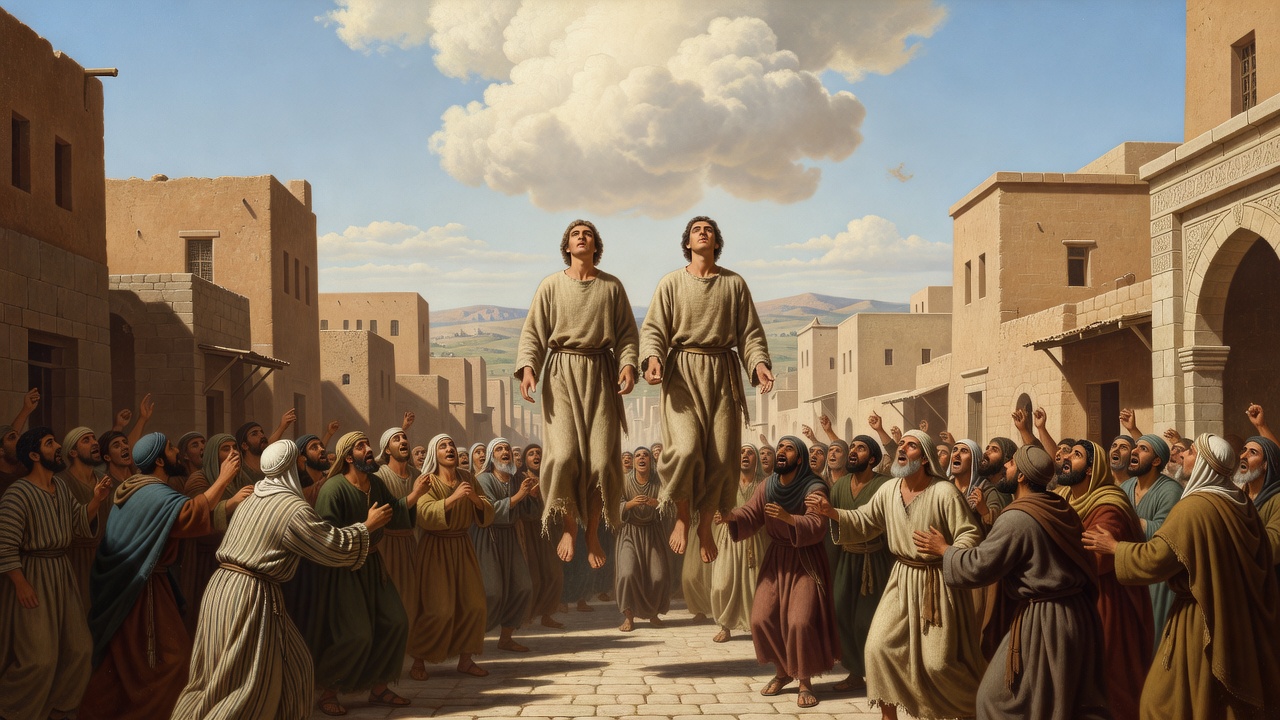
- When the two witnesses finish their testimony, the beast that comes up from the Abyss overpowers and kills them. For three and a half days, peoples, tribes, tongues, and nations view their bodies and will not permit them to be laid in a tomb, while the earth's inhabitants gloat over them, celebrate, and send one another gifts, because the two prophets had tormented them. After that, the breath of life from God enters them; they stand on their feet and go up to heaven in a cloud as their enemies watch.Sources: the Bible text itself
Notes written with AI assistance from open sources (Theographic Bible Metadata, CC BY-SA 4.0; Easton’s Bible Dictionary, public domain) and reviewed before publishing.
Places in this chapter
Only places identified with high confidence are shown (90% or more according to the scholarly sources compiled by OpenBible). Period map: DARE (Digital Atlas of the Roman Empire), CC BY 4.0; modern map: © OpenStreetMap contributors; places: OpenBible.info (CC BY 4.0).
Credits and license for this translation
Elu Ọhụn: Ẹkụkwọ-Nsọ (Azụụn Ọhụn rịn'a)
Revision of New Testament in Ika
copyright © 2010 Wycliffe
Language: Ika
Translation by: Wycliffe
Ika (ikk) Nigeria
In Nigeria the word Ika is not only the name of the Ika
people, but is also used to designate a local government area in the Akwa Ibom
State. The Ika people are a sub group of the Igbo people. It is interesting to note
that Ika is the name of a town in Croatia is one of the eight Annang local
government areas of the local government areas in Akwa Ibom State. An alternative
name for the Ika people is Ika-Annang. There appears to be another dialect of Ika
that is spoken in Delta State of Nigeria.
Copyright Information
© 2010, Wycliffe. All rights reserved.
This translation text is made available to you under the terms of the Creative
Commons License: Attribution-Noncommercial-No Derivative Works. ( http://creativecommons.org/licenses/by-nc-nd/3.0/ ) In addition, you have
permission to port the text to different file formats, as long as you do not change
any of the text or punctuation of the Bible.
You may share, copy, distribute, transmit, and extract portions or quotations from
this work, provided that you include the above copyright information:
You must give Attribution to the work.
You do not sell this work for a profit.
You do not make any derivative works that change any of the actual words or
punctuation of the Scriptures.
Permissions beyond the scope of this license may be available if you contact us
with your request.
Printed book ISBN 9789789037056
Revision
The New Testament
in Ika
© 2010, Wycliffe. All rights
reserved.
This translation is made available to you under the terms of the
Creative Commons Attribution-Noncommercial-No Derivatives license 4.0.
You may share and redistribute this Bible translation or extracts from it in any format, provided that:
You include the above copyright and source information.
You do not sell this work for a profit.
You do not change any of the words or punctuation of the Scriptures.
Pictures included with Scriptures and other documents on this site are licensed just for use with those Scriptures and documents.
For other uses, please contact the respective copyright owners.
2019-08-09
Source: http://ebible.org/ikkNT/ · eBible.org