Acts 12
Elu Ọhụn: Ẹkụkwọ-Nsọ (Azụụn Ọhụn rịn'a) · Tap a verse to see its cross-references.
Hẹrọdụ E Kpokpo Jemisi Lẹ Pita
1Ogẹn hụ, Hẹrọdụ wụ eze nọ nwụnrụn ndị hụ imẹ ndị ụka, kẹn'o mẹ wẹ eje-ihiẹn.
2O gigụụ ọpịa-agha gbu Jemisi nwẹnẹ Jọnụ, 3ọ nọ hụn nị ihiẹnni sụọ ndị Ju ụsụọ, ọ nọ nwan nwụnrụn Pita. (Ihiẹnni mẹ ogẹn Mmẹmmẹ Brẹdi nwọnlẹni yisti o gi a fụ.) 4Ogẹn o gi nwụnrụngụụ Pita, ọ nọ bu ẹ che ụlọ-ngan, we ẹ che ẹka itu-agha ẹnọ ndị-agha ẹnọ-ẹnọ rịsọnmẹ. Hẹrọdụ bu obi n'o k'e kin ẹ ikpe id'ẹnya ịhịan ile wẹ mẹgụụ Mmẹmmẹ-Nghafe hụn ya lẹ Mmẹmmẹ Brẹdi nwọnlẹni yisti o gi a fụ wị. 5Ya wẹ nọ bu Pita tọ ụlọ-ngan; kanị ndị-ụka nọ wepụha obi wẹ mẹmẹn'ẹ ekpere, a kpọku Osolobuẹ banyen'ẹ.
Mmọn-ozi E Wepụha Pita Imẹ Ụlọ-ngan
6W'a kpọ a eki kẹ wẹ k'e wepụha Pita, o ru imẹ uhinhin, Pita rị ụran ẹgbata ndị-agha ẹbụọ. Wẹ gi ẹgan ẹbụọ kpọma a; o nwẹzi ndị-agha rị ezi ẹhụ ọnụmụzọ ụnọ-ngan ahụn e che nche.
7Idẹnmizi, mmọn-ozi Di-nwọnni-ẹnyi nọ fopụha ebẹhụ; ukpẹ nọ nwun imẹ mmughẹ hụ wẹ kpọkin ẹ ye imẹ ụlọ-ngan. Mmọn-ozi hụ nọ kpa Pita ẹka ẹkụnkụn, kpọtiẹn ẹ, sị, “Lihi ọtọ ozigbo!” Ya ẹgan ndị hụ nọ gha a olu-ẹka danfụ. 8Mmọn-ozi hụ nọ sị Pita, “Kẹnmẹ akpụkpọ-ukun i, y'e yiri akp'ụkụ ị.” Pita nọ mẹ ihiẹn o ku. Ọ nọzị sị Pita, “Yiri ẹkwa y'e yiye ẹ elu ẹ, y'e sọnmẹ m.” 9Pita nọ sọn ẹ gha imẹ ụlọ-ngan pụ. Pita amarịn nị ihiẹn wẹ rị e gi mmọn-ozi ahụn e mẹ wụ ẹnya-uke, o ro n'ọ rị a hụn ọhụn. 10A ghafegụụ wẹ itu ibuzọ lẹ nke ẹbụọ rị e che nche, wẹ nọ fụha ọnụ-mgbọn igwe hụn wẹ gha a pụha imẹ ngan hụ, banye imẹ obodo. Ya kẹ ọnụ-mgbọn hụ nọ gi ẹka a gụnpụnị wẹ, wẹ nọ pụ, pụha ogele ohu. E jẹnzụkazị wẹ, idẹnmizi mmọn-ozi hụ nọ na Pita tọ.
11Ya ẹnya nọ fọn Pita, ọ nọ sị, “O wegụọ m nwan ẹnya nị Di-nwọnni-ẹnyi zi mmọn-ozi ẹ d'a zụọpụha m ẹka Hẹrọdụ lẹ ihiẹn ile ndị Ju te rị a tụ ẹnya a.”
12Hụn o gihụ ghọta ihiẹn mẹni, ọ nọ si iwe Meri, nnẹ Jọnụ, ebe ndị bu ọda gbakikomẹ e mẹ ekpere. Ẹfan Jọnụ wụzị Makị. 13Ogẹn o gi dụ ẹka ọnụ-mgbọn rị ezi, odibo ohu wụ okpoho hụn w'a kpọ Roda nọ pụha d'a za. 14Ogẹn o gi ghọta nị olu Pita rọ, okẹn ịghọghọ nọ jun ẹ obi, nke wụnị hụn o k'e gi gụnpụ ọnụ-mgbọn hụ, ọ gbabanzị imẹ ụlọ d'a gwa wẹ nị Pita turu ọnụ-mgbọn. 15Wẹ nọ sị a, “Ẹra rị a pụ ị!” Kanị ọ hụkwọ e ku ẹ nị ezioku rọ. Wẹ nọ sị, “Mmọn-ozi ẹ rọ.” 16Kanị Pita hụkwọ a dụ ẹka. Ogẹn wẹ gi nwan gụnpụ ọnụ-mgbọn, a hụn w'a, ọ nọ tụ wẹ ẹnya. 17Ọ nọ gi ẹka sị wẹ gba nkịntịn, ọ nọ kọwa nị wẹ kẹ Di-nwọnni-ẹnyi dọn wepụha a imẹ ụlọ-ngan. Ọ nọzị sị, “Gwa nị Jemisi lẹ ndị ụka họdụnị ihiẹnni.” Ya kẹ ọ nọ pụ, si ụzọ ọzọ.
18Ogẹn eki gi fọn, okẹn isusu nọ rị imẹ igunrun ndị-agha te rị e che Pita nche makẹ ihiẹn mẹni, wẹ gilẹni marịn k'o jẹn.
19Ogẹn Hẹrọdụ gi chọgụụ a, ọ hụnn'a; ọ nọ jụkẹnmẹ ndị nche hụ ọnụ—ọ nọ sị wẹ gbu wẹ. Ya ọ nọ gha Judia pụ, si Sizarịa d'a nọdị.
Ọnwụn Hẹrọdụ
20Ogẹn hụ, Hẹrọdụ rị e bu ni ndị Taya lẹ Sidọnụ olulu. Ya wẹ nọ zugbama d'a hụn a. E bugụụ wẹ ụzọ jẹn d'a hụn Blastọsị hụn e lefụ ọgwa Hẹrọdụ ẹnya, kẹni o kweri yeni wẹ ẹka. Ya wẹ nọ nwan jẹn d'e kunrun Hẹrọdụ d'a rịọ a nị ya lẹ wẹ dọn—makẹni anị Hẹrọdụ rị a kị kẹ alị wẹ gha e nwẹhẹn ihiẹn-oriri.
21Ụhụọhịn wẹ kaye e ru, Hẹrọdụ nọ yiri ẹwuru-nze ẹ, nọdị alị ukpo ẹ, gwama ndị hụ oku. 22Ndị ahụn hụ e yi oro, a sị, “Oluni wụ olu mmọn, ẹlẹ olu ịhịan-mmaka!” 23Ozigbo, mmọn-ozi Osolobuẹ nọ titu Hẹrọdụ, makẹni ọ narịn ọjịja-mma hụ hụn nkẹ o gi we ẹ ye Osolobuẹ. Ọhọrị nọ bu ẹ ri, ọ nọ nwụnhụn.
24Kanị oku Osolobuẹ hụ a gha ihun, ndị bu-ọda hụ e kweri.
Banabasị Lẹ Sọlụ E Kinhẹn Antịọkụ
25Ogẹn Banabasị lẹ Sọlụ gi rụngụụ ihiẹn ahụn wẹ bịa Jerusalẹm d'a rụn, wẹ nọ gha Jerusalẹm kinhẹn Antịọkụ. Ogẹn hụ wẹ gi kinkọ, wẹ nọ weri Jọnụ hụn w'a kpọzị Makị.
Did you know?
Peter's escape and Herod's death
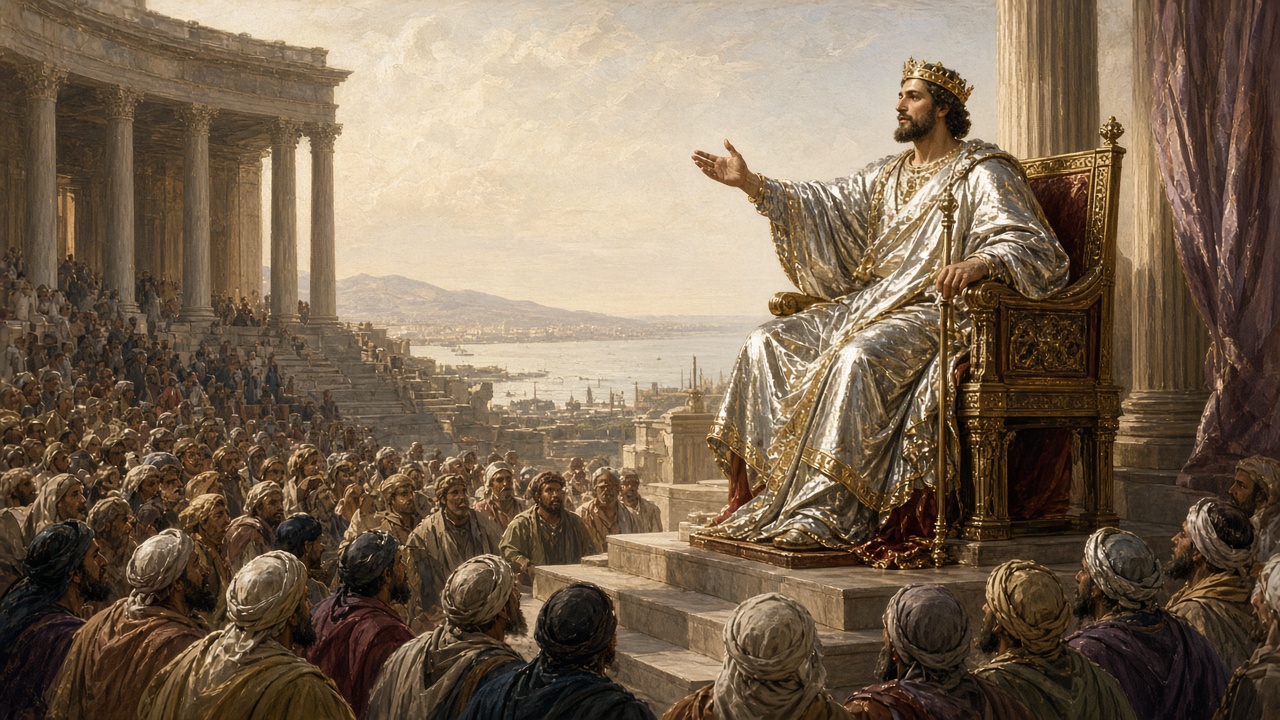
- The King Herod of this chapter is Herod Agrippa I, grandson of Herod the Great, who in time held his grandfather's entire kingdom and the title of king. He put James to death and imprisoned Peter. Easton's Bible Dictionary (1897) says that on the second day of a festival honoring the emperor Claudius, Agrippa appeared in the great theatre at Caesarea wearing magnificent silver robes; it was early in the day, and the sun's rays dazzled those who saw him.Sources: Herod Agrippa I · the Bible text itself
- The James killed with the sword was James the son of Zebedee, brother of the apostle John, a fisherman who had worked in partnership with Peter. Easton's Bible Dictionary (1897) calls him the first of the apostles to be put to death and says that Herod Agrippa had him beheaded. The James whom Peter tells the believers to notify is another man: the same dictionary identifies him as the James who headed the church in Jerusalem.Sources: James (Son of Zebedee) · James (Brother of Jesus) · the Bible text itself
- Once he knew he was free, Peter went to the house of Mary, mother of John Mark, in Jerusalem, which Easton's Bible Dictionary (1897) calls a common meeting place of the disciples; many people were gathered there praying. The servant who came to the outer gate was Rhoda, a name that means a rose; overjoyed at his voice, she ran inside to announce him and forgot to open the gate. John, also called Mark, was Mary's son—Mark, his Roman name, gradually replaced the Jewish name John—and he later left Jerusalem with Barnabas and Saul.Sources: Mary (Mother of John Mark) · Rhoda · John Mark · the Bible text itself
Notes written with AI assistance from open sources (Theographic Bible Metadata, CC BY-SA 4.0; Easton’s Bible Dictionary, public domain) and reviewed before publishing.
Places in this chapter
- Caesarea · Today: Caesarea Maritima · 32.500, 34.892 · verse 19
- Judea · Today: Judea 1 · 31.777, 35.234 · verse 19
- Sidon · Today: Sandikli archaeological site in Sidon · 33.561, 35.372 · verse 20
- Tyre · 33.271, 35.196 · verse 20
- Jerusalem · 31.777, 35.234 · verse 25
Only places identified with high confidence are shown (90% or more according to the scholarly sources compiled by OpenBible). Period map: DARE (Digital Atlas of the Roman Empire), CC BY 4.0; modern map: © OpenStreetMap contributors; places: OpenBible.info (CC BY 4.0).
Credits and license for this translation
Elu Ọhụn: Ẹkụkwọ-Nsọ (Azụụn Ọhụn rịn'a)
Revision of New Testament in Ika
copyright © 2010 Wycliffe
Language: Ika
Translation by: Wycliffe
Ika (ikk) Nigeria
In Nigeria the word Ika is not only the name of the Ika
people, but is also used to designate a local government area in the Akwa Ibom
State. The Ika people are a sub group of the Igbo people. It is interesting to note
that Ika is the name of a town in Croatia is one of the eight Annang local
government areas of the local government areas in Akwa Ibom State. An alternative
name for the Ika people is Ika-Annang. There appears to be another dialect of Ika
that is spoken in Delta State of Nigeria.
Copyright Information
© 2010, Wycliffe. All rights reserved.
This translation text is made available to you under the terms of the Creative
Commons License: Attribution-Noncommercial-No Derivative Works. ( http://creativecommons.org/licenses/by-nc-nd/3.0/ ) In addition, you have
permission to port the text to different file formats, as long as you do not change
any of the text or punctuation of the Bible.
You may share, copy, distribute, transmit, and extract portions or quotations from
this work, provided that you include the above copyright information:
You must give Attribution to the work.
You do not sell this work for a profit.
You do not make any derivative works that change any of the actual words or
punctuation of the Scriptures.
Permissions beyond the scope of this license may be available if you contact us
with your request.
Printed book ISBN 9789789037056
Revision
The New Testament
in Ika
© 2010, Wycliffe. All rights
reserved.
This translation is made available to you under the terms of the
Creative Commons Attribution-Noncommercial-No Derivatives license 4.0.
You may share and redistribute this Bible translation or extracts from it in any format, provided that:
You include the above copyright and source information.
You do not sell this work for a profit.
You do not change any of the words or punctuation of the Scriptures.
Pictures included with Scriptures and other documents on this site are licensed just for use with those Scriptures and documents.
For other uses, please contact the respective copyright owners.
2019-08-09
Source: http://ebible.org/ikkNT/ · eBible.org