Zephaniah 1
Biblica® Baịbụlụ Nsọ nʼIgbo Ndị Ugbu a nke dịrị onye ọbụla ịgụ · Tap a verse to see its cross-references.
About this book
About Zephaniah
- Easton's Bible Dictionary (1897) presents Zephaniah, whose name it explains as "Jehovah has concealed" or "Jehovah of darkness," as the son of Cushi and great-grandson of Hezekiah, and as the ninth of the minor prophets. It dates his prophecy to the reign of Josiah, king of Judah (641–610 B.C.), and says he was contemporary with Jeremiah, with whom he had much in common.Sources: Easton: Zephaniah · Zephaniah · Cushi
- Amon, Josiah's father, restored idolatry in Judah, and Easton reads Zephaniah 1:4 and 3:4, 11 as referring to that reign. The same dictionary links Zephaniah 1:4–6 with the worship of Baal and Zephaniah 1:5 with Malcham, described as the national idol of the Ammonites. Josiah, who came to the throne at eight, is presented as later acting against the idolatry that prevailed.Sources: Amon · Josiah · Baal · Malcham
- Easton's Bible Dictionary outlines the book as an introduction announcing judgment on the world and on Israel because of their transgressions (1:1–6), a description of the judgment (1:7–18), an exhortation to seek God while there is still time (2:1–3), judgment on other peoples (2:4–15), what it calls the hopeless misery of Jerusalem (3:1–7), and a promise of salvation (3:8–20).Sources: Easton: Zephaniah
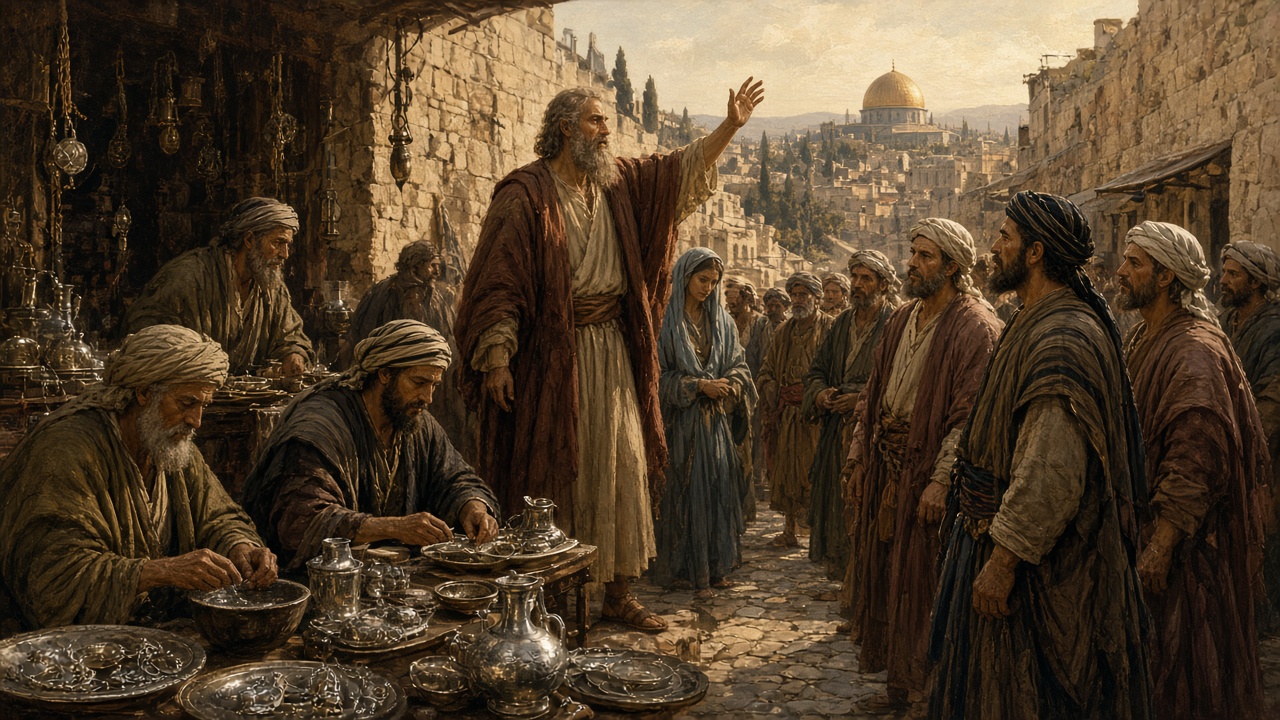
- Zephaniah 1:11 names the Mortar, a place in or near Jerusalem inhabited by silver merchants. It has been conjectured that this was the Phoenician quarter of the city, where traders of that nation lived.Sources: Mortar
Notes written with AI assistance from open sources (Theographic Bible Metadata, CC BY-SA 4.0; Easton’s Bible Dictionary, public domain) and reviewed before publishing.
1Okwu Onyenwe anyị nke rutere Zefanaya, nwa Kushi, nwa nwa Gedaliya, bụ nwa Amaraya. Amaraya bụ nwa Hezekaya. Ozi a bịara nʼoge Josaya nwa Amọn, bụ eze Juda.
Ikpe ọmụma dịrị ụwa niile nʼụbọchị nke Onyenwe anyị
2“Aga m azachapụ ihe niile
site nʼelu ụwa,”
Otu a ka Onyenwe anyị kwubiri.
3“Aga m azachapụ mmadụ na anụmanụ.
Aga m azachapụ ụmụ anụ ufe niile nke dị nʼeluigwe,
zachapụkwa azụ niile nke dị nʼosimiri,
na arụsị niile dị iche iche nke na-eme ka ndị ajọ mmadụ sụọ ngọngọ.”
“Mgbe m kpochapụrụ mmadụ niile
site nʼelu ụwa,”
otu a ka Onyenwe anyị kwubiri.
Ahụhụ dịrị Juda
4“Aga m esetipụ aka m megide Juda,
megidekwa ndị niile bi na Jerusalem.
Aga m ebipụkwa ndị niile na-efe Baal fọdụrụ nʼebe a,
na aha ndị nchụaja arụsị niile, ma ndị nchụaja niile na-ekpere arụsị,
5bụ ndị ahụ niile na-anọ nʼelu ụlọ ha
na-akpọ isiala nye ọnwa na kpakpando,
ha na ndị ahụ niile na-akpọrọ Onyenwe anyị isiala, na-eji aha ya nʼaṅụ iyi,
ma na-ejikwa Milkọm na-aṅụ iyi,
6na ndị ahụ niile na-alaghachi azụ site nʼiso Onyenwe anyị,
na ndị ahụ na-adịghị achọ Onyenwe anyị, maọbụ jụta ase site nʼaka ya.”
7Dere duu nʼihu Onye kachasị ihe niile elu, bụ Onyenwe anyị
nʼihi na ụbọchị ikpe ya ahụ dị egwu na-abịa nso.
Onyenwe anyị ejikerela ịchụ aja;
o doola ndị ọ kpọrọ oriri nsọ.
8“Nʼụbọchị ịchụ aja nke Onyenwe anyị ahụ,
aga m ata ndịisi niile
na ụmụ eze niile,
na ndị niile na-eyi uwe
e si na mba ọzọ bubata ahụhụ.
9Nʼụbọchị ahụ, aga m ata ha ahụhụ
bụ ndị niile na-adịghị azọ ụkwụ nʼọnụ ụzọ mbata,
ndị ji ihe ike na aghụghọ
na-emejupụta ụlọ arụsị ha.
10“Nʼụbọchị ahụ,”
otu a ka Onyenwe anyị kwubiri ya,
“olu iti mkpu akwa ga-esite nʼỌnụ Ụzọ Ama Azụ daa,
mkpu nke ịkwasi akwa ike ga-ada site nʼebe obibi ọhụrụ ahụ,
na ụzụ oke ntiwa site nʼugwu nta niile.
11Kwasienụ akwa ike unu ndị niile bi nʼakụkụ ebe ahịa dị;
nʼihi na a ga-egbuchapụ ndị ahịa unu niile.
Ndị niile na-eji ọlaọcha azụ ahịa ka a ga-ebibi.
12Nʼoge ahụ, aga m eji oriọna nyobanyechaa anya nʼakụkụ niile nke Jerusalem.
Aga m ata ndị ahụ niile na-anọ nʼahụ dị jụụ ahụhụ,
bụ ndị ahụ dọọrọ dịka ike mmanya a ṅụfọdụrụ aṅụfọ,
ndị na-eche nʼobi ha sị, ‘O nweghị ihe Onyenwe anyị ga-eme anyị,
maọbụ ihe ọma, maọbụ ihe ọjọọ.’
13Akụ ha ga-abụ ihe a kwakọrọ nʼike,
a ga-akwatukwa ụlọ ha niile.
Ọ bụ ezie na ha ga-ewu ụlọ,
ma ha agaghị ebi nʼime ha;
ọ bụ ezie na ha ga-akọ ubi vaịnị,
ma ha agaghị aṅụ mmanya si na ha.”
Ụbọchị ukwu nke Onyenwe anyị
14Oke ụbọchị Onyenwe anyị na-abịa nso,
ọ na-abịakwa ọsịịsọ.
Gee ntị! Iti mkpu akwa nke ụbọchị Onyenwe anyị ga-adị ilu nke ukwuu.
A ga-anụkwa ụzụ ndị bụ dike nʼagha nʼebe ahụ.
15Ụbọchị ahụ ga-abụ ụbọchị ọnụma,
ụbọchị ahụhụ na mkpagbu,
ụbọchị nsogbu na mbibi,
ụbọchị ọchịchịrị na oke obi ọjọọ,
ụbọchị igwe ojii, na oke ọchịchịrị,
16ụbọchị opi ike na iti mkpu agha
imegide obodo niile e wusiri ike,
na imegide akụkụ ụlọ elu niile.
17“Aga m eme ka oke nhụju anya bịakwasị ndị mmadụ,
mee ka ha jegharịa dịka ndị kpuru ìsì,
nʼihi na ha emehiela megide Onyenwe anyị.
A ga-awụsịkwa ọbara ha dịka uzuzu,
tufukwaa anụ ahụ ha dịka nsị anụ.
18Ọlaọcha na ọlaedo ha
agaghị azọpụta ha
nʼụbọchị ọnụma nke Onyenwe anyị ahụ.”
A ga-erechapụ ụwa niile
site nʼọkụ ekworo ya,
nʼihi na ọ bụ na mberede
ka ọ ga-eme ka ndị niile bi nʼụwa gwụsịa.
Did you know?
The Day of the LORD and Judgment on Idolatry
- Zephaniah traces his lineage back four generations to Hezekiah, dating his prophetic ministry to the reign of King Josiah of Judah. Josiah came to power after his father, King Amon, had restored idolatry across Judah before being assassinated by his own servants.Sources: the Bible text itself · Josiah · Amon · Hizkiah
- The chapter denounces religious syncretism in Jerusalem, where people bowed on rooftops to the host of heaven and combined their devotion to the LORD with oaths to Baal and Malcham, the national idol of the Ammonites.Sources: the Bible text itself · Baal · Malcham
- The prophecy specifies landmarks in Jerusalem that would experience turmoil, including the Fish Gate and the Mortar (or Hollow), a district inhabited by merchants who weighed out silver.Sources: the Bible text itself · Fish Gate · Mortar
Notes written with AI assistance from open sources (Theographic Bible Metadata, CC BY-SA 4.0; Easton’s Bible Dictionary, public domain) and reviewed before publishing.
Places in this chapter
- Jerusalem · 31.777, 35.234 · verses 4, 12
- Fish Gate · Today: in Jerusalem · 31.777, 35.234 · verse 10
- Second Quarter · Today: in Jerusalem · 31.777, 35.234 · verse 10
- Canaan · 32.767, 35.333 · verse 11
- Mortar · Today: in Jerusalem · 31.777, 35.234 · verse 11
Only places identified with high confidence are shown (90% or more according to the scholarly sources compiled by OpenBible). Period map: DARE (Digital Atlas of the Roman Empire), CC BY 4.0; modern map: © OpenStreetMap contributors; places: OpenBible.info (CC BY 4.0).
Credits and license for this translation
Biblica® Baịbụlụ Nsọ nʼIgbo Ndị Ugbu a nke dịrị onye ọbụla ịgụ The Holy Bible in the Igbo language of Nigeria: Biblica® Baịbụlụ Nsọ nʼIgbo Ndị Ugbu a nke dịrị onye ọbụla ịgụ copyright © 2020 Biblica, Inc. Language: Igbo Contributor: Biblica, Inc. This work is made available under the Creative Commons Attribution-ShareAlike 4.0 International License (CC BY-SA). To view a copy of this license, visit http://creativecommons.org/licenses/by-sa/4.0 or send a letter to Creative Commons, PO Box 1866, Mountain View, CA 94042, USA. Biblica® is a trademark registered by Biblica, Inc., and use of the Biblica® trademark requires the written permission of Biblica, Inc. Under the terms of the CC BY-SA license, you may copy and redistribute this unmodified work as long as you keep the Biblica® trademark intact. If you modify a copy or translate this work, thereby creating a derivative work, you must remove the Biblica® trademark. On the derivative work, you must indicate what changes you have made and attribute the work as follows: “The original work by Biblica, Inc. is available for free at www.biblica.com and open.bible.” Notice of copyright must appear on the title or copyright page of the work as follows: Biblica® Baịbụlụ Nsọ nʼIgbo Ndị Ugbu a nke dịrị onye ọbụla ịgụ Ndị Biblica, Inc. degharịrị ya nʼafọ © 1980, 1988, 2019, 2020 Biblica® Open Igbo Contemporary Bible™ Copyright © 1980, 1988, 2019, 2020 by Biblica, Inc. “Biblica” bụ akara e ji mara ụlọ ọrụ a, nke edebanyere dịka iwu si kwado nʼụlọ ọrụ dị nʼobodo United States, ebe a na-enye akara a na ikike maka azụm ahịa ndị Biblica, Inc. Ọ bụ ha ka e nyere ikike idenye ya. “Biblica” is a trademark registered in the United States Patent and Trademark Office by Biblica, Inc. Used with permission. You must also make your derivative work available under the same license (CC BY-SA). If you would like to notify Biblica, Inc. regarding your translation of this work, please contact us at https://open.bible/contact-us. This translation is made available to you under the terms of the Creative Commons Attribution Share-Alike license 4.0. You have permission to share and redistribute this Bible translation in any format and to make reasonable revisions and adaptations of this translation, provided that: You include the above copyright and source information. If you make any changes to the text, you must indicate that you did so in a way that makes it clear that the original licensor is not necessarily endorsing your changes. If you redistribute this text, you must distribute your contributions under the same license as the original. Pictures included with Scriptures and other documents on this site are licensed just for use with those Scriptures and documents. For other uses, please contact the respective copyright owners. Note that in addition to the rules above, revising and adapting God's Word involves a great responsibility to be true to God's Word. See Revelation 22:18-19. 2023-04-12
Source: http://ebible.org/ibo/ · eBible.org