Lamentations 4
Biblica® Baịbụlụ Nsọ nʼIgbo Ndị Ugbu a nke dịrị onye ọbụla ịgụ · Tap a verse to see its cross-references.
1Lee ka ọlaedo si chuo echu.
Lee ka ọlaedo makarịsịrị mma si gbanwee ghọọ ihe na-amakwaghị mma.
Nkume niile dị oke ọnụahịa nke ebe nsọ bụ
ndị a ghasara nʼisi okporoụzọ niile.
2Lee ka ụmụ ndị ikom Zayọn dị oke ọnụahịa,
ndị dị oke ọnụahịa na mbụ dịka ọlaedo a nụchara anụcha,
si dịrị ugbu a dịka ite aja
nke ọkpụ ite kpụrụ.
3Ọ bụladị ụmụ nkịta ọhịa na-eji ara ha
azụ ụmụ ha,
ma ndị a aghọọla ndị na-enweghị obi ebere;
ha aghọọla enyi nnụnụ nke na-ebi nʼọzara.
4Lee na ire nwa ọhụrụ na-arapara nʼakpo ọnụ ya
nʼihi akpịrị ịkpọ nkụ.
Ụmụntakịrị na-arịọkwa ka e nye ha nri,
ma o nweghị onye na-enye ha nri ahụ.
5Ndị ahụ naara eri ihe ụtọ dị iche iche
tọgbọrọ nʼefu ugbu a nʼokporoụzọ.
Ndị ahụ a zụrụ iyi uwe uhie uhie
nọ ugbu a na-edina nʼebe a na-ekpofu ahịhịa.
6Ahụhụ dịịrị ndị m dị ukwuu
karịa ahụhụ nke bịakwasịrị Sọdọm.
Nʼihi na ọ bụ nʼotu ntabi anya ka a kwatụrụ ya.
Ọ dịkwaghị onye bịara nyere ya aka.
7Ụmụ ndị eze ha na-egbuke karịa akụmmiri igwe,
ha na-acha ọcha chakarịa mmiri ara ehi.
Anụ ahụ ha na-akwọ mụrụmụrụ dịka nkume rubi dị oke ọnụahịa;
ha makwara mma ile anya dịka nkume safaia, bụ nkume dị oke ọnụahịa.
8Ma ugbu a, ha na-eji nji karịa unyi.
A naghị amatakwa ha ma a hụ ha nʼezi.
Anụ ahụ ha araparala nʼọkpụkpụ ha;
ọ kpọnwụọla dịka a ga-asị na ọ bụ osisi kpọrọ nkụ.
9Ọnọdụ ndị e ji mma agha gbuo ka mma
karịa ọnọdụ ndị nwụrụ site nʼụnwụ,
ndị agụụ gụgburu, ndị ji nwayọọ nwayọọ nwụọ
nʼihi nri nke na-adịghị nʼubi.
10Aka ha ka ndị inyom ndị ahụ nwere obi ebere
ji gbuo ụmụ ha, sie ha.
Ụmụ ha ghọọrọ ha nri
nʼoge ahụ a lara ndị m nʼiyi.
11Onyenwe anyị emeela ka nrubiga oke nke iwe ya pụta ìhè;
ọ wụpụla iwe ya dị ọkụ.
O sunyela ọkụ na Zayọn,
nke rechapụrụ ntọala ya niile.
12Ndị eze nke ụwa ekwetaghị;
otu a kwa, ndị ụwa niile ekwetakwaghị
na ndị iro nwere ike
si nʼọnụ ụzọ ama banye nʼime Jerusalem.
13Ma ihe ndị a mere nʼihi mmehie ndị amụma ya,
na nʼihi ajọ omume nke ndị nchụaja ya,
ndị wụsiri ọbara
ndị ezi omume nọ nʼetiti ya.
14Ugbu a, ha na-asọ isi nʼokporoụzọ niile,
dịka ndị kpuru ìsì.
Ha ejirila ọbara merụọ onwe ha.
O nwekwaghị onye na-agbalị ịbịaru ha nso ịmetụ uwe ha aka.
15Ndị mmadụ na-eti mkpu na-asị ha, “Sitenụ nʼebe anyị nọ wezuga onwe unu! Unu rụrụ arụ!
Wezuganụ onwe unu, unu emetụkwala anyị aka!”
Mgbe ha gbapụrụ ọsọ bido na-awagharị,
ndị nọ na mba dị iche iche na-asị ha,
“O kwesighị ka ha nọrọkwa nʼebe a.”
16Onyenwe anyị nʼonwe ya achụsaala ha.
Ọ gaghị agụnyekwa ha.
Ọ dịkwaghị ndị na-asọpụrụ onye nchụaja,
ọ dịkwaghị ndị na-emere ndị okenye amara.
17Nke ka nke, anya agbaala anyị ọchịchịrị,
ebe anyị nọ na-elepụ anya nʼefu maka enyemaka.
Ọ bụ site nʼụlọ elu nche ka anyị nọ na-elepụ anya, na-ele anya
maka ọbịbịa mba ahụ na-enweghị ike bịa zọpụta anyị.
18Ndị mmadụ na-esogharị anyị ebe niile anyị jere,
nʼihi ya anyị enweghị ike jegharịakwa nʼokporoụzọ anyị.
Ọgwụgwụ anyị adịla nso, a pụkwara ịgụta ụbọchị ole fọdụụrụ anyị,
tupu ọgwụgwụ anyị eruo.
19Ndị na-achụ anyị ọsọ na-agbasi ọsọ ike
karịa ugo na-efe na mbara eluigwe.
Ha chụgharịrị anyị nʼelu ugwu niile,
nọrọkwa nʼọzara zoo onwe ha na-eche anyị.
20Ume ndụ anyị, nke Onyenwe anyị tere mmanụ,
ka ha jidere nʼọnya ha.
Anyị naara eche na anyị ga-ebi nʼokpuru ndo ya,
nʼetiti mba dị iche iche.
21Ṅụrịa ọṅụ, ka obi tọkwaa gị ụtọ, gị ada Edọm,
onye nke bi nʼala Uz.
Ma a ga-emesịakwa nye gị iko ahụ.
Ị ga-esitekwa na ya ṅụọ ihe ọṅụṅụ ṅụjụbiga afọ oke. A ga-agbakwa gị ọtọ.
22Gị ada Zayọn, ahụhụ gị agwụsịala;
Ọ gaghị emekwa ka i jee biri ogologo oge na mba ọzọ.
Kama, ọ ga-ata gị ahụhụ nʼihi mmehie gị, gị, ada Edọm,
kpugheekwa ajọ omume gị niile.
Did you know?
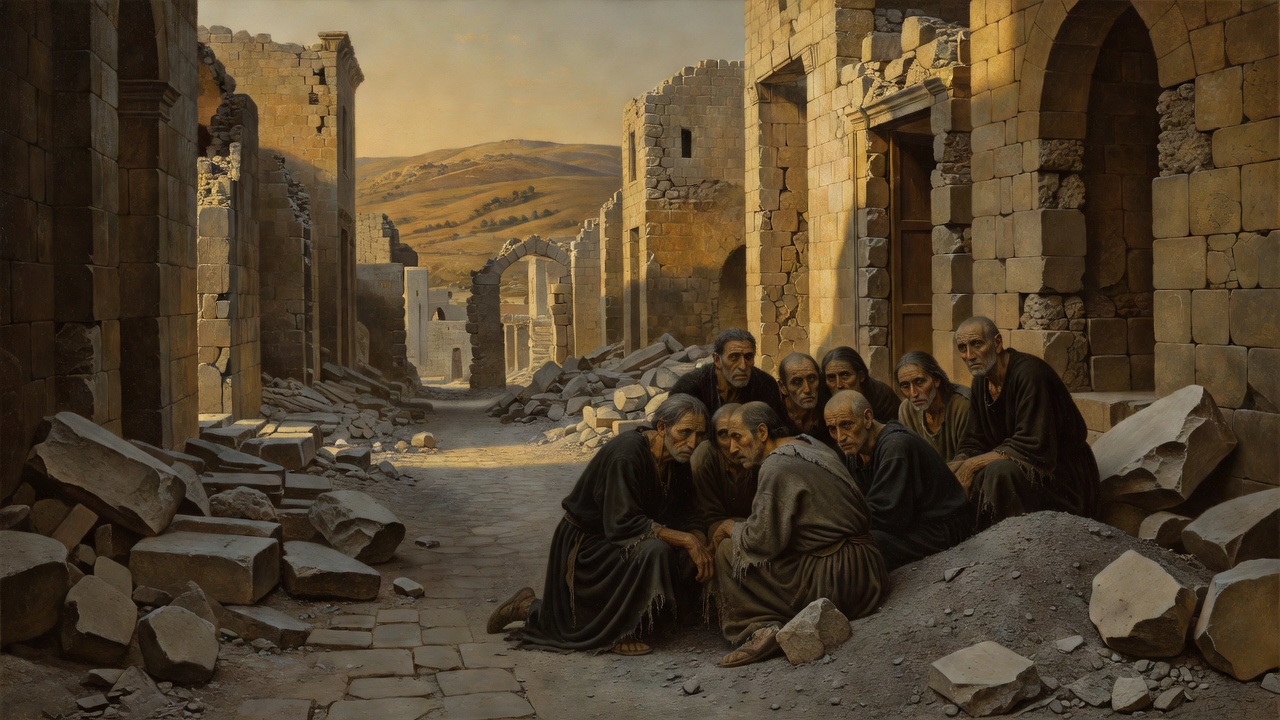
The Agony of the Fallen City
- The poet considers Jerusalem's prolonged suffering worse than the fate of Sodom. While Sodom was overthrown in an instant by divine fire, the inhabitants of Jerusalem endured the agonizing and drawn-out torment of siege and starvation.Sources: the Bible text itself · Sodom
- Before its capture, Jerusalem was widely regarded as an impenetrable mountain city. The text observes that foreign kings and surrounding nations never believed an enemy could breach its fortified gates.Sources: the Bible text itself · Jerusalem
- The chapter closes with an address to Edom dwelling in the land of Uz, warning that judgment will soon overtake her. Uz is mentioned in only three biblical books: Job, Jeremiah, and Lamentations.Sources: the Bible text itself · Uz · Edom
Notes written with AI assistance from open sources (Theographic Bible Metadata, CC BY-SA 4.0; Easton’s Bible Dictionary, public domain) and reviewed before publishing.
Places in this chapter
- Zion · Today: Jerusalem · 31.777, 35.234 · verses 2, 11, 22
- Jerusalem · 31.777, 35.234 · verse 12
- Edom · 30.746, 35.604 · verses 21, 22
Only places identified with high confidence are shown (90% or more according to the scholarly sources compiled by OpenBible). Period map: DARE (Digital Atlas of the Roman Empire), CC BY 4.0; modern map: © OpenStreetMap contributors; places: OpenBible.info (CC BY 4.0).
Credits and license for this translation
Biblica® Baịbụlụ Nsọ nʼIgbo Ndị Ugbu a nke dịrị onye ọbụla ịgụ The Holy Bible in the Igbo language of Nigeria: Biblica® Baịbụlụ Nsọ nʼIgbo Ndị Ugbu a nke dịrị onye ọbụla ịgụ copyright © 2020 Biblica, Inc. Language: Igbo Contributor: Biblica, Inc. This work is made available under the Creative Commons Attribution-ShareAlike 4.0 International License (CC BY-SA). To view a copy of this license, visit http://creativecommons.org/licenses/by-sa/4.0 or send a letter to Creative Commons, PO Box 1866, Mountain View, CA 94042, USA. Biblica® is a trademark registered by Biblica, Inc., and use of the Biblica® trademark requires the written permission of Biblica, Inc. Under the terms of the CC BY-SA license, you may copy and redistribute this unmodified work as long as you keep the Biblica® trademark intact. If you modify a copy or translate this work, thereby creating a derivative work, you must remove the Biblica® trademark. On the derivative work, you must indicate what changes you have made and attribute the work as follows: “The original work by Biblica, Inc. is available for free at www.biblica.com and open.bible.” Notice of copyright must appear on the title or copyright page of the work as follows: Biblica® Baịbụlụ Nsọ nʼIgbo Ndị Ugbu a nke dịrị onye ọbụla ịgụ Ndị Biblica, Inc. degharịrị ya nʼafọ © 1980, 1988, 2019, 2020 Biblica® Open Igbo Contemporary Bible™ Copyright © 1980, 1988, 2019, 2020 by Biblica, Inc. “Biblica” bụ akara e ji mara ụlọ ọrụ a, nke edebanyere dịka iwu si kwado nʼụlọ ọrụ dị nʼobodo United States, ebe a na-enye akara a na ikike maka azụm ahịa ndị Biblica, Inc. Ọ bụ ha ka e nyere ikike idenye ya. “Biblica” is a trademark registered in the United States Patent and Trademark Office by Biblica, Inc. Used with permission. You must also make your derivative work available under the same license (CC BY-SA). If you would like to notify Biblica, Inc. regarding your translation of this work, please contact us at https://open.bible/contact-us. This translation is made available to you under the terms of the Creative Commons Attribution Share-Alike license 4.0. You have permission to share and redistribute this Bible translation in any format and to make reasonable revisions and adaptations of this translation, provided that: You include the above copyright and source information. If you make any changes to the text, you must indicate that you did so in a way that makes it clear that the original licensor is not necessarily endorsing your changes. If you redistribute this text, you must distribute your contributions under the same license as the original. Pictures included with Scriptures and other documents on this site are licensed just for use with those Scriptures and documents. For other uses, please contact the respective copyright owners. Note that in addition to the rules above, revising and adapting God's Word involves a great responsibility to be true to God's Word. See Revelation 22:18-19. 2023-04-12
Source: http://ebible.org/ibo/ · eBible.org