Job 5
Biblica® Baịbụlụ Nsọ nʼIgbo Ndị Ugbu a nke dịrị onye ọbụla ịgụ · Tap a verse to see its cross-references.
1“Kpọọ oku ma ị chọọ, ma onyekwanụ ga-aza gị?
Ole ndị dị nsọ ị ga-agbakwuru?
2Oke iwe na-egbu onye nzuzu,
ekworo na-egbu onye na-enweghị uche.
3Mụ onwe m ahụla onye nzuzu ka ọ na-agba mgbọrọgwụ,
mana mberede, abụrụ ụlọ ya ọnụ.
4Ụmụ ya na-anọpụ anya site nʼebe nchebe dị,
a na-azọpịa ha nʼọnụ ụzọ ama, ọ dịkwaghị onye na-anapụta ha.
5Onye agụụ na-agụ na-eripịa ihe o wetara nʼubi;
ọ na-ewere ihe ubi ndị a ọ bụladị site nʼetiti ogwu;
akụnụba ya ka onye akpịrị na-akpọ nkụ ga-achụso.
6Nʼihi na ọnọdụ ọjọọ adịghị esite nʼala pupụta,
ma ọ bụkwanụ nsogbu adịghịkwa esite nʼala walite.
7Kama, a mụrụ mmadụ nye nsogbu,
dịka ire ọkụ si esite nʼọkụ a kwanyere na-amali elu.
8“Ma ọ bụrụ na m bụ gị, m ga-ekpesara Chineke;
ya ka m ga-akọsara ihe niile.
9Nʼihi na Chineke na-arụ ọrụ ịtụnanya karịrị nghọta,
ọrụ ebube nke a na-apụghị ịgụta ọnụ.
10Ọ bụ ya na-enye elu ụwa mmiri ozuzo,
ma na-ezigakwa mmiri nʼubi niile.
11Ọ na-ebuli ndị dị ala elu,
na-emekwa ka ndị na-eru ụjụ nọ nʼebe a na-echebe ha.
12Ọ na-emebi nzube niile nke ndị aghụghọ,
ka aka ha ghara imezu ihe ha zubere.
13Ọ na-ejide ndị oke amamihe nʼaghụghọ ha niile,
mee ka atụmatụ ndị aghụghọ bụrụ ihe e kpochapụrụ.
14Ọchịchịrị na-abịakwasị ha nʼoge ehihie,
nʼetiti ehihie ha na-asọ ìsì dịka ndị nọ nʼọchịchịrị nke abalị;
15Ọ na-azọpụta ndị mkpa na-akpa, site na mma agha dị ha nʼọnụ,
ọ na-anapụtakwa ha site nʼaka ndị dị ike.
16Ya mere, ndị ogbenye na-enwe olileanya,
ikpe ezighị ezi na-emechikwa ọnụ ya.
17“Ngọzị na-adịrị mmadụ ahụ Chineke na-adọ aka na ntị;
ya mere, ajụla ịdọ aka na ntị nke Onye pụrụ ime ihe niile.
18Nʼihi na ọ na-etihịa mmadụ ahụ ma na-ekechikwa ọnya ha;
Ọ na-eti mmadụ ihe, ma aka ya na-agwọkwa.
19Ọ ga-anapụta gị site nʼụzọ nsogbu isii,
mee ka ihe ọjọọ hapụ irute gị na nsogbu nke asaa.
20Ọ ga-echebe gị ka ị hapụ ịnwụ nʼoge ụnwụ;
chebekwa gị ka mma agha hapụ ịmetụ gị nʼoge agha.
21Ị ga-abụ onye a na-echebe site na nkwutọ nke ire ndị ga-ekwutọ gị.
Ị gaghị atụkwa egwu mgbe mbibi bịara.
22Ị ga-achị ọchị nʼoge ụnwụ na nʼoge mbibi,
ị gaghị atụkwa egwu ajọ anụ ọhịa dị iche iche.
23Nʼihi na gị na nkume niile dị nʼọhịa ga-agba ndụ,
gị na anụ ọhịa ga-anọkwa nʼudo.
24Ị ga-amata na ụlọ ikwu gị dị nʼudo;
ị ga-agụkọ ihe niile i nwere chọpụta na o nweghị nke na-efu efu.
25Ị ga-amata na ụmụ gị ga-adị ọtụtụ,
matakwa na ụmụ ụmụ gị dị ukwuu nʼọnụọgụgụ dịka ahịhịa dị nʼala.
26Ị ga-aba nʼili gị mgbe i mere nnọọ ezigbo agadi,
dịka ọka a ghọrọ mgbe oge ya ruru.
27“Anyị enyochaala ihe a, hụ na ọ bụ eziokwu.
Ya mere nụrụ ya, ma jiri ya rụọ ọrụ na ndụ gị.”
Did you know?
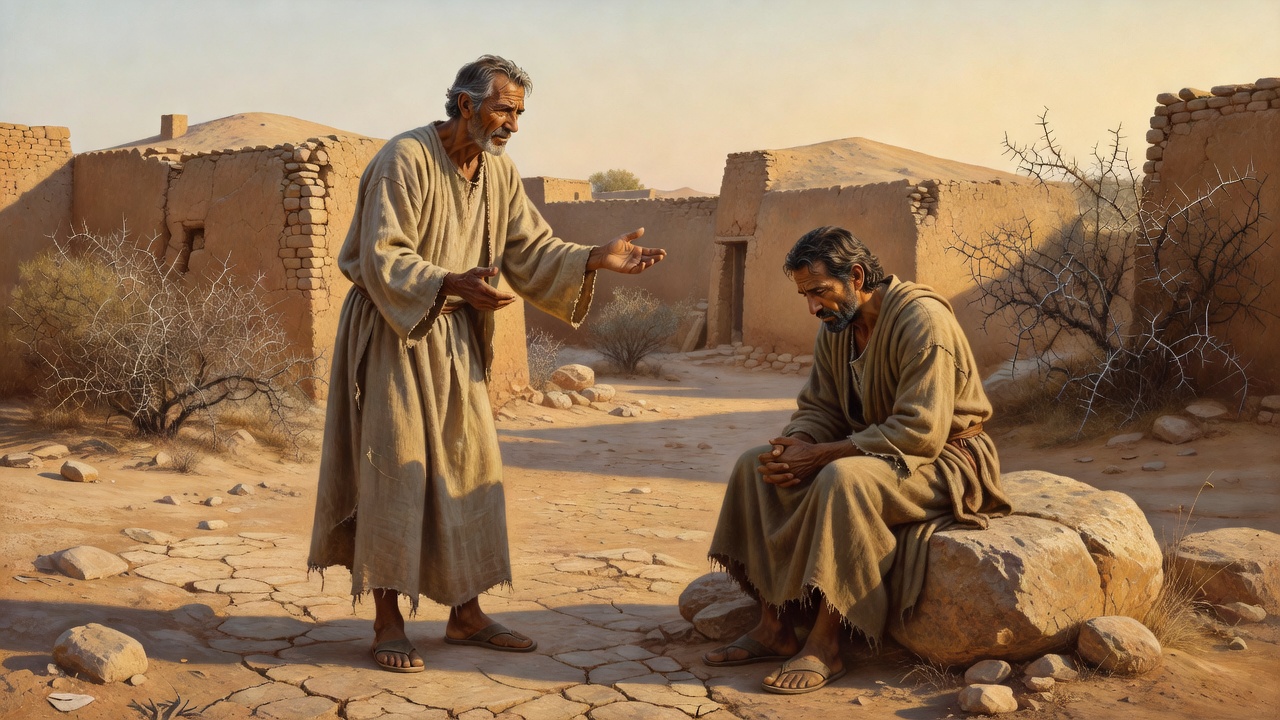
Eliphaz's Counsel on Suffering and Divine Correction
- Eliphaz portrays suffering as purposeful divine discipline rather than arbitrary misfortune, asserting that trouble does not arise without cause from the soil. He urges Job not to despise the correction of the Almighty, who wounds only to heal and restore.Sources: the Bible text itself
- In promising deliverance from six calamities and even seven, Eliphaz employs a traditional poetic formula known as graded numerical parallelism. This rhetorical pattern, common in ancient Near Eastern wisdom poetry, builds emphasis to express comprehensive and complete protection.Sources: the Bible text itself
- Eliphaz describes ultimate restoration in vivid agricultural and pastoral terms, depicting a life where wild beasts and stony soil cease to be hostile. He envisions a peaceful death occurring in full vigor, likened to a sheaf of grain harvested at the proper season.Sources: the Bible text itself
Notes written with AI assistance from open sources (Theographic Bible Metadata, CC BY-SA 4.0; Easton’s Bible Dictionary, public domain) and reviewed before publishing.
Credits and license for this translation
Biblica® Baịbụlụ Nsọ nʼIgbo Ndị Ugbu a nke dịrị onye ọbụla ịgụ The Holy Bible in the Igbo language of Nigeria: Biblica® Baịbụlụ Nsọ nʼIgbo Ndị Ugbu a nke dịrị onye ọbụla ịgụ copyright © 2020 Biblica, Inc. Language: Igbo Contributor: Biblica, Inc. This work is made available under the Creative Commons Attribution-ShareAlike 4.0 International License (CC BY-SA). To view a copy of this license, visit http://creativecommons.org/licenses/by-sa/4.0 or send a letter to Creative Commons, PO Box 1866, Mountain View, CA 94042, USA. Biblica® is a trademark registered by Biblica, Inc., and use of the Biblica® trademark requires the written permission of Biblica, Inc. Under the terms of the CC BY-SA license, you may copy and redistribute this unmodified work as long as you keep the Biblica® trademark intact. If you modify a copy or translate this work, thereby creating a derivative work, you must remove the Biblica® trademark. On the derivative work, you must indicate what changes you have made and attribute the work as follows: “The original work by Biblica, Inc. is available for free at www.biblica.com and open.bible.” Notice of copyright must appear on the title or copyright page of the work as follows: Biblica® Baịbụlụ Nsọ nʼIgbo Ndị Ugbu a nke dịrị onye ọbụla ịgụ Ndị Biblica, Inc. degharịrị ya nʼafọ © 1980, 1988, 2019, 2020 Biblica® Open Igbo Contemporary Bible™ Copyright © 1980, 1988, 2019, 2020 by Biblica, Inc. “Biblica” bụ akara e ji mara ụlọ ọrụ a, nke edebanyere dịka iwu si kwado nʼụlọ ọrụ dị nʼobodo United States, ebe a na-enye akara a na ikike maka azụm ahịa ndị Biblica, Inc. Ọ bụ ha ka e nyere ikike idenye ya. “Biblica” is a trademark registered in the United States Patent and Trademark Office by Biblica, Inc. Used with permission. You must also make your derivative work available under the same license (CC BY-SA). If you would like to notify Biblica, Inc. regarding your translation of this work, please contact us at https://open.bible/contact-us. This translation is made available to you under the terms of the Creative Commons Attribution Share-Alike license 4.0. You have permission to share and redistribute this Bible translation in any format and to make reasonable revisions and adaptations of this translation, provided that: You include the above copyright and source information. If you make any changes to the text, you must indicate that you did so in a way that makes it clear that the original licensor is not necessarily endorsing your changes. If you redistribute this text, you must distribute your contributions under the same license as the original. Pictures included with Scriptures and other documents on this site are licensed just for use with those Scriptures and documents. For other uses, please contact the respective copyright owners. Note that in addition to the rules above, revising and adapting God's Word involves a great responsibility to be true to God's Word. See Revelation 22:18-19. 2023-04-12
Source: http://ebible.org/ibo/ · eBible.org