Jeremiah 13
Biblica® Baịbụlụ Nsọ nʼIgbo Ndị Ugbu a nke dịrị onye ọbụla ịgụ · Tap a verse to see its cross-references.
Ihe ike nʼukwu
1Ihe ndị a ka Onyenwe anyị gwara m, “Gaa, zụta mgbado ukwu akwa ọcha nke a na-eke nʼukwu. Ị zụtachaa ya, kekwasị ya nʼukwu gị. Ma ekwekwala ka o metụ na mmiri.” 2Ejere m zụta ajị ahụ dịka Onyenwe anyị kwuru, kee ya nʼukwu m.
3Mgbe ahụ, okwu Onyenwe anyị bịakwutere m nke ugboro abụọ, sị m, 4“Were ajị ahụ ị zụtara, nke i kekwasịrị nʼukwu gị, bilie, jee nʼosimiri Yufretis. I ruo, zoo ihe okike ukwu ahụ na mgbawa nkume dị nʼebe ahụ.” 5Ya mere, apụrụ m, jee, zoo ya na Yufretis dịka Onyenwe anyị gwara m.
6Mgbe ọtụtụ ụbọchị gasịrị, Onyenwe anyị gwara m okwu sị m, “Bilie, jeghachi Yufretis. I jeruo, wepụta ajị ahụ m sị gị zoo nʼebe ahụ.” 7Ya mere, agara m Yufretis, gwupụta ajị ahụ site nʼebe m zoro ya, ma mgbe m wepụtara ya, ahụrụ m na o mebiela, na ọ bakwaghị uru ọbụla.
8Mgbe ahụ, okwu Onyenwe anyị ruru m ntị, sị, 9“Otu a ka Onyenwe anyị kwuru, ‘Nʼotu aka ahụ, mụ onwe m ga-ebibi mpako Juda na oke mpako Jerusalem. 10Ndị ajọ omume ahụ, bụ ndị jụrụ ige ntị nʼokwu m, ndị ahụ na-ejegharị nʼisiike nke obi ha na-agbaso chi ndị ọzọ na-efe ma na-akpọkwa isiala nye ha. Ha ga-adịka belịt a, nke na-abakwaghị uru ọbụla. 11Nʼihi na dịka belịt mmadụ kere nʼukwu ya si arapara ya nʼukwu, otu a ka m si mee ka ụlọ Izrel niile, na ụlọ Juda niile rapara m nʼahụ,’ ime ka ha ghọọ ndị m, ndị a ga-esite na ha bulie aha m elu, nye m otuto na nsọpụrụ. Ma ha ajụla ige ntị.” Otu a ka Onyenwe anyị kwupụtara.
Karama mmanya akpụkpọ
12Sị ha, “Otu a ka Onyenwe anyị, Chineke Izrel kwuru: A ga-agbaju karama akpụkpọ ọbụla mmanya. Ọ bụrụ na ha sị gị, ‘Ọ bụ na anyị amaghị na a na-agbaju karama akpụkpọ ọbụla mmanya?’ 13Mgbe ahụ gwa ha, ‘Ihe ndị a ka Onyenwe anyị na-ekwu, Aga m eme ka ndị bi nʼala a ṅụbiga mmanya oke, ma onye eze na-anọkwasị nʼocheeze Devid, ma ndị nchụaja, na ndị amụma niile bi na Jerusalem. 14Aga m atụpịakwa ha, otu onye nʼelu ibe ya, nna na ụmụ ya nʼelu ibe ha kwa. Agaghị m ekwe ka obi ọmịiko, maọbụ obi ebere gbochie m ibibi ha.’ ” Otu a ka Onyenwe anyị kwubiri.
Ịdọ aka na ntị banyere ịdọta nʼagha
15Nụrụnụ, geekwanụ ntị,
unu ebulila onwe unu elu,
nʼihi na Onyenwe anyị ekwuola ya.
16Nyenụ Onyenwe anyị Chineke unu nsọpụrụ.
Tupu o mee ka ọchịchịrị dakwasị unu;
tupu unu akpọbie ụkwụ unu
nʼelu ugwu gbara ọchịchịrị.
Unu na-ele anya ìhè
ma ọ ga-eme ka ihe ahụ ghọọrọ unu oke ọchịchịrị.
Ọ ga-agbanwe ihe ahụ, mee ka ọ ghọọ onyinyo ọnwụ.
17Ma ọ bụrụ na unu ajụ ige ntị.
Ọ bụ na nzuzo ka m ga-anọ kwaa akwa
nʼihi mpako unu.
Anya mmiri ga-esi m nʼanya pụta;
anya mmiri ga-esi na ya na-eruda nke ukwuu
nʼihi na igwe atụrụ Onyenwe anyị ka a ga-adọta nʼagha.
18Gwanụ eze na nne eze okwu sị ha,
“Sitenụ nʼocheeze unu rịdata,
nʼihi na okpueze ọma unu
ga-esi nʼisi unu dapụ.”
19A ga-emechi obodo niile nke Negeb.
Ọ dịkwaghị onye ga-emeghe ha.
A ga-adọtakwa Juda niile nʼagha
buru ha kpamkpam buga ha nʼala ọzọ.
20Welienụ anya unu
ka unu hụrụ ndị ahụ si nʼugwu na-abịa.
Ebee ka igwe ewu na atụrụ ndị ahụ e tinyere unu nʼaka nọ,
igwe ewu na atụrụ ahụ unu ji na-anya isi?
21Gịnị ka ị ga-asị mgbe Onyenwe anyị mere ka ndị ahụ ị gụrụ
dịka ndị enyi gị bịa buso gị agha?
Ihe mgbu nke ga-abịakwasị gị
ọ gaghị adị ka ihe mgbu na-abịakwasị nwanyị ime na-eme?
22Mgbe ahụ, ị ga-ajụkwa obi gị ajụjụ sị,
“Gịnị mere ihe ndị a ji dakwasị m?”
Ọ bụ nʼihi ịba ụba nke mmehie gị
ka e ji dọwaa uwe mwụda gị,
merụọ gị ahụ nʼakụkụ ahụ gị niile.
23Onye Kush ọ pụrụ ịgbanwe akpụkpọ ahụ ya?
Agụ ọ pụrụ ịgbanwe akpụkpọ ahụ ya tụrụ agwa agwa?
Nʼụzọ dị otu a kwa,
unu ndị ihe ọjọọ riri ahụ apụghị ime ezi ihe.
24“Aga m efesasị unu dịka ahịhịa ọka kpọrọ nkụ,
nke oke ifufe si nʼọzara na-ebugharị.
25Nke a bụ ihe unu fetara na nza,
oke nke m kwadoro si nʼaka m inye unu.” Otu a ka Onyenwe anyị kwubiri.
“Nʼihi na unu echefuola m,
tụkwasị obi unu na chi okwu ụgha dị iche iche.
26Ya mere, aga m ekpughepụ uwe i yi nʼahụ, jiri ya kpuchie gị ihu,
si otu a gbaa gị ọtọ. Ihere ga-emekwa gị.
27Mgbe ahụ, ịkwa iko gị niile ga-apụta ihe ya na agụụ ihe ọjọọ niile na-agụ gị,
na ọnọdụ enweghị ihere nke ịgba akwụna gị niile!
Nʼihi na ahụla m omume rụrụ arụ gị niile,
nke ị na-eme nʼelu ugwu, na nʼime ọhịa.
Ahụhụ dịrị gị, Jerusalem!
Ruo ole mgbe ka ị ga-anọgide nʼime adịghị ọcha gị?”
Did you know?
The Ruined Linen Sash and the Threat of Exile
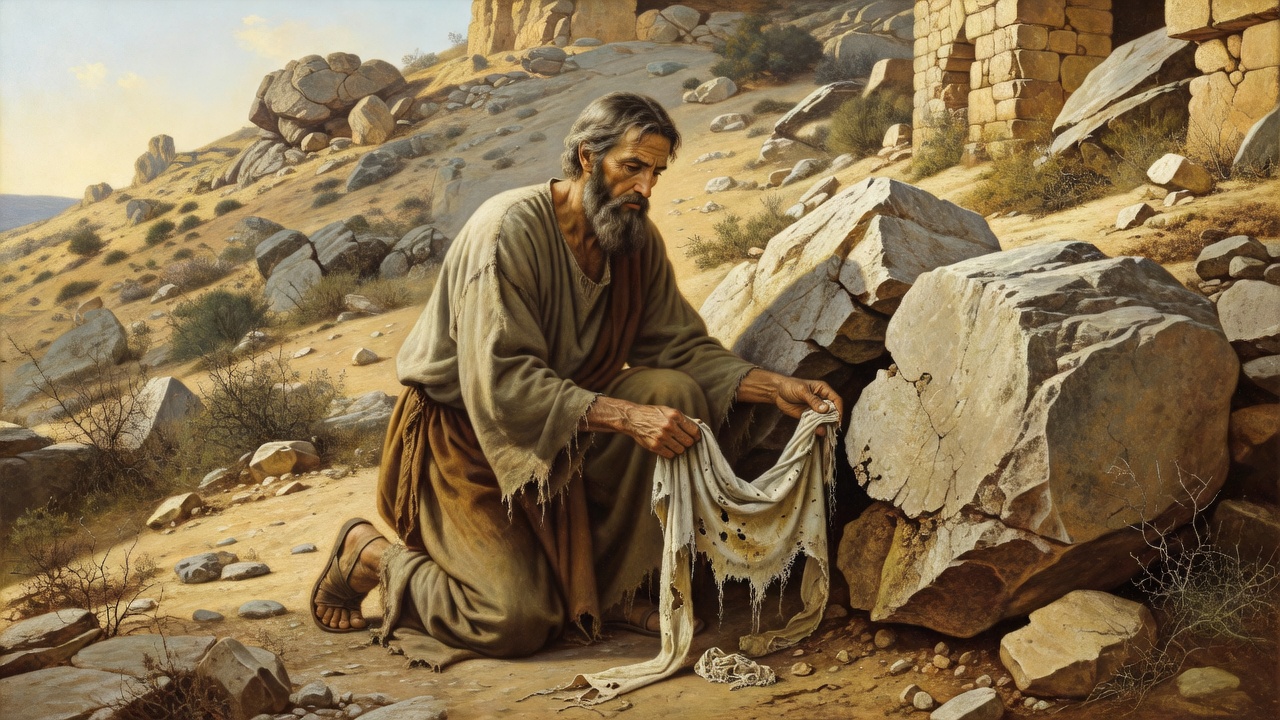
- Jeremiah is commanded to bury a new linen loincloth in a crevice of the rocks at Perath, the Hebrew name for the Euphrates River. When retrieved after many days, the rotted, useless cloth served as a dramatic symbol of how God would ruin the pride of Judah and Jerusalem.Sources: the Bible text itself · Euphrates
- The prophecy warns that disaster would reach even the cities of the Negev, the arid region stretching across Judah's southern frontier on the route toward Egypt. The locking of these southern towns indicated that escape routes were cut off and that total exile was approaching.Sources: the Bible text itself · Negeb
Notes written with AI assistance from open sources (Theographic Bible Metadata, CC BY-SA 4.0; Easton’s Bible Dictionary, public domain) and reviewed before publishing.
Places in this chapter
- Euphrates · Today: Euphrates River · 31.004, 47.442 · verses 4, 5, 6, 7
- Jerusalem · 31.777, 35.234 · verses 9, 13, 20, 27
- Negeb · 31.245, 34.841 · verse 19
Only places identified with high confidence are shown (90% or more according to the scholarly sources compiled by OpenBible). Period map: DARE (Digital Atlas of the Roman Empire), CC BY 4.0; modern map: © OpenStreetMap contributors; places: OpenBible.info (CC BY 4.0).
Credits and license for this translation
Biblica® Baịbụlụ Nsọ nʼIgbo Ndị Ugbu a nke dịrị onye ọbụla ịgụ The Holy Bible in the Igbo language of Nigeria: Biblica® Baịbụlụ Nsọ nʼIgbo Ndị Ugbu a nke dịrị onye ọbụla ịgụ copyright © 2020 Biblica, Inc. Language: Igbo Contributor: Biblica, Inc. This work is made available under the Creative Commons Attribution-ShareAlike 4.0 International License (CC BY-SA). To view a copy of this license, visit http://creativecommons.org/licenses/by-sa/4.0 or send a letter to Creative Commons, PO Box 1866, Mountain View, CA 94042, USA. Biblica® is a trademark registered by Biblica, Inc., and use of the Biblica® trademark requires the written permission of Biblica, Inc. Under the terms of the CC BY-SA license, you may copy and redistribute this unmodified work as long as you keep the Biblica® trademark intact. If you modify a copy or translate this work, thereby creating a derivative work, you must remove the Biblica® trademark. On the derivative work, you must indicate what changes you have made and attribute the work as follows: “The original work by Biblica, Inc. is available for free at www.biblica.com and open.bible.” Notice of copyright must appear on the title or copyright page of the work as follows: Biblica® Baịbụlụ Nsọ nʼIgbo Ndị Ugbu a nke dịrị onye ọbụla ịgụ Ndị Biblica, Inc. degharịrị ya nʼafọ © 1980, 1988, 2019, 2020 Biblica® Open Igbo Contemporary Bible™ Copyright © 1980, 1988, 2019, 2020 by Biblica, Inc. “Biblica” bụ akara e ji mara ụlọ ọrụ a, nke edebanyere dịka iwu si kwado nʼụlọ ọrụ dị nʼobodo United States, ebe a na-enye akara a na ikike maka azụm ahịa ndị Biblica, Inc. Ọ bụ ha ka e nyere ikike idenye ya. “Biblica” is a trademark registered in the United States Patent and Trademark Office by Biblica, Inc. Used with permission. You must also make your derivative work available under the same license (CC BY-SA). If you would like to notify Biblica, Inc. regarding your translation of this work, please contact us at https://open.bible/contact-us. This translation is made available to you under the terms of the Creative Commons Attribution Share-Alike license 4.0. You have permission to share and redistribute this Bible translation in any format and to make reasonable revisions and adaptations of this translation, provided that: You include the above copyright and source information. If you make any changes to the text, you must indicate that you did so in a way that makes it clear that the original licensor is not necessarily endorsing your changes. If you redistribute this text, you must distribute your contributions under the same license as the original. Pictures included with Scriptures and other documents on this site are licensed just for use with those Scriptures and documents. For other uses, please contact the respective copyright owners. Note that in addition to the rules above, revising and adapting God's Word involves a great responsibility to be true to God's Word. See Revelation 22:18-19. 2023-04-12
Source: http://ebible.org/ibo/ · eBible.org