Judges 7
Biblica® Baịbụlụ Nsọ nʼIgbo Ndị Ugbu a nke dịrị onye ọbụla ịgụ · Tap a verse to see its cross-references.
Gidiọn emerie ndị Midia
1Jerub-Baal, onye bụkwa Gidiọn, na ndị agha ya niile biliri nʼisi ụtụtụ, maa ụlọ ikwu ha nʼisi iyi Harod. Ma ndị agha Midia mara ụlọ ikwu nke ha nʼakụkụ ugwu ebe ndị Izrel nọ, nʼime ndagwurugwu nke dị nso nʼugwu nta More. 2Mgbe ahụ, Onyenwe anyị gwara Gidiọn okwu sị ya, “Lee, ndị ikom gị dị ọtụtụ. Agaghị m enyefe ndị Midia nʼaka ha, ma ọ bụghị otu a, Izrel ga-anya isi megide m, sị, ‘Ike aka m azọpụtala m.’ 3Ugbu a, maa ọkwa nye ndị agha sị ha, ‘Onye ọbụla ụjọ na-atụ, ya hapụ ugwu Gilead laghachi azụ.’ ” Nʼihi nke a, iri puku ndị agha abụọ na abụọ laghachiri azụ nʼụlọ nke aka ha. Ma ndị agha dị puku iri nʼọnụọgụgụ fọdụrụ.
4Ma Onyenwe anyị gwara Gidiọn, sị ya, “Lee, ndị agha gị ka dị ọtụtụ. Duru ha gbada na mmiri ala, m ga-anwale ha ma webilatara gị ọnụọgụgụ ha nʼebe ahụ. Ọ bụrụ na m sị, ‘Onye nke a ga-eso gị jee,’ ọ ga-eje, ma ọ bụrụ na m sị, ‘Onye nke a agaghị eso gị jee,’ ọ gaghị eso jee.”
5Ya mere, Gidiọn duuru ha bịa na mmiri ala ahụ. Nʼebe ahụ, Onyenwe anyị gwara ya okwu sị ya, “Kewapụ ndị ji ire ha rachara mmiri dịka nkịta, site na ndị ahụ gburu ikpere nʼala ịṅụ mmiri.” 6Ọ bụ naanị narị ndị agha atọ ji ọbụ aka ha kwọlịte mmiri ha ṅụrụ. Ma ndị agha fọdụrụ gburu ikpere ha abụọ nʼala tinye ọnụ ha na mmiri, ṅụọ mmiri.
7Onyenwe anyị sịrị Gidiọn, “Ọ bụ narị ndị ikom atọ ndị a raara mmiri ka m ga-eji zọpụta gị, ma rarakwa ndị Midia nye gị nʼaka. Zilaga ndị fọdụrụ ka ha laa nʼụlọ nke aka ha.” 8Gidiọn zilagara ndị Izrel ndị a nʼụlọ ikwu ha ma hapụ naanị narị mmadụ atọ ndị napụtara ndị ahụ na-ala ala ngwongwo niile ha ji ebu agha, na opi ike.
Ndị Midia mara ụlọ ikwu ha na ndagwurugwu, nʼebe na-adịghị anya site nʼebe Gidiọn nọ. 9Nʼabalị ahụ, Onyenwe anyị gwara Gidiọn okwu sị ya, “Bilie, gaa lụso ọmụma ụlọ ikwu ahụ agha, nʼihi na ana m aga inyefe ha nʼaka gị. 10Ma ọ bụrụ na ụjọ na-atụ gị ibuso ha agha, duru Pura onyeozi gị gaa nso nʼọmụma ụlọ ikwu ahụ, 11ṅaa ntị, nụrụ ihe ha na-ekwu. Emesịa, ị ga-abụ onye a gbara ume ibu agha megide ọmụma ụlọ ikwu ahụ.” Ya mere, ya na Pura onyeozi ya gara nʼebe dị nso, nʼebe ndị nche ọmụma ụlọ ikwu ahụ nọ. 12Ma lee, usuu ndị agha Midia, na ndị Amalek, na ndị obodo ndị ọzọ ahụ si nʼọwụwa anyanwụ bịa jupụtara na ndagwurugwu ahụ dị ka igurube. Nʼezie, ịnyịnya kamel ha dị ọtụtụ, dịka aja dị nʼakụkụ oke osimiri.
13Gidiọn rutere mgbe otu onye nọ na-akọrọ enyi ya banyere nrọ ọ rọrọ. Ọ na-asị, “Arọrọ m nrọ, ebe otu ogbe achịcha dị gburugburu, e ji ọka balị mee dabatara nʼime ụlọ ikwu ndị Midia. O ji ike dị egwu tie ụlọ ikwu a, nke mere na ụlọ ikwu a dajiri, kpuo ihu nʼala.”
14Onye ibe ya zara sị, “Nke a abụghị ihe ọzọ karịa mma agha Gidiọn nwa Joash, onye Izrel na-aga ịbịakwute anyị nʼebe a. Chineke enyefeela ndị Midia na ụlọ ikwu ya niile nʼaka ya.”
15Mgbe Gidiọn nụrụ nrọ ahụ, na nkọwa ya, ọ kpọrọ isiala kelee Chineke. Ọ laghachiri na ọmụma ụlọ ikwu ndị Izrel sị ha, “Bilienụ ọtọ! Nʼihi na Onyenwe anyị enyefeela unu ọmụma ụlọ ikwu ndị Midia nʼaka.” 16O kewara ndị agha ya ụzọ atọ, nyekwa onye ọbụla nʼime ha opi ike, na ite aja nke iheọkụ dị nʼime ya.
17Ọ sịrị ha, “Unu na-ele m anya, meekwa ihe m na-eme. Mgbe anyị bịaruru nso na mpụta ebe ụlọ ikwu ahụ dị, meenụ ihe ọbụla unu hụrụ m mere. 18Mgbe ọbụla mụ na ndị so m nʼazụ fụrụ opi ike anyị, unu niile ga-afụkwa opi ike unu nʼakụkụ ọbụla unu nọ, tie mkpu, sị, ‘Anyị dịnyere Onyenwe anyị, dịnyekwara Gidiọn.’ ”
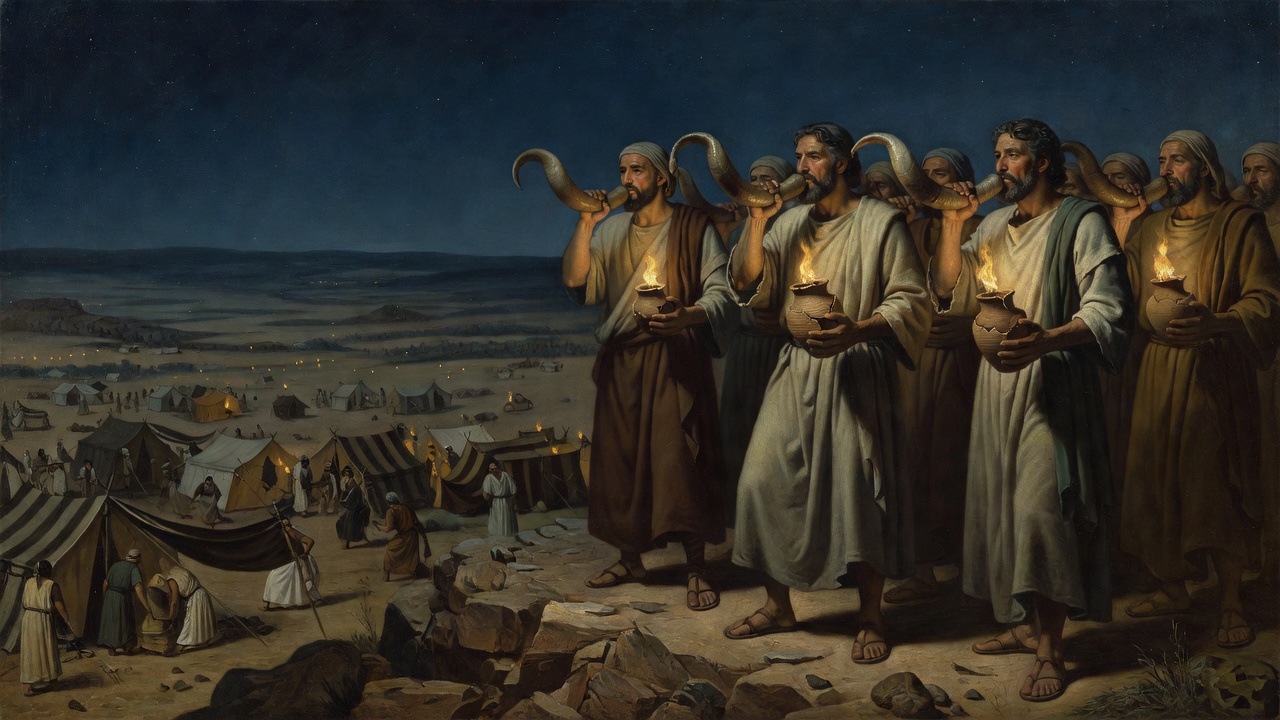
19Nʼabalị ahụ, mgbe etiti abalị ahụ gabigasịrị, Gidiọn na narị ndị agha ya gbeere egbere ruo na mpụta ebe ndị agha Midia mara ụlọ ikwu ha. Nʼoge a, ha ka gbanwere ndị agha na-eche nche. 20Ụzọ ndị agha Gidiọn atọ ahụ fụrụ opi ike ha, tiwakwaa ite aja ha. Ha ji ọwaọkụ ndị ahụ nʼaka ekpe ha na opi ike ha gaje igbu nʼaka nri ha, ha tiri mkpu sị, “Mma agha Onyenwe anyị, na mma agha Gidiọn!” 21Onye ọbụla nʼime ha guzoro nʼebe o kwesiri ịnọ gburugburu ọmụma ụlọ ikwu ahụ. Ndị Midia niile malitere ịgba ọsọ, na-etikwa mkpu akwa mgbe ha na-agbalaga.
22Mgbe ha fụrụ narị opi ike atọ ndị ahụ, Onyenwe anyị mere ka ndị ikom niile nọ nʼakụkụ niile nke ọmụma ụlọ ikwu ahụ tụgharịa were mma agha gburịta onwe ha. Ndị agha ahụ gbapụrụ ọsọ gbara gaa Bet-Shita nʼụzọ Zerera, gbarukwaa nke oke ala Ebel-Mehola, nke dị nso Tabat. 23A kpọpụtara ndị Izrel si Naftalị, na Asha na Manase niile ka ha pụta chụso ndị Midia ọsọ. 24Gidiọn ziri ozi nʼala ugwu ugwu Ifrem sị ha, “Pụtanụ gbochie ụzọ niile ndị Midia si agbafe. Cheenụ ọnụ mmiri Jọdan niile nche ruo na Bet-Bara.”
Ya mere, a kpọpụtara ndị ikom niile nọ na Ifrem, bụ ndị gbochiri mmiri Jọdan ruo na Bet-Bara. 25Ha jidekwara ọchịagha ndị Midia abụọ, ndị aha ha bụ Oreb na Zeeb. Ha gburu Oreb nʼelu nkume nke na-aza aha ya ruo taa. E gbukwara Zeeb nʼebe a na-azọcha vaịnị. Ebe ahụ na-azakwa aha Zeeb ruo taa. Ha bipụrụ Oreb na Zeeb isi buru ha jekwuru Gidiọn nʼakụkụ osimiri Jọdan.
Did you know?
Gideon's Three Hundred
- Before the battle, Gideon's force of 32,000 men was drastically reduced to just 300 at the spring of Harod. First, 22,000 fearful men were permitted to return home, and the remaining 10,000 were sifted by how they drank water from the spring, leaving only those who brought water to their mouths with their hands.Sources: the Bible text itself · Harod
- Gideon used night tactics and psychological shock by dividing his 300 men into three companies armed only with rams' horns, torches, and clay jars. Surrounding the vast camp of Midianites and allied eastern nomads near the hill of Moreh during the night watch, the sudden sound of shattering jars and blowing horns caused the enemy to turn on one another in the dark.Sources: the Bible text itself · Moreh (little Hermon) · East
- As the Midianites fled toward the Jordan River, the tribe of Ephraim was summoned to cut off their retreat at the river crossings. The Ephraimites captured and executed two Midianite leaders, Oreb (meaning 'raven') and Zeeb (meaning 'wolf').Sources: the Bible text itself · Oreb · Zeeb · Ephraim
Notes written with AI assistance from open sources (Theographic Bible Metadata, CC BY-SA 4.0; Easton’s Bible Dictionary, public domain) and reviewed before publishing.
Places in this chapter
- Midian · 28.495, 35.012 · verses 1, 2, 7, 8, 12, 13, 14, 15, 23, 24, 25
- Amalek · 30.648, 34.422 · verse 12
- East · Today: region around Amman · 31.955, 35.934 · verse 12
- Jordan · Today: Jordan River · 31.761, 35.558 · verses 24, 25
Only places identified with high confidence are shown (90% or more according to the scholarly sources compiled by OpenBible). Period map: DARE (Digital Atlas of the Roman Empire), CC BY 4.0; modern map: © OpenStreetMap contributors; places: OpenBible.info (CC BY 4.0).
Credits and license for this translation
Biblica® Baịbụlụ Nsọ nʼIgbo Ndị Ugbu a nke dịrị onye ọbụla ịgụ The Holy Bible in the Igbo language of Nigeria: Biblica® Baịbụlụ Nsọ nʼIgbo Ndị Ugbu a nke dịrị onye ọbụla ịgụ copyright © 2020 Biblica, Inc. Language: Igbo Contributor: Biblica, Inc. This work is made available under the Creative Commons Attribution-ShareAlike 4.0 International License (CC BY-SA). To view a copy of this license, visit http://creativecommons.org/licenses/by-sa/4.0 or send a letter to Creative Commons, PO Box 1866, Mountain View, CA 94042, USA. Biblica® is a trademark registered by Biblica, Inc., and use of the Biblica® trademark requires the written permission of Biblica, Inc. Under the terms of the CC BY-SA license, you may copy and redistribute this unmodified work as long as you keep the Biblica® trademark intact. If you modify a copy or translate this work, thereby creating a derivative work, you must remove the Biblica® trademark. On the derivative work, you must indicate what changes you have made and attribute the work as follows: “The original work by Biblica, Inc. is available for free at www.biblica.com and open.bible.” Notice of copyright must appear on the title or copyright page of the work as follows: Biblica® Baịbụlụ Nsọ nʼIgbo Ndị Ugbu a nke dịrị onye ọbụla ịgụ Ndị Biblica, Inc. degharịrị ya nʼafọ © 1980, 1988, 2019, 2020 Biblica® Open Igbo Contemporary Bible™ Copyright © 1980, 1988, 2019, 2020 by Biblica, Inc. “Biblica” bụ akara e ji mara ụlọ ọrụ a, nke edebanyere dịka iwu si kwado nʼụlọ ọrụ dị nʼobodo United States, ebe a na-enye akara a na ikike maka azụm ahịa ndị Biblica, Inc. Ọ bụ ha ka e nyere ikike idenye ya. “Biblica” is a trademark registered in the United States Patent and Trademark Office by Biblica, Inc. Used with permission. You must also make your derivative work available under the same license (CC BY-SA). If you would like to notify Biblica, Inc. regarding your translation of this work, please contact us at https://open.bible/contact-us. This translation is made available to you under the terms of the Creative Commons Attribution Share-Alike license 4.0. You have permission to share and redistribute this Bible translation in any format and to make reasonable revisions and adaptations of this translation, provided that: You include the above copyright and source information. If you make any changes to the text, you must indicate that you did so in a way that makes it clear that the original licensor is not necessarily endorsing your changes. If you redistribute this text, you must distribute your contributions under the same license as the original. Pictures included with Scriptures and other documents on this site are licensed just for use with those Scriptures and documents. For other uses, please contact the respective copyright owners. Note that in addition to the rules above, revising and adapting God's Word involves a great responsibility to be true to God's Word. See Revelation 22:18-19. 2023-04-12
Source: http://ebible.org/ibo/ · eBible.org