Judges 13
Biblica® Baịbụlụ Nsọ nʼIgbo Ndị Ugbu a nke dịrị onye ọbụla ịgụ · Tap a verse to see its cross-references.
Ọmụmụ Samsin
1Ndị Izrel mehiekwara ọzọ nʼihu onyenwe anyị. Nʼihi nke a, Onyenwe anyị kwenyere ka ndị Filistia merie ha. Ndị Izrel nọrọ nʼokpuru ọchịchị ha iri afọ anọ.
2Nʼoge ahụ, o nwere otu nwoke onye Zora aha ya bụ Manoa. Nwoke a si nʼagbụrụ Dan, nwunye ya bụ nwanyị aga nke mere na ọ mụtaghị nwa. 3Otu ụbọchị, mmụọ ozi Onyenwe anyị gosiri nwanyị a onwe ya, gwa ya okwu sị, “Ọ bụ ezie na ị bụ nwanyị aga nke mere na ị mụtaghị nwa ma na mgbe na-adịghị anya, ị ga-atụrụ ime mụta nwa. 4Ma site ugbu a, gaa nʼihu, aṅụkwala ihe ọṅụṅụ ọbụla na-aba nʼanya. Erikwala ihe ọbụla rụrụ arụ. 5Ị ga-atụrụ ime, mụkwaa nwa nwoke, onye agụba agaghị aba nʼisi ya, nʼihi na ọ ga-abụ onye e kewapụrụ nye Chineke site nʼime akpanwa. Ọ ga-ebute ụzọ nʼịgbapụta Izrel site nʼaka ndị Filistia.”
6Nwanyị ahụ gbara ọsọ gbalaa gaa gwa di ya sị ya, “Otu onye nke Chineke egosila m onwe ya. O dokwara m anya na ọ bụ mmụọ ozi Chineke, nʼihi na ọ dị oke ebube nʼile anya. Ma ajụghị m ya ebe o siri bịa, ọ gwakwaghị m aha ya. 7Kama ọ sịrị m, ‘Ị ga-adị ime, mụta nwa nwoke. Ma ugbu a, ị gaghị aṅụ mmanya vaịnị maọbụ ihe ọbụla na-aba nʼanya, maọbụ rie ihe ọbụla rụrụ arụ, nʼihi na nwantakịrị ahụ ga-abụ onye e doro nsọ nye Chineke, site nʼime akpanwa ruo nʼọnwụ ya.’ ”
8Mgbe ahụ, Manoa kpere ekpere rịọọ Onyenwe anyị arịrịọ sị, “Biko, Onyenwe anyị, ka onye nke Chineke ahụ i ziteere anyị bịaghachikwa ọzọ, kuziere anyị otu anyị ga-esi zụlite nwa nwoke a ga-amụta.”
9Chineke zara ekpere ya. Mmụọ ozi ahụ bịakwutekwara nwunye Manoa mgbe ọ nọ nʼubi; maọbụ naanị ya nọ, di ya anọghị ya. 10Ya mere, nwanyị ahụ gbara ọsọ gaa gwa di ya sị, “Lee, nwoke ahụ bịakwutere m ụbọchị a, abịala ọzọ!”
11Manoa biliri, soro nwunye ya. Mgbe o bịarutere ebe nwoke ahụ nọ, ọ jụrụ ya ajụjụ sị, “Ọ bụ gị bụ nwoke ahụ gwara nwunye m okwu nʼoge gara aga?”
Ọ zara sị ya, “E, ọ bụ m.”
12Manoa gwara ya okwu sị, “Mgbe okwu gị mezuru, gịnị bụ iwu banyere ndụ na ọrụ nwa nwoke a?”
13Mmụọ ozi Onyenwe anyị zaghachiri, “Nwunye gị aghaghị imezu ihe niile m nke m gwara ya. 14Ka ọ ghara iri ihe ọbụla si nʼosisi vaịnị, maọbụ ṅụọ mmanya ọbụla maọbụ ihe ọbụla na-aba nʼanya, maọbụ rie ihe rụrụ arụ ọbụla.”
15Manoa rịọrọ Mmụọ ozi Onyenwe anyị si ya, “Ọ ga-amasị anyị ma ị nọdụ chere ka anyị kwadoro gị nwa ewu.”
16Ma Mmụọ ozi Onyenwe anyị zara ya, “A sịkwarị na i mee ka m nọrọ, agaghị m eri nri gị ọbụla. Ma ọ bụrụ na i kwadoo aja nsure ọkụ, were ya chụọrọ Onyenwe anyị aja.” Ma Manoa aghọtaghị na onye ahụ bụ Mmụọ ozi Onyenwe anyị.
17Mgbe ahụ, Manoa jụrụ Mmụọ ozi Onyenwe anyị ahụ, sị, “Biko, gịnị bụ aha gị, ka anyị nye gị nsọpụrụ dịịrị gị mgbe okwu gị mezuru?”
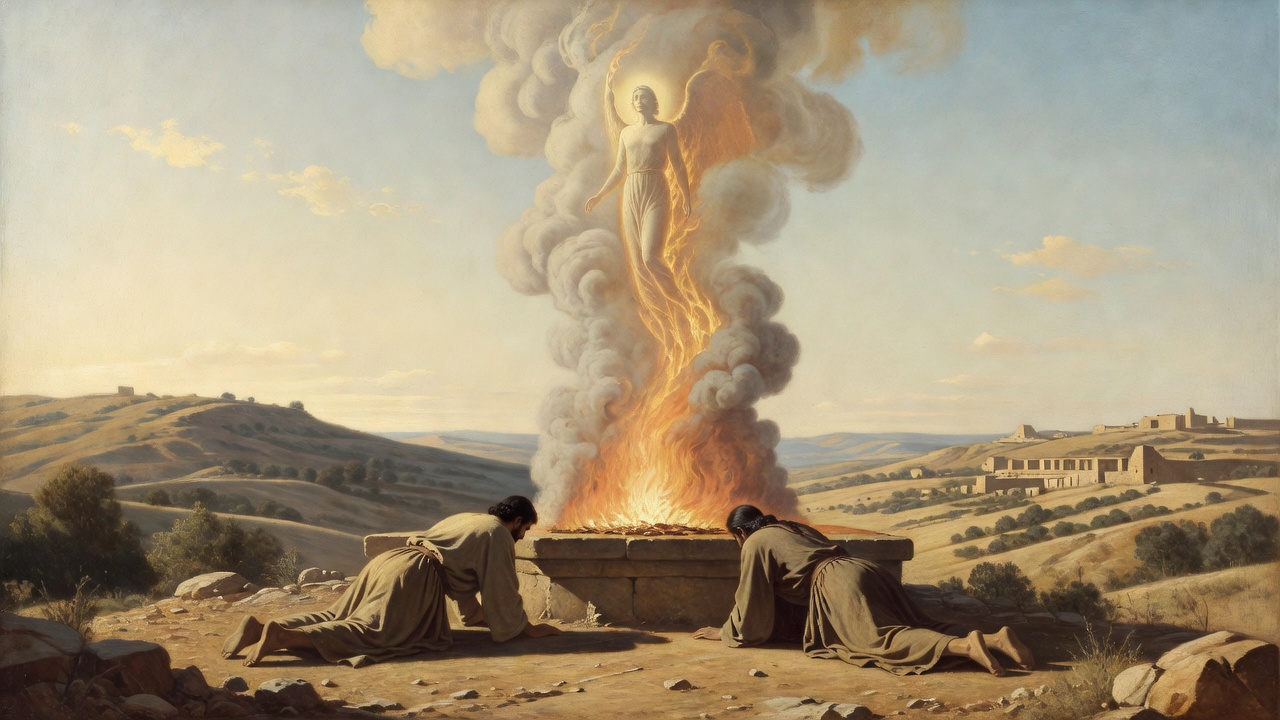
18Ọ zara, “Nʼihi gịnị kwa ka ị na-ajụ banyere aha m? Ọ bụ ihe karịrị nghọta.” 19Mgbe ahụ, Manoa weere nwa ewu, ya na ụfọdụ mkpụrụ ọka, jiri ha chụọrọ Onyenwe anyị aja nʼelu nkume. Mgbe ahụ kwa, Onyenwe anyị mere ihe dị ebube nke ukwuu mgbe Manoa na nwunye ya guzo na-ele anya: 20Mgbe ire ọkụ ahụ sitere nʼebe ịchụ aja ahụ na-arịgo na-aga elu, Mmụọ ozi Onyenwe anyị wụliri elu soro ire ọkụ ahụ rigoro gawa nʼeluigwe! Mgbe Manoa na nwunye ya hụrụ ka nke a na-eme, ha kpuru ihu ha nʼala. 21Mgbe Mmụọ ozi Onyenwe anyị na-egosighị onwe ya ọzọ nye Manoa na nwunye ya, ka Manoa ghọtara na ọ bụ Mmụọ ozi Onyenwe anyị ka ha hụrụ.
22Manoa gwara nwunye ya sị, “Anyị abụrụla ndị nwụrụ anwụ, nʼihi na anyị ahụla Chineke!”
23Ma nwunye ya zara sị ya, “Ọ bụrụ na Onyenwe anyị chọrọ igbu anyị, ọ garaghị anara aja nsure ọkụ, na aja mkpụrụ ọka anyị chụrụ nye ya. Ọzọkwa, ọ garaghị egosi anyị ihe ndị a niile maọbụ gwa anyị ihe ndị a.”
24Emesịa, nwanyị ahụ mụrụ nwa nwoke, onye ha gụrụ Samsin. Onyenwe anyị gọzikwara nwantakịrị ahụ mgbe ọ na-etolite. 25Mmụọ Onyenwe anyị bidokwara na-agba ya ume nʼoge niile, mgbe ọ nọ Mahane Dan, nke dị nʼetiti Zora na Eshtaol.
Did you know?
The Birth and Calling of Samson
- Samson is the first person in Scripture described as a Nazirite from birth. While vows under the law of Moses could be taken for a temporary duration, the angel instructed that Samson was to observe these restrictions, including abstaining from wine, unclean food, and haircuts, for his entire lifetime.Sources: Samson · the Bible text itself
- Samson's father, Manoah, belonged to the tribe of Dan and lived in Zorah, a town in the foothills overlooking the Sorek Valley. Along with neighboring Eshtaol, Zorah served as an important Danite settlement during a period of forty years under Philistine domination.Sources: Manoah · Zorah · Eshtaol · the Bible text itself
- The chapter closes at Mahaneh-dan, a name meaning the camp of Dan, situated between Zorah and Eshtaol. This site marks the location where the Spirit of the LORD first began to move upon Samson in his youth.Sources: Mahaneh-dan · the Bible text itself
Notes written with AI assistance from open sources (Theographic Bible Metadata, CC BY-SA 4.0; Easton’s Bible Dictionary, public domain) and reviewed before publishing.
Credits and license for this translation
Biblica® Baịbụlụ Nsọ nʼIgbo Ndị Ugbu a nke dịrị onye ọbụla ịgụ The Holy Bible in the Igbo language of Nigeria: Biblica® Baịbụlụ Nsọ nʼIgbo Ndị Ugbu a nke dịrị onye ọbụla ịgụ copyright © 2020 Biblica, Inc. Language: Igbo Contributor: Biblica, Inc. This work is made available under the Creative Commons Attribution-ShareAlike 4.0 International License (CC BY-SA). To view a copy of this license, visit http://creativecommons.org/licenses/by-sa/4.0 or send a letter to Creative Commons, PO Box 1866, Mountain View, CA 94042, USA. Biblica® is a trademark registered by Biblica, Inc., and use of the Biblica® trademark requires the written permission of Biblica, Inc. Under the terms of the CC BY-SA license, you may copy and redistribute this unmodified work as long as you keep the Biblica® trademark intact. If you modify a copy or translate this work, thereby creating a derivative work, you must remove the Biblica® trademark. On the derivative work, you must indicate what changes you have made and attribute the work as follows: “The original work by Biblica, Inc. is available for free at www.biblica.com and open.bible.” Notice of copyright must appear on the title or copyright page of the work as follows: Biblica® Baịbụlụ Nsọ nʼIgbo Ndị Ugbu a nke dịrị onye ọbụla ịgụ Ndị Biblica, Inc. degharịrị ya nʼafọ © 1980, 1988, 2019, 2020 Biblica® Open Igbo Contemporary Bible™ Copyright © 1980, 1988, 2019, 2020 by Biblica, Inc. “Biblica” bụ akara e ji mara ụlọ ọrụ a, nke edebanyere dịka iwu si kwado nʼụlọ ọrụ dị nʼobodo United States, ebe a na-enye akara a na ikike maka azụm ahịa ndị Biblica, Inc. Ọ bụ ha ka e nyere ikike idenye ya. “Biblica” is a trademark registered in the United States Patent and Trademark Office by Biblica, Inc. Used with permission. You must also make your derivative work available under the same license (CC BY-SA). If you would like to notify Biblica, Inc. regarding your translation of this work, please contact us at https://open.bible/contact-us. This translation is made available to you under the terms of the Creative Commons Attribution Share-Alike license 4.0. You have permission to share and redistribute this Bible translation in any format and to make reasonable revisions and adaptations of this translation, provided that: You include the above copyright and source information. If you make any changes to the text, you must indicate that you did so in a way that makes it clear that the original licensor is not necessarily endorsing your changes. If you redistribute this text, you must distribute your contributions under the same license as the original. Pictures included with Scriptures and other documents on this site are licensed just for use with those Scriptures and documents. For other uses, please contact the respective copyright owners. Note that in addition to the rules above, revising and adapting God's Word involves a great responsibility to be true to God's Word. See Revelation 22:18-19. 2023-04-12
Source: http://ebible.org/ibo/ · eBible.org