1 Kings 10
Biblica® Baịbụlụ Nsọ nʼIgbo Ndị Ugbu a nke dịrị onye ọbụla ịgụ · Tap a verse to see its cross-references.
Eze nwanyị Sheba bịara ileta Solomọn
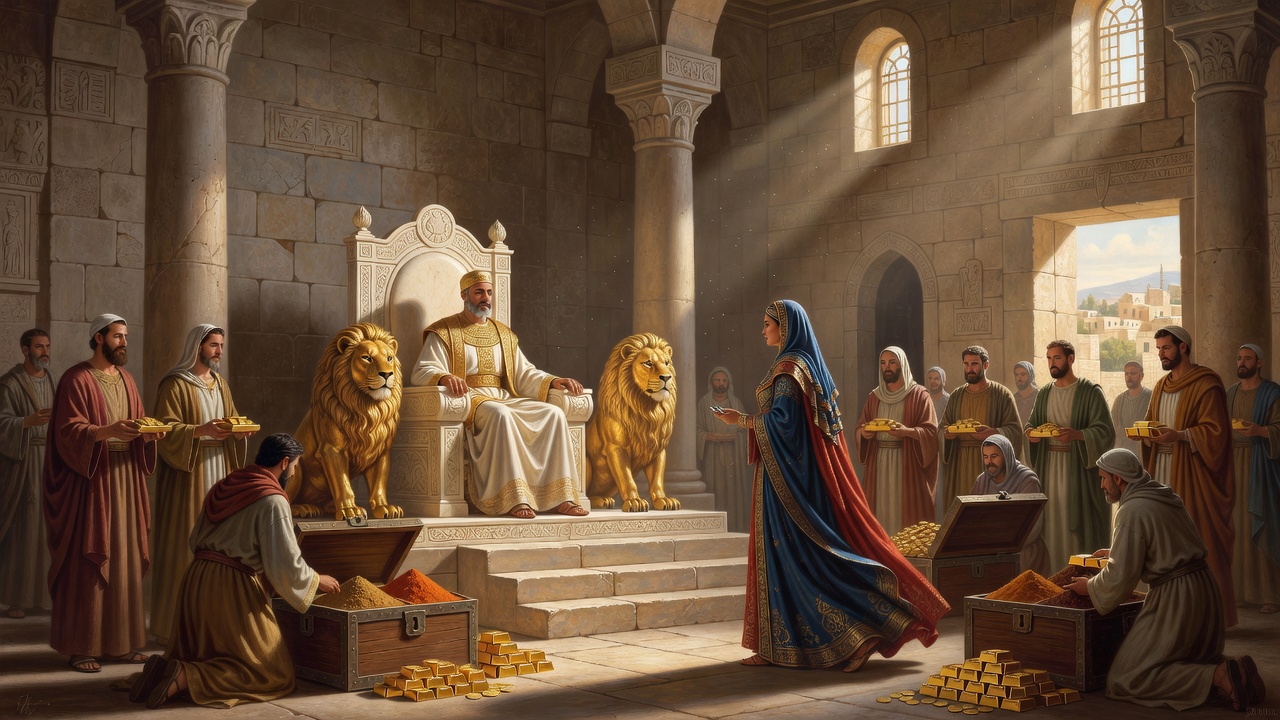
1Mgbe eze nwanyị Sheba nụrụ akụkọ Solomọn, na ịdị na mma nke dị nʼetiti ya na Onyenwe anyị, ọ bịara ka o were ọtụtụ ajụjụ siri ike nwalee Solomọn. 2Ọ bịarutere Jerusalem, ya na ọtụtụ ndị ozi nʼebe ha bara ụba, ndị so ya, tinyere ọtụtụ ịnyịnya kamel ndị bu ụda dị iche iche, ọtụtụ ọlaedo na nkume dị oke ọnụahịa dị iche iche. Ọ bịakwutere Solomọn, ya na ya kparịtara ụka banyere ihe niile nke dị ya nʼobi. 3Solomọn zara ya ajụjụ ya niile; ọ dịkwaghị ihe siiri eze ike ịkọwara ya. 4Mgbe eze nwanyị Sheba hụrụ amamihe niile nke Solomọn, hụkwa ụlọeze o wuru, 5na ihe oriri a na-adọkwasị nʼelu tebul ya, usoro ọnọdụ nke ndịisi ọchịchị ya, na ndị guzo na-ejere ya ozi nʼuwe ha yi, onye na-ebu iko ihe ọṅụṅụ ya, na aja nsure ọkụ niile ọ na-achụ nʼụlọnsọ Onyenwe anyị, ọ dịkwaghị ihe ọzọ ọ maara ọ ga-eme, maọbụ kwuo.
6Ọ sịrị eze, “Akụkọ niile m nọ nʼala m nụ banyere ihe niile ị rụpụtara na amamihe gị bụ eziokwu. 7Ma ekwenyeghị m akụkọ ndị a tutu ruo mgbe m bịara jiri anya m abụọ hụ ha. Nʼezie, ihe m nụrụ erughị ọkara; nʼamamihe nakwa nʼịba ụba gị, ị tụkwasịla ihe nʼakụkọ m nụrụ. 8Lee, ụdị ọṅụ ndị gị na-enwe. Lee, ụdị ọṅụ nke ndị ozi na-enwe, bụ ndị na-eguzo nʼihu gị mgbe niile na-anụ okwu amamihe gị. 9Ngọzị dịrị Onyenwe anyị Chineke gị, onye nwere mmasị nʼebe ị nọ, o debere gị nʼocheeze Izrel. Nʼihi ịhụnanya nke Onyenwe anyị na-adị ruo mgbe ebighị ebi nʼebe Izrel nọ, o meele gị eze, ka ị debe ikpe ziri ezi na ezi omume.”
10O nyere Solomọn onyinye ọlaedo ịdị arọ ya dị puku kilogram anọ, nyekwa ya ọtụtụ ụda na-esi isi ụtọ dị iche iche, na ọtụtụ nkume dị oke ọnụahịa. O nwebeghị oge ọzọ ewebatara ọtụtụ ụda na-esi isi ụtọ dịka ndị ahụ eze nwanyị Sheba nyere eze Solomọn.
11(Ọzọkwa, ọtụtụ ụgbọ mmiri nke eze Hiram bubatara ọlaedo site nʼỌfịa bulatara Solomọn. Ha sitekwara nʼebe ahụ bute osisi almụg nʼebe ọ bara ụba, na ọtụtụ nkume dị oke ọnụahịa dị iche iche. 12Eze ji osisi almụg ndị a wuo ogidi ndabere dị nʼụlọnsọ ukwu Onyenwe anyị na nke ụlọeze. O jikwa ya meere ndị na-abụ abụ ụbọ akwara na une. Ọ dịbeghị mgbe ọbụla ahụrụ maọbụ tụbata osisi almụg ha otu a site nʼụbọchị ahụ ruo taa.)
13Eze Solomọn nyekwara eze nwanyị Sheba ihe niile ọ chọrọ na ihe niile bụ nke ọ rịọrọ, na-agụnyeghị onyinye niile Solomọn nyere ya dịka eze ọ bụ. Emesịa, ọ hapụrụ laghachi nʼala nke aka ya, ya na ndị na-ejere ya ozi.
Ebube ịbụ eze Solomọn
14Ọtụtụ ịdị arọ nke ọlaedo Solomọn na-enweta kwa afọ bụ puku kilogram iri abụọ na atọ, 15na-agụnyeghị uru nke na-esi nʼaka ndị na-atụ mgbereahịa na ndị na-azụ ahịa na nke sitekwara nʼaka ndị eze Arebịa niile, nakwa nʼaka ndịisi na-achị obodo niile nke ala ahụ.
16Eze Solomọn kpụrụ narị ọta ọlaedo ukwu abụọ site nʼọlaedo etipịara etipịa. Ọ bụ ọlaedo nke ịdị arọ ya ruru kilogram isii na ụma itoolu ka eji kpụọ ọta ọbụla. 17Ọ kpụkwara narị ọta nta atọ, nke sitere na ọlaedo etipịara etipịa. Ọ bụ ọlaedo ịdị arọ ya ruru kilogram atọ na ọkara ka eji kpụọ ọta ọbụla. Eze debere ha nʼụlọeze nʼOke Ọhịa Lebanọn.
18Eze mekwara ocheeze dị ukwu nke e ji ọdụ enyi na ọlaedo a nụchara anụcha machie. 19Ocheeze ahụ nwere ihe nrigo isii, o nwere elu dị gburugburu nʼazụ ya. E nwere ebe ntụkwasị aka nʼakụkụ abụọ ya, nke nwere oyiyi ọdụm abụọ guzo nʼakụkụ nke ọbụla nʼime ha. 20Ọdụm iri na abụọ na-eguzo nʼelu ihe nrigo isii ahụ, otu nʼakụkụ isi abụọ nke ihe nrigo ọbụla. Ọ dịkwaghị alaeze ọzọ dị nke e mere ihe dị otu a nye. 21Ihe niile Solomọn nwere nke e ji aṅụ ihe bụ ọlaedo ka e ji mee ha. Ngwongwo niile nke dị nʼime ụlọeze nʼOke Ọhịa Lebanọn bụkwa ọlaedo a nụchara anụcha ka e ji kpụọ ha. Ọ dịghị ihe e ji ọlaọcha kpụọ, nʼihi na-agụnyeghị ọlaọcha dịka ihe ọbụla nʼoge Solomọn. 22Eze nwere ọtụtụ ụgbọ mmiri e ji azụ ahịa nʼoke osimiri, tinyere ụgbọ nke Hiram. Otu ugbo nʼafọ atọ, ka ụgbọ mmiri ndị a na-alọta, buru ọlaedo, ọlaọcha na ọdụ enyi, enwe na adaka dị iche iche bata.
23Eze Solomọn bara ụba nʼakụ, nwekwa amamihe karịa ndị eze niile dị nʼụwa. 24Ụwa niile na-abịa ịchọ ihu Solomọn ka ha nụta okwu amamihe nke Chineke tinyere nʼobi ya. 25Onye ọbụla bịakwutere ya na-ebutere ya onyinye ịnata ihuọma, ya bụ ngwa ọlaọcha na ọlaedo, uwe dị iche iche, ngwa agha, ụda dị iche iche, ịnyịnya na ịnyịnya muul, nke a bụ kwa afọ, kwa afọ.
26Solomọn chịkọbara ọtụtụ ụgbọ agha na ịnyịnya dị iche iche. O nwere ụgbọ agha dị otu puku na narị anọ na ịnyịnya agha dị puku iri na abụọ nʼọnụọgụgụ, ndị o debere ụfọdụ nʼime ha nʼobodo ụgbọ agha ya ma ndị ọzọ dị na Jerusalem ebe ya onwe ya nọ. 27Eze mere ka ọlaọcha baa ụba dịka nkume efu na Jerusalem. O mekwara ka osisi sida dị ọtụtụ dịka osisi sikamọ nke dị nʼala ala ugwu dị iche iche. 28A na-esite nʼIjipt nakwa ala Kue atụbatara Solomọn ịnyịnya. Ndị ahịa eze na-azụta ha site na Kue nʼọnụ ahịa a na-ere ha nʼoge ahụ. 29Ha sitere nʼIjipt tụbata otu ụgbọ agha nʼọnụ ahịa narị shekel ọlaọcha isii, jirikwa otu narị shekel na iri shekel ise zụta otu ịnyịnya. Ha zipụkwara ha nye ndị eze niile nke ndị Het na ndị Aram.
Did you know?
Solomon's Splendor and the Queen of Sheba
- Sheba is identified with Saba in Southern Arabia, a kingdom renowned in the ancient world for its lucrative trade in aromatics and spices. The queen's visit with a vast camel train carrying spices, gold, and precious stones reflected both diplomatic interests and the region's commercial wealth.Sources: Sheba · the Bible text itself
- Solomon allied with King Hiram of Tyre to conduct maritime expeditions to distant locations like Ophir and Tarshish. These fleets returned with rare goods, including almug wood, ivory, precious stones, and gold, further enriching the royal court in Jerusalem.Sources: Hiram · Ophir · Tarshish · the Bible text itself
- The biblical text describes Solomon's elaborate ivory throne overlaid with fine gold, which stood on six steps flanked by twelve sculpted lions. Such extravagant furnishings and gold drinking vessels highlighted the unprecedented prosperity of his reign.Sources: the Bible text itself
Notes written with AI assistance from open sources (Theographic Bible Metadata, CC BY-SA 4.0; Easton’s Bible Dictionary, public domain) and reviewed before publishing.
Places in this chapter
- Sheba · 15.348, 44.206 · verses 1, 4, 10, 13
- Jerusalem · 31.777, 35.234 · verses 2, 26, 27
- Arabia · Today: Arabian Peninsula · 23.000, 46.000 · verse 15
- House of the Forest of Lebanon · Today: in Jerusalem · 31.777, 35.234 · verses 17, 21
- Shephelah · 31.692, 34.875 · verse 27
- Egypt · 30.129, 31.308 · verses 28, 29
- Syria · Today: Aram · 33.511, 36.306 · verse 29
Only places identified with high confidence are shown (90% or more according to the scholarly sources compiled by OpenBible). Period map: DARE (Digital Atlas of the Roman Empire), CC BY 4.0; modern map: © OpenStreetMap contributors; places: OpenBible.info (CC BY 4.0).
Credits and license for this translation
Biblica® Baịbụlụ Nsọ nʼIgbo Ndị Ugbu a nke dịrị onye ọbụla ịgụ The Holy Bible in the Igbo language of Nigeria: Biblica® Baịbụlụ Nsọ nʼIgbo Ndị Ugbu a nke dịrị onye ọbụla ịgụ copyright © 2020 Biblica, Inc. Language: Igbo Contributor: Biblica, Inc. This work is made available under the Creative Commons Attribution-ShareAlike 4.0 International License (CC BY-SA). To view a copy of this license, visit http://creativecommons.org/licenses/by-sa/4.0 or send a letter to Creative Commons, PO Box 1866, Mountain View, CA 94042, USA. Biblica® is a trademark registered by Biblica, Inc., and use of the Biblica® trademark requires the written permission of Biblica, Inc. Under the terms of the CC BY-SA license, you may copy and redistribute this unmodified work as long as you keep the Biblica® trademark intact. If you modify a copy or translate this work, thereby creating a derivative work, you must remove the Biblica® trademark. On the derivative work, you must indicate what changes you have made and attribute the work as follows: “The original work by Biblica, Inc. is available for free at www.biblica.com and open.bible.” Notice of copyright must appear on the title or copyright page of the work as follows: Biblica® Baịbụlụ Nsọ nʼIgbo Ndị Ugbu a nke dịrị onye ọbụla ịgụ Ndị Biblica, Inc. degharịrị ya nʼafọ © 1980, 1988, 2019, 2020 Biblica® Open Igbo Contemporary Bible™ Copyright © 1980, 1988, 2019, 2020 by Biblica, Inc. “Biblica” bụ akara e ji mara ụlọ ọrụ a, nke edebanyere dịka iwu si kwado nʼụlọ ọrụ dị nʼobodo United States, ebe a na-enye akara a na ikike maka azụm ahịa ndị Biblica, Inc. Ọ bụ ha ka e nyere ikike idenye ya. “Biblica” is a trademark registered in the United States Patent and Trademark Office by Biblica, Inc. Used with permission. You must also make your derivative work available under the same license (CC BY-SA). If you would like to notify Biblica, Inc. regarding your translation of this work, please contact us at https://open.bible/contact-us. This translation is made available to you under the terms of the Creative Commons Attribution Share-Alike license 4.0. You have permission to share and redistribute this Bible translation in any format and to make reasonable revisions and adaptations of this translation, provided that: You include the above copyright and source information. If you make any changes to the text, you must indicate that you did so in a way that makes it clear that the original licensor is not necessarily endorsing your changes. If you redistribute this text, you must distribute your contributions under the same license as the original. Pictures included with Scriptures and other documents on this site are licensed just for use with those Scriptures and documents. For other uses, please contact the respective copyright owners. Note that in addition to the rules above, revising and adapting God's Word involves a great responsibility to be true to God's Word. See Revelation 22:18-19. 2023-04-12
Source: http://ebible.org/ibo/ · eBible.org