Revelation 11
Nin tének káwintal an okˀóxláb · Tap a verse to see its cross-references.
Xi cháb an óltsixtsik
1In pidhan tám jun i lejbaxtaláb xin junwal jelti jun i teꞌ xu lejbaxnáb ani in utsan enchéꞌ:
―Ki kʼale ka lejbay an atá xon tu kʼwajíl na Dios ani xon tu kʼwajbáb an pikbaxtaláb ani ka ajay xáy xu kʼakʼnaxtsik tajaꞌ. 2Por yab ka lejbantsi tin elébil an atá xon tu kʼwajíl na Dios, pos jachanꞌ, pidhnékich an píl iniktsik. Jechéꞌ an iniktsik, neꞌech kin odhbijiy an tʼokat bitsow tin nakíl óx i tamub kʼal chʼejel. 3Neꞌech ku abaꞌ cháb u tʼiltsíxil abal ti kin tʼilaꞌ tin nakíl óx i tamub kʼal chʼejel, xeketlidhtsik kʼal i kodhow kʼudhkʼum.
4Jechéꞌ cháb an tʼiltsixtsik, jaꞌich xi cháb an olibo ani xi cháb in kúb an béla xi kʼwajat tin tamét na Dios xin dhabal an chabál. 5Max u leꞌnáb ka atʼax tʼajtsintsik kʼal jun xitaꞌ, jajáꞌtsik in káldhál i kʼamal bin wiꞌ ani in tsikál kʼál xu tomnaxtsik, pos anchanꞌ koꞌol ka chemech xitaꞌkichkʼi xi kʼál tu leꞌnáb ka atʼax tʼajtsintsik. 6Jechéꞌ an tʼiltsixtsik, in koꞌol i awiltaláb abal kin tʼajaꞌ ke yab ka ulich i áb tam ka xeꞌchin ti tʼiltsixtsik. In koꞌoltsik jeye i awiltaláb abal kin wenkʼo an jaꞌ ti xichʼ ani kin waꞌchindhaꞌ xowaꞌkichkʼi i yajtsiktaláb techéꞌ ti chabál xáyíl kin leꞌnaꞌtsik. 7Por tam kin okʼóch ti tʼiltsix jechéꞌ an tʼiltsixtsik, neꞌech ka péjeyat kʼal an atʼax xi kale ban owtsiktaláb xi yab in koꞌol in okʼontal in ówtsík. Neꞌech ka átá ani neꞌech ka chemdhá an tʼiltsixtsik. 8Nin tʼuꞌúl an tʼiltsixtsik, neꞌech ka jilkʼon kwachatsik junax chʼejel an yejcheꞌ bitsow. Jechéꞌ an yejcheꞌ bitsow, jaꞌich jelti an bitsow xi Sodoma ani xi Ejipto. Ba jechéꞌ an yejcheꞌ bitsow, jaꞌich jeye xon ti chemdhá ni Ajátik pajkʼidh ban peltsidh teꞌ. 9Tin nakíl óx a kʼítsá kʼal chʼejel, neꞌech ka chuꞌtsintsik kwachatsik an tin tʼuꞌúl kʼal ejtalkʼi an atiklábtsik xi techéꞌ ti chabál ani yab neꞌech kin walkaꞌtsik ka jolyat. 10Xu kʼwajíltsik techéꞌ ti chabál, neꞌech ka kulbétsik tʼajat abal in chuꞌu chemdhá jechéꞌ an tʼiltsixtsik. Neꞌech ka kulbétsik tʼajat, ke asta neꞌech ti chʼéjwálixtsik jún ani jún; pos abal jajáꞌtsik, jachanꞌ cháb an tʼiltsixtsik, in junwal jelti max i yajbédhomtaláb. 11Por tam ti kidhéch óx a kʼítsá kʼal chʼejel, ejdhátsik kʼal na Dios. Chʼakaytsik ani jikʼeytsik tʼajat ejtal xi kʼál ti chuꞌtattsik. 12Xi jechéꞌ cháb an tʼiltsixtsik in achʼaꞌ tám jun i kawidh káwintaláb túꞌ walkʼiꞌ xu usnal kʼál enchéꞌ:
―Ki kʼadhiytsik techéꞌ.
Kʼadhiytsik tám walkʼiꞌ ba jun i tokow ani chuꞌtattsik xitaꞌ kʼál ti tomnadh. 13Támkʼi jachanꞌ, léwékʼin chapik an chabál, julpan jun pejeꞌ an bitsow ani chemech buk mil i atiklábtsik kʼal tin kwenta abal léwékʼin an chabál. An atiklábtsik xi jilkʼon, jikʼeytsik tʼajat ani in kʼakʼnaꞌtsik na Dios xi kʼwajat walkʼiꞌ.
14Nin chabtal an yajtsiktaláb, watʼéch, por kʼunat i kʼij neꞌech ka tujey nin oxtal.
Nin búkláb an korneta
15Tam ti nin búkláb an tʼokat abatwále in jutsuy an korneta xi taꞌ tin koꞌol, achʼatmé i kawidh káwintalábtsik tu walkʼiꞌ xin ulal enchéꞌ:
Xoꞌ in bajúch xowkʼi an Okʼóxláb ani an Kristo neꞌech ti takʼixich ban chabál xon tu takʼix an iniktsik;
ani Jajáꞌ neꞌech ti takʼix malilíl i kʼij.
16Xi jun inik chéꞌ an yejcheltsik, xi taꞌ ti buxutsik bin tʼokat kʼwajtaltsik tin tamét na Dios, tudhlan kututsik asta chabál, in kʼakʼnaꞌtsik na Dios, 17ani in ulutsik enchéꞌ:
Tu pidhál ti jalbintsixtaláb, Okʼóxláb,
Dios xi ejtal a ejtowal ka tʼajaꞌ,
xi kʼwajat ejat malilíl i kʼij,
pos a xalkʼámalich na pulek cháp
ani a tujúmalich ta takʼix.
18Ejtal an atiklábtsik chakunek,
por in bajúmalich an kʼij xowkʼi Tatáꞌ neꞌech ka pidhnaꞌ an ti yajtsiktaláb,
xowkʼi jeye neꞌech ka lújundhaꞌ an chemélomtsik
ani xowkʼi neꞌech ka pidhaꞌ na tʼiltsíxiltsik xowaꞌ in átámal abal ti tʼójontsámaltsik.
Xowkʼi jeye neꞌech ka pidhaꞌ xowaꞌ in átámal xu dhabalábichtsik kʼal Tatáꞌ ani xitaꞌ ti kʼakʼnantsal an ta bij,
tsʼitsik ani pakdhaꞌ.
In bajúmalich jeye an kʼij xowkʼi neꞌech ka kʼibdhaꞌtsik xin atʼax tʼajtsaltsik an chabál.
19Japyat tám túꞌ walkʼiꞌ an atá xon tu kʼwajíl na Dios ani xalkʼan nin taꞌpáb nin lejkintalábil xi taꞌ ti kʼwajat ban atá xon ti Jajáꞌ u kʼwajíl. Lamkʼin tám i léy, píkʼan i junkil, achʼatmé i káwintalábtsik, léwékʼin an chabál ani ulich jun i chapik idhidh áb.
Did you know?
The Two Witnesses and the Great City
- Revelation 11 says that the bodies of the two witnesses will lie in the street of the great city, figuratively called Sodom and Egypt, where their Lord was also crucified. A dictionary entry explains Sodom as Burning, or the walled, a city destroyed by fire from heaven because of its inhabitants' wickedness, a destruction that Scripture frequently recalls. Egypt, the land of the Nile and the pyramids, is likewise described as holding great significance in Scripture.Sources: the Bible text itself
- The two witnesses are empowered to prophesy for 1,260 days, clothed in sackcloth. They are the two olive trees and the two lampstands that stand before the Lord of the earth, and they have power to shut the sky so that no rain falls, to turn the waters into blood, and to strike the earth with every kind of plague.Sources: the Bible text itself
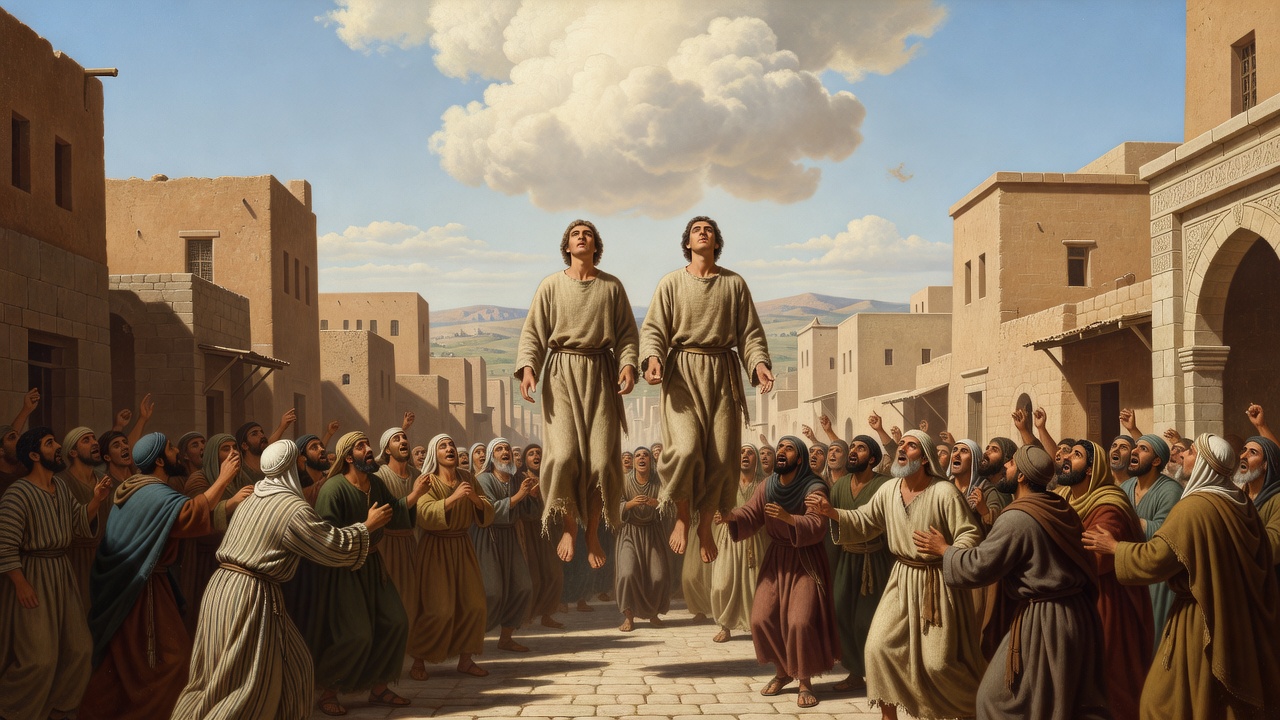
- When the two witnesses finish their testimony, the beast that comes up from the Abyss overpowers and kills them. For three and a half days, peoples, tribes, tongues, and nations view their bodies and will not permit them to be laid in a tomb, while the earth's inhabitants gloat over them, celebrate, and send one another gifts, because the two prophets had tormented them. After that, the breath of life from God enters them; they stand on their feet and go up to heaven in a cloud as their enemies watch.Sources: the Bible text itself
Notes written with AI assistance from open sources (Theographic Bible Metadata, CC BY-SA 4.0; Easton’s Bible Dictionary, public domain) and reviewed before publishing.
Places in this chapter
Only places identified with high confidence are shown (90% or more according to the scholarly sources compiled by OpenBible). Period map: DARE (Digital Atlas of the Roman Empire), CC BY 4.0; modern map: © OpenStreetMap contributors; places: OpenBible.info (CC BY 4.0).
Credits and license for this translation
Nin tének káwintal an okˀóxláb
New Testament in Huastec Aquiche; hus (MX:hus:Huastec)
copyright © 2005 Wycliffe Bible Translators, Inc.
Language: Huastec
Translation by: Wycliffe Bible Translators, Inc.
Huasteco, Veracruz [hus], Mexico
Copyright Information
© 2005, Bible League International
This translation text is made available to you under the
terms of the Creative Commons License: Attribution-Noncommercial-No Derivative Works.
( http://creativecommons.org/licenses/by-nc-nd/3.0/ )
In addition, you have permission to port the text to different file formats, as long as you
do not change any of the text or punctuation of the Bible.
You may share, copy, distribute, transmit, and extract portions
or quotations from this work, provided that you include the above copyright
information:
You must give Attribution to the work.
You do not sell this work for a profit.
You do not make any derivative works that change any of the actual words or punctuation of the Scriptures.
Permissions beyond the scope of this license may be
available if you contact
us with your request.
The New Testament
in Huastec
© 2005, Bible League International
This translation is made available to you under the terms of the
Creative Commons Attribution-Noncommercial-No Derivatives license 4.0.
You may share and redistribute this Bible translation or extracts from it in any format, provided that:
You include the above copyright and source information.
You do not sell this work for a profit.
You do not change any of the words or punctuation of the Scriptures.
Pictures included with Scriptures and other documents on this site are licensed just for use with those Scriptures and documents.
For other uses, please contact the respective copyright owners.
2014-04-25
Source: http://ebible.org/husNT2005/ · eBible.org