Ephesians 5
Nin tének káwintal an okˀóxláb · Tap a verse to see its cross-references.
Xan ti yejat ka kʼwajay xu chakámlábichtsik kʼal na Dios
1Pos kom i chakámlábichtsik kʼal na Dios, xi kʼanidhábtsik tʼajat, yejat ka tʼajáltsik xowaꞌ Jajáꞌ in tʼajál. 2Ki kʼánídháxintsik, jelt xan ti na Kristo tu kʼanidhaꞌ ani in pidhnaꞌ tinbáꞌ ka chemdhá kʼal wawáꞌ ti alwaꞌbíl, jelt tam u chemdháb jun i borrego abal ka pikbantsat na Dios tsikadh ani kin jiktsi tin niwíy.
3Kom i dhabalábichtsik kʼal na Dios, yabich yejat ka waꞌchin kʼal tatáꞌtsik níwéꞌ xitaꞌ xu kʼwajíltsik yab exbadh, ni jun xataꞌ xowaꞌ atʼax, nibal i chʼeꞌneꞌtaláb. 4Yab ka tʼilaꞌtsik ni jun xataꞌ xi yab tsubax, nibal xowaꞌ xi yab a exláltsik; yab jeye ki odhbijxin, pos ejtal jechéꞌ yab alwaꞌ. Alwaꞌ más ki pidhál ti jalbintsixtaláb na Dios. 5Pos a choꞌóbichtsik alwaꞌ, ke max jun xitaꞌ u junkunal kʼal xi yab in tomtal o in tʼajál xowaꞌ yab alwaꞌ, yab neꞌech kin ejto ka kʼwajay takʼnél kʼal na Kristo ani kʼal na Dios. Xitaꞌ chʼeꞌneꞌ tʼajat, in junwal jelti max in kʼakʼnál i chʼilabtsik, yab jeye neꞌech kin ejto ka kʼwajay takʼnél kʼal na Kristo ani kʼal na Dios. 6Yab ka walkaꞌtsik ti ki kʼambiy ni jun xitaꞌ kʼal i aniꞌ tʼilabtsik. Pos jaꞌich kʼal jechéꞌ tin kwenta tu tʼájnal xowaꞌ yab alwaꞌ ani jaꞌich ti neꞌech ka tsích an kʼakʼadh yajtsiktaláb xi neꞌech kin abnaꞌ na Dios abal an atiklábtsik xi yab u tʼajnal kʼál ti kʼij na Dios. 7Pos yabtsik ka wéwnaꞌ xowaꞌ a chuꞌtal in tʼajáltsik.
8Tatáꞌtsik i kʼwajatwiꞌik jelti max ban jikʼwaxtaláb kʼal tin kwenta an walastaláb xa tʼajáltsik. Por xoꞌ, kom i kʼwajatichtsik junax kʼal an Ajátikláb, i kʼwajatichtsik jelti max ban tajaxtaláb. Ki kʼwajaytsik jelt xan tu kʼwajíl an atiklábtsik xi kʼwajattsik ban tajaxtaláb. 9Pos ban tajaxtaláb tu tsiꞌil ejtal an alwaꞌtaláb, an tsubaxtaláb ani an lujattaláb. 10Ka tʼajáltsik echʼekʼi xowaꞌ in léꞌ an Ajátikláb. 11Yab ka tʼajáltsik xowaꞌ xi yab xataꞌ in jalbíl jelt xowaꞌ in tʼajál xi yabtsik u belom xi kʼwajattsik jelti max ban jikʼwaxtaláb; más alwaꞌ ka xalkʼantsitsik abal kin chuꞌutsik ke yab alwaꞌ. 12Pos tidhetál tʼajat ki tʼilaꞌ asta xowaꞌ jajáꞌtsik in tʼajál chinat; 13por tam ka xalkʼantsat ban tajaxtaláb ejtal xowaꞌ in tʼajáltsik, ejtal u jilkʼonal tejwaꞌ, pos an tajaxtaláb in xalkʼál ejtal. 14Jaxtám tu ulwáb enchéꞌ:
Ki ejchich, tatáꞌ xi kʼwajat ta wayal;
ki chʼakách xon ta kʼwajat ban chemélomtsik
ani na Kristo neꞌech ti tajbách.
15Jaxtám, ka chuꞌutsik alwaꞌ xan ta kʼwajattsik. Yab ki kʼwajaytsik jelti xi yab chalpadh, ki kʼwajaytsik jelti xi chalpadh. 16Ka éynaꞌtsik alwaꞌ an kʼij, pos an kʼij yab echʼekʼi alwaꞌ. 17Yabtsik ka junu jelti xi yab chalpadh; ka exbaytsik alwaꞌ xowaꞌ in léꞌ ka tʼajan an Ajátikláb. 18Yab ki uchʼáchtsik, pos jechéꞌ yab alwaꞌ, u júnax ban kʼibeltaláb; más alwaꞌ ka aliytsik xan ti ki kʼwajay teykómte tʼajat kʼal nin cháp an Tʼokat Ejattaláb. 19Ka ajatnaꞌtsik i ajatlábtsik ani i ajatlábtsik xi ijtsinal kʼal an Tʼokat Ejattaláb. Ka ajtintsitsik ani ka kʼakʼnaꞌ kʼal ejtal na itsích an Ajátikláb. 20Ka pidháltsik echʼekʼi ti jalbintsixtaláb na Dios an Tátaꞌláb kʼal ejtal xowaꞌ a tʼajáltsik, tin bij ni Ajátik Jesukristo.
Xan ti yejat ka kʼwajay an belomtsik kʼal nin kidhtaltsik
21Ki kʼákʼnáxintsik jún ani jún abal ka xalkʼan ke yabich a chʼikat tʼajáltsik na Dios.
22An tomkidh mímláb yab yejat kin chʼikat tʼajál nin tomkíl, pos jaꞌich in léꞌ an Ajátikláb. 23Abal an tomkidh inik, jaꞌich kʼwajat jelti nin ókʼ nin tomtal, anchanꞌ jelti na Kristo kʼwajat jelti nin ókʼ an belomtsik. Na Kristo jaꞌich jeye nin Loꞌóxil an belomtsik ani an belomtsik jaꞌich na kʼwajat jelti nin putálíl nin tʼuꞌúl na Kristo. 24Pos anchanꞌ xan ti an belomtsik yab in chʼikat tʼajál na Kristo, anchanꞌ jeye an tomkidh mímlábtsik yab yejat kin chʼikat tʼajaꞌ nin tomkíl.
25Tomkidh iniktsik, ka kʼanidhaꞌ na tomtal, jelt xan ti na Kristo tin kʼanidhaꞌ an belomtsik ani in pidhnaꞌ tinbáꞌ ka chemdhá kʼal tin alwaꞌbíl an belomtsik. 26Jechéꞌ in tʼajaꞌ abal kin tʼoko an belomtsik. In tʼoko kʼal an alwaꞌ tʼilab ani in tʼoko jelti max kʼal i jaꞌ, 27abal kin utu tin tamét Jajáꞌ jelti jun i labidh tʼokat belomtsik, yab chʼoꞌodh, alabél, tʼokat ani lujat tʼajat. 28An tomkidh inik, yejat kin kʼanidhál nin tomtal, jelt xan tin kʼanidhál tinbáꞌ. Xitaꞌ in kʼanidhál nin tomtal, in kʼanidhál tinbáꞌ. 29Pos ni jun xitaꞌ yab in pojkál tinbáꞌ, tokot in kʼapundhál ani in beletnál tinbáꞌ. Na Kristo, anchanꞌ jeye tin tʼajál kʼal an belomtsik; 30pos an belomtsik, jaꞌich na kʼwajat jelti nin putálíl nin tʼuꞌúl na Kristo ani wawáꞌ jayéch i kidhtal jachanꞌ nin putálíl nin tʼuꞌúl na Kristo. U tʼajadh kʼal jayéch nin tʼuꞌúl ani kʼal jayéch nin beklék. 31“Jaxtám, an inik neꞌech kin jilaꞌ nin tátaꞌ ani nin nánaꞌ abal ka kʼwajay kʼal nin tomtal ani xi jechéꞌ cháb, jún tokot ti neꞌech ka ájin.” 32Jechéꞌ jaꞌich jun xataꞌ púlek xi kʼwajatwiꞌik yab tejwaꞌ; por nanáꞌ in kʼwajat u tʼilál na Kristo ani an belomtsik. 33Por jechéꞌ in ulal jeye ke juntsik ta éb yejat ka kʼanidhaꞌ na tomtal jelt xan ta kʼanidhál tabáꞌ ani an tomkidh mímláb, yab yejat kin chʼikat tʼajaꞌ nin tomkíl.
Did you know?
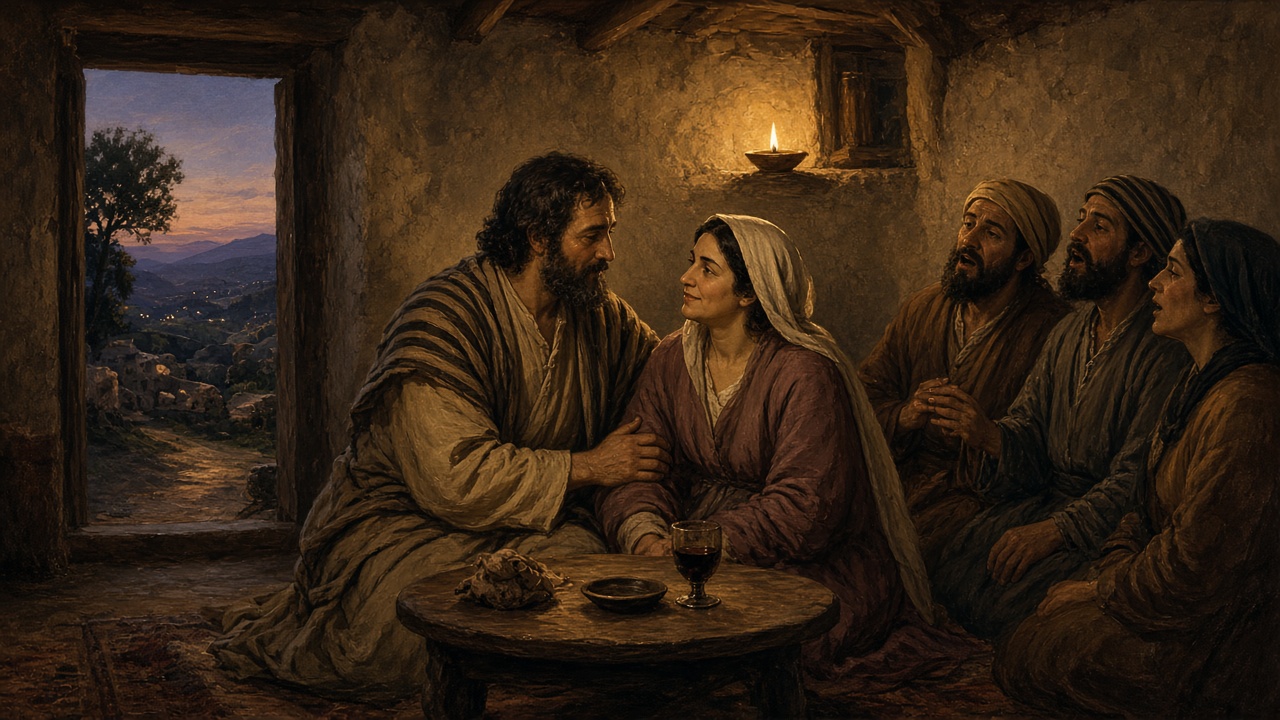
Love, light, and the household
- Ephesians 5 opens by calling readers to imitate God as beloved children and to walk in love, just as Christ loved them and gave himself up for them as a fragrant sacrificial offering to God.Sources: the Bible text itself
- The chapter says its readers were once darkness but are now light in the Lord, and that the fruit of the light is all goodness, righteousness, and truth. It also cites a saying that calls the sleeper to wake and rise from the dead, promising that Christ will shine on that person.Sources: the Bible text itself
- A call to submit to one another out of reverence for Christ introduces the instructions for wives and husbands. Husbands are told to love their wives as Christ loved the church and gave himself up for her, and the chapter calls the union of husband and wife a profound mystery concerning Christ and the church.Sources: the Bible text itself
Notes written with AI assistance from open sources (Theographic Bible Metadata, CC BY-SA 4.0; Easton’s Bible Dictionary, public domain) and reviewed before publishing.
Credits and license for this translation
Nin tének káwintal an okˀóxláb
New Testament in Huastec Aquiche; hus (MX:hus:Huastec)
copyright © 2005 Wycliffe Bible Translators, Inc.
Language: Huastec
Translation by: Wycliffe Bible Translators, Inc.
Huasteco, Veracruz [hus], Mexico
Copyright Information
© 2005, Bible League International
This translation text is made available to you under the
terms of the Creative Commons License: Attribution-Noncommercial-No Derivative Works.
( http://creativecommons.org/licenses/by-nc-nd/3.0/ )
In addition, you have permission to port the text to different file formats, as long as you
do not change any of the text or punctuation of the Bible.
You may share, copy, distribute, transmit, and extract portions
or quotations from this work, provided that you include the above copyright
information:
You must give Attribution to the work.
You do not sell this work for a profit.
You do not make any derivative works that change any of the actual words or punctuation of the Scriptures.
Permissions beyond the scope of this license may be
available if you contact
us with your request.
The New Testament
in Huastec
© 2005, Bible League International
This translation is made available to you under the terms of the
Creative Commons Attribution-Noncommercial-No Derivatives license 4.0.
You may share and redistribute this Bible translation or extracts from it in any format, provided that:
You include the above copyright and source information.
You do not sell this work for a profit.
You do not change any of the words or punctuation of the Scriptures.
Pictures included with Scriptures and other documents on this site are licensed just for use with those Scriptures and documents.
For other uses, please contact the respective copyright owners.
2014-04-25
Source: http://ebible.org/husNT2005/ · eBible.org