Zechariah 4
Habo nalolene bi gahenge lo winigo ogo · Tap a verse to see its cross-references.
Lamu hale wiagane irane wiaria hendenego ogo
1Dahuliyali ala i̱la bi lalu haribagome i̱ hewaria ibalu i̱ paliahondo haradagua biwaria barila haya. 2Ani buwa ibugua i̱hondo hale halu lalu, Í̠na agile dege hendedebe, laya.
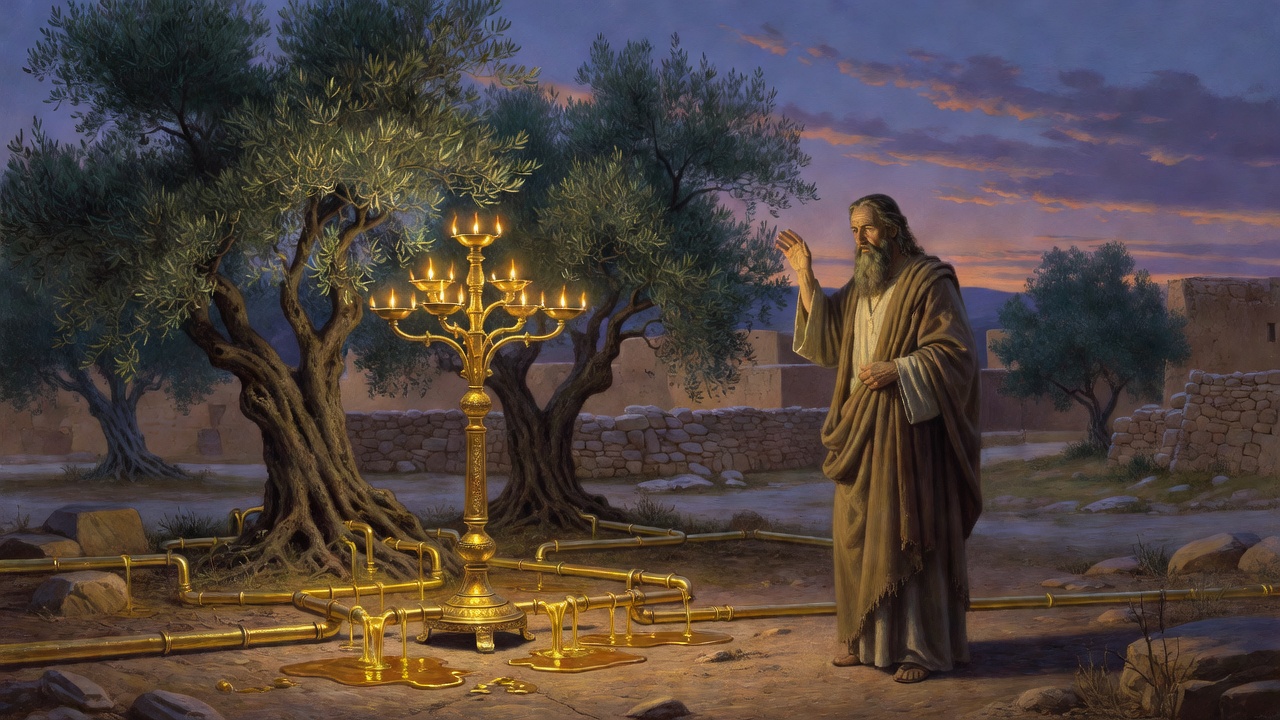
Ani layagola i̱na ibuhondo ladai bialu lalu, I̱na lamu hale wiagane irane mbira ngolome wabini ngaria hendedo. Lamu hale wiagane ogoninaga nguni daligahayagi ndisi be weli bedaore mo paga howa ngane hendedo. Lamu hale wiagane irane mbiraore ogoriani howa lamu karia ho gebaga bigi bidago odaruni ti hale delole iba be mbiraore ogoniha howa dege purogo lagadane hendedo. 3Ai weli be wiaga biagonaga lene mende mendehabi ira olibe kira kane hendedo, lalu dahuliyali biagohondo ladai biru. 4I̱na uruni hondowa ai irane agibe lalu ibuhondo hale haru.
5Ani hale halu hewaria ibugua ladai bialu lalu, Í̠na uruni manda nabi kebe, layagola i̱na ibuhondo ladai bialu lalu, Agali haguane-o i̱ manda nabiore kogoni, laru.
Anduane Homogo ibugua mbirale mbira buleore bero lalu Serubabelehondo bi mbira lowinigo ogo
6Ani larugola dahuliyali biago ibugua ladai bialu, Bi ogo agali haguane Serubabele kagohondo lamibe, laya. Bi ogoni Anduane Homogohanda lalu, Í̠na biabe berego bialu í̠naga ami agali kegonaga hongonibi í̠ninaga hongonibi ndo bialu holebere. I̱ dinininaga hongo í̠ha kagome biabe berego bayale bialu holebere. 7Í̠ poregoha mbirale taibi hari timbuni wedarubime hapai hayaguabi i̱nime mo waholebero. Ani bialu kogola í̠na i̱naga anda gialo wahene biago lone bia dai bulebere. Anda ogoni bule pigane bialu howa anda háinaga ege to̱le̱ dunini wia maro bialu kegola wali agali tigua hondowa lalu, Anda ogoni bayaleoreda, laga bialu hongo howa ga̱ ladagadaga bialu holebira, laya.
8Ai Anduane Homogohanda bi mende langiyago ogo. 9Ibugua lalu, Serubabelehanda i̱naga anda ogoni bulenaga dindi gumuni godo tiga bialu gene wedago ibunioreme biai holebira. I̱naga anda ogoni biai kagola i̱naga wali agaliru tigua i̱nime í̠ ti karia pu layada lo manda biai holebira. 10Biabe ogoni biai nahedagola i̱naga wali agalirume tinaga bu miniha genda ho holebira. Anigo Serubabele ibugua anda pigane tenialu bulenaga pu luni anda magi manda bulenaga yu howa bialu kago hondowa wali agali tigua turu timbuni ho holebira, laya lalu dahuliyali biagome lene.
Lamu hale wiaganebi ira olibe kirabi de hendenegonaga irane laminigo ogo
Dahuliyali biagome i̱hondo lalu, Lamu karia uruninaga manane Anduane Homogonaga de karia howa dindi bibahendeore ibugua handame haga ka, laya.
11Ani layagola i̱na ibuhondo hale halu lalu, Lamu hale wiagane gene mende mendehayagibi ira olibe kira kago irane agibe. 12Ira olibenaga magane kira olibe lininaga weli piagane baibo harigawi ngolome wabinigoha mandagi kago ogoninaga iranebi langibe, laru.
13Ani hale halu hewaria ibugua ladai bialu lalu, Í̠ uruni manda nabi kebe, layagola, i̱na ibuhondo ladai bialu lalu, Agali haguane-o i̱ manda nabiore kogoni, laru.
14Ani larugola ibugua lalu, Ira olibe kira ogoni libu agali kira dindi bibahendenaga Anduane Homogo kagome ibunaga biabe bilo dabalu libunaga haguaneni olibe weli odo wialu helenego ka, lalu langiya.
Did you know?
The Lampstand and Zerubbabel
- Zerubbabel led the first group of Jewish exiles returning from Babylon and laid the foundation for the rebuilt temple. In this vision, the prophet is assured that despite major obstacles, Zerubbabel will complete the temple and bring forth its capstone with a plumb line in hand.Sources: Zerubbabel · the Bible text itself
- The vision of the solid gold lampstand supplied with oil from two olive trees illustrates that God's work will be accomplished not by might nor by power, but by his Spirit. The two olive branches are identified as two anointed ones standing beside the Lord of all the earth.Sources: the Bible text itself
Notes written with AI assistance from open sources (Theographic Bible Metadata, CC BY-SA 4.0; Easton’s Bible Dictionary, public domain) and reviewed before publishing.
Credits and license for this translation
Habo nalolene bi gahenge lo winigo ogo
The Holy Bible with Deuterocanon in the Huli Language of Papua New Guinea
Buk Baibel long tokples Huli long Niugini
Copyright © 1983, 1991, 2002 Bible Society of Papua New Guinea
℗ Faith Comes by Hearing
Language: Huli
Translation by: Bible Society of Papua New Guinea
This translation is made available to you under the terms of the
Creative Commons Attribution-Noncommercial-No Derivatives license 4.0.
You may share and redistribute this Bible translation or extracts from it in any format, provided that:
You include the above copyright and source information.
You do not sell this work for a profit.
You do not change any of the words or punctuation of the Scriptures.
Pictures included with Scriptures and other documents on this site are licensed just for use with those Scriptures and documents.
For other uses, please contact the respective copyright owners.
2014-12-11
Source: http://png.bible/hui/ · eBible.org