Psalms 87
Habo nalolene bi gahenge lo winigo ogo · Tap a verse to see its cross-references.
Yarusaleme tano mo yaraga halu iba gana lenego ogo
1Anduane Homogo ibugua ibuninaga tano mbira hari hombene loma bini winigoria bini.
2Ibugua Isaraelenaga dindi maru bu ngaru gubalini ho kagobi ndo
Yarusaleme tanoore gubalini timbuniore ho kagoni.
3Ngode Datagaliwabenaga tano odagoriani wali agali bu kamiru-o
Ngode Datagaliwabe ibugua tí lalu bi baya turubioreru mbira laga birago hale halimu.
4Ngode Datagaliwabe ibugua ogodagua laya.
Wali agali i̱naga bi larogo hale halu biaga karu damenego dagalama porongi
i̱na Iyibi wali agalibi Babilonia wali agalibi dagalamaga dege holebero, leda.
Pilidia wali agalibi Taia wali agalibi Idiobia wali agalibi
uruni tibi Yarusaleme wali agali heba dege dagalamaga holebero, leda.
5Yarusaleme tano lalu agua lolebira.
Hameigini tara tara paluyu pedaru
ti bibahendenaga dindi duniniore ogoni holebira, leda.
Ngode Datagaliwabe Hongo Haiheore kagome Yarusaleme heyu helalu
dindi ogoni hongoheore helo mo hongoho helolebira.
6Anduane Homogo ibugua wali agali maru dindi tara tarani karunaga minibi gili buwa
Yarusaleme wali agalinaga minibi heba gilibumaga howa daga lamaga holebira.
7Yarusaleme wali agali bu karume turuore howa iba gana lalu,
Iname mbirale bayale bayale yu kamarunaga tene Yarusalemeha ngagoni, lalu holebira.
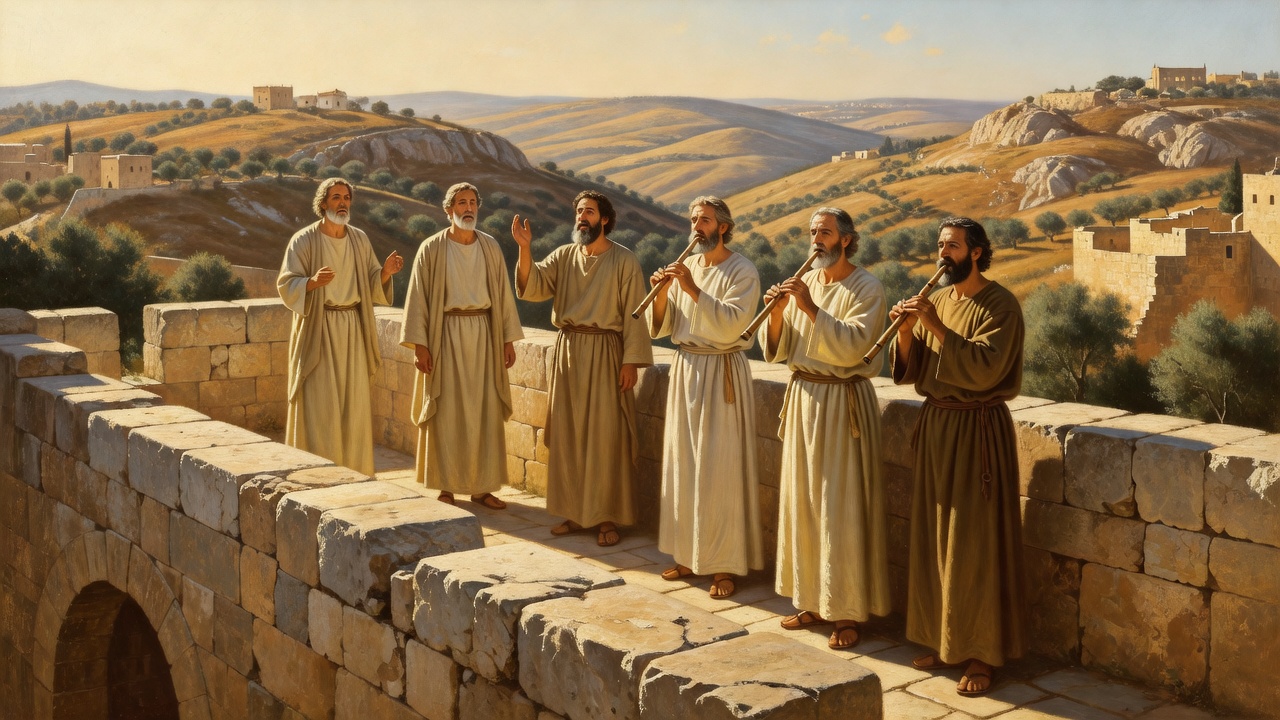
Did you know?
Zion and the Nations
- In Psalm 87, foreign and historically rival regions—including Babylon, Philistia, Tyre, and Cush—are depicted as being registered as native citizens born in Zion, the city of God.Sources: the Bible text itself · Zion · Tyre · Babylon
- The name 'Rahab' in verse 4 is a poetic Hebrew term meaning insolence or pride, used in biblical poetry as a symbolic designation for Egypt.Sources: Rahab · the Bible text itself
- The psalm is attributed to the 'sons of Korah,' a Levitical group that provided musical leadership in Jerusalem centuries after their ancestor Korah led a rebellion in the wilderness.Sources: Korah (Levite) · the Bible text itself
Notes written with AI assistance from open sources (Theographic Bible Metadata, CC BY-SA 4.0; Easton’s Bible Dictionary, public domain) and reviewed before publishing.
Places in this chapter
- Zion · Today: Jerusalem · 31.777, 35.234 · verses 2, 5
- Babylon · 32.543, 44.422 · verse 4
- Cush · Today: Cush 1 · 16.935, 33.751 · verse 4
- Egypt · 30.129, 31.308 · verse 4
- Jerusalem · 31.777, 35.234 · verses 4, 6, 7
- Philistia · 31.664, 34.546 · verse 4
- Tyre · 33.271, 35.196 · verse 4
Only places identified with high confidence are shown (90% or more according to the scholarly sources compiled by OpenBible). Period map: DARE (Digital Atlas of the Roman Empire), CC BY 4.0; modern map: © OpenStreetMap contributors; places: OpenBible.info (CC BY 4.0).
Credits and license for this translation
Habo nalolene bi gahenge lo winigo ogo
The Holy Bible with Deuterocanon in the Huli Language of Papua New Guinea
Buk Baibel long tokples Huli long Niugini
Copyright © 1983, 1991, 2002 Bible Society of Papua New Guinea
℗ Faith Comes by Hearing
Language: Huli
Translation by: Bible Society of Papua New Guinea
This translation is made available to you under the terms of the
Creative Commons Attribution-Noncommercial-No Derivatives license 4.0.
You may share and redistribute this Bible translation or extracts from it in any format, provided that:
You include the above copyright and source information.
You do not sell this work for a profit.
You do not change any of the words or punctuation of the Scriptures.
Pictures included with Scriptures and other documents on this site are licensed just for use with those Scriptures and documents.
For other uses, please contact the respective copyright owners.
2014-12-11
Source: http://png.bible/hui/ · eBible.org