Psalms 79
Habo nalolene bi gahenge lo winigo ogo · Tap a verse to see its cross-references.
Isaraele wali agali biamogo bilo Ngode Datagaliwabehondo bi la henego ogo
1Ngode Datagaliwabe-o wali agali tara tara í̠ mitangi nabiaga karume
í̠naga dindi wai bialu karulole íbu ka.
Tigua anda í̠nagaore helo loma biaho helarigoha anda puwa mebia haya.
Yarusalemebi mo ko halu bo gialo wahai haya.
2Tigua í̠naga wali agali bo wahalu ega bodo hariawe aleme nelo
tinaga tingini ngelalu pene.
Í̠naga biabe biahaga wali agali hearu bo wahai hayagola
nogo gabua bu hearume tinaga tingini nalu kagoni ndobe.
3Waitigi biarume í̠naga wali agali biaru bo wahayagola
uruninaga darama Yarusaleme tanoha iba poradagua pialu kagoni.
Homayaru mo horo holene agali mbira naheoreya.
4Hameigini tara tara ina kamagoria kaware bu karume
ina mege buwa hondo oba halu bi koru laga bialu ka.
5Anduane Homogo í̠na inahondo keba ho haabo holeberebe.
Í̠naga kebago hongohe ira hungu ale dalu hundia nabulene kebe be agua bidebe.
6Hameigini tara tara í̠ mitangi bialu lotu nalagabi í̠nihondo bi nalagabi karu
tihondo keba hariyagua nde karulapeda.
7Wali agali uruni tigua í̠naga wali agali hearu bo wahai halu
í̠naga dindi andaru mo ko halu mo labu hai haya.
8Inanaga mamalirume mana ko bialu hayagonaga pani nolene winigo
inahondo nguleni nangibe.
Ina mini dege dindi ho kamago hondowa dara halu
inanaga mini mbiraore ngamago mo hongo habe.
9Ngode Datagaliwabe-o ina pele ngiaga í̠ore kegoni.
Í̠ mini leneore kegome ina mitangi bialu biamogo bibe.
Iname ko birimaru domo wahalu ina haru dai bibe.
10Hameigini tara tara bu karume lalu,
Tínaga Ngode Datagaliwabe agoha kabe, laga bialu kago
irane aginaga í̠na ti ani leledebe.
Hameigini tara tara uruni tigua wali agali í̠naga biabe biahaga bu hearu
bo wahai halu tinaga darama piyadagua tininaga darama ani pelo
í̠na tini bo waharego ina hondole hamelo kama.
11Garabaya andaha bu karume dugu biaruago hale habe.
Waitigi bu karume inanaga wali agali garabaya karu
ti homelo bolene nga layago nahomelo
í̠ninaga hongo timbuni ngegome ti haru dai bibe.
12Anduane Homogo-o waitigi agali uruni tigua í̠hondo bi ko laabo hayagonaga
í̠na tihondo pani ka halu miadai bibe.
13Í̠na ani beregola ina nogo sibi ale howa í̠naga wali agali bu kamarume
í̠hondo ka̱i̱ laabo holeberema.
Inanaga waneigini aguaneneru mani hama polobadaru tiguabi
í̠naga mini yaraga halu hadege bulebira.
Did you know?
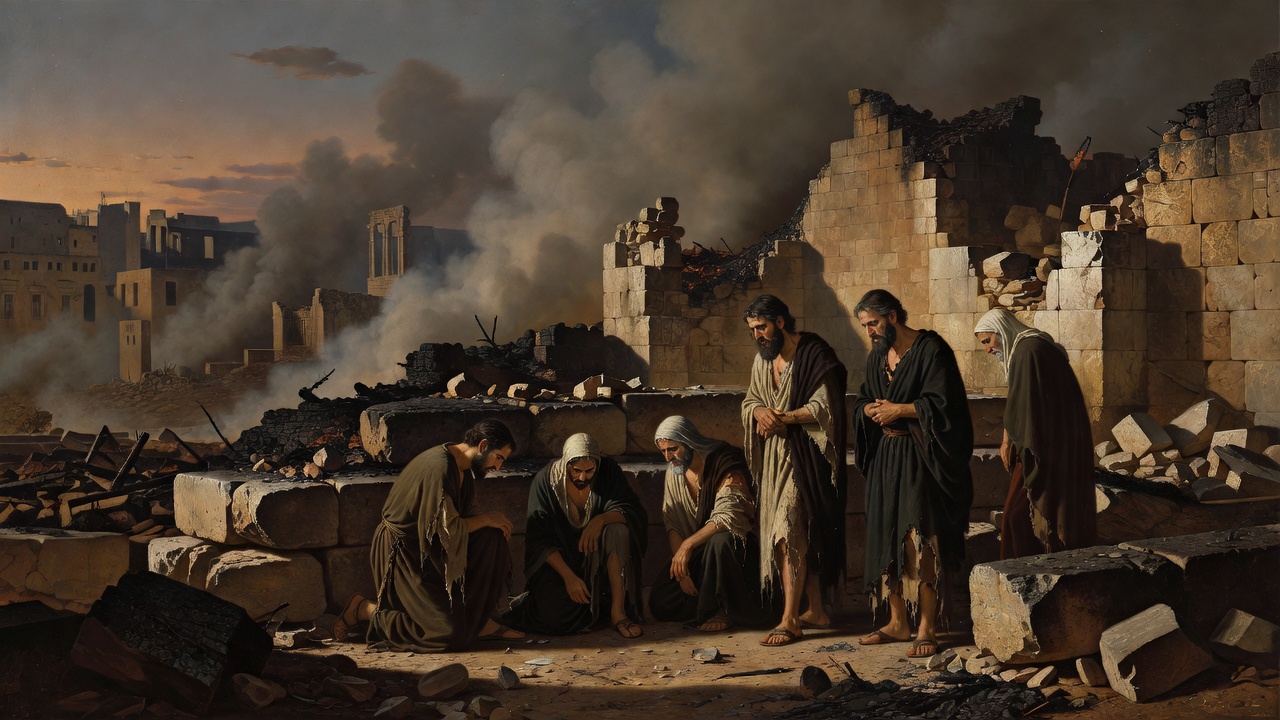
A Lament over the Destruction of Jerusalem
- Psalm 79 is titled a psalm of Asaph, placing it among a collection of psalms (Psalms 50 and 73–83) associated with the Levite musician and seer Asaph. In the biblical record, the title may also refer to the sons of Asaph, a recognized guild of temple singers and poets.Sources: Asaph (Levite) · the Bible text itself
- The psalm laments the defilement of the holy temple, the destruction of Jerusalem into rubble, and the unburied bodies left throughout the city. Jerusalem, known as the holy city and a mountain fastness, is portrayed here as having suffered devastating invasion by surrounding nations.Sources: Jerusalem · the Bible text itself
- The poem calls upon God for help because foreign nations have devoured Jacob and devastated his homeland. In biblical tradition, the name of the patriarch Jacob is frequently used as a poetic collective term for his descendants and their shared homeland.Sources: Jacob (Israel) · the Bible text itself
Notes written with AI assistance from open sources (Theographic Bible Metadata, CC BY-SA 4.0; Easton’s Bible Dictionary, public domain) and reviewed before publishing.
Places in this chapter
Only places identified with high confidence are shown (90% or more according to the scholarly sources compiled by OpenBible). Period map: DARE (Digital Atlas of the Roman Empire), CC BY 4.0; modern map: © OpenStreetMap contributors; places: OpenBible.info (CC BY 4.0).
Credits and license for this translation
Habo nalolene bi gahenge lo winigo ogo
The Holy Bible with Deuterocanon in the Huli Language of Papua New Guinea
Buk Baibel long tokples Huli long Niugini
Copyright © 1983, 1991, 2002 Bible Society of Papua New Guinea
℗ Faith Comes by Hearing
Language: Huli
Translation by: Bible Society of Papua New Guinea
This translation is made available to you under the terms of the
Creative Commons Attribution-Noncommercial-No Derivatives license 4.0.
You may share and redistribute this Bible translation or extracts from it in any format, provided that:
You include the above copyright and source information.
You do not sell this work for a profit.
You do not change any of the words or punctuation of the Scriptures.
Pictures included with Scriptures and other documents on this site are licensed just for use with those Scriptures and documents.
For other uses, please contact the respective copyright owners.
2014-12-11
Source: http://png.bible/hui/ · eBible.org