Psalms 77
Habo nalolene bi gahenge lo winigo ogo · Tap a verse to see its cross-references.
Genda íbu wiyagola Ngode Datagaliwabe olenego ogo
1I̱na Ngode Datagaliwabehondo hongo howa olalu kogoni.
I̱na ibuhondo bi larogo hale habe lalu olalu kogoni.
2Genda anda ibirangi i̱na Anduane Homogohondo bi laruli.
Mbiraga bibahendengi i̱na gi yaraga halu Anduane Homogohondo bi laruligoyu
i̱ha mo palia holene nawi dege kogoni.
3I̱na Ngode Datagaliwabe mitangi biaabo halu koria
i̱naga bu miniha dugu bialu haruli.
I̱na mitangitangi bialu mini hurula bialu kogola
i̱naga miniha genda dege dindi ho haruli.
4Ibugua i̱ palia hondo nahe mo yangayangabu helaga kagoni.
I̱naga bu miniha genda yu kogome bi labe naheore kogoni.
5Ainde i̱ni bamba bayale hama ibiniru mitangibu dai bialu haruli.
Mali ala bolangua halu peneru mitangiore bialu haruli.
6Mbiraga paluwa i̱na mitangitangi dege biruli.
I̱naga miniha mini hurula bu howa i̱nihondo bi ogobi laruli,
7Anduane Homogohanda inahondo erembira ngialu haabo holebiradabe.
Inahondo turu lone naholobadabe.
8Ibugua ina dara howa gubalini haraligo hairi áyu kagonidabe.
Ibugua buleore lalu bi lo wiyaru habo layadabe.
9Ngode Datagaliwabehanda ina dara howa biamogo bulene embeda hayabe tobaheda.
Ibunaga dara holene winigo ai keba holene wia aribia hayadabe, lo mitangi bu harugoni.
10I̱na urunidagua mitangibu howa lalu, Ngode Datagaliwabe Daligaorene Daliga kago
ibugua ina áyu pele ngulenego manga hayada.
Ibu ogonibi haruada mitangi bialu
i̱naga bu miniha tandaga timbuniore ho kogoni ndobe, larugoni.
11Anduane Homogo-o biabe timbuni í̠na biriruni mitangibu dai bulebero.
Bambaore í̠na mbirale tara nahendene ale bigi biriru mitangi budai bulebero.
12Biabe bibahendeore í̠na biriru damene mitangi biaiore holebero.
Í̠na biabe hongohe taraore bigi biriruni mitangi biai holebero.
13Ngode Datagaliwabe-o í̠na bigi biriligo bibahende bayale tigabiore birili.
Mbirale bi pupu wule dama mitangi bialu gime wabini ngaruni
bibahendeore í̠ ale mbira nawiore.
Í̠na uruni bolangua haihe kegoni.
14Ngode Datagaliwabe-o mbirale nahendene ale agalime bibe nahe ngaru
biai haga í̠ni hanguore kegoni.
Bamba í̠na wali agali dindi tara tarani bu hearuhondo
í̠ninaga hongo timbuni walia harigoni.
15Yagaba Yosebelanaga aguanene
í̠ninaga wali agali mani andaho aribia hene hearu
í̠ninaga hongooreme pele mialu haru dai birigoni.
16Ngode Datagaliwabe-o bamba iba berearume í̠ hondowa gi hai haya.
Iba solowara timbuni berearumebi duru lalu biraya.
17Beralibame iba dalu timbuniore ibira halu
hari kilikulu timbuniore layuagobi
hari daba migimege laga bialubi uruni bibahende biai haya.
18Humbirini wai biyago dombeneha howa hari kilikulu timbuni lelarigoni.
Hari daba migimege lelarigome dindi bibahendeha wá hagimbu biyagola
dindi ogo mogo lalu dumbirumbi biagimbu biya.
19Iba yaribu biyagoria í̠ni iba daligani pirigoni.
Iba solowara timbuni bereagoha hariga bo wialu pirigoni.
Í̠ penegoha ge ngane nahandabeheya.
20Í̠ni haru haganeore howa bamba halu pirigola
í̠naga wali agali í̠ talima ibagaya.
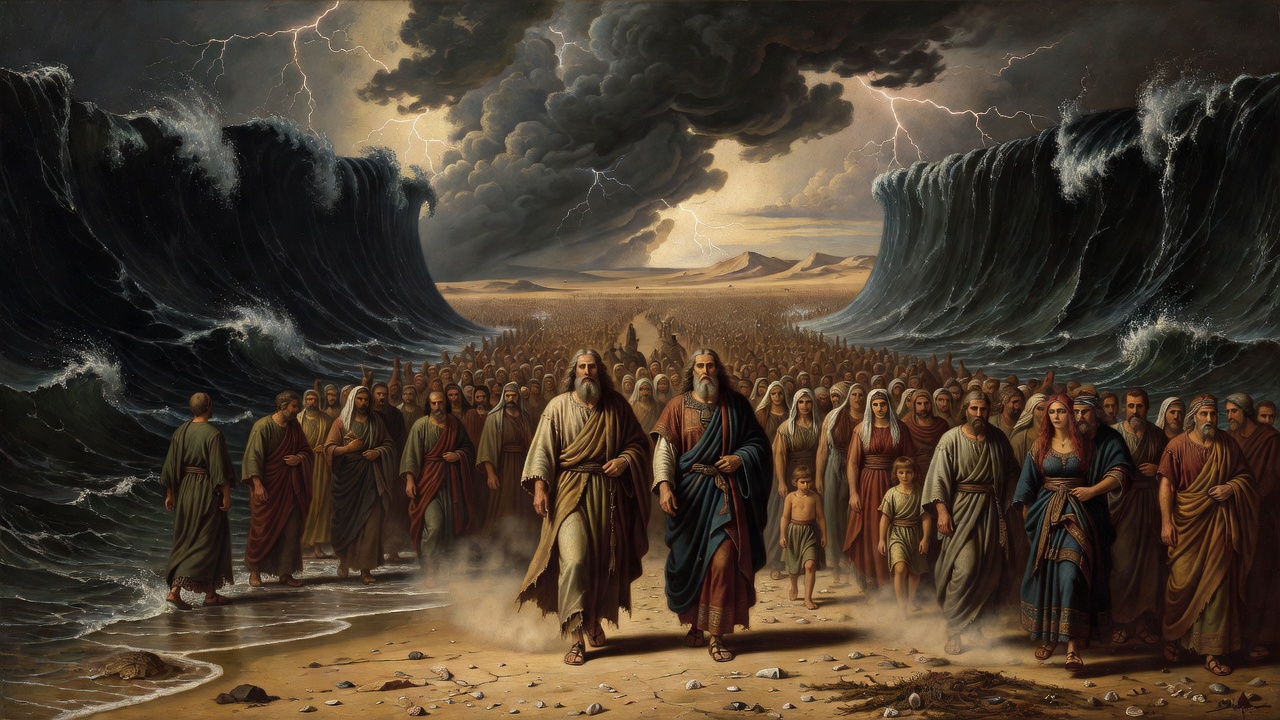
Mosese Aronola haru haga helarigome
libugua wali agaliru haru howa handayaho hayagoni.
Did you know?
Remembering God's Wonders in Times of Trouble
- The psalm's title associates the composition with Asaph and Jeduthun, both identified in biblical records as prominent Levite leaders of music and choir during the era of David.Sources: Asaph (Levite) · Jeduthun (Ethan) · the Bible text itself
- To find comfort in a time of sleeplessness and deep distress, the psalmist reflects on God's past deliverance of Israel, poetically recalling how the sea parted and God led His people like a flock through the leadership of Moses and Aaron.Sources: Moses · Aaron · the Bible text itself
- The redeemed nation is specifically named as the descendants of Jacob and Joseph, evoking the patriarchal origins of Israel and the family line preserved during the years in Egypt.Sources: Jacob (Israel) · Joseph (son of Jacob) · the Bible text itself
Notes written with AI assistance from open sources (Theographic Bible Metadata, CC BY-SA 4.0; Easton’s Bible Dictionary, public domain) and reviewed before publishing.
Credits and license for this translation
Habo nalolene bi gahenge lo winigo ogo
The Holy Bible with Deuterocanon in the Huli Language of Papua New Guinea
Buk Baibel long tokples Huli long Niugini
Copyright © 1983, 1991, 2002 Bible Society of Papua New Guinea
℗ Faith Comes by Hearing
Language: Huli
Translation by: Bible Society of Papua New Guinea
This translation is made available to you under the terms of the
Creative Commons Attribution-Noncommercial-No Derivatives license 4.0.
You may share and redistribute this Bible translation or extracts from it in any format, provided that:
You include the above copyright and source information.
You do not sell this work for a profit.
You do not change any of the words or punctuation of the Scriptures.
Pictures included with Scriptures and other documents on this site are licensed just for use with those Scriptures and documents.
For other uses, please contact the respective copyright owners.
2014-12-11
Source: http://png.bible/hui/ · eBible.org