Psalms 42
Habo nalolene bi gahenge lo winigo ogo · Tap a verse to see its cross-references.
Agali mbira dindi taraha haru pu henegome Ngode Datagaliwabehondo bi lenego ogo
1Nogo meme ale mini dia gabuame iba noa howa hége lebola ho yalu Nogo meme ale mini dia gabuame iba noa howa ... iba libule porago ... piaganedagua Ngode Datagaliwabe-o i̱ í̠ kegoria ha paraho hole ibulene hameore lo ko.|src="HK 2f.tif" size="2" ref="(42.1)"
iba libule porago hendehende gerai piaganedagua
Ngode Datagaliwabe-o i̱ í̠ kegoria haparaho hole ibulene hameore lo ko.
2Ngode Datagaliwabe í̠ holenehe kegoni.
Iba noa biradagua i̱naga minime í̠ kegoria haparaho holeneore hamelo kogoni.
I̱na í̠ kego de handalu
í̠naga mini yaraga hole angi ibuliyadabe.
3Mbiraga horombebi i̱ dugu biaabo halu
tomo nane tomo i̱ninaga de iba no paliruli.
Horo bibahendengi wali agali i̱naga waitigi karume i̱hondo,
Í̠naga Ngode Datagaliwabe hayuagoni agoha kabe, laabo haga.
4Ala bialu haruligo mitangi budai berodagua nde
i̱naga gubaliniha tandagaore bialu habe naharagola haruli.
Wali agali maru heba wabuni Ngode Datagaliwabenaga andaha pole poramaligobi
ti maha ibilo i̱na haru bamba haruligobi nde
mitangiore halu ko.
Wali agali turuhe damene wabuni buyu pialu
iba ganaru lagalaga bialu
Ngode Datagaliwabenaga mini yaraga hagahaga bima ibunaga andaha pole poramaligoore
mitangi haabo halu ko.
5Ai nde áyu i̱ore miniha turu naheore haabo kogoni aginagadabe.
I̱naga miniha genda bialu lungulungu biaruagoni agiorenagadabe.
Ani biaruagoni bilo
i̱na i̱naga Ngode Datagaliwabeni mini hanaho holebero.
I̱naga Pele Ngiagabi i̱naga Ngode Datagaliwabebi kagonaga mini
i̱na lone mo yaraga holebero.
6I̱ i̱ninaga dindini hewaria bo ba tagi haya handala dindi taraha o pu kogoni koria
i̱naga gubaliniha tandagaore bialu tumbudu biragola kogoni.
Ani biragola i̱naga mitangi mo tiga bialu
Ngode Datagaliwabe kagohayagi pelaruli.
Ibugua dara bulenego iba yaribu bu yu ibilaradagua
i̱naga mini dara buleneme bu dambi haga.
Genda tara tara bulenego Hari Hemono howabi Hari Misa howabi
iba dugutagi halu ue lama Yodanaha pugulupebe biradagua biragola
birama iralu i̱ namu labehe kogoni.
8Ani kogonigo Anduane Homogo gubalini haho wiaabo haga kago
ibugua horongi ibunaga gubalini holene ogoni walia helo hameledo.
Ibugua ani birago hondowa
i̱na mbiraga iba gana lo mialu
i̱ holene ngiagane tene Ngode Datagaliwabe kago
ibuhondo bi ogoni lolene hameledo.
9I̱naga waitigirume bolilono i̱naga mo wiaga Ngode Datagaliwabe kagohondo,
Í̠na i̱ aginaga embedaho waharibe, laro.
I̱naga waitigi karume i̱ bo hengedo waharagola
tandaga narogo naabo holiya kego aginagabe.
10Tigua i̱hondo, Í̠naga Ngode Datagaliwabe hayuago agoha kabe, lalu
mege biaabo haragome i̱ore hengedope haabo haragola kogoni.
11Ai nde áyu i̱ore miniha turu naheore haabo kogoni aginagadabe.
I̱naga miniha genda bialu lungulungu biaruagoni agiorenagadabe.
Ani biaruagoni bilo
i̱na i̱naga Ngode Datagaliwabeni mini hanaho holebero.
I̱na i̱naga Pele Ngiagabi i̱naga Ngode Datagaliwabebi kagonaga mini
i̱na lone mo yaraga holebero.
Did you know?
Thirsting for God Far from Home
- The psalm is introduced as a song of the sons of Korah, a Levitical family descended from the Levite Korah who took part in temple music and worship.Sources: the Bible text itself · Korah (Levite)
- The speaker longs for God from the northern borderlands, mentioning the Jordan, Mount Hermon, and Mount Mizar. Hermon is a towering range with multiple peaks reaching over 9,000 feet, while Mizar (meaning 'smallness') represents a lesser neighboring summit.Sources: the Bible text itself · Hermon · Hill Mizar
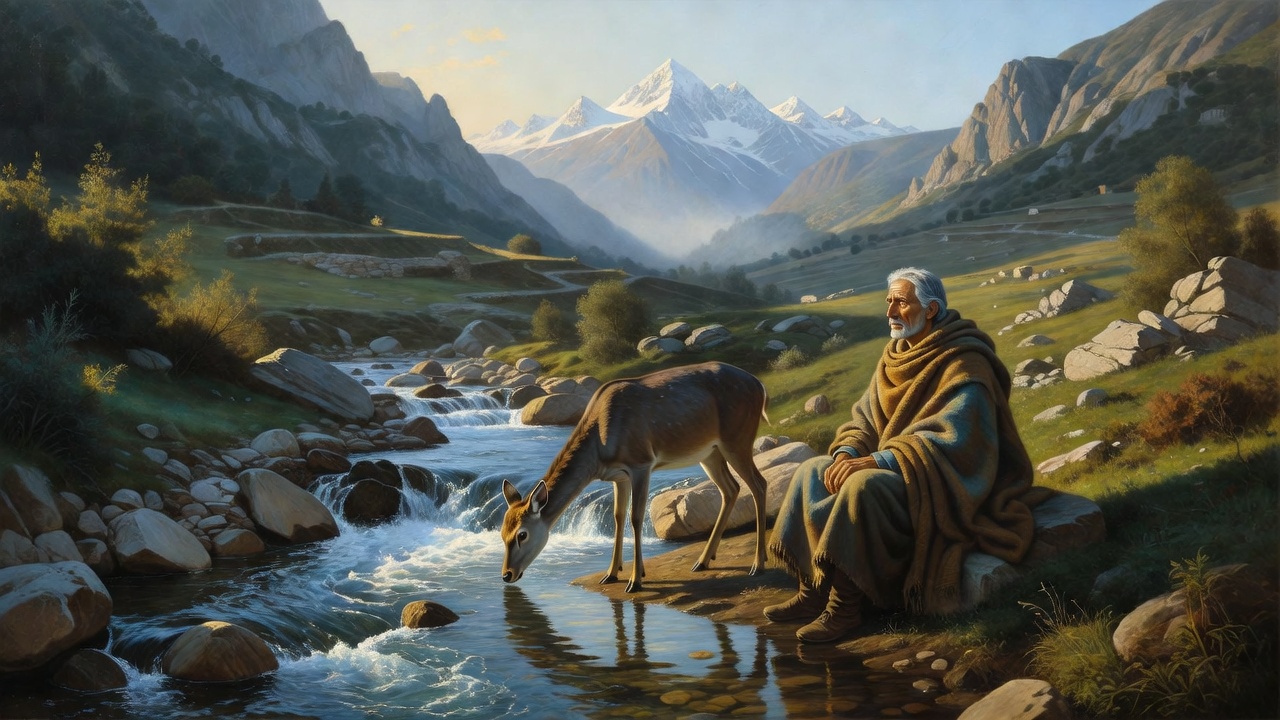
- The poem uses vivid water metaphors, moving from a thirsty deer longing for mountain streams to roaring waterfalls and crashing waves that symbolize overwhelming emotional distress.Sources: the Bible text itself
Notes written with AI assistance from open sources (Theographic Bible Metadata, CC BY-SA 4.0; Easton’s Bible Dictionary, public domain) and reviewed before publishing.
Places in this chapter
Only places identified with high confidence are shown (90% or more according to the scholarly sources compiled by OpenBible). Period map: DARE (Digital Atlas of the Roman Empire), CC BY 4.0; modern map: © OpenStreetMap contributors; places: OpenBible.info (CC BY 4.0).
Credits and license for this translation
Habo nalolene bi gahenge lo winigo ogo
The Holy Bible with Deuterocanon in the Huli Language of Papua New Guinea
Buk Baibel long tokples Huli long Niugini
Copyright © 1983, 1991, 2002 Bible Society of Papua New Guinea
℗ Faith Comes by Hearing
Language: Huli
Translation by: Bible Society of Papua New Guinea
This translation is made available to you under the terms of the
Creative Commons Attribution-Noncommercial-No Derivatives license 4.0.
You may share and redistribute this Bible translation or extracts from it in any format, provided that:
You include the above copyright and source information.
You do not sell this work for a profit.
You do not change any of the words or punctuation of the Scriptures.
Pictures included with Scriptures and other documents on this site are licensed just for use with those Scriptures and documents.
For other uses, please contact the respective copyright owners.
2014-12-11
Source: http://png.bible/hui/ · eBible.org