Psalms 128
Habo nalolene bi gahenge lo winigo ogo · Tap a verse to see its cross-references.
Anduane Homogohanda ibunaga bi mana hale haga karu mo bayale holebero lenego ogo
1Wali agali Anduane Homogohanda hame ledadagua bialu karu
ibunaga bi mana lo ngadagua bialu hagabi karu
ti turuore ho ka.
2Í̠ ogonibi keyagua í̠naga biabe bereruha howa karulape mo ngialu
mbirale burupale keru yu holebere.
Mbirale í̠na bereru damene bibahende bayale hai haragola
í̠ni turubiore holebere.
3Í̠ one ibu nde gerebi lini dewaore daga kaligobi birulebira.
Ira olibe hongone dewa ira teneha anda ho mabu biralidagua
í̠naga waneiginiru ti í̠naga andagani ira dedagoria biru mabu bulebira.
4Heneneore mbirali Anduane Homogonaga bi ledago taluwa biaga kago
ibuha mo turu holene ogonibi migi bulebira.
5Anduane Homogo ibugua Saionoha howa í̠ mo bayale helo.
Í̠ dindini homa nabi wene keore Yarusalemeni mbirale uruni heneneore biaabo halu kane handabelo hameledo.
6Í̠ dindi ogoria luore haabo howa
í̠naga waneigini aguaneru de handabelo hameledo.
Isaraele wali agaliru tiha mo palia holene wia helo hameledo.
Did you know?
Blessings of Family and the Peace of Jerusalem
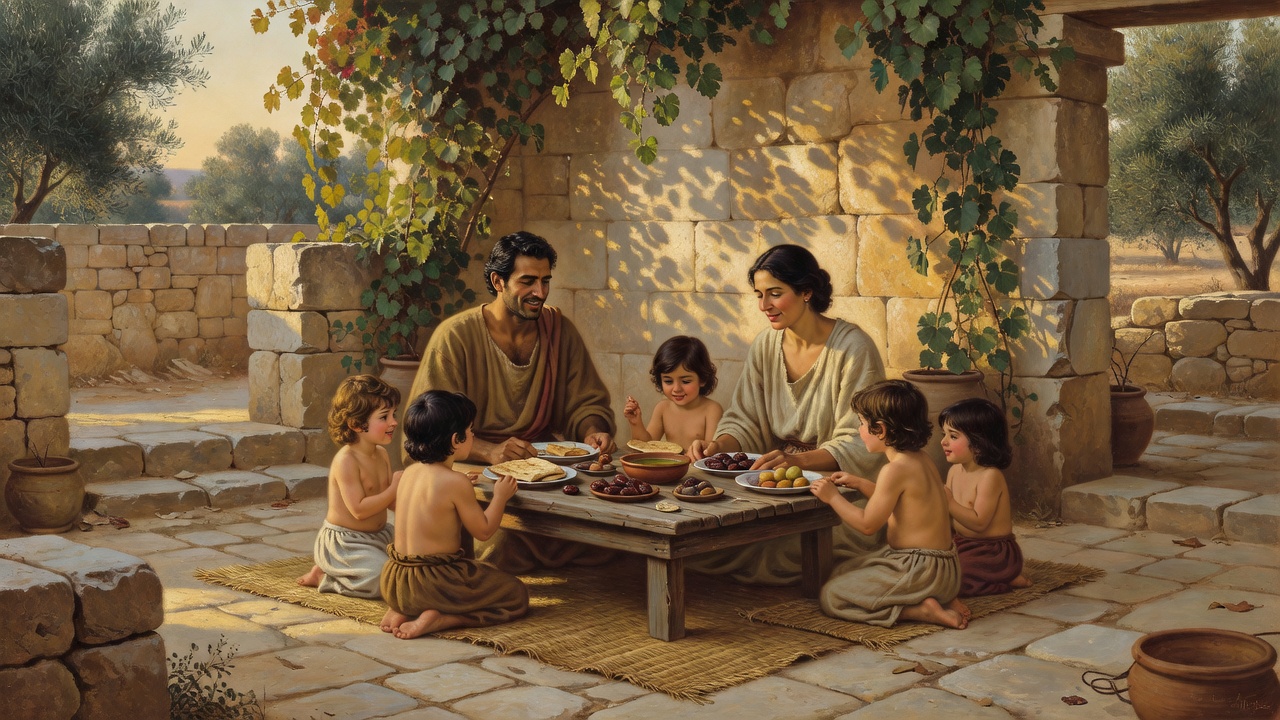
- Psalm 128 uses familiar agricultural metaphors to depict domestic abundance, comparing a wife to a fruitful grapevine and children gathered around the table to vigorous olive shoots.Sources: the Bible text itself
- The psalm is designated as a Song of Ascents, connecting the daily labor and domestic happiness of the individual with the collective welfare of Zion and Jerusalem.Sources: the Bible text itself · Zion
- The final blessing for peace upon Israel echoes the traditional meaning of Jerusalem itself, whose name signifies a possession or foundation of peace.Sources: the Bible text itself · Jerusalem
Notes written with AI assistance from open sources (Theographic Bible Metadata, CC BY-SA 4.0; Easton’s Bible Dictionary, public domain) and reviewed before publishing.
Places in this chapter
Only places identified with high confidence are shown (90% or more according to the scholarly sources compiled by OpenBible). Period map: DARE (Digital Atlas of the Roman Empire), CC BY 4.0; modern map: © OpenStreetMap contributors; places: OpenBible.info (CC BY 4.0).
Credits and license for this translation
Habo nalolene bi gahenge lo winigo ogo
The Holy Bible with Deuterocanon in the Huli Language of Papua New Guinea
Buk Baibel long tokples Huli long Niugini
Copyright © 1983, 1991, 2002 Bible Society of Papua New Guinea
℗ Faith Comes by Hearing
Language: Huli
Translation by: Bible Society of Papua New Guinea
This translation is made available to you under the terms of the
Creative Commons Attribution-Noncommercial-No Derivatives license 4.0.
You may share and redistribute this Bible translation or extracts from it in any format, provided that:
You include the above copyright and source information.
You do not sell this work for a profit.
You do not change any of the words or punctuation of the Scriptures.
Pictures included with Scriptures and other documents on this site are licensed just for use with those Scriptures and documents.
For other uses, please contact the respective copyright owners.
2014-12-11
Source: http://png.bible/hui/ · eBible.org