Psalms 125
Habo nalolene bi gahenge lo winigo ogo · Tap a verse to see its cross-references.
Anduane Homogohanda ibunaga wali agali handayaho haga kago ogo
1Wali agali Anduane Homogoha mini mbiraore wu karu
ti Hari Saiono ale imiema nabi durubi nalaga hongo haabo haga ka.
2Hari wedarume Yarusaleme ho hagira bu kadagua
Anduane Homogohanda ibunaga wali agali handayaho howa
ho mabu bu haabo holebira.
3Wali agali ko biaga karume wali agali mana tigabi biaga karu
handayaho haabo naholebira.
Tigua handayaho haabo hayagua nde wali agali tigabi karume
tibi nde mana ko biaga holobada.
4Anduane Homogo-o wali agali bayale í̠naga mana ngeru taluwa bialu haga karu
tihondo í̠na mana bayale biadai bibe.
5Í̠na wali agali ko biaga karunaga pani nelo mialu howa
wali agali maru í̠naga mana ngeru mo wahalu piaga karubi
ti bibahende pani nelo miai habe laro.
Isaraele wali agaliru tiha mo palia holene wia helo hameledo.
Did you know?
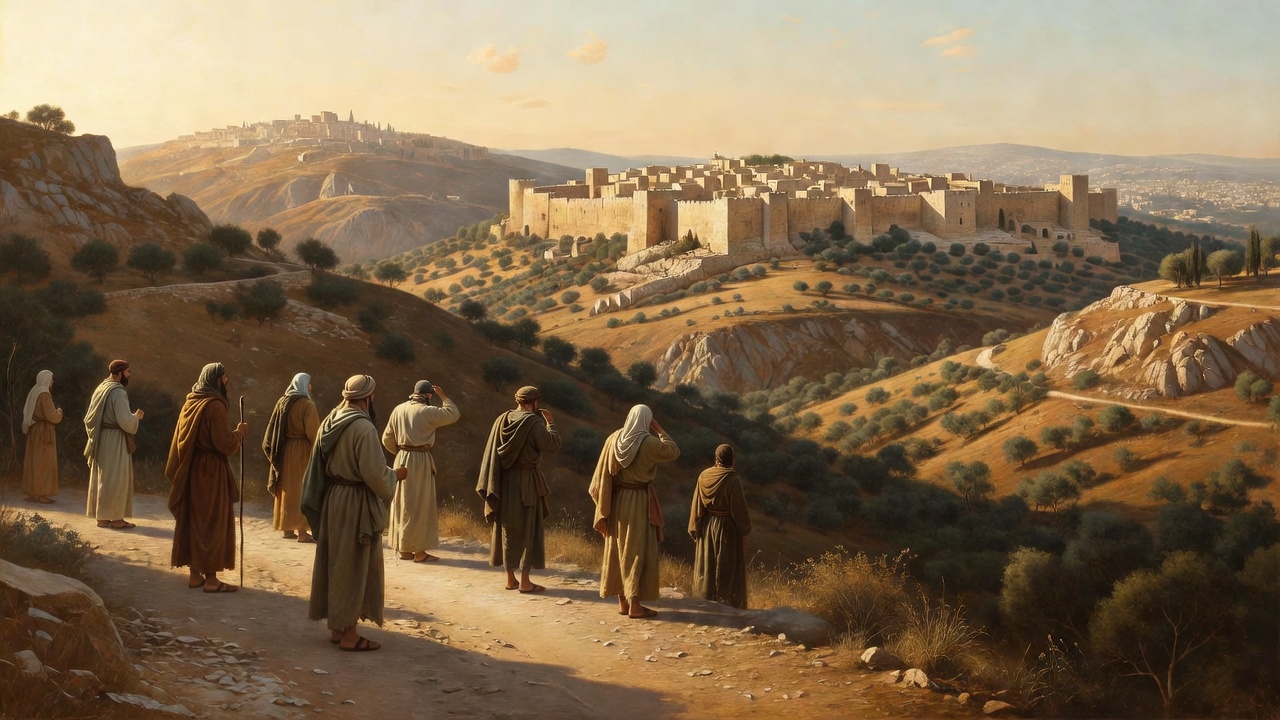
Unshakable Security in Jerusalem
- Psalm 125 is one of the Songs of Ascents, comparing those who trust in God to Mount Zion. Mount Zion was a naturally fortified hill in Jerusalem, surrounded by deep valleys on nearly all sides, making it a fitting symbol of permanence and stability.Sources: the Bible text itself · Mount Zion
- The psalmist draws on local geography by noting how mountains encircle Jerusalem. Built as a mountain fortress among neighboring heights, the city provided an evocative physical illustration of divine protection surrounding the community.Sources: the Bible text itself · Jerusalem
- The psalm concludes with a prayer for peace upon Israel, which resonates with the traditional interpretation of Jerusalem's Hebrew name as a foundation or possession of peace.Sources: the Bible text itself · Jerusalem
Notes written with AI assistance from open sources (Theographic Bible Metadata, CC BY-SA 4.0; Easton’s Bible Dictionary, public domain) and reviewed before publishing.
Places in this chapter
Only places identified with high confidence are shown (90% or more according to the scholarly sources compiled by OpenBible). Period map: DARE (Digital Atlas of the Roman Empire), CC BY 4.0; modern map: © OpenStreetMap contributors; places: OpenBible.info (CC BY 4.0).
Credits and license for this translation
Habo nalolene bi gahenge lo winigo ogo
The Holy Bible with Deuterocanon in the Huli Language of Papua New Guinea
Buk Baibel long tokples Huli long Niugini
Copyright © 1983, 1991, 2002 Bible Society of Papua New Guinea
℗ Faith Comes by Hearing
Language: Huli
Translation by: Bible Society of Papua New Guinea
This translation is made available to you under the terms of the
Creative Commons Attribution-Noncommercial-No Derivatives license 4.0.
You may share and redistribute this Bible translation or extracts from it in any format, provided that:
You include the above copyright and source information.
You do not sell this work for a profit.
You do not change any of the words or punctuation of the Scriptures.
Pictures included with Scriptures and other documents on this site are licensed just for use with those Scriptures and documents.
For other uses, please contact the respective copyright owners.
2014-12-11
Source: http://png.bible/hui/ · eBible.org