Job 14
Habo nalolene bi gahenge lo winigo ogo · Tap a verse to see its cross-references.
1Yobo ibugua lalu, Ina wali agali ina ai̱yahanda taba hanayangi howa horo emene tubagi niruniha hangu dindini kamagola genda dewaore tagira ibaga.
2Ina balawaya baya egerebagi bayale dedane handarigo ai alendo handalu karia yogo bialu ko haraligobi kamagoni. Ani bialu ni dedagola inanaga munini kane handaramaligo ai ni beralibame ge haragola munini biago ereba haraligobi kamagoni. 3Ani bidamago í̠ iname ko biniru aginaga dabalu kebe. Ngode Datagaliwabe-o i̱ galone nahe mbirago kogodago í̠na i̱ aginaga dabalu kebe. 4Ina wali agali mana ko biaga dodohe kamago. Í̠naga deni bayale helo ko birimadaru domo wahabehe mbira ai kabe. Mbirali naheoreyago. 5Wali agali ina dindi ogoria holenenaga horo ege malibi ogodaguaore helo lalu pongo bo wirigo mbiralime ibuore bolangua howa lu hole lalu ibunaga holene horo ege malibi dewa lone mo tago habehe ai ibu kabe. 6Ai agali garabaya biabe ale bia hagame ibunaga biabe bulenego bu maro buwa alendo ibuni turuho hagadagua i̱bi nde bu miniha turu hagabu holiya yupe habelo hamelo kogoni.
7I̱na manda bialu koria ira dibinigonaga teneha karulapeyagua lone ogoriani dongoria biaga ndobe. 8Ira ibunaga pini bambaore heneyaguabi tene ibu gabu hayaguabi 9ira teneha dindi ibane bere wiagua nde ira dibayagonaga teneha howa lone dongoria biaga ndobe. Ani anda howa gini gene halu ira gahenge lone anda haga. 10Anigo wali agali ogonidagua biaga ndo. Ina homaramagola mani holebiraru tigua ina hendelo ndo homalu ereba haramagoniore. 11Manane iba gorene timbuni bereneru hundialu iba ema bialu piagaru hundu tege laraligoni. 12Ogonidagua dege wali agali homeneru lone heya nabiaga. Dindi harila piyaguabi ti heyulene henge nawi howa paliaho wulebira.
13Wali agali homayaruni lone dére holene henge nawi bada. Anigo ai Ngode Datagaliwabe-o mani kebaho keruni embeda helonaga áyu í̠ wali agali abale homenerunaga dindiha mo do howa horo mbiru nde i̱ mitangi bulene horo mo ngelabe. I̱na dindi ogoni holiya henge ngiridago piai helo hondo holebero. 15Horo uruni piai haragola nde í̠nimeore wabini i̱ yu wanahe í̠ni kegoria kawareore haparaho holiya hamelo holebere. Ani buwa í̠nime i̱ olaregola homene dindi uruni wahalu í̠ni keria ibulebero. 16Ani buwa ogoningi i̱na ibaga bialu kogo baya hangu mamage halu ko biruruni mo embeda holebere. 17Wali agalime nuha mbirale mbira kabubu honowa embeda haralidagua ko i̱na biruruni manda biaho wia nabi í̠na domo wahai holebere.
18Hari timbuni wedaru podarangibi ege to̱le̱ timbuni bedaru pendege lalu porangibi ibame ege to̱le̱ ngaru gindulobaga bialu dindi bibahendeha hilo yai halu porangibi ani buwa iba dalu timbuni ibalu dindi bayale ngaru hilo yalu piai halu bulebira. Agali dege lone heyule lowa mini dunubia ho karia uruni mo waholebere bada. 20Í̠ninaga hongo timbuni daligaore ngegome ti bope halu homelarili. Ti homalu tinaga denguiru mo tara halu aibe tobahe ngagola ai ti homenerunaga dindiha hama pudaba lariligoni. 21Ti ani pu kagola dindini ti igini helalu homayaru nde agali mini lene homogo hayaguabi yagibano kagola wali agalirume mo taga howa mo ko halu hayaguabi homene tigua handa dai bialu manda bibe nahe holebira. 22Tigua tininaga tinginiha tandaga timbuni nalu karunagabi tiniha genda ibiyarunagabi dugu bialu biraabo holebira, lalu Yobohanda lene.
Did you know?
The Frailty of Life and the Hope of Renewal
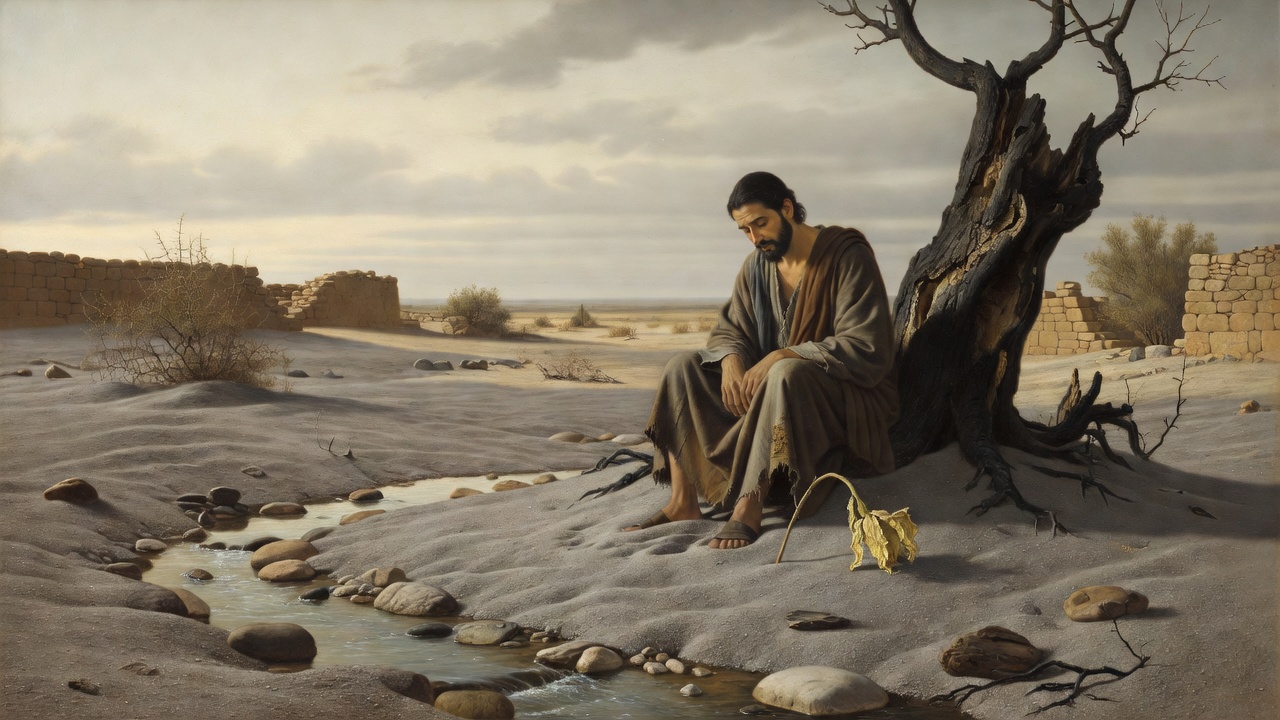
- In this speech, Job contrasts the fate of mortals with that of a tree. While a felled tree can sprout new shoots at the scent of water even after its stump seems dead, a human being dies, lies down, and does not rise again to life on earth.Sources: the Bible text itself
- Job contemplates Sheol as a potential hiding place where he might be sheltered until divine anger passes, imagining a longing in which God would seal his transgressions in a bag and call upon the work of His hands.Sources: the Bible text itself
- To capture the brevity and decay of human existence, the chapter draws upon natural metaphors of erosion and transience, comparing human life to a fleeting shadow, a withered flower, and rocks worn down by water.Sources: the Bible text itself
Notes written with AI assistance from open sources (Theographic Bible Metadata, CC BY-SA 4.0; Easton’s Bible Dictionary, public domain) and reviewed before publishing.
Credits and license for this translation
Habo nalolene bi gahenge lo winigo ogo
The Holy Bible with Deuterocanon in the Huli Language of Papua New Guinea
Buk Baibel long tokples Huli long Niugini
Copyright © 1983, 1991, 2002 Bible Society of Papua New Guinea
℗ Faith Comes by Hearing
Language: Huli
Translation by: Bible Society of Papua New Guinea
This translation is made available to you under the terms of the
Creative Commons Attribution-Noncommercial-No Derivatives license 4.0.
You may share and redistribute this Bible translation or extracts from it in any format, provided that:
You include the above copyright and source information.
You do not sell this work for a profit.
You do not change any of the words or punctuation of the Scriptures.
Pictures included with Scriptures and other documents on this site are licensed just for use with those Scriptures and documents.
For other uses, please contact the respective copyright owners.
2014-12-11
Source: http://png.bible/hui/ · eBible.org