Isaiah 64
Habo nalolene bi gahenge lo winigo ogo · Tap a verse to see its cross-references.
1Anduane Homogo-o í̠na hari li kagoni budalu dalibelo hame ledama. Ani dalidele hari wama pedaruni í̠naga deni gi howa duru lalu ema biai ho ngale. 2Hari urunime pogolodagaha dali bialu iba todobeneha hambu deledagola pobo howa kidikodo lalu haralidagua bulebira. Anduane Homogo-o í̠na í̠naga hongo timbuniore ngego heba ibalu waitigi karume í̠ mini manda biai helobi dindi tara tarani hameigini bu karu bibahendeme ti kagoria í̠ dalerego hondowa ti mogo lalu duru lai helobi abale ibulene nga. 3Bambaore nde í̠ni ibalu howa nahendene ale tara tara bigi birigola iname mogolo handaga birimagoni. Í̠ni dalirigola hari wiarume gi timbuni howa duru lalu hayago. 4Bambaore howa mendealime ibunaga wali agali ibuhondo mini dunubia ho karu ti biamogo bialu nahendene ale tara í̠na birigodagua biyane mbira handa nabi haleme hale nahebi naheneore nde áyubi nahe dege. Anduane Homogo-o anidagua biagane í̠ hanguore kegoni ndobe. 5Wali agali mana tigabi bayale hangu bule turu halu biagabi í̠ni hame ledegobi talialu bialu haga karubi tihondo í̠na gubalini haga kegoni. Ai iname ko bulene ngaruha hongo howa haabo harimagonaga í̠na inahondo keba harigoni. Ani keba haabo harigoyu iname mana ko ala beremalidagua dege bialu mini beregeda nabiore kamagoni. Anigo iname haabo holene agua yu holeberemabe. 6Ina bibahende ko birimagome í̠naga deni ko dodohe ngubiore kamagoni. Iname mbirale bayale beremabe toba howa bialu kamaria í̠naga deni ina aga ko dodohe ngubi ngaligobi kamagoni. Iname mana ko nabulene wiaru bialu haabo harimagome ina dangi yuni gaule ngaru puyabume pulo yalu poralidagua yalu pu wahabehe kamagoni. 7Mbiralime nde í̠hondo bi lole í̠ keria naibaga. Í̠naga mini olalu biamogo bia lolebi naibagaore kamagoni. Í̠na ina handa tara halu pu waore hene kamagoni. Iname nde ko dege biaabo harimagome ina mo ko hai howa tandaga pani nalu kamagoni.
8Anigoyu Anduane Homogo-o ina aba í̠ore kegoni. Agalime dindi duguwa mbirale todobene be ale wabiaga hagadagua í̠ni kego ina nde todobene be ale wabini kamagoni. Inanaga tingini bibahendeore í̠ninaga gioreme wabirigoni. Anduane Homogo-o ina aba í̠ore kegoni. Agalime dindi duguwa mbirale todobene be ale wabiaga hagadagua í̠ni kego ina nde todobene be ale wabini kamagoni.|src="HK 33e.tif" size="1" ref="(64.8)" 9Anigo Anduane Homogo-o í̠na iname ko bialu harimadarunaga keba haabo nahabe. Ina í̠naga wali agali kamaru mitangi bialu dara habe. 10Í̠naga tano loma bini biaruni bame dindi ko wali agali nahaga ale nga. Yarusalemebi bo gialabaga bu wahene wali agali nahaga dege ngagoni ndobe. 11Í̠naga anda inanaga mamali henerume í̠ mitangi bialu lotu lole ogoniha puwa í̠nihondo turu howa í̠ mini yaraga haga anda o biagoni irame dalu bo gialabaga bialu mo ko hene ndobe. Dindi ogoriani bayale maru iname turuho haga winirubi bibahende gialabaga biai halu mo ko hai hene ngagoni. 12Anduane Homogo-o í̠na o bidaruni handalu keria í̠naga bu miniha mogo lalu mbirale mbira bua nabiaruane kebe. Iname manda bu handalu kamaria mana ko dewa birimagonaga genda timbuni uruni yu haabo holoma̱ya bi henemane í̠hondo laramaru hale nahe kegonibe, lene.
Did you know?
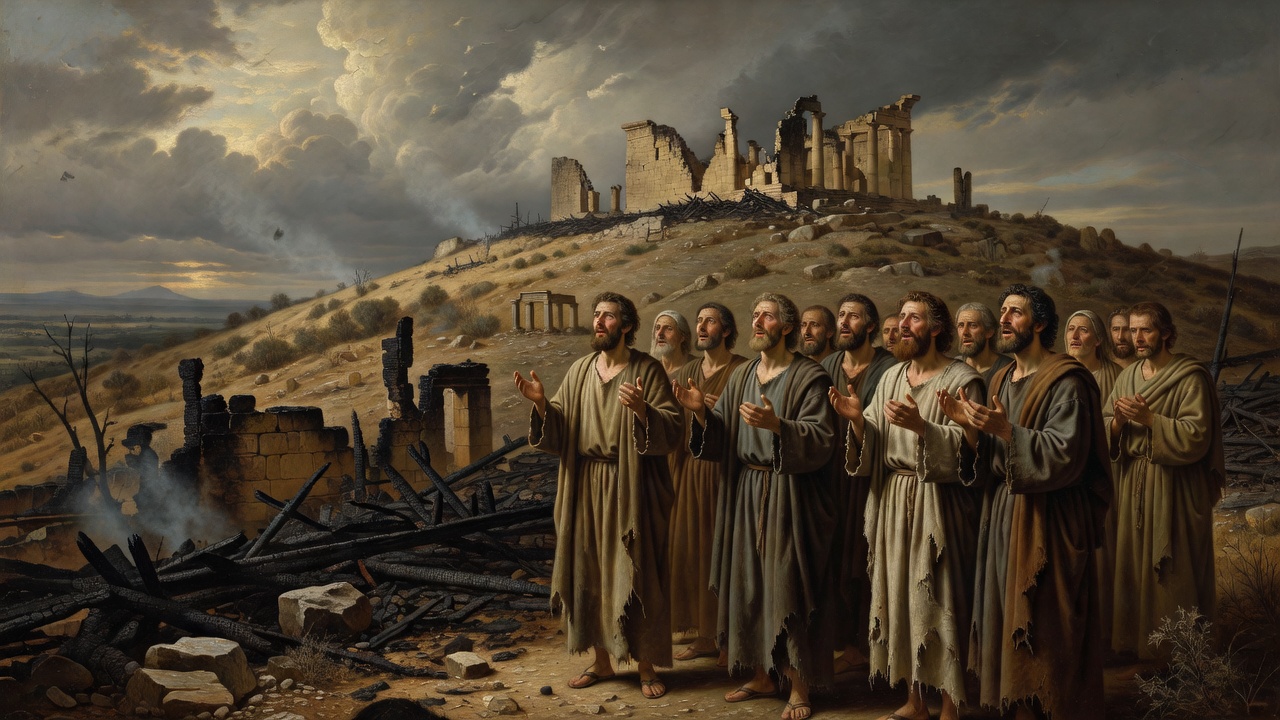
A Prayer for Mercy Amid Ruin
- The passage opens with a plea for God to rend the heavens and descend with world-shaking power, like fire that kindles brushwood. Yet it contrasts this desire for divine presence with a confession of human unworthiness, comparing people to withering leaves swept away by their own iniquities.Sources: the Bible text itself
- In Isaiah 64, the community appeals to God as a Father and craftsman, declaring, "we are the clay, and You are the potter." This imagery emphasizes human frailty and total dependence on God, pleading for divine mercy despite their acknowledged guilt.Sources: the Bible text itself
- The chapter laments the destruction of sacred spaces, describing Zion and Jerusalem as desolate wastelands. It specifically mourns the burning and ruin of the holy temple where past generations had offered praise.Sources: the Bible text itself · Zion · Jerusalem
Notes written with AI assistance from open sources (Theographic Bible Metadata, CC BY-SA 4.0; Easton’s Bible Dictionary, public domain) and reviewed before publishing.
Places in this chapter
Only places identified with high confidence are shown (90% or more according to the scholarly sources compiled by OpenBible). Period map: DARE (Digital Atlas of the Roman Empire), CC BY 4.0; modern map: © OpenStreetMap contributors; places: OpenBible.info (CC BY 4.0).
Credits and license for this translation
Habo nalolene bi gahenge lo winigo ogo
The Holy Bible with Deuterocanon in the Huli Language of Papua New Guinea
Buk Baibel long tokples Huli long Niugini
Copyright © 1983, 1991, 2002 Bible Society of Papua New Guinea
℗ Faith Comes by Hearing
Language: Huli
Translation by: Bible Society of Papua New Guinea
This translation is made available to you under the terms of the
Creative Commons Attribution-Noncommercial-No Derivatives license 4.0.
You may share and redistribute this Bible translation or extracts from it in any format, provided that:
You include the above copyright and source information.
You do not sell this work for a profit.
You do not change any of the words or punctuation of the Scriptures.
Pictures included with Scriptures and other documents on this site are licensed just for use with those Scriptures and documents.
For other uses, please contact the respective copyright owners.
2014-12-11
Source: http://png.bible/hui/ · eBible.org