2 Corinthians 7
Habo nalolene bi gahenge lo winigo ogo · Tap a verse to see its cross-references.
1I̱ nenege turubiru-o bi uruni Ngode Datagaliwabehanda bule lowini ngaru inahondo lowini. Aniore bidago tinginibi minibi mo ko haga ngaru bibahende iname mo wahalu Ngode Datagaliwabe mitangi buwa gi halu ibuhondo inane loma bia ho hai hami̱ya.
Polo ibu turu henego ogo
2Tí bu miniha howa inahondo henge ngilimu. Iname mbiralihondo ko nabi mo ko nahebi mo hondo hole manda nabi kamagoni. 3I̱na bi o larogo lalu tí ko nakarulape kami lalu ndo laro. Ala larudagua iname tíhondo gubaliniore howa laro. Ina harimayaguabi homarimayaguabi ina haru mandagi haabo holeberama. 4I̱na tíhondo mini mbiraore wu howa i̱naga miniha yangalo kogoni. Ina gendabi dewa yu howa i̱naga miniha mo hongo holene to̱lalu turu holene to̱lo tagi ho kogoni.
5Ina Masedonia dindini anda pu howabi ha̱lo naheore harima. Gendabiru wiame halu tagiraha wali agali maru baba lai lolenebi miniha gi holenebi winiya. 6Ani bialu hemagola Ngode Datagaliwabehanda genda yu karu mo dabia bia haga kago Taidasa ibiyagola ina mo dabia bia hene. 7Taidasa ibiyagome hangu ndo tígua ibu mo turu harimigonaga te langiyagomebi i̱ turu timbuniore biragola kogoni. Ibugua bi langiyago ogodagua laya, Iname Polo de hondoa ho kama, larimiyagobi tíni nakarulape birimigo manda bialu taga harimiyagobi tígua i̱naga bi la hole kama larimiyagobi hale howa i̱ turu timbuniore biragola kogoni.
8Ala tíhondo beba gilibu wia harugome tí mo genda haruyane hondowa i̱na ani gili birugonaga kagua biruda nalolebero. Beba ogonime tí mo genda emene tigi mandi hayane hondowa i̱ tí dara habehe dege haru. 9Ai áyu i̱ turu ho kogo irane i̱na tí mo genda harugonaga ndo tí genda harimigome tínaga mini mo beregedayagonaga i̱ turu ho kogoni. Tí genda harimigome Ngode Datagaliwabehanda tí mo bayale hayago ai iname tí mo ko nahe harima. 10Genda holene ogonibi Ngode Datagaliwabehanda mo ha haganego mini mo beregedowa pele mulene yu holoma̱yanaga biaga. Ani biagago nakarulape ndo karulapeore nga. Anigoyu dindinaga genda holeneme homolene yu anda ibaga. 11Tígua genda harimigome Ngode Datagaliwabehanda biyago manda bilimu. Ani biyagome tí mini mo hongo halu kagua nabi lalu lo tiga bilimulonagabi mo bia haya. Ko hondowa keba holenebi mogo lolenebi hame lolenebi hongo holenebi ko biyagonaga tandaga nelo mulenebi uruni bibahende Ngode Datagaliwabehanda mo mitangi bia haya. Ani birimigome tíha ko mbira nawiore lalu walia harimi.
12Anigo i̱na tíhondo beba biago gilibu wia harugo mbiralime ko biyagonagabi ko biyagola mendealime tandaga nayagonagabi mitangi bialu ndo gili biru. Ani biradagua tígua Ngode Datagaliwabe deni howa inahondo mitangi timbuniore bu kamigo tíhondo walia holenaga gili biru. 13Tígua aguani birimigome ina miniha turu ho harima.
Ogoninaga dege ndo. Tígua Taidasa biamogo birimigo ibugua tíhondo turu timbuni ho heago hondowa inabi turu timbuni ho harima. 14Ala i̱na Taidasahondo te lalu tínaga mini yaraga harugo i̱na larudagua tígua bialu hemigo ibuhondo walia harimigonaga i̱ taga nahe ko. Iname tíhondo henene hangu laabo halu harima. Ani larimadagua iname Taidasahondo te lalu tínaga mini yaraga halu harimago heneneore larimayane walia harimi. 15Ogonigo ibugua tí bibahendeme bulene ngadagua bulebi Ngode Datagaliwabehondo gi halu nakarulape kama lalu ibu nenege hinarimigobi mitangi bialu tíhondo ibunaga gubaliniha yanga lalu ka. 16I̱naga mini tíhondo hana hai holedago turu timbuniore ho kogoni.
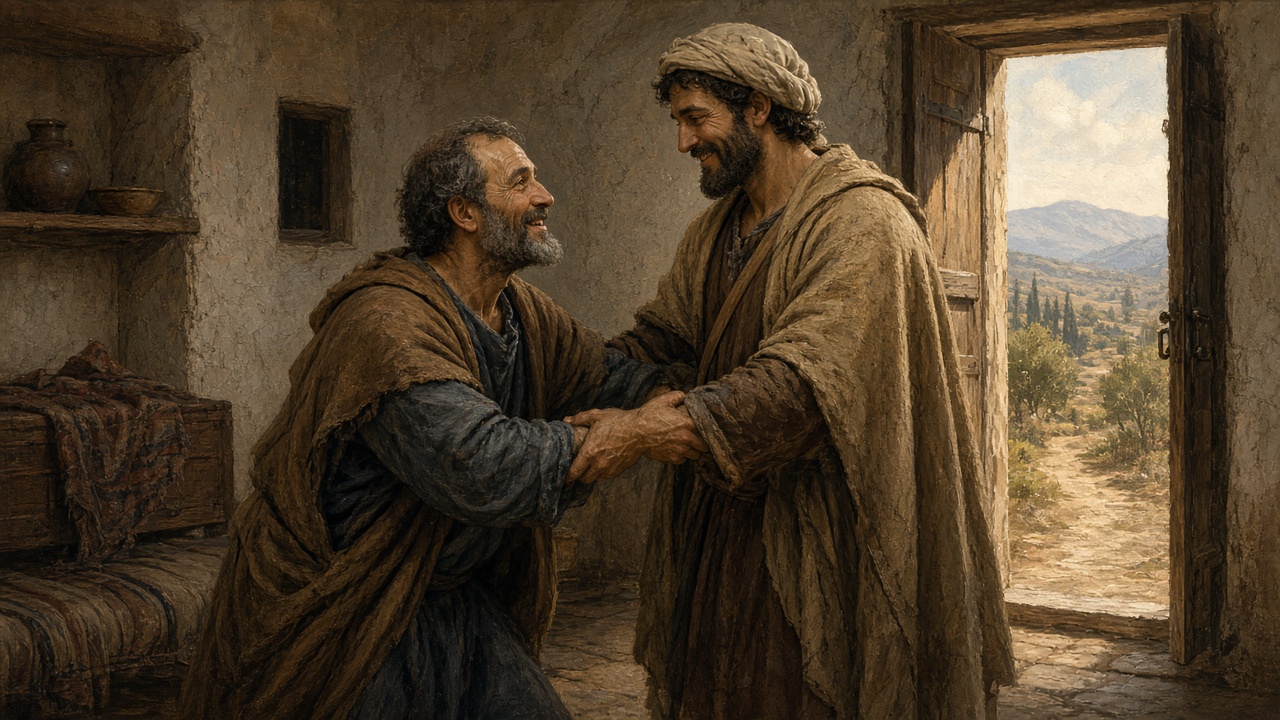
Did you know?
Comfort after a painful letter
- Macedonia, where Paul says he arrived with no rest in his body—conflicts outside and fears within—was a Roman province north of Greece. There, he writes, the God who comforts the downcast comforted him by the arrival of Titus.Sources: Macedonia · the Bible text itself
- Paul speaks of a letter that made them sorrowful, but only for a short time. He now rejoices not because they were sorrowful, but because that sorrow led them to repentance; he says they felt the sorrow God intended, were not harmed by him, and showed earnestness, zeal, and innocence in the matter.Sources: the Bible text itself
- A short account describes Titus as a companion of Paul, apparently a Gentile chiefly engaged in ministering to Gentiles. In this chapter Paul says Titus’s arrival comforted him, that Titus reported their longing, mourning, and zeal, and that they welcomed Titus with fear and trembling.Sources: Titus · the Bible text itself
Notes written with AI assistance from open sources (Theographic Bible Metadata, CC BY-SA 4.0; Easton’s Bible Dictionary, public domain) and reviewed before publishing.
Places in this chapter
- Macedonia · 41.600, 22.540 · verse 5
Only places identified with high confidence are shown (90% or more according to the scholarly sources compiled by OpenBible). Period map: DARE (Digital Atlas of the Roman Empire), CC BY 4.0; modern map: © OpenStreetMap contributors; places: OpenBible.info (CC BY 4.0).
Credits and license for this translation
Habo nalolene bi gahenge lo winigo ogo
The Holy Bible with Deuterocanon in the Huli Language of Papua New Guinea
Buk Baibel long tokples Huli long Niugini
Copyright © 1983, 1991, 2002 Bible Society of Papua New Guinea
℗ Faith Comes by Hearing
Language: Huli
Translation by: Bible Society of Papua New Guinea
This translation is made available to you under the terms of the
Creative Commons Attribution-Noncommercial-No Derivatives license 4.0.
You may share and redistribute this Bible translation or extracts from it in any format, provided that:
You include the above copyright and source information.
You do not sell this work for a profit.
You do not change any of the words or punctuation of the Scriptures.
Pictures included with Scriptures and other documents on this site are licensed just for use with those Scriptures and documents.
For other uses, please contact the respective copyright owners.
2014-12-11
Source: http://png.bible/hui/ · eBible.org