1 Timothy 2
Habo nalolene bi gahenge lo winigo ogo · Tap a verse to see its cross-references.
Ngode Datagaliwabehondo bi lolene mana lenego ogo
1Í̠na mbira bibelo hame ledogo ala langero. Iname wali agali bibahende karubi kini karubi gabumane bibahende karubi mitangi bialu Ngode Datagaliwabehondo bi lolene nga. Iname Ngode Datagaliwabehondo mitangi bulene ngadagua mitangi bialu mana tigabi bialu howa karulape holenebi mo palia holenebi yu holoma̱ya Ngode Datagaliwabehondo, Biamogo bia, lolenebi, Ngi, lolenebi, Ka̱i̱, lolenebi nga. 3Bi bayale lolene ogonibime inanaga Pele Ngiaga Ngode Datagaliwabe mo turu haga. 4Ibugua wali agali bibahende pele mulene yu helobi mana henene ngago manda bu helobi hamelo ka. 5Ngode Datagaliwabe mbiraore hangu ka. Agali mbiraore Keriso Yasu kago ibu degeme dombegua howa Ngode Datagaliwabebi wali agalibi mo mbiraore haga ka. 6Keriso Yasuhanda wali agali bibahende haru dai biai hole horo pongo bo winigongiore ibugua ibuninaga holene pelene. Ogoningi Ngode Datagaliwabehanda wali agali bibahendeore pele mule hame lowa walia hoa ho winigobiore walia hene. 7Irane ogoninaga Ngode Datagaliwabehanda i̱ abosolo biabe buliya dabo helaya. Yuali ndo wali agali tara tara karuhondo henene lolene manabi Ngode Datagaliwabehondo mini mbiraore wulene manabi lawai haga holiya Ngode Datagaliwabehanda i̱ dabo heleayago ko. Bi o larogo tindule ndo heneneore larogoni.
8Keriso hameigini dindi bibahendeni karume Ngode Datagaliwabehondo bi laabo helo hamelo ko. Agali urunime tini Ngode Datagaliwabehondo loma bia hene howa keba holenebi lai lolenebi mbira miniha do nahe howa Ngode Datagaliwabehondo bi lalu holene nga.
Walime mana bulene nga lenego ogo
9Ai bi mende ogo laro. Walime mine nahe howa agabi mbirale dongoneni karuledaru bayuwa karulolene nga. Mandari yáribi tingini yáribi mbirale ngolome wabini ngarubi pealobi aga yolo timbunime minirubi bulene nawi. 10Wali Ngode Datagaliwabenaga bi mana yu tiga biaga bedarume biabe bayale bulene nga. 11Walime mine nahe biruwa bi nale Ngode Datagaliwabe bi mana hale halu yu tiga bulene nga. 12I̱na bi mbira larogo ogo. Ngode Datagaliwabehanda ala Adama wabuwa mani Iba wabini. Walime agali lawai helobi haru helobi helolene nawi. Walime bi naleore birulene nga. 14Dama Heyolabeme Adama mo hondo nahe Iba ala mo hondo hayagola Ngode Datagaliwabe mana lowinigo wali biago ibugua puguai hene. 15Ani binigo manda buwa walime waneigini taba hanalu biruwa Ngode Datagaliwabehondo mini mbiraore wu biruwabi gubalini ho biruwabi mini tigabi wu biruwabi mine nahe bialu birayagua Ngode Datagaliwabehanda ibu pele mulebira.
Keriso hameigini ogobime haru holene nga lenego ogo
Did you know?
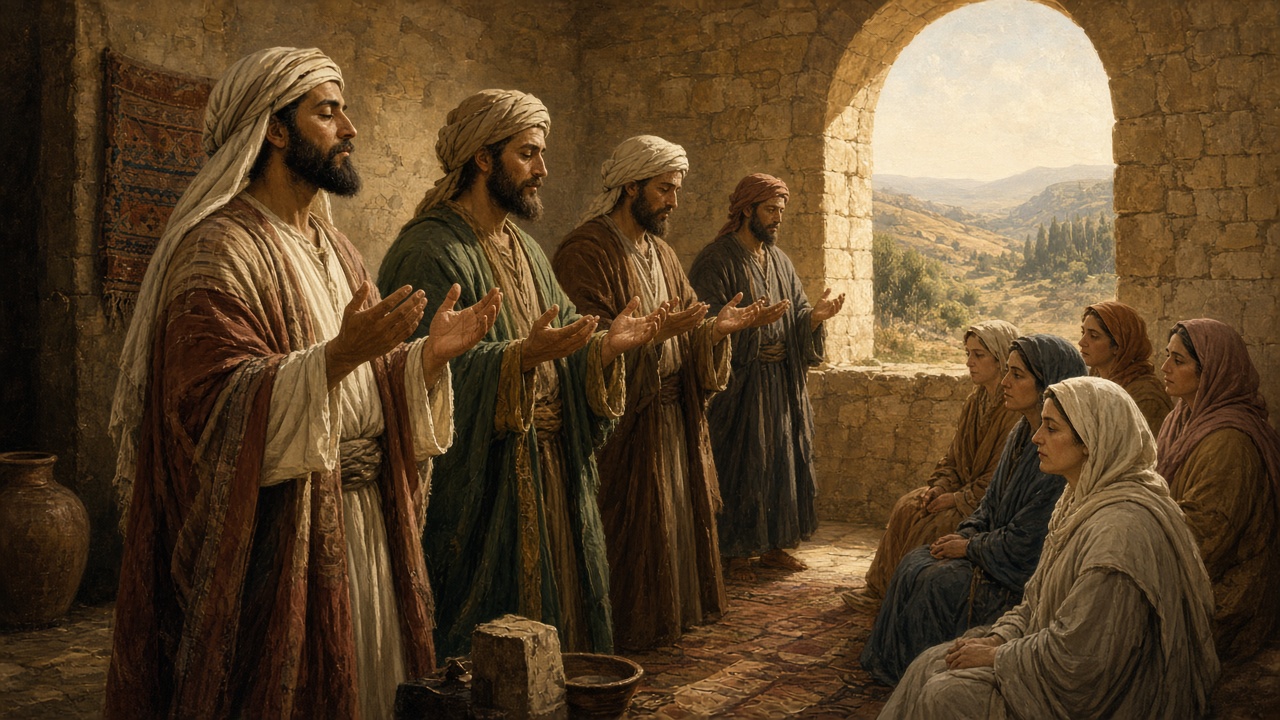
Prayer, modest worship, and Adam and Eve
- This chapter urges that petitions, prayers, intercessions, and thanksgiving be offered for everyone, including kings and all those in authority, so that believers may lead tranquil and quiet lives in all godliness and dignity. It also says there is one God and one mediator between God and men, the man Christ Jesus, who gave himself as a ransom for all.Sources: the Bible text itself
- When the letter says that Adam was formed first, and then Eve, it appeals to the first man of Genesis. Easton's Bible Dictionary (1897) explains that Adam is a Babylonian word meaning 'red,' the generic name for man, with the same meaning in Hebrew and Assyrian, and that he was formed from the dust of the earth.Sources: the Bible text itself · Adam
- The letter says it was not Adam who was deceived, but the woman, who was deceived and fell into transgression. Easton's Bible Dictionary (1897) says Eve means 'life' or 'living,' the name Adam gave his wife, and that the account of her creation is given in Genesis 2:21-22.Sources: the Bible text itself · Eve
Notes written with AI assistance from open sources (Theographic Bible Metadata, CC BY-SA 4.0; Easton’s Bible Dictionary, public domain) and reviewed before publishing.
Credits and license for this translation
Habo nalolene bi gahenge lo winigo ogo
The Holy Bible with Deuterocanon in the Huli Language of Papua New Guinea
Buk Baibel long tokples Huli long Niugini
Copyright © 1983, 1991, 2002 Bible Society of Papua New Guinea
℗ Faith Comes by Hearing
Language: Huli
Translation by: Bible Society of Papua New Guinea
This translation is made available to you under the terms of the
Creative Commons Attribution-Noncommercial-No Derivatives license 4.0.
You may share and redistribute this Bible translation or extracts from it in any format, provided that:
You include the above copyright and source information.
You do not sell this work for a profit.
You do not change any of the words or punctuation of the Scriptures.
Pictures included with Scriptures and other documents on this site are licensed just for use with those Scriptures and documents.
For other uses, please contact the respective copyright owners.
2014-12-11
Source: http://png.bible/hui/ · eBible.org