Matthew 11
Sveta Biblija · Tap a verse to see its cross-references.
1Pošto Isus završi upućivati dvanaestoricu učenika, ode odande naučavati i propovijedati po njihovim gradovima. 2A kad Ivan u tamnici doču za djela Kristova, posla svoje učenike 3da ga upitaju: “Jesi li ti Onaj koji ima doći ili drugoga da čekamo?” 4Isus im odgovori: “Pođite i javite Ivanu što ste čuli i vidjeli: 5Slijepi progledaju, hromi hode, gubavi se čiste, gluhi čuju, mrtvi ustaju, siromasima se navješćuje Evanđelje. 6I blago onom tko se ne sablazni o mene.” 7Kad oni odoše, poče Isus govoriti mnoštvu o Ivanu: “Što ste izišli u pustinju gledati? Trsku koju vjetar ljulja? 8Ili što ste izišli vidjeti? Čovjeka u mekušasto odjevena? Eno, oni što se mekušasto nose po kraljevskim su dvorima. 9Ili što ste izišli? Vidjeti proroka? Da, kažem vam, i više nego proroka. 10On je onaj o kome je pisano: Evo, ja šaljem glasnika svoga pred licem tvojim da pripravi put pred tobom. 11Zaista, kažem vam, između rođenih od žene ne usta veći od Ivana Krstitelja. A ipak, i najmanji u kraljevstvu nebeskom veći je od njega! 12A od dana Ivana Krstitelja do sada kraljevstvo nebesko silom se probija i siloviti ga grabe. 13Uistinu, svi proroci i Zakon prorokovahu do Ivana. 14Zapravo ako hoćete: on je Ilija koji ima doći.” 15“Tko ima uši, neka čuje.” 16“A komu da prispodobim ovaj naraštaj? Nalik je djeci što sjede na trgovima pa jedni drugima dovikuju: 17'Zasvirasmo vam i ne zaigraste, zakukasmo i ne zaplakaste.'” 18“Doista, dođe Ivan. Nije jeo ni pio, a govori se: 'Ðavla ima.' 19Dođe Sin Čovječji koji jede i pije, a govori se: 'Gle, izjelice i vinopije, prijatelja carinika i grešnika!' Ali opravda se Mudrost djelima svojim.” 20Tada stane prekoravati gradove u kojima se dogodilo najviše njegovih čudesa, a oni se ne obratiše: 21“Jao tebi, Korozaine! Jao tebi, Betsaido! Da su se u Tiru i Sidonu zbila čudesa koja su se dogodila u vama, odavna bi se već oni u kostrijeti i pepelu bili obratili. 22Ali kažem vam: Tiru i Sidonu bit će na Dan sudnji lakše negoli vama.” 23“I ti, Kafarnaume! Zar ćeš se do neba uzvisiti? Do u Podzemlje ćeš se strovaliti! Doista, da su se u Sodomi zbila čudesa koja su se dogodila u tebi, ostala bi ona do danas. 24Ali kažem vam: Zemlji će sodomskoj biti na Dan sudnji lakše nego tebi.” 25U ono vrijeme reče Isus: “Slavim te, Oče, Gospodaru neba i zemlje, što si ovo sakrio od mudrih i umnih, a objavio malenima. 26Da, Oče, tako se tebi svidjelo. 27Sve je meni predao Otac moj i nitko ne pozna Sina doli Otac niti tko pozna Oca doli Sin i onaj kome Sin hoće objaviti.” 28“Dođite k meni svi koji ste izmoreni i opterećeni i ja ću vas odmoriti. 29Uzmite jaram moj na sebe, učite se od mene jer sam krotka i ponizna srca i naći ćete spokoj dušama svojim. 30Uistinu, jaram je moj sladak i breme moje lako.”
Did you know?
John's question and the cities that did not repent
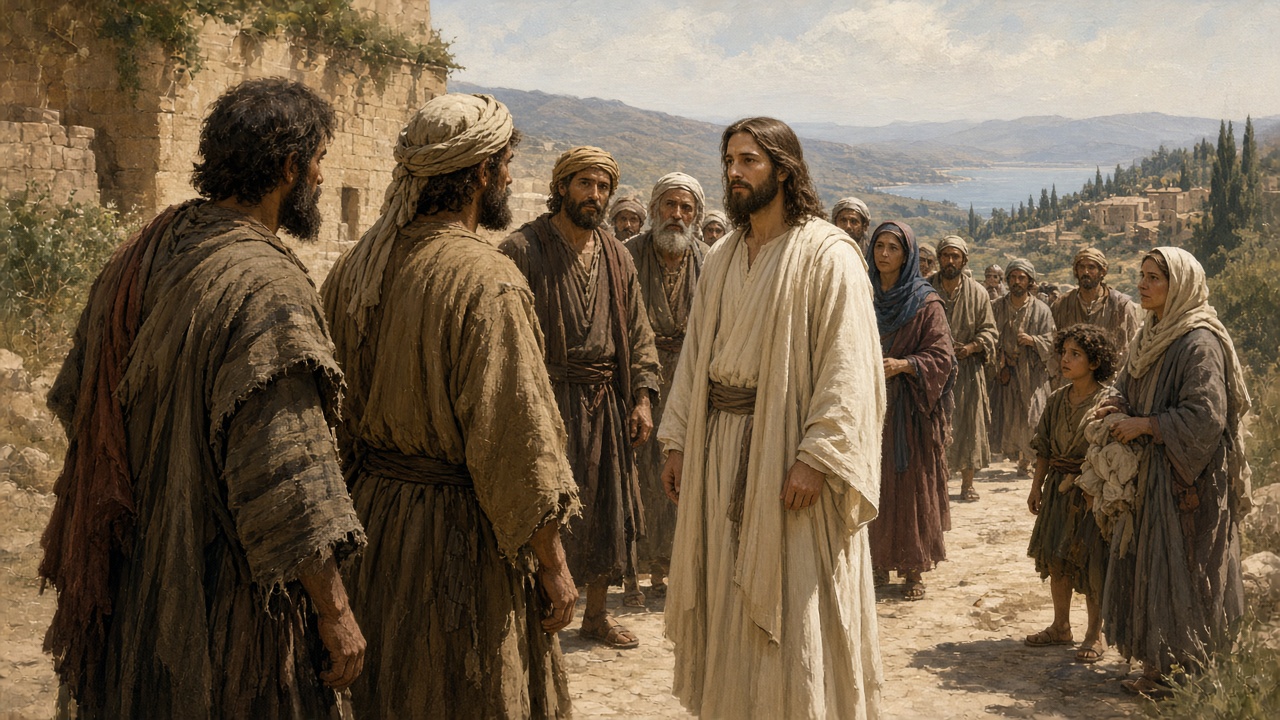
- From prison, John sent his disciples to ask whether Jesus was the one who was to come. Jesus told the crowds that John was more than a prophet—the messenger sent ahead to prepare the way—and, if they were willing to accept it, the Elijah who was to come. A Bible dictionary calls John the forerunner and says his mission was already the subject of prophecy, citing Isaiah 40:3 and Malachi 3:1; it also introduces Elijah as the Elias of the New Testament.Sources: the Bible text itself · John the Baptist · Elijah
- Jesus then denounced Chorazin, Bethsaida, and Capernaum, where most of his miracles had been performed, because they did not repent. A dictionary identifies Chorazin with modern Kerazeh, about two and a half miles up the Wady Kerazeh from Capernaum, and says that Capernaum, absent from the Old Testament, became Jesus' own city after he left Nazareth. It places Bethsaida on the east side of the lake, two miles up the Jordan in Gaulonitis, enlarged by Philip the tetrarch and named Julias after the emperor's daughter, though some have supposed there was only one Bethsaida, near where the Jordan enters the lake.Sources: the Bible text itself · Chorazin · Capernaum · Bethsaida
- He set those cities against Tyre and Sidon, which he said would have repented long ago in sackcloth and ashes, and against Sodom, which he said would have remained to this day. Sidon, on the Mediterranean coast about twenty-five miles north of Tyre, was the oldest Phoenician city there and the mother city of Tyre. A dictionary says the commerce of the whole world was gathered into Tyre's warehouses, and that Sodom, in the vale of Siddim, was destroyed by fire from heaven so completely that no trace of it has been found.Sources: the Bible text itself · Sidon · Tyre · Sodom
Notes written with AI assistance from open sources (Theographic Bible Metadata, CC BY-SA 4.0; Easton’s Bible Dictionary, public domain) and reviewed before publishing.
Places in this chapter
- Galilee · 32.760, 35.527 · verse 1
- Sidon · Today: Sandikli archaeological site in Sidon · 33.561, 35.372 · verses 21, 22
- Tyre · 33.271, 35.196 · verses 21, 22
Only places identified with high confidence are shown (90% or more according to the scholarly sources compiled by OpenBible). Period map: DARE (Digital Atlas of the Roman Empire), CC BY 4.0; modern map: © OpenStreetMap contributors; places: OpenBible.info (CC BY 4.0).
Credits and license for this translation
Sveta Biblija
The Holy Bible in the Croatian language, translated by Ivan Šarić Sarajevo
Public Domain
Language: Hrvatski (Croatian)
2019-12-16
Source: http://ebible.org/hrv/ · eBible.org