Revelation 21
Hset Hadròeh · Tap a verse to see its cross-references.
Jerusalem maneo
1Khoe aih au hnoq trŏc neo xam taneh neo, majah qmang aih trŏc xam taneh ma adroe khoe hnhung, diac raxìq hadai pi i.
2Au hadai hnoq Plài Hadròeh, aih la Jerusalem maneo enh plình, loh enh Boc Plình, khoe padon qmòe qmang ka mai neo taqnèp anì dèh ka ŏng. 3Au tàng i bàu dêh loh enh nòe gèq doe rameh: “Hacô! Ranòh kùh waiq da Boc Plình oe qne kon mangai, Haq oe ti wì, wì jah broq mangai da Haq; cla Boc Plình jah oe ti wì. 4Haq xùt hreo diac mat enh mat wì, pi oe i kan cachìt, kan mangò, bàu crò hmoe, kan jìq xa hòm, majah qmang aih ƀài yiniq ma adroe khoe pi i.
5Mangai haqngui tagèq doe: “Au broq neo hlài rìm yiniq”. Haq doe hòm: “Achìh beq, majah qmang aih ƀài bàu kô dìq khòh lùi, dìq joq qnàng”. 6Haq doe ka au: “Khoe gêh! Au kô Anpha xam Ômega, aih la baxèm xam pulùch. Cabô croh ranŏng, Au yŏc thòng diac kan rìh đòeq am dech ka haq. 7Mangai leq blêq hi jah ƀài yiniq aih đòeq broq kùng hang, au jah broq Boc Plình da mangai aih, haq aih jah broq kon da au. 8Ƀài mangai ma lèu, mangai ma ùh lùi, mangai jìang ka ramòt, mangai jêh đac mangai, mangai tango anang, mangai ti pàih panàih blài blŏng, mangai kùh waiq radua qmù, xam mangai capoch amòng, nòe da wì haq aih bau ùnh xam liu hwình khàng ma adrènh: Aih raq kan cachìt yàng baiq.”
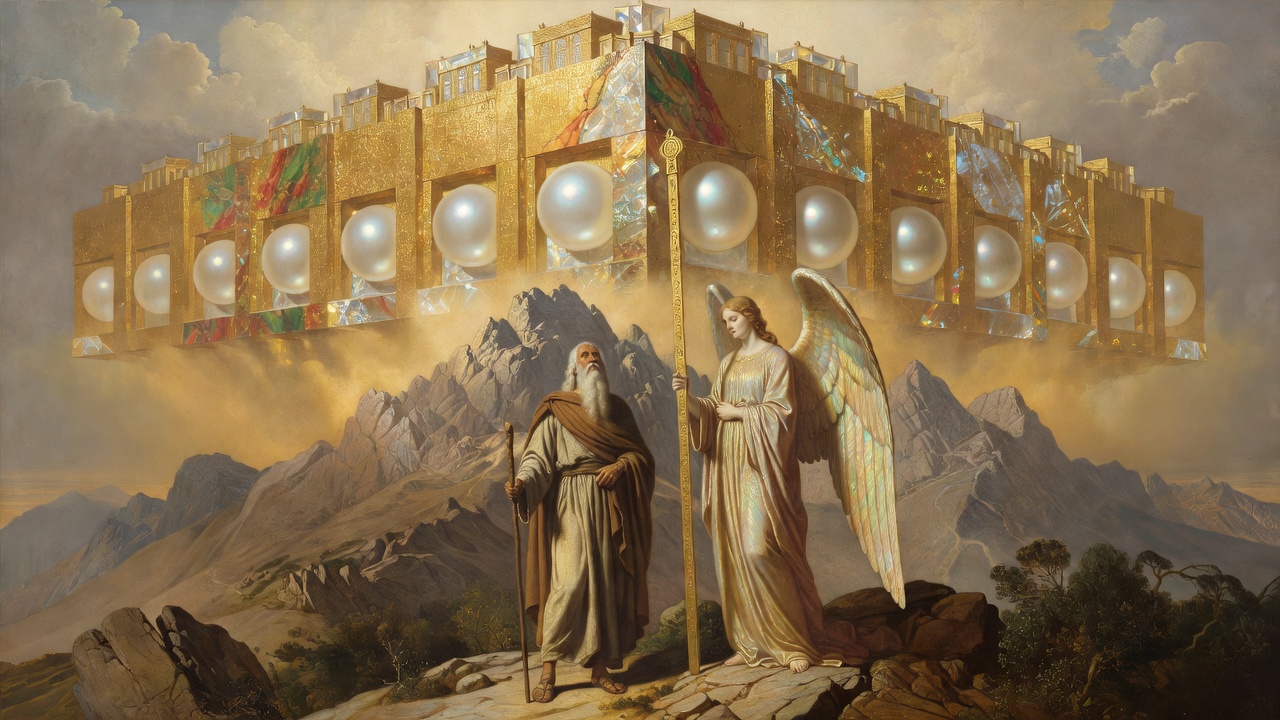
9Mòeq ta tapèh ngai ƀình plình ma khoe wê tapèh toq doe chrŏng kan ranàc, thia haten doe ka au: “Trùh ajang kô beq, đòeq au patô ka ìh hnoq kon mai, aih mai maneo ban da Kon Trìu”. 10Khoe aih ta phàn yiang, ƀình plình aih qnung au lam tŏc ta bui wang kàn haqnhèq, patô ka au hnoq Plài Hadròeh, aih la Jerusalem, enh plình, loh enh Boc Plình, 11qngah qngiang kan ranhòm da Boc Plình. Kan ca-ah ca-iang da plài aih tìah qmang pliang hmu ngŏc ma canaq bac, qmang ka ngŏc hmu lang hliang ma raplênh. 12Haq i panàt haqnghèq, i mòeq jàt baiq toq qmang, xam mòeq jàt baiq ƀình plình ajang trong qmang, enh qnhèq ka qmang achìh yiniq da mòeq jàt baiq nang noe Isorali. 13Panàt pah mat mahì tŏc i piq toq qmang, enh pah qngeo i piq toq qmang, enh pah qma i piq toq qmang, enh pah mat mahì clìh i piq toq qmang. 14Panàt plài aih i mòeq jàt baiq toq hmu xèm, ta aih achìh yiniq da mòeq jàt baiq ngai Tiaq cla da Kon Trìu.
15Ƀình plình ma capoch ka au tì haq wê mòeq toq long maneh aih long triang niaq broq xi wang đòeq wêh plài aih, wêh ƀài qmang xam panàt plài. 16Plài aih pôn bè daq adàng, dang gat dang yôh taq atoq ka dabau. Ƀình plình wêh plài aih xi catoch triang niaq: Plài aih jah mòeq jàt baiq mùan êtađo, dang yôh, dang gat, dang yàng dìq taq atoq. 17Haq wêh panàt plài bè habàu jah: Mòeq hrinh pôn jàt pôn cuđê, aih maneh wêh da bình plình, hadai maneh wêh da kon mangai. 18Panàt broq xam ngŏc hmu lang, plài aih broq xam wang, hliang raplênh qmang ka guàng. 19Jo xèm panàt plài aih broq toq xi hmu canaq. Xèm ma adroe aih xam hmu lang, xèm ma atìq aih xi hmu ngŏc saphia, xèm ma piq aih xi hmu ngŏc mainao, xèm ma pôn aih xam hmu ngŏc nget, 20xèm ma padam aih xi hmu mainao gòh drinh, xèm ma tadràu aih xi hmu rubi; xèm ma tapèh aih xi hmu ngŏc ngèq ngèq, xèm ma rahem aih xi ngŏc thìh thuàng, xèm ma hachìn aih xi ngŏc gòh nget, xèm ma mòeq jàt aih xi ngŏc xênh, xèm mòeq jàt mòeq aih xi hmu ngŏc gòh, xèm mòeq jàt baiq aih xi hmu lang gam. 21Mòeq jàt baiq toq qmang broq xi mòeq jàt baiq pliang ngŏc, rìm toq qmang dìq broq enh cato ngŏc. Trong lam ta plài dìq broq xam wang, hliang qmang ka guàng.
22Ta aih au ùh i hnoq mòeq toq hnim kùh waiq leq, majah qmang aih Boc Plình i cwìang itai rìm trong xam Kon Trìu aih raq hnim kùh waiq da plài aih. 23Plài aih hanoh ùh hìaq ep waq ka i mat mahì, mat khê đòeq sreo qngah; majah qmang aih i kan ranhòm da Boc Plình sreo qngah qngiang, Kon Trìu aih raq đen da plài aih. 24Ƀài diac wì lam tiaq kan qngah plài aih, ƀài bùa ta crŏng taneh aràng deh kan nhòm nhình qmùt ta aih. 25Ƀài qmang ta plài aih dahì ùh clênh majah qmang aih ta aih ùh i ka damang. 26Kan rahù ranhòm da bàc diac jah aràng qmùt ta aih, 27mangai ùh hadròeh, mangai broq trong qmèq, mangai loq qnùt blinh ùh jah mùt; mahaq đòeq toq ka ƀài mangai ma khoe jah achìh yiniq ta hset kan rìh da Kon Trìu.
Did you know?
The New Jerusalem
- In this vision the city coming down from heaven is called the holy city, the new Jerusalem. Jerusalem was also known as the holy city and the city of God, and in Arabic it is el-Khuds, meaning the holy. Its name is in a dual form and means possession of peace or foundation of peace.Sources: the Bible text itself · Jerusalem
- The seer is carried in the Spirit to a great and high mountain and shown that holy city descending. Jerusalem is described as a mountain city enthroned on a mountain stronghold, and the dual form of the name probably refers to the two mountains on which it was built, Zion and Moriah, or, as some suppose, to the upper and lower city.Sources: the Bible text itself · Jerusalem
- The city wall has twelve gates, three on each side, inscribed with the names of the twelve tribes of Israel. Israel is another name for Jacob, explained as one who follows on another's heels, or as a supplanter.Sources: the Bible text itself · Jacob (Israel)
Notes written with AI assistance from open sources (Theographic Bible Metadata, CC BY-SA 4.0; Easton’s Bible Dictionary, public domain) and reviewed before publishing.
Places in this chapter
Only places identified with high confidence are shown (90% or more according to the scholarly sources compiled by OpenBible). Period map: DARE (Digital Atlas of the Roman Empire), CC BY 4.0; modern map: © OpenStreetMap contributors; places: OpenBible.info (CC BY 4.0).
Credits and license for this translation
Hset Hadròeh
The New Testament in the Hre language of Vietnam, translated by Baq Thi
Copyright © 2024 Baq Thi
Language: (Hre)
This translation is made available to you under the terms of the
Creative Commons Attribution Share-Alike license 4.0.
You have permission to share and redistribute this Bible translation in any format and to make reasonable revisions and adaptations of this translation, provided that:
You include the above copyright and source information.
If you make any changes to the text, you must indicate that you did so in a way that makes it clear that the original licensor is not necessarily endorsing your changes.
If you redistribute this text, you must distribute your contributions under the same license as the original.
Pictures included with Scriptures and other documents on this site are licensed just for use with those Scriptures and documents.
For other uses, please contact the respective copyright owners.
Note that in addition to the rules above, revising and adapting God's Word involves a great responsibility to be true to God's Word. See Revelation 22:18-19.
2026-07-18
Source: http://ebible.org/hrebt/ · eBible.org