Leviticus 15
Hset Hadròeh · Tap a verse to see its cross-references.
Ranenh trong kan ùh hruah da gucadrì xam guacalô
1Chuaq Jêhowa anoe tam ka wa Môise wa Arôn rameh: 2Thê anoe ka mangai Isorali qmang kô: Waq toq mangai calô leq ta chac haq loh jìq làuq, aih èh haq loh ka ùh hruah; 3kan ùh hruah da haq taiq kan jìq làuq: yac chac haq loh diac ùh wìa yac khoe atàt, aih dua mangai aih loh ka ùh hruah. 4Juàng leq haq aih khoe kùi, dìq loh ka ùh hruah: èh ƀài ngè leq haq khoe haqngui enh qnhèq hanoh loh ka ùh hruah. 5Cabô ma troq bèq da haq juàng, ep rùh dèh cwàn eo, hùm ta diac, èh loh ka ùh hruah trùh xèq clam. 6Cabô haqngui nòe mangai jìq làuq aih khoe haqngui, ep rùh dèh cwàn eo, hùm ta diac, èh loh ka ùh hruah trùh xèq clam. 7Cabô troq bèq chac mangai jìq làuq aih, ep rùh dèh cwàn eo, hùm ta diac, èh loh ka ùh hruah trùh xèq clam. 8Tàng mangai jìq làuq troq cachôh ka mangai ma hruah, mangai aih èh ep rùh dèh cwàn, hùm ta diac, èh loh ka ùh hruah trùh xèq clam. 9Xê leq mangai jìq làuq aih khoe haqngui aih èh dìq loh ka ùh hruah. 10Waq toq cabô troq bèq yiniq cleq enh chac mangai jìq làuq aih, dìq top kan ùh hruah trùh xèq clam. Cabô ma wê ƀài ngè aih, ep rùh dèh cwàn eo, hùm ta diac, èh top kan ùh hruah trùh xèq clam. 11Yac ka cabô ùh dèh, waq toq mangai jìq làuq aih ùh qnheo tì ta diac mahaq troq bèq haq aih, mangai aih èh ep rùh dèh cwàn eo ta diac, èh top kan ùh hruah trùh xèq clam. 12Abôq taneh leq mangai aih troq bèq, ep tùq đac ka padah, ngè broq xi long, aih qnheo ta diac. 13Jò mangai calô jìq làuq khoe jah brêh, aih ep rèn patep pang hì haq jah brêh trùh tapèh hì, khoe aih rùh dèh eo cwàn ta diac hìu; khoe aih, haq hi jah hreo. 14Trùh hì rahem, haq aih ep rùp ka rađeh baiq toq trù braih, ùh meh baiq toq trù kon, lam trùh enh ngèa Chuaq Jêhowa, jang nòe qmang traiq taglàm, èh am ka mangai pajàu. 15Mangai pajàu dèch toq ma kô broq ramènh baxon yiniq lui, ma tau broq ramènh bùh, qmang aih mangai pajàu broq ramènh baxon yiniq lui da mangai calô kô enh ngèa Chuaq Jêhowa. 16Jò mangai calô apô xep, ep hùm dìq ka chac ta diac, èh loh ka ùh hruah tùh xèq clam. 17Eo cwàn xam ngè akia leq ma khoe top, ep rùh ta diac, loh ka ùh hruah trùh xèq clam. 18Jò mangai calô xam mangai cadrì waq ka dabau, aih èh ep hùm ta diac, loh ka ùh hruah trùh xèq clam. 19Jò mangai cadrì i khê, aih ep ùh hruah ta tapèh hì; waq toq cabô ma bèq haq hi loh ka ùh hruah trùh xèq clam. 20Ngè leq haq ma kùi qnì haqngui qnì jò haq ma i khê, aih dìq top kan ùh hruah. 21Cabô troq da haq juàng, ep rùh dèh cwàn eo, hùm ta diac, èh loh ka ùh hruah trùh xèq clam. 22Cabô ma troq ngè leq haq ma khoe haqngui enh qnhèq, ep rùh dèh eo cwàn, hùm ta diac, èh loh ka ùh hruah trùh xèq clam. 23Tàng loq i cleq ta juàng, ùh meh ta ngè haq haqngui, cabô ma troq poh, hi loh ka ùh hruah trùh xèq clam. 24Tàng i moeq ngai calô waq ka gucadrì aih, èh kan amùa jò i khê top ka mangai calô, aih èh mangai calô loh ka ùh hruah ta tapèh hì; juàng leq haq ma kùi dìq top kan ùh hruah. 25Jò mangai gucadrì khoe dìq dèh ka khê mahaq oe raq loh mahim bàc, ùh meh loh ka lon, aih loh ka ùh hruah tìah ka jò oe raq i mahim qmang ka jò i khê. 26Jò i mahim, yac ka juàng leq haq khoe kùi enh qnhèq dìq tìah qmang ka juàng jò haq i khê diq. 27Cabô ma troq ƀài ngè aih dìq loh ka ùh hruah, ep rùh dèh cwàn eo, hùm ta diac, èh loh ka ùh hruah trùh xèq clam. 28Jò mahim gucadrì aih khoe atàt, ep rèn pang hì atàt jah tapèh hì, aih èh hi jah hruah. 29Trùh hì rahem, mangai aih rùp baiq toq trù braih, ùh meh baiq toq trù kon, aràng ka mangai pajàu ajang qmang traiq taglàm. 30Mangai pajàu ep dèch toq ma kô broq ramènh baxon yiniq lui, toq ma tau broq ramènh bùh; broq qmang aih haq baxon yiniq lui da gucadrì tau enh ngèa Chuaq Jêhowa. 31Qmang aih, pì jah lah mangai Isorali hangai kan ùh hruah da wì haq, yùq èh wì haq loq broq amùa ka traiq taglàm au ma xan oe taqne wì haq, ùh qmang aih èh wì haq loq ep cachìt dèh ta kan ùh hruah. 32Aih raq ranenh am ka mangai calô loh ka jìq làuq, am ka rìm ngai apô xep, 33am ka gucadrì jò haq i khê, ka rìm ngai, yac ka gucalô gucadrì, ma loh ka jìq làuq, ka mangai calô jò haq waq ka gucadrì jò haq i khê.
Did you know?
Laws on Bodily Discharges and Purification
- The purity laws in Leviticus 15 regulated both natural and abnormal bodily discharges in men and women, which rendered individuals ceremonially unclean. Objects touched by an afflicted person, such as beds, chairs, and saddles, transmitted uncleanness, requiring anyone who touched them to wash their clothes, bathe in water, and remain unclean until evening.Sources: the Bible text itself
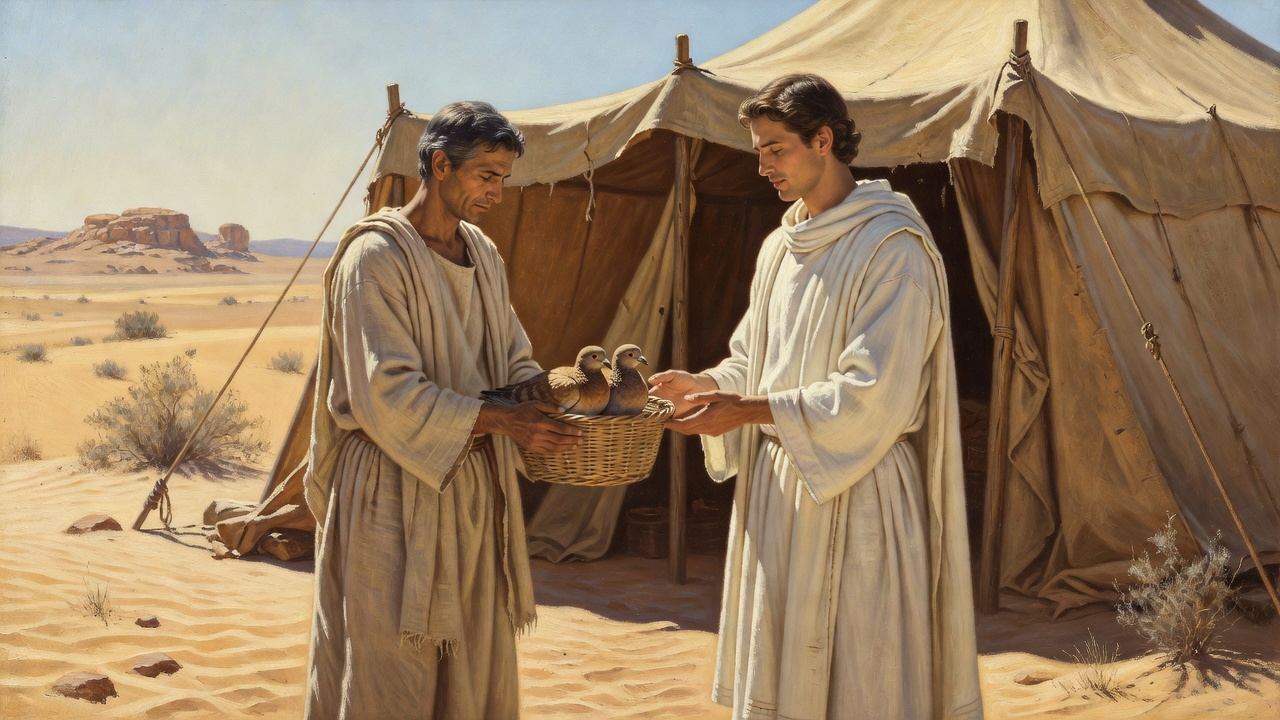
- Purification from prolonged discharges required waiting seven days after healing, washing garments, and bathing in fresh water. On the eighth day, the person brought two turtledoves or two young pigeons to the priest at the entrance of the Tent of Meeting to offer one as a sin offering and the other as a burnt offering.Sources: the Bible text itself
- The explicit goal of these regulations was to keep the Israelites mindful of ritual boundaries, preventing them from defiling the tabernacle that stood in the midst of the camp.Sources: the Bible text itself
Notes written with AI assistance from open sources (Theographic Bible Metadata, CC BY-SA 4.0; Easton’s Bible Dictionary, public domain) and reviewed before publishing.
Credits and license for this translation
Hset Hadròeh
The New Testament in the Hre language of Vietnam, translated by Baq Thi
Copyright © 2024 Baq Thi
Language: (Hre)
This translation is made available to you under the terms of the
Creative Commons Attribution Share-Alike license 4.0.
You have permission to share and redistribute this Bible translation in any format and to make reasonable revisions and adaptations of this translation, provided that:
You include the above copyright and source information.
If you make any changes to the text, you must indicate that you did so in a way that makes it clear that the original licensor is not necessarily endorsing your changes.
If you redistribute this text, you must distribute your contributions under the same license as the original.
Pictures included with Scriptures and other documents on this site are licensed just for use with those Scriptures and documents.
For other uses, please contact the respective copyright owners.
Note that in addition to the rules above, revising and adapting God's Word involves a great responsibility to be true to God's Word. See Revelation 22:18-19.
2026-07-18
Source: http://ebible.org/hrebt/ · eBible.org