Leviticus 1
Hset Hadròeh · Tap a verse to see its cross-references.
About this book
About Leviticus
- Easton's Bible Dictionary (1897) presents Leviticus as the third book of the Pentateuch and as the third book of Moses. The name, used in the Vulgate following the LXX, reflects the book's chief concern: the Levitical service.Sources: Easton: Leviticus
- Easton states that every ordinance in the book was delivered within one month, the first month of the second year after the Exodus. His entry on Sinai, also called Horeb, says the Hebrews reached that mountain district in the third month after the Exodus and remained encamped for about a whole year, and that the whole of Leviticus records what occurred there.Sources: Easton: Leviticus · Mount Sinai
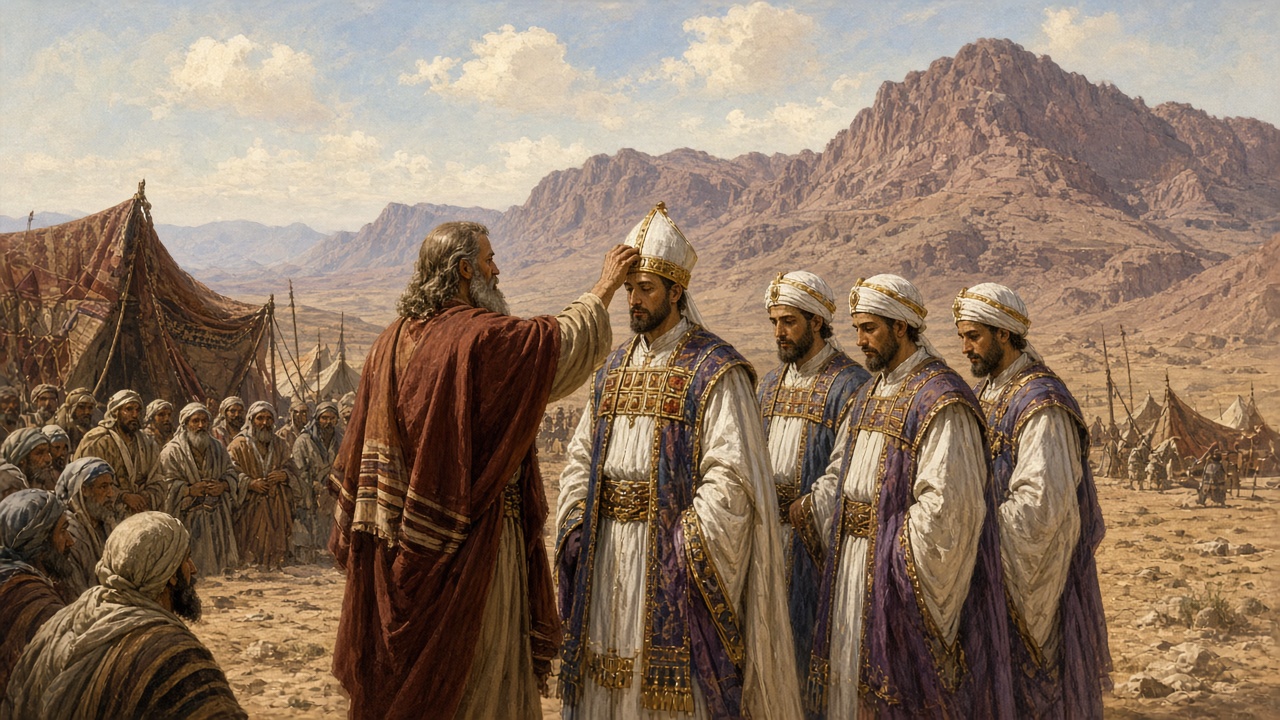
- Chapters 1–7 give laws for burnt offerings, meat offerings, and thank offerings, then for sin offerings and trespass offerings, and for the priests' duties in offering sacrifice. Chapters 8–10 recount the consecration of Aaron and his sons, Aaron's first offering for himself and the people, and the death of Nadab and Abihu, who were struck dead and buried outside the camp after offering strange, or common, fire not taken from the great brazen altar. Chapters 11–16 concern purity and the sacrifices and ordinances for putting impurity away.Sources: Easton: Leviticus · Nadab · Abihu
- Easton describes chapters 17–20 as laws marking the separation between Israel and other peoples. Further laws concern the priests' personal purity and their eating of holy things, offerings without blemish, and the due celebration of the great festivals in chapters 23 and 25. Promises and warnings about obedience follow, the book closes with a section on vows, and Easton notes that God is the direct speaker through almost the whole of it.Sources: Easton: Leviticus
- In the rites of chapter 16, one goat is associated with Azazel, which the Authorized Version renders scapegoat and the Revised Version leaves as Azazel. Easton reports that some Jewish interpreters take it as a place in the wilderness about twelve miles east of Jerusalem, while others take it as an evil spirit or even Satan, and he also notes a root meaning of separation.Sources: Azazel
Notes written with AI assistance from open sources (Theographic Bible Metadata, CC BY-SA 4.0; Easton’s Bible Dictionary, public domain) and reviewed before publishing.
Ranenh da ramènh bùh…
1Chuaq Jêhowa oe enh dalam ka traiq taglàm creo doe ka Môise rameh: 2Drah anoe ka mangai Isorali qmang kô: Tàng jò leq taqne pì i cabô dèch ramènh ka Chuaq Jêhowa aih ep dèch ngè pì ma aban, yac ka bo, yac ka trìu.
3Tàng ramènh da haq aih la ramènh bùh xi ƀo, aih ep yŏc ƀo calô ùh ka xìt habau, dèch ajang qmang traiq taglàm, enh ngèa Chuaq Jêhowa, đòeq Haq jah lem manoh dì yŏc. 4Mangai aih ep roh deh tì tagàu kon ramènh aih, aih èh haq hi jah dì yŏc thai, đòeq jah baxon yiniq lui da mangai aih. 5Khoe aih, haq jêh kon ƀo aih enh ngèa Chuaq Jêhowa, èh ƀài kon da Arôn, aih la ƀài pajàu, hi tadreo dèch mahim, rai pùc dudan ka prang tadreo ajang nòe traiq taglàm. 6Tìa aih, wì lôq akia kon ramènh aih, rai xah loh tang haqnech jam. 7Ƀài kon calô da pajàu Arôn hi patep ùnh tanòe prang tadreo khoe aih chàt ra-ùnh enh qnhèq ka ùnh aih. 8èh ƀài kon calô Arôn, aih ƀài pajàu hi tah ƀài haqnech jam aih, xam gàu xam bòq enh qnhèq ka ra-ùnh khoe bùh ta prang tadreo. 9Mangai aih hi yŏc diac qnheo ƀài cliac clèm xam jo, èh pajàu aràng dìq dŏng bùh tanòe prang tadreo, aih raq ramènh bùh, aih la mòeq ramènh tadreo dèch xi ùnh, i kan xua thùm ka Chuaq Jêhowa
10Tàng joq ramènh da haq aih la ramènh bùh xi ngè aban qyoh, yac ka trìu yac ka bubi, aih ep yŏc mòeq toq ma calô ùh hìaq i xìt habau, 11jêh ngè aih enh ƀè qngeo da prang tadreo, enh ngèa ka Chuaq Jêhowa; èh ƀài kon calô da Arôn, aih la ƀài pajàu, hi pùc mahim dudan enh crŏng prang tadreo; 12Xah jam aih loh tang haqnech, gàu xam bòq đòeq crài, mangai pajàu yŏc ƀài ngè aih tah enh qnhèq ka ra-ùnh ma khoe bùh ùnh enh qnhèq ka prang tadreo. 13Mangai aih hi yŏc diac qnheo pù cliac clèm xam jo, khoe èh mangai pajàu bùh dŏng rìm yiniq ma oe crŏng prang tadreo, aih raq ramènh bùh, ramènh tadreo dèch xi ùnh i kan xua thùm ka Chuaq Jêhowa. 14Tàng ramènh da haq dèch ka Chuaq Jêhowa aih la ramènh bùh xi chìm, aih ep yŏc trùh braih tàng ùh trù kon. 15Mangai pajàu aràng ajang nòe prang tadreo, wech catech ka gàu, khoe èh bùh taprang tadreo, hanhot ma dìq ka mahim haq pùc dudan ka prang tadreo. 16Mangai aih hi doeh padìu rai lôih xàc, èh khwênh haten ka prang tadreo, oe enh ƀè mahì clìh, aih la nòe ùc blo; 17khoe èh hit ajang baiq toq panan, mahaq ùh jah catech hloe, khoe èh mangai pajàu aràng bùh tanòe prang tadreo, nòe khoe baxù đòeq ra-ùnh; aih la ramènh bùh, ramènh tadreo dèch xi ùnh i kan xua thùm ka Chuaq Jêhowa.
Did you know?
The Burnt Offering
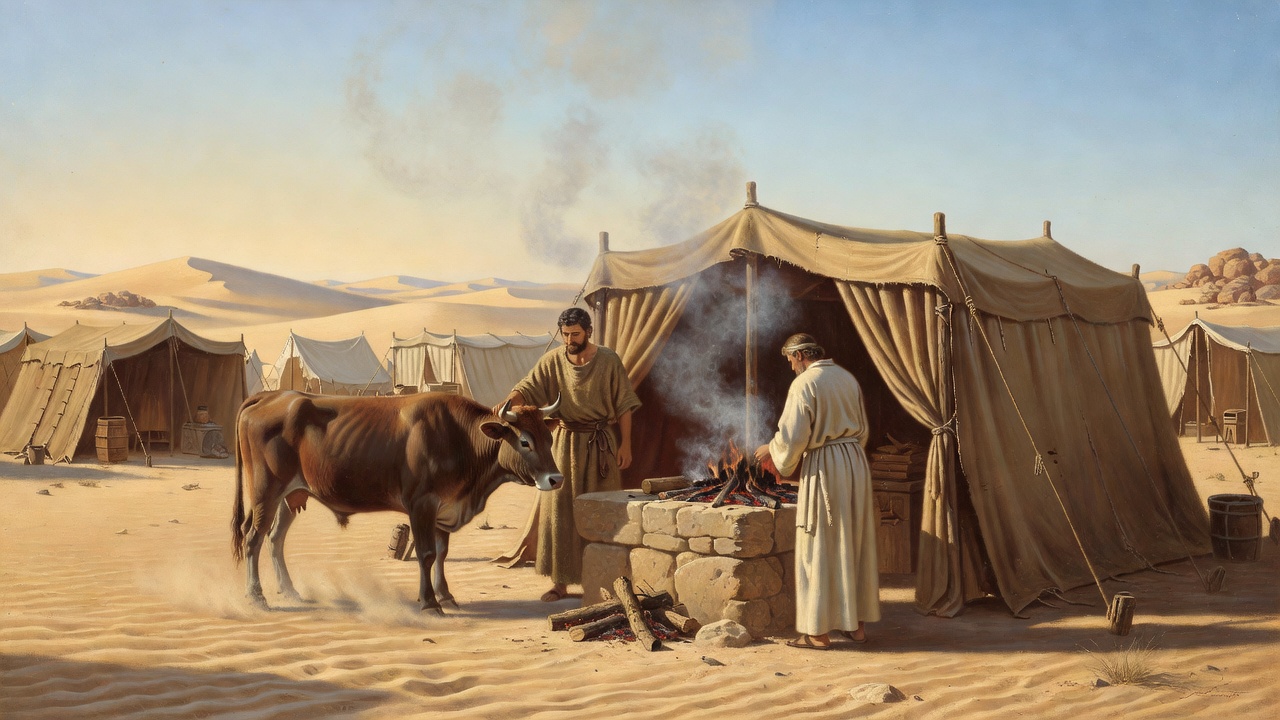
- The instructions for the burnt offering accommodate different economic means by allowing offerings from the herd, the flock (sheep or goats), or birds (turtledoves or young pigeons). For livestock, the animal was required to be a male without blemish.Sources: the Bible text itself
- The ritual required a clear division of roles between the worshiper and the priests. The worshiper brought the animal, laid a hand on its head for atonement, slaughtered it, skinned it, and washed its inner parts, while the sons of Aaron sprinkled the blood and burned the entire offering on the altar.Sources: the Bible text itself · Aaron
Notes written with AI assistance from open sources (Theographic Bible Metadata, CC BY-SA 4.0; Easton’s Bible Dictionary, public domain) and reviewed before publishing.
Credits and license for this translation
Hset Hadròeh
The New Testament in the Hre language of Vietnam, translated by Baq Thi
Copyright © 2024 Baq Thi
Language: (Hre)
This translation is made available to you under the terms of the
Creative Commons Attribution Share-Alike license 4.0.
You have permission to share and redistribute this Bible translation in any format and to make reasonable revisions and adaptations of this translation, provided that:
You include the above copyright and source information.
If you make any changes to the text, you must indicate that you did so in a way that makes it clear that the original licensor is not necessarily endorsing your changes.
If you redistribute this text, you must distribute your contributions under the same license as the original.
Pictures included with Scriptures and other documents on this site are licensed just for use with those Scriptures and documents.
For other uses, please contact the respective copyright owners.
Note that in addition to the rules above, revising and adapting God's Word involves a great responsibility to be true to God's Word. See Revelation 22:18-19.
2026-07-18
Source: http://ebible.org/hrebt/ · eBible.org