Genesis 49
Hset Hadròeh · Tap a verse to see its cross-references.
Jacôp waiq am xôq ramot dèh ka bài kon...
1Jacôp creo dèh ka ƀài kon calô trùh ti rađeh rai doe: Tagop dudan ajang kô, baq hu anoe ƀài bìac ep trùh ka pì kon ta hì atìq kô èh.
2Ƀài kon calô da Jacôp, drah thia tagop ajang kô hu tàng;
Tamàng bàu Isorali, baq da pì kon.
3Ruƀên! aih la kon ramua da baq,
Kan dêh baq, teo padren baxèm da baq,
Rìh acaq lem yi loe dŏng, trong qnì loq haq yeo loq dìq dŏng.
4Kon rachùi tìah ka diac tro, dài ma ùh diang đeh cabô.
Majah qmang aih kon khoe tŏc ta aniang baq
Kon tŏc juàng baq, broq kan padrùh ta aih.
5Simê-ôn xam Lêwi wa aih oh daq mòeq cliac clèm.
Pla chang da wa aih joq ranac da kan ngang dù.
6Waiq dôq mahua yiang da baq ùh pajùm ti wa,
Kan ranhòm da baq ùh alùh pajùm tanòe tagop da wa haq.
Majah qmang aih wì haq khoe jêh đac mangai ta kan panòeh.
Kat đac qnhàng ƀo qnìq tiaq deh manoh cla enh.
7Kan nòeh da wì haq joq troq ka ra-òh hamaiq, majah qmang aih joq xòc joq qnàng.
Joq troq ka ra-òh hamaiq kan nòeh da wì haq, majah qmang aih ngang joq qnàng.
Au lah đac wì haq tahnim Jacôp,
Palac wì haq taqne mangai Isorali.
8Juađa! kô èh oh daq hi manè apôi kon,
Tì kŏng kon jah padit ranŏng ƀài ƀình ma tagit ka kon.
Ƀài kon calô da baq kô èh jah hacùn cràng enh ngèa kon.
9Juđa aih la sutùh caqmàng;
A kon! kon rùp jah hanùm khoe aih hua ahlài.
Haq canùng kùi i crài cleq ka sutùh calô.
Tìah ka sutùh kan; cabô hùa tŏc haqngui enh crŏng haq?
10Long dùi da bùa, ùh talìc ka Juđa.
Mangai qnoh ranenh ùh catech khoe ka jènh haq.
Trùh jò Mangai Silô ma hi trùh.
Rìm diac dìq iu tiaq Mangai aih.
11Haq kàt deh lùa ajang xèm nho,
Kàt dèh kon lùa qyoh ajang hamenh nho ma yeo lem dŏng.
Haq rùh dèh eo cwàn ta alac nho,
Yŏc mahim nho rùh dèh eo yôh.
12Mat haq gam yeo hnau ka alac.
Hanenh haq taboc yeo hnau ka diac tôh.
13Sabulôn oe ti nòe kênh diac raxìq.
Aih la nòe i boang kàn oe.
Acang taneh diac haq bòt qnah ta Siđôn.
14Ysa-ca aih la lùa dêh padren,
Kùi padài taqne cadrong.
15Jò hnoq dèh nòe kùi padài aih joq alàng.
Taneh aih joq lem qnàng,
Aih èh haq bet plêh xùi kan trap.
Ep iu tiaq trong broq xàu.
16Đan jah hadrah deh mangai da haq.
Qmang ka xinoe da Isora-li.
17Đan èh tìah qmang ka bìh oe ti kênh trong
Mòeq toq bìh plŏng roc trong,
Kap cachop axêh.
Broq ka mangai kòe axêh tacro dalùi,
18Wôi Jêhowa! au tangèh gòm kan dèch claih da Ìh.
19Gat èh i mòeq calùh lình clàm jêh haq.
Yàng èh haq tùh jêh chau rai qnat tiaq,
20Enh nòe Ase i dahwèq ramaq jìang,
Haq palàng ngè jìang acaq ka ƀài bùa.
21Nepta-li aih joe cadrì caqnaih enh cadrong.
Xêh loh ƀài kon joe lem lình.
22Jôsep aih xèm nho, plì da haq top haraya,
Hon ten ka thòng diac,
Hamenh haq heo enh qnhèq ka canàng.
23Mangai wê panenh khoe leoq haq,
Pênh rang rai canàt jêh haq.
24Canòm ka tì kŏng Mangai I cwìang Rìm trong da Jacôp,
Dài panenh da haq dua cajap
Canòm ka Mangai Ban trìu, aih la Hmo da Isorali
Dài baiq toq kŏng haq rai dêh tam.
25Boc Plình da Baq jah wiang ti kon;
Mangai I cwìang Rìm trong jah am xôq ramot ka kon,
Aih la xôq ramot loh enh plình,
Xam xôq ramot tŏc enh nòe kòe jrùq.
Xôq ramot enh tôh xam da cliac miq.
26Xôq ramot baq waiq am ka kon glŏng ka haqnhèq.
Qnhèq ùh hnau ka xôq ramot wì kan cadraq da baq,
Haqnhèq ùh hnau ka ƀài bui wang qnhòng calah nèh.
Waiq ƀài xôq ramot kô oe tagàu Jôsep
Ajang ngòng mangai broq cla craq ƀài oh daq haq.
27Ƀênja-min aih la koq yiang hrah ka acaq,
Disroq haq chriang rùp hanùm
Dixèq haq lah axong hanùm đeh khoe axan jah.
28Ƀài wì aih dìq gàu rangàu da mòeq jàt baiq xinoe Isorali; aih la bàu baq wì haq doe jò qnang waiq xôq ramot am ka wì, waiq xôq ramot crài am ka tang ngai.
Jacôp cachìt.
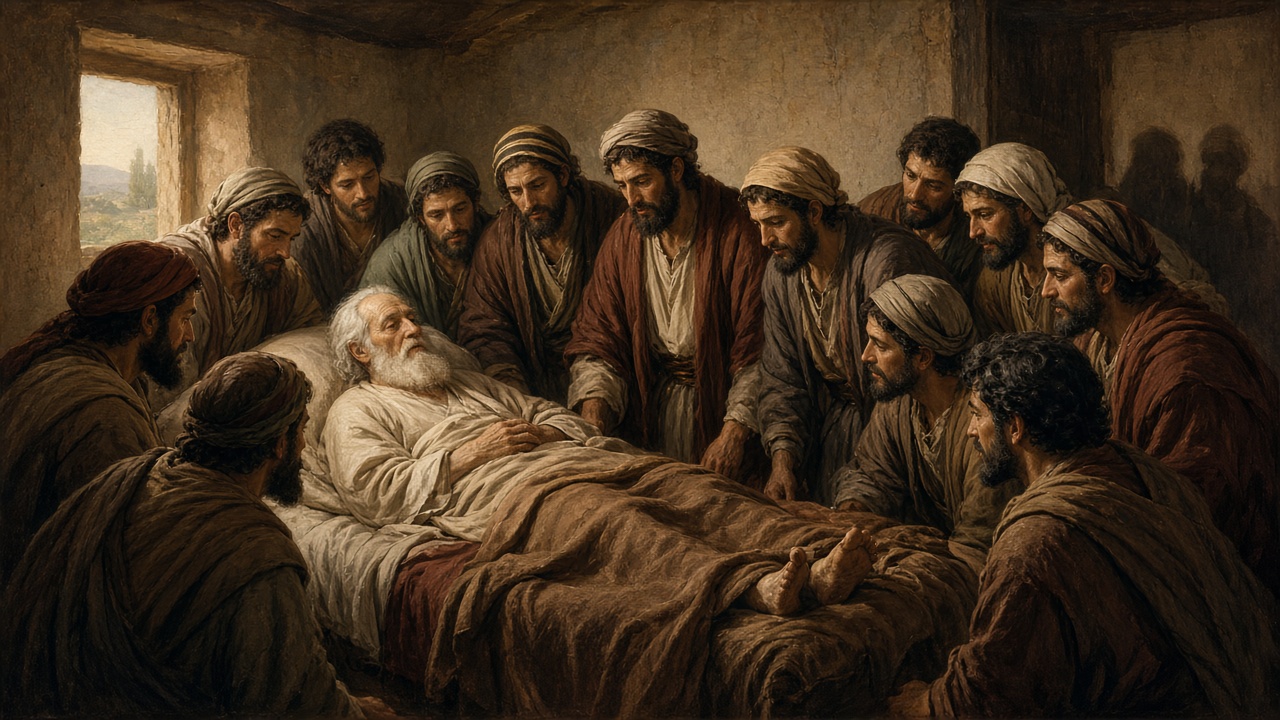
29Khoe aih haq thê dèh ƀài kon calô rameh: Baq kô èh hlài ti wì kan cadraq, pì kon catùh baq pajùm ti wì kan cadraq, ta kòp hmu nòe đùng ruàng Eprôn, mangai Hêtit, 30aih la kòp hmo tađùng Macbêla haten ka Mamrê, gùng Cana-an, aih la nòe Apraham khe rot hu broq nòe đòeq cađac hanang hloe xam đùng ruàng da Eprôn. 31Ta aih wì khoe catùh Apraham xam Sara mai haq; Ysac xam Rêbêca mai haq; hadai ta aih raq baq khoe catùh Lê-a, 32Đùng ruàng aih xam kòp hmo khoe rot hlài enh xinoe mangai Hèch.
33Jò tanap deh ka wì kon ƀài bàu aih hi khoe, Jacôp dèch hlài dèh jènh tŏc ta juàng, khoe aih hi pat, jah hlài dèh ti wì kan cadraq.
Did you know?
Last Blessings for Israel's Twelve Tribes
- Jacob's sayings play on the meanings of his sons' names. Judah (Hebrew Yehudah) comes from Leah's words, "Now will I praise" (odeh), and Jacob says that Judah's brothers will praise him. Dan's name echoes his mother Bilhah's "God hath judged me" (dananni); Jacob says Dan will judge, or provide justice for, his people, and Easton's Bible Dictionary (1897) suggests this probably alludes to Samson, a later judge from the tribe of Dan.Sources: Judah (patriarch) · Dan · the Bible text itself
- The chapter calls each speech a blessing, yet some are stern. Reuben, firstborn of Jacob and Leah, whose name means "Behold a son!", is told he will no longer excel because he defiled his father's bed. Simeon and Levi, who took violent revenge on Hamor and the Shechemites, hear their anger cursed and are told they will be dispersed in Jacob and scattered in Israel; the Authorized Version's "they digged down a wall" is rendered in the Revised Version "they houghed an ox," as this chapter says they hamstring oxen.Sources: Reuben · Simeon · Levi (patriarch) · the Bible text itself
- Jacob then asks to be buried with his fathers in the cave in the field of Ephron the Hittite, which Abraham bought as a family grave. Machpelah, a name understood to mean "portion" or "double cave," stood on a hillside east of Hebron, facing Mamre in the land of Canaan. Abraham and Sarah, Isaac and Rebekah, and Leah were already buried there.Sources: Machpelah · Ephron · Mamre · the Bible text itself
Notes written with AI assistance from open sources (Theographic Bible Metadata, CC BY-SA 4.0; Easton’s Bible Dictionary, public domain) and reviewed before publishing.
Places in this chapter
- Shiloh · Today: Khirbet Seilun · 32.056, 35.290 · verse 10
- Sidon · Today: Sandikli archaeological site in Sidon · 33.561, 35.372 · verse 13
- Canaan · 32.767, 35.333 · verse 30
- Machpelah · Today: Cave of the Patriarchs · 31.525, 35.111 · verse 30
Only places identified with high confidence are shown (90% or more according to the scholarly sources compiled by OpenBible). Period map: DARE (Digital Atlas of the Roman Empire), CC BY 4.0; modern map: © OpenStreetMap contributors; places: OpenBible.info (CC BY 4.0).
Credits and license for this translation
Hset Hadròeh
The New Testament in the Hre language of Vietnam, translated by Baq Thi
Copyright © 2024 Baq Thi
Language: (Hre)
This translation is made available to you under the terms of the
Creative Commons Attribution Share-Alike license 4.0.
You have permission to share and redistribute this Bible translation in any format and to make reasonable revisions and adaptations of this translation, provided that:
You include the above copyright and source information.
If you make any changes to the text, you must indicate that you did so in a way that makes it clear that the original licensor is not necessarily endorsing your changes.
If you redistribute this text, you must distribute your contributions under the same license as the original.
Pictures included with Scriptures and other documents on this site are licensed just for use with those Scriptures and documents.
For other uses, please contact the respective copyright owners.
Note that in addition to the rules above, revising and adapting God's Word involves a great responsibility to be true to God's Word. See Revelation 22:18-19.
2026-07-18
Source: http://ebible.org/hrebt/ · eBible.org