Genesis 44
Hset Hadròeh · Tap a verse to see its cross-references.
Chrŏng ƀac oe ta caƀau qmau da Ƀênjamin.
1Jôsep thê mangai wèq hnim haq: Waq toq wì aih hlàt wê pang leq, aih pì tŏng ka wì haq qmau bình ta caƀau toq aih, khoe aih ƀac mangai leq tah hlài ta caƀau mangai aih. 2Èh tah doe chrŏng ƀac da au ajang ngah caƀau hloe xam ƀac rot qmau da mangai ùch. Mangai wèq hnim broq tiaq wop qmang ka bàu Jôsep thê rađeh.
3Sroq èh! trŏc bu qngah wì am ƀài aih xam ƀài lùa hlài. 4Wì lam qnhòq hangai ka than phôq, Jôsep doe ka mangai wèq tahnim: Ìh drah yòng beq hnan tiaq ƀài wì aih; jò khoe tem, ìh doe rameh: Gleq pì majah yŏc kan qmèq đòeq caqnaih ka trong lem qmang qmat? 5Kô ùh xài chrŏng craq nhèn ôq alac rai đòeq capoch pajàu qmòh? Pì khoe broq moeq bìac ùh lem. 6Mangai wèq hnim tiaq tem, capoch hlài wop qmang ka bàu aih; 7ƀài oh daq hi tèu: Gleq wì craq majah anoe qmang aih? Ùh jò leq mangai hapŏng ìh ma i manoh broq yiniq qmang kô!. 8Hacô enh Cana-an nhèn i wê ƀac ma khoe jah ajang ngah caƀau qnoh hu padreo hlài ka ìh; aih wìa ka ma i manoh enh atùng ƀac qnì wang qnì tanòe hnim wì craq ìh qmòh?. 9Tàng joq ìh chaq hnoq doe chrŏng aih ta caƀau da mangai hapŏng leq aih èh dôq haq aih cachìt hloe! Èh nhèn kô broq hapŏng dìc ka wì craq. 10Mangai aih doe: Òq hêq! Broq qmang ka bàu pì doe raq au chaq hnoq chrŏng aih ajang cabô, mangai aih ep broq dìc ka au; mangai ma qnoeq aih ùh i đeh ka yiniq lui cleq 11Tajòe qmòe, rìm ngai drah qnoh dèh caƀau ta haqneq rai pèh ngah haq. 12Mangai aih chèh chaq enh caƀau da mangai daq ramua adroe èh trùh ta caƀau da mangai oh ùch. Doe chrŏng aih chaq hnoq ta caƀau da Bênjamin. 13Rìm ngai hit dèh eo, dèch ƀau qmau tŏc crŏng lùa, wìh loh ta than phôq.
Jôsep enh padràng Ƀênjamin oe hlài tagùng Êdip…
14Cla Jôsep oe raq tahnim, jò Juđa xam ƀài oh daq trùh ta aih, wì bla op ta haqneq enh ngèa haq. 15Jôsep bòch: Pì khoe broq cleq qmang kô? Ma ùh loq mangai troeq au kô rabiaq ka broq pajàu đòeq chaq hnoq rìm yiniq cleq ma khoe hnhung qmòh? 16Juđa tèu: Nhèn oe qnì tèu wì craq qmang leq, oe hangah hlài qmang leq? oe cwaih rađeh qmang leq? Boc Plình khoe hnoq dŏng trong dù da hapŏng ìh. Kô èh nhèn xam mangai khoe jah rùp doe chrŏng ajang nòe tì kŏng haq, dìq broq hapŏng ka wì craq. 17Mahaq Jôsep tèu bàu: Au ùh i hèm ka broq qmang aih! Mangai leq ma khoe jah rùp doe chrŏng ajang tì haq, mangai aih èh ma ep broq hapŏng au; èh ƀài pì dìq hlài dèh hnim baq pì ka catèm. 18Juđa thia haten ka Jôsep rai doe: Wì craq! apaq dayo ka hapŏng ìh, am au capoch đeh moeq nà bàu ka wì craq tamàng. 19Wì craq i bòch deh mangai hapŏng rameh: Pì oe i ka baq, oe i ka oh daq qnoeq loq ùh? 20Nhèn i doe ka wì craq rameh: Nhèn oe i baq craq, xam moeq toq kon calô ha-uang ka haq jò khoe craq. Daq moeq cliac moeq clèm ka haq khoe cachìt, dài taqne ƀài kon da miq haq, oe moeq toq haq aih raq, èh baq loq waq dèh ka haq haraya. 21Khoe aih ìh doe ka hapŏng ìh: Qnoh haq loh tacô ka au, dôq au jah hnoq qmòe xi cla. 22Èh nhèn i anoe ka wì craq: Kon qyoh aih ùh jah talah ka baq, tàng joq talah aih èh baq cachìt. 23Yàng wì craq aih doe: Tàng joq oh ùch ùh tiaq pì loh tacô, aih èh pì ùh hnoq hadrò au hòm. 24Dài qmang aih jò nhèn hlài tahnim mangai hapŏng ìh, aih la baq au, nhèn i anoe hlài ka haq tàng bàu da wì craq. 25khoe aih, baq thê hòm nhèn: Drah loh rot tam ka bèn toq biaq dahwèq acaq. 26Nhèn doe ka haq: Ùh jah, mahaq tàng joq oh ùch tiaq nhèn, aih men jah loh, tàng ùh qmang aih nhèn ùh jah glàm haq aih. 27Mangai hapŏng ìh aih la baq nhèn, tèu rameh: Pì loq mai au ha-uang ka au baiq toq kon calô; 28mòeq ngai khoe cađac au lam hnhnung hloe; au ji khoe doe canau ngè rôm khoe hit đac haq, majah qmang aih trùh manòeq qnhòq hnoq wìh hlài. 29Tàng joq pì oe qnung kon qyoh kô lam khoe ka au hòm, tàng beq loq i yiniq cleq haƀo trùh ka haq, aih xài pì broq ka mangai craq ko gàu kô catech cliac clèm loh ta hwin.
30Baq loq waq dèh hrìn ka oh ùch au, mahua yiang wa ùh taclah ka dabau, tàng joq manòeq kô au wìh hlài hnim hapŏng ìh, aih la baq nhèn mahaq ùh i ka oh ùch aih, 31qmang aih jò pi oe hnoq kon ùch hòm, aih èh haq cachìt. Qmang aih, xài ƀài hapŏng da wì craq kô broq dèh ka baq craq khoe ko gàu, haq aih hadai hapŏng wì craq raq, catech cliac clèm loh ta hwin. 32Majah qmang aih hapŏng ìh kô khoe chìuq pagàu ka kon ùch aih rameh: Tàng joq au ùh ahlài oh ka baq, aih èh au pòq yiniq lui ka baq mòeq đòe. 33Qmang aih manòeq kô, dôq ka hapŏng ìh jah oe dìc thai dèh ka mangai qyoh kô, đòeq haq jah hlài dèh tiaq ƀài daq. 34Tàng joq kon qyoh ùh tiaq hlài, broq qmang leq au oe hùa hlài dèh ta baq? Wùih! broq qmang leq au ma manaq hnoq kan rànac kàn trùh dèh ka baq qmòh!
Did you know?
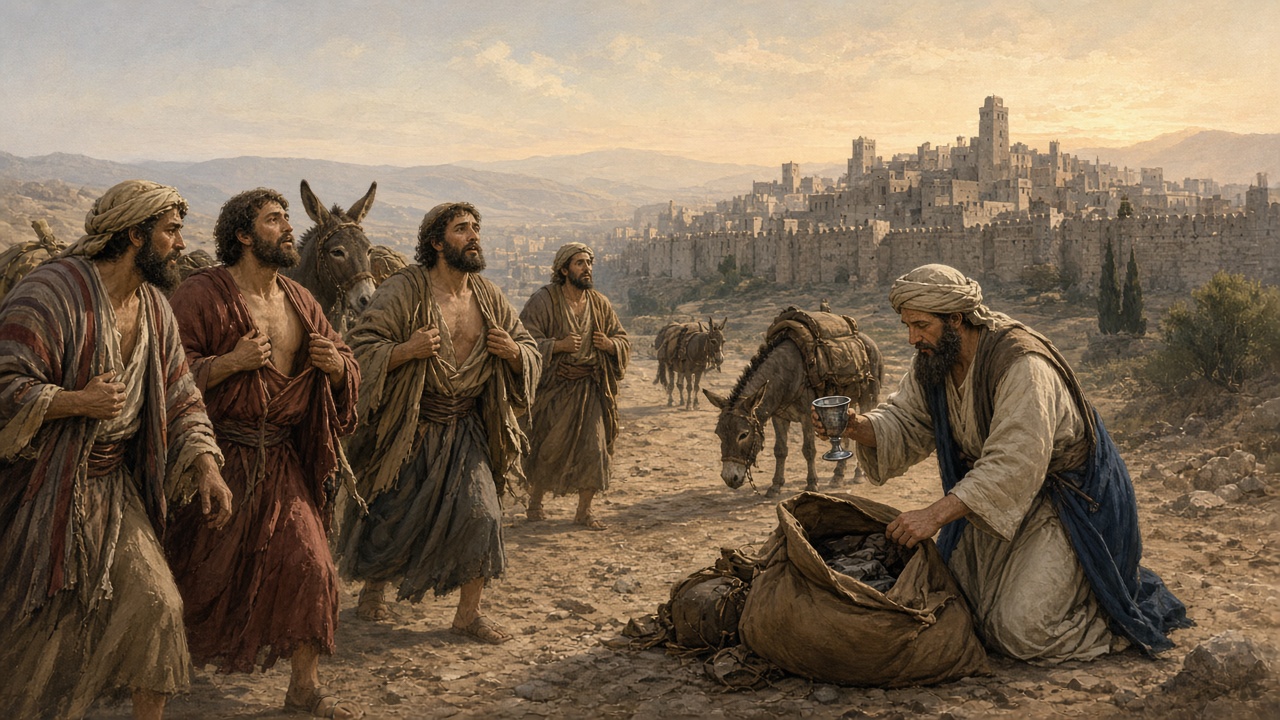
The Hidden Cup and Judah's Plea
- Judah, Jacob's fourth son by Leah, speaks for the brothers and offers to remain as a slave in the boy's place so that Benjamin may return with his brothers. Easton's Bible Dictionary (1897) notes that Judah had earlier intervened to spare Joseph's life, and that he took the lead in the family's affairs, including in the appeal recorded in this chapter.Sources: Judah (patriarch) · the Bible text itself
- Benjamin was the younger of Jacob's two sons by Rachel; she died giving birth to him and called him Ben-oni, "son of my pain," before his father named him Benjamin. The brothers tell Joseph that the boy is the only son of his mother still living, and that their father believes the other was torn to pieces. They say this to Joseph himself—Rachel's elder son, loved by Jacob as the child of his old age—while still speaking to him as a lord equal to Pharaoh.Sources: Benjamin (patriarch) · Joseph (son of Jacob) · the Bible text itself
- On Joseph's orders, the steward hid Joseph's silver cup—the cup he drank from and used for divination—in Benjamin's sack, along with the silver paid for the grain. When it was found, the brothers tore their clothes and returned to the city. Joseph then asked whether they did not know that a man like him could divine the truth, although the narrative shows that he had arranged for the cup to be found.Sources: the Bible text itself
Notes written with AI assistance from open sources (Theographic Bible Metadata, CC BY-SA 4.0; Easton’s Bible Dictionary, public domain) and reviewed before publishing.
Places in this chapter
- Canaan · 32.767, 35.333 · verse 8
Only places identified with high confidence are shown (90% or more according to the scholarly sources compiled by OpenBible). Period map: DARE (Digital Atlas of the Roman Empire), CC BY 4.0; modern map: © OpenStreetMap contributors; places: OpenBible.info (CC BY 4.0).
Credits and license for this translation
Hset Hadròeh
The New Testament in the Hre language of Vietnam, translated by Baq Thi
Copyright © 2024 Baq Thi
Language: (Hre)
This translation is made available to you under the terms of the
Creative Commons Attribution Share-Alike license 4.0.
You have permission to share and redistribute this Bible translation in any format and to make reasonable revisions and adaptations of this translation, provided that:
You include the above copyright and source information.
If you make any changes to the text, you must indicate that you did so in a way that makes it clear that the original licensor is not necessarily endorsing your changes.
If you redistribute this text, you must distribute your contributions under the same license as the original.
Pictures included with Scriptures and other documents on this site are licensed just for use with those Scriptures and documents.
For other uses, please contact the respective copyright owners.
Note that in addition to the rules above, revising and adapting God's Word involves a great responsibility to be true to God's Word. See Revelation 22:18-19.
2026-07-18
Source: http://ebible.org/hrebt/ · eBible.org