Genesis 42
Hset Hadròeh · Tap a verse to see its cross-references.
Oh daq Jôsep loh ta Êdip…
1Jacôp tàng doe ta Êdip i qmau tech, hi doe dèh ka bài kon calô: Hagleq pì ma ragòt toq ngan dabau qmang qmat? 2Haq doe tam: Baq tàng doe gùng Êdip i qmau tech, pì drah loh ta aih hu rot qmau ka bèn, đòeq bèn hu rìh ùh hìaq cachìt qmòh. 3Mòeq jàt ngai daq Jôsep hi loh ta Êdip hu rot qmau. 4Mahaq Jacôp ùh am Bênjamin oh Jôsep lam ti wì daq; majah qmang aih haq hèm: Au ep wèq yùq loq i bìac ùh lem trùh ka haq. 5Gùng Cana-an hadai pangot, aih ìq dài ƀài kon da Isorali majah hanoh loh ta Êdip hu rot qmau tìah ka wì qnoeq.
6Manòeq! Jôsep wèq cwìang dìq ka diac, rai tech qmau am dìq ka mangai. Qmang aih wì daq Jôsep trùh hacùn cràng ta haqneq enh ngèa haq. 7Jò Jôsep bu hnoq dèh ƀài daq, haq khoe canau ka wì; mahaq haq broq đeh ùh canau, haq capoch nhang ka wì: Pì trùh enh leq?. Wì tèu: Enh gùng Cana-an nhèn trùh hu rot qmau. 8Yac ka Jôsep canau dèh ka ƀài daq mahaq wì ùh canau ka haq.
9Jôsep hmàng hlài trong đeh ma apô hnoq dèh ƀài daq, haq cachech ka dêh: Pì kô ƀài mangai lam rinh, lam tacô hu ti achop ngan ƀài nòe ma ùh dràng ta gùng nhèn. 10Wì tèu: Wì craq, ùh xài qmang aih, ƀài hapŏng wì craq trùh tacô hu rot đeh toq qmau. 11Nhèn kô dìq kon pajùm mòeq baq, nhèn joq mangai abèq đeh joq qnàng, ùh xài mangai lam rinh. 12Haq doe ka wì: Ùh xài! Pì kô trùh đòeq hu rinh ngan nòe leq ma ùh cajap tagùng kô. 13Mahaq wì doe: Ƀài hapŏng ìh kô i mòeq jàt baiq ngai oh daq, kon da mòeq baq, nhèn rìh ta Cana-an, mòeq ngai khoe lam pi qnì qmòe taleq, mangai ùch manòeq kô oe ta hnim ti baq nhèn. 14Jôsep doe: Aih! hiloq troeq au khoe doe, pì kô ƀài mangai lam rinh. 15Kô trong au qnhro ngan pì, au patô chac Phara-ôn đòeq hu hapah ka pì, tàng joq oh ùch pì ùh loh tacô, aih èh ùh jò leq pì jah loh khoe enh kô. 16Drah thê moeq ngai taqne ƀài pì hlài qnoh oh ùch pì loh; ƀài mangai qnoeq dìq clêh đòeq tacô. Bàu pì ep qnhro đòeq adroe, khoe aih èh au men loq bàu pì anoe aih i joq loq ùh. Tàng ùh joq, au patô chac Phara-ôn đòeq hu hapah: Pì kô joq qnàng mangai ti lam rinh 17Khoe aih Jôsep thê clêh pajùm wì aih ta hnim cadrong piq hì.
Jacôp ep caqnaih Bênja-min loh Êdip….
18Hì piq, Jôsep doe ka wì: Au iu yùq ka Boc Plình, drah broq qmang kô, aih èh jah rìh. 19Tàng joq pì aih ƀài mangai abèq abroq đeh joq qnàng, aih đòeq mòeq ngai oe tù tacô, ƀài ma qnoeq ahlài dahwèq tahnim hu ban wì acaq ka pangot. 20Mahaq pì ep qnoh oh ùch pì trùh ti au, aih èh bàu da pì aih joq qnàng, aih èh pì ùh hìaq cachìt. 21Wì doe ka dabau: Joq bèn khoe pòq yiniq lui deh ka oh, majah qmang aih jò nèh bèn hnoq mahua yiang haq mangò dàng leq jò haq cali calo chaq đeh kan ha-och enh bèn, mahaq bèn ùh tamàng, dài manòeq kan ranàc kô majah trùh ka bèn. 22Ruƀên tèu wì haq: Ùh xài daq khoe doe ka pì oh apaq broq yiniq lui ka kon mangai qyoh aih qmòh? Mahaq pì ùh waq tamàng, dài manòeq kô bèn ep pòq hlài mahim haq. 23Wì haq ùh qnì Jôsep loq tàng wì haq, majah Jôsep xan yŏc mangai capoch hlài.
24Jôsep wìh hadrò taqnoeq hu hmoe. Khoe aih tawìh hlài capoch ti wì; èh taqne wì oh daq haq thê rùp kàt Simê-ôn enh ngèa wì aih.
25Jôsep thê dèh hapŏng tŏng qmau ùc bình ta caƀau èh yŏc ƀac da tang ngai tah hlài da wì haq, hanoh tah tam dahwèq kaq ka trong. Hapŏng broq tìah ka bàu aih. 26Khoe aih ƀài oh daq dèch qmau tŏc crŏng lùa èh hi lam. 27Trùh tanòe wì haq padài hu kùi mang aih, i mòeq ngai ta wì haq pèh dèh ƀau hu yŏc qmau am dèh ka lùa, aih cadoe haq hnoq dèh ƀac oe ajang ngah ƀau da haq. 28Haq doe deh ka wì oh daq: Wì khoe padreo hlài da au ƀac! hacô haq oe ta bau qmau au kô. Ƀài daq crè pi cajaq cleq rai tarìt rai ta anoe, wì doe: Boc Plình khoe broq ka bèn cleq qmang kô ìq? 29Jò ƀài daq hlài trùh ta Jacôp baq wì haq oe ta gùng Cana-an, wì anoe ka Jacôp dìq dŏng rìm bìac ma khoe loh, rameh: 30Mangai ma qnang broq cla craq tagùng Êdip capoch nhang ka nhèn, doe nhèn kô ƀài mangai lam ti rinh. 31Mahaq nhèn i anoe ka haq rameh: Nhèn kô mangai abèq đeh joq qnàng, joq ùh xài mangai ti lam rinh. 32Nhèn i mòeq jàt baiq ngai oh daq, kon pajùm mòeq baq, mòeq ngai lam khoe hnhung hloe, oe mangai ma ùch manòeq kô oe tahnim ti baq oe gùng Cana-an. 33Mangai broq cla craq gùng aih thê: Broq qmang kô au men loq pì joq mangai manoh lem. Taqne pì qmat đòeq hlài moeq ngai oe ti au, oe i toq leq ngai ahlài dahwèq hu ban wì tahnim pì acaq ka pangot, 34khoe aih, qnoh oh ùch pì trù ta au. Qmang aih au men loq pì ùh xài mangai ti lam rinh, mahaq joq mangai broq lem; brì ka au padreo hlài da pì oh, èh pì jah padro acaq tagùng kô.
35Èh, jò oh daq qnang ùc qmau loh enh caƀau, aih ka doe ta cabau i ƀac da rìm ngai; baq xam ƀài oh daq hnoq deh ƀài caxop ƀac, dìq crè pi cajaq cleq.
36Jacôp baq wì haq doe: Pì khoe broq hnhung ƀài kon au, Jôsep khoe hnhung, Simê-ôn hadai khoe hnhung hloe; yàng manòeq kô, cadoe enh qnung hloe Bênjamin lam hòm qmòh? Ƀài kan haƀo kô ta-ùc dìq ta au. 37Ruƀên doe dèh ka baq: Baq jao oh am ka au beq, i au ahlài haq. Tàng joq au ùh ahlài haq, aih baq jêh đac baiq toq kon calô au beq. 38Mahaq Jacôp doe: Kon ùch au ùh loh tiaq pì taleq, majah qmang aih daq haq khoe cachìt, oe moeq toq haq qmat raq. Tàng joq loq i bìac cleq trùh ka haq roc trong pì lam, aih ajoq pì broq ka mangai ko gàu kô catech cliac clèm loh ta hwinh.
Did you know?
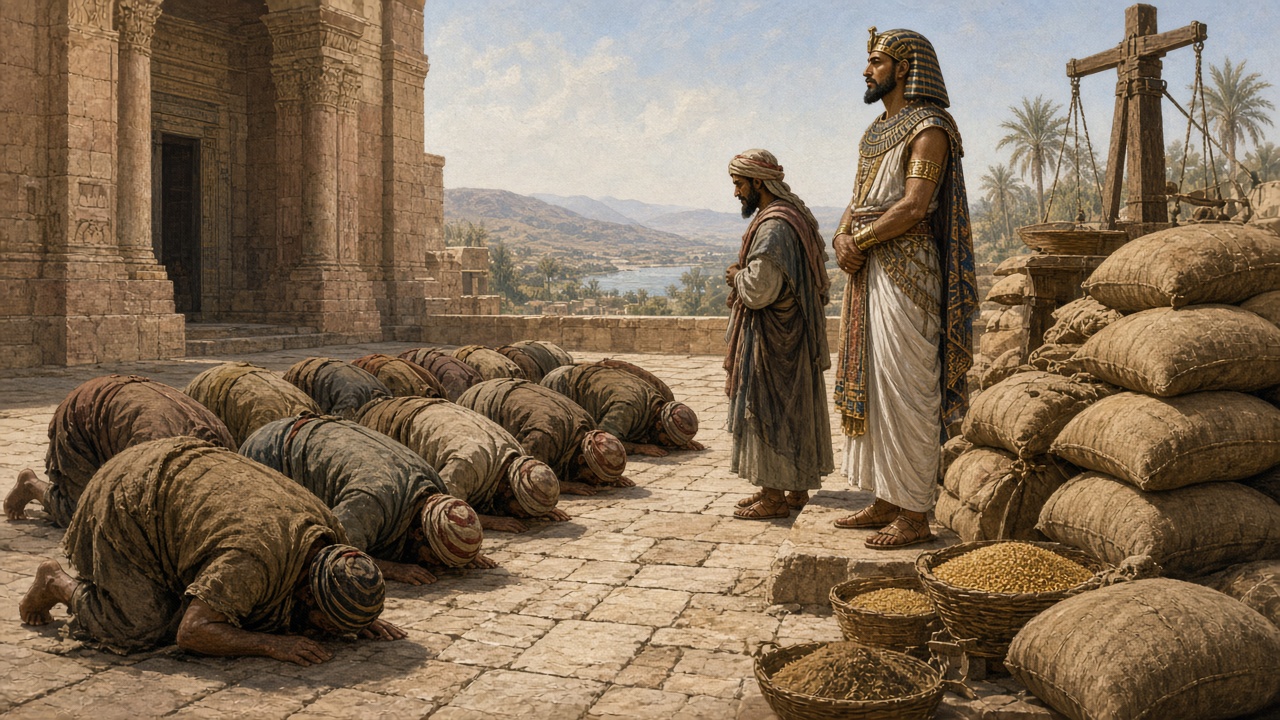
The Brothers Come to Egypt for Grain
- Jacob heard that there was grain in Egypt, the land of the Nile, and sent ten of his sons from Canaan to buy some so the family would not die in the famine. The seven-year famine is dated to a beginning in 1707 BC, and the brothers' journey to Egypt to 1706 BC.Sources: the Bible text itself · Egypt · 7 years of famine · Joseph's brothers go to Egypt
- Joseph, ruler of the land and the one who sold grain to its people, recognized his brothers when they bowed before him, but they did not recognize him. An interpreter stood between them, so they did not realize that he understood what they said. He turned away and wept, then had Simeon, Jacob's second son by Leah, bound before their eyes and held as a hostage.Sources: the Bible text itself · Simeon
- Benjamin, the younger son of Jacob and Rachel, stayed behind with his father; Joseph was Rachel's elder son, and Jacob believed that brother was already dead. Jacob refused to let Benjamin go down to Egypt, saying that harm to him would bring his gray hair down to Sheol in sorrow. Reuben, the eldest son of Jacob and Leah, who had earlier saved Joseph when the other brothers would have put him to death, pledged his own life and the lives of his two sons if he failed to bring Benjamin back.Sources: the Bible text itself · Benjamin (patriarch) · Joseph (son of Jacob) · Reuben
Notes written with AI assistance from open sources (Theographic Bible Metadata, CC BY-SA 4.0; Easton’s Bible Dictionary, public domain) and reviewed before publishing.
Places in this chapter
Only places identified with high confidence are shown (90% or more according to the scholarly sources compiled by OpenBible). Period map: DARE (Digital Atlas of the Roman Empire), CC BY 4.0; modern map: © OpenStreetMap contributors; places: OpenBible.info (CC BY 4.0).
Credits and license for this translation
Hset Hadròeh
The New Testament in the Hre language of Vietnam, translated by Baq Thi
Copyright © 2024 Baq Thi
Language: (Hre)
This translation is made available to you under the terms of the
Creative Commons Attribution Share-Alike license 4.0.
You have permission to share and redistribute this Bible translation in any format and to make reasonable revisions and adaptations of this translation, provided that:
You include the above copyright and source information.
If you make any changes to the text, you must indicate that you did so in a way that makes it clear that the original licensor is not necessarily endorsing your changes.
If you redistribute this text, you must distribute your contributions under the same license as the original.
Pictures included with Scriptures and other documents on this site are licensed just for use with those Scriptures and documents.
For other uses, please contact the respective copyright owners.
Note that in addition to the rules above, revising and adapting God's Word involves a great responsibility to be true to God's Word. See Revelation 22:18-19.
2026-07-18
Source: http://ebible.org/hrebt/ · eBible.org