Genesis 40
Hset Hadròeh · Tap a verse to see its cross-references.
Cwan dèch alac xam cwan dèch ƀênh …
1Khoe ka ƀài bìac aih, i cwan dèch alac xam cwan dèch ƀênh da bùa Êdip broq yiniq lui dèh ka cla craq. 2Phara-ôn plôh nòeh dèh ka wa cwan, aih la cwan dèch alac xam cwan dèch ƀênh, 3hi rùp clêh wa aih ta hnim cwan ma wèq hnim bùa, aih nòe wì qnang clêh Jôsep. 4Cwan wèq hnim bùa thê Jôsep patìh ka wa aih. Atìq ka wa haq oe ta aih bu toq ƀiaq, 5hanoh ta mòeq mang, cwan dèch alac xam cwan dèch ƀênh da bùa Êdip qnang oe tù, dìq i apô hnoq, mòeq ngai mòeq apô, apô leq dìq i dèh ranenh. 6Sroq èh, Jôsep trùh ta wa, hnoq hadrò wa haq mangò, 7hi bòch wa: Hì kô hagleq hadrò chôp majah mangò qmang qmat? 8Wa tèu: Ma i mòeq apô mahaq ùh i cabô tình ƀiaq da ma. Jôsep doe: Bìac hatình trong apô hnoq aih ma ùh xài loh enh Boc Plình qmòh? Aleq anoe hlài ka au chôp cwan apô cleq au hutàng đeh diq. 9Cwan dèch alac taqmon hlài dèh apô ka Jôsep: Ta apô au hnoq enh ngèa au i mòeq xèm nho, 10xèm nho aih i piq hamenh. Hnoq hamenh plôh ramot, loh riang tìah gleq i plì dùm. 11Tì au qnang wê doe mŏng da Phara-ôn; au git plì nho aih, padit yŏc diac plì nho, khoe aih dèch alac ka tì kŏng Phara-ôn. 12Jôsep doe: Apô aih qmang kô: Piq hamenh plì nho aih la piq hì, 13Oe piq hì hòm, Phara-ôn hi caqnaih ìh loh enh hnim clêh kô, am ìh broq hlài cwan, ìh hi dèch hlài doe mŏng da Phara-ôn ka tì kŏng haq, tìah ka enh nèh qmang ka jò ìh oe raq broq cwan dèch alac. 14Mahaq jò rìm yiniq khoe jah lem ka ìh, hmàng trùh au, anoe ka Phara-ôn loq bìac da au, rai qnoh au loh khoe ka ajang kô.
15Majah qmang aih wì rùp đac au qnoh au loh khoe ka taneh da mangai Hêbru, èh tacô au hanoh ùh i broq loh đeh yiniq lui cleq ma tajì ka clêh đac au tanòe clam cluiq kô.
16Cwan dèch ƀênh hnoq Jôsep anoe trong apô rabiaq qmang aih, hi anoe diq: Da au apô qmang kô, au kui piq cađap ƀênh taboc tagàu: 17ta cađap ma enh qnhèq dìq dŏng, i tôm taih ƀài dahwèq da mangai broq ƀênh ka Phara-ôn; chìm jràp ta cađap tagàu au kaq dŏng ƀài dahwèq aih”. 18Jôsep doe: Apô aih qmang kô piq cađap aih la piq hì. 19Ta piq hì hòm, Phara-ôn hi pot ranŏng ìh, thê wì atua goe long dôq ƀài chìm jrêh acaq jam ìh”.
20Trùh hì piq, aih hì ha-uang da Phara-ôn, haq padon yiniang yinàng dèh ka ƀài cwan acaq ôq, haq qnoh wa cwan dèch alac xam cwan dèch ƀênh loh enh hnim clêh. 21Phara-ôn am cwan dèch alac broq hlài cwan qmang ka dùnh, cwan kô dèch alac ka tì kŏng rađeh; 22mahaq thê wì dèch atua cwan dèch ƀênh; wop qmang ka bàu Jôsep khoe doe.
23Èh, cwan dèch alac pi hmàng trùh Jôsep hòm, hèt hloe ka haq ma hapinh.
Did you know?
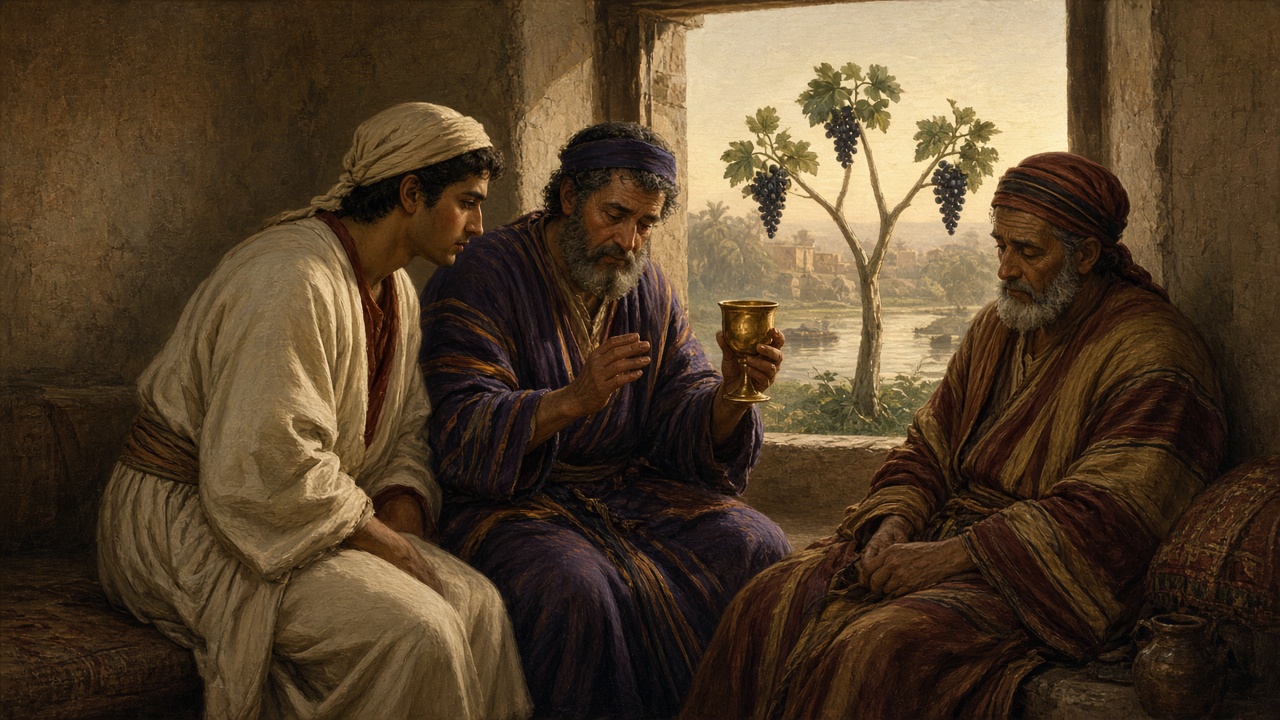
Dreams in Pharaoh's Prison
- Pharaoh was angry with two officers, the chief cupbearer and the chief baker, and put them in the house of the captain of the guard, the same prison where Joseph was confined. The captain assigned them to Joseph, who became their personal attendant.Sources: the Bible text itself
- On the same night the cupbearer and the baker each dreamed, and Joseph said that interpretations belong to God. He took the three branches and the three baskets to mean three days: Pharaoh would lift up the cupbearer's head and restore him, but lift off the baker's head and hang him on a tree. On the third day, Pharaoh's birthday, the king held a feast for his officials, restored the cupbearer, and hanged the baker.Sources: the Bible text itself
- Joseph asked the cupbearer to remember him and mention him to Pharaoh after his restoration. He said he had been kidnapped from the land of the Hebrews and had done nothing for which he should have been put in the dungeon. Easton's Bible Dictionary (1897) identifies the Pharaoh of Joseph's days as probably Apopi, or Apopis, the last of the Hyksos kings; some argue instead that Joseph came to Egypt later, under Thothmes III.Sources: the Bible text itself · Pharaoh (of Joseph)
Notes written with AI assistance from open sources (Theographic Bible Metadata, CC BY-SA 4.0; Easton’s Bible Dictionary, public domain) and reviewed before publishing.
Places in this chapter
Only places identified with high confidence are shown (90% or more according to the scholarly sources compiled by OpenBible). Period map: DARE (Digital Atlas of the Roman Empire), CC BY 4.0; modern map: © OpenStreetMap contributors; places: OpenBible.info (CC BY 4.0).
Credits and license for this translation
Hset Hadròeh
The New Testament in the Hre language of Vietnam, translated by Baq Thi
Copyright © 2024 Baq Thi
Language: (Hre)
This translation is made available to you under the terms of the
Creative Commons Attribution Share-Alike license 4.0.
You have permission to share and redistribute this Bible translation in any format and to make reasonable revisions and adaptations of this translation, provided that:
You include the above copyright and source information.
If you make any changes to the text, you must indicate that you did so in a way that makes it clear that the original licensor is not necessarily endorsing your changes.
If you redistribute this text, you must distribute your contributions under the same license as the original.
Pictures included with Scriptures and other documents on this site are licensed just for use with those Scriptures and documents.
For other uses, please contact the respective copyright owners.
Note that in addition to the rules above, revising and adapting God's Word involves a great responsibility to be true to God's Word. See Revelation 22:18-19.
2026-07-18
Source: http://ebible.org/hrebt/ · eBible.org