Genesis 26
Hset Hadròeh · Tap a verse to see its cross-references.
Ysac glàm kan pangot kàn …
1Enh gùng ka kan pangot yàng ma adroe taqnhòng da Apraham, manòeq kô tagùng i tam mòeq yàng hòm. Ysac hi lam trùh ti Abimêlec bùa Philitin, oe ta Gêra. 2Chuaq Jêhowa loh ti haq rai doe: Apaq loh ta Êdip; thê oe ta gùng au hu padon patô am. 3Thê oe tagùng kô, i au oe ti ìh rai am xôq ramot ka ìh; majah qmang aih au am ka ìh xam xinoe ìh ƀài gùng kô, èh au hu broq gêh ka bàu au ma khoe hapah ka Apraham, baq ìh. 4Au jah tam ka xinoe ìh bàc tìah ka halŏng ta trŏc, èh au am ka wì haq ƀài gùng kô; dìq dŏng ka phù cròng ta crŏng taneh canòm ka xinoe ìh đòeq hujah xôq ramot; 5majah qmang aih Apraham khoe wèq tiaq bàu hnài, bàu thê xam ranenh da au. 6Qmang aih Ysac hi oe hlài ta Gêra.
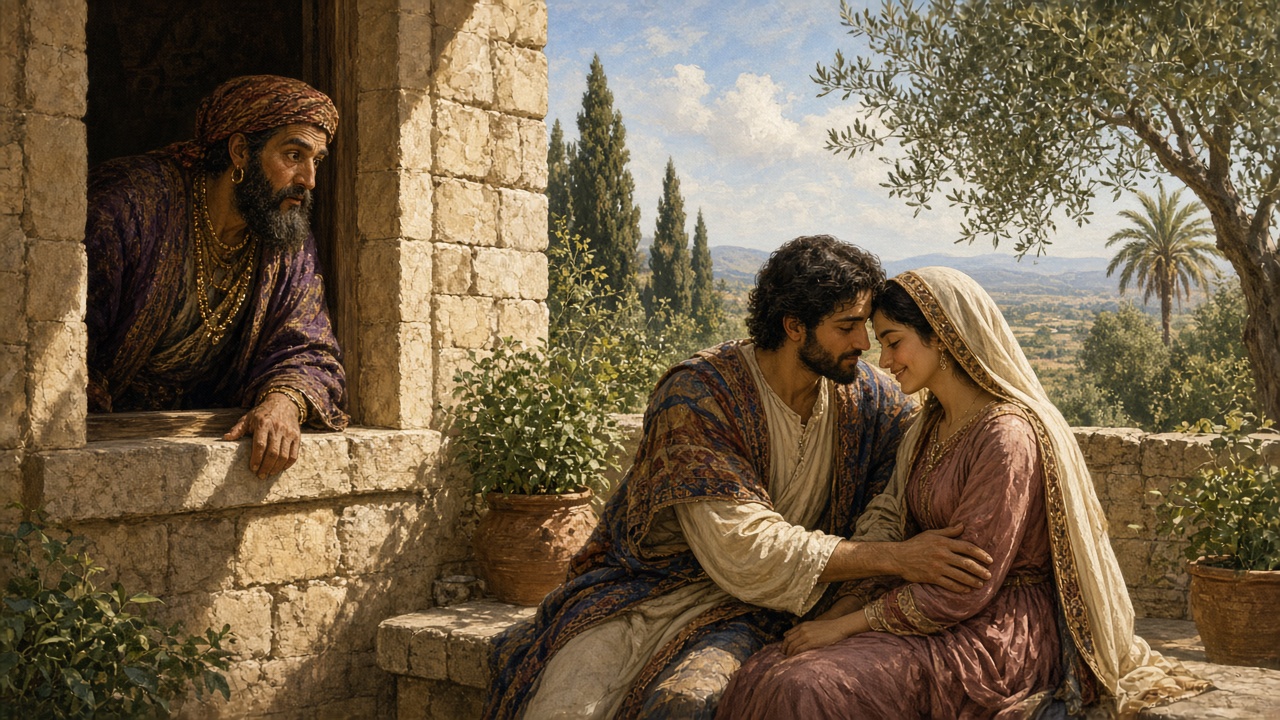
7Jò wì tagùng aih bòch trùh mai haq, haq doe: Aih xài oh cadrì au. Majah qmang aih haq yùq ùh hùa doe: aih mai au. Haq hèm: Taiq Rêbêca wì gùng kô loq jêh đac au. Majah qmang aih Rêbêca lem joq qnàng. 8Jò Ysac oe ta ai khoe dùnh. I moeq hì tau Abi-mêlec bùa Philitin ngan ti qmŏc hnim, aih hnoq Ysac baxùh dèh ti Rêƀêca, mai haq. 9Bùa thê creo ka Ysac, haq doe: Haq tau joq mai ìh, gleq ma doe: haq oh ìh?. Ysac padreo bàu: Majah qmang aih au i hèm atùng ta manoh, au kô èh cachìt taiq dèh mai. 10Abi-mêlec doe: Ìh broq ka nhèn cleq qmang aih? Beq rayeq loq i mangai leq lam kùi ti mai ìh, aih ìq broq ka nhèn pòq yiniq lui. 11Abi-mêlec thê dìq ka wì gùng aih: Waq toq cabô troq mangai kô qnì troq mai haq qnì, mangai èh ep cachìt.
Ysac jah padrŏng...
12Ysac rai adrech tagùng aih, hanam aih jah loe ka hrinh yàng; majah qmang aih Chuaq Jêhowa khoe am xôq ramo. 13Haq loh ka padrŏng, hang jah rai èh rai bàc, jaq haq mech loh qmòe ka padrŏng kan. 14Haq i bàc calùh trìu, calùh ƀo xam ƀài hapŏng bàc raya dài aih mangai Philitin majah loh ka tagrình ta amnoh. 15Toq leq toq diac adràm, adroe nèh hapŏng da Apraham, baq haq ma khoe chìa, manòeq kô mangai Philitin catùh đac dŏng. 16Abimêlec doe ka Ysac rameh: Drah loh ma khoe ka nhèn, majah qmang aih ìh khoe padrŏng yeo loe ka nhèn. 17Qmang aih Ysac cađac gùng kô lam trùh ta tamang Gêra, broq traiq hu oe ta aih,
18Ysac hi chìa hlài ƀài adràm wì ma chìa qnhòng da Apraham, baq haq, ƀài mangai Philitin ma khoe yŏc taneh catùh đac jò Apraham cachìt, haq yiniq ka ƀài adràm aih tiaq yiniq Apraham ma khoe yiniq. 19Ƀài hapŏng da Ysac chìa tam adràm neo roc nòe ma haqneq, glàm diac adràm i tamŏc. 20Mahaq ƀài mangai ban trìu Gêra taqmiaq ka ƀài mangai ban trìu da Ysac, wì doe diac qmat da nhèn, dài aih wì majah creo ka adràm kô la Êsêt. Majah qmang aih ƀài ban trìu tau i taqmiaq ka wì haq. 21Atìq ka aih ƀài hapŏng aih i chìa tam moeq toq diac jìang, hadai taqmiaq hòm, wì hi yiniq ka diac adràm aih la Sitna 22Khoe aih, haq cađac jang aih lam chìa ònh adràm ajang qnoeq, adràm kô pi i cabô taqmiaq hòm, dài aih haq hi yiniq ka jang kô la Rêhôƀôt, haq doe: Manòeq kô Chuaq Jêhowa khoe đòeq bèn jah oe nòe anòh anai, kô èh au jah padrŏng tagùng kô.
23Enh aih Ysac lam ta Bê-esêƀa, 24Mang aih Chuaq Jêhowa mahnò rađeh ka haq rai doe: Au kô raq Boc Plình da Apraham, baq ìh, apaq yùq, au oe ti ìh, jah am ka ìh xôq ramot rai tam ka xinoe ìh, majah qmang aih Apraham aih hapŏng au. 25Ysac broq mòeq toq prang tadreo, waiq dang yiniq Chuaq Jêhowa, èh haq broq traiq ta aih. Khoe èh ƀài hapŏng haq chìa mòeq toq diac jìang ta aih. 26Jò aih bùa Abi-mêlec oe ta Gêra trùh hmàih ka Ysac, i Ahusac, bua haq, xam Phicôn cla craq ƀài cwan lình da haq, lam tiaq. 27Ysac hi doe: Pì tagit ka au, khoe hnan qnoh đac au loh khoe ka gùng pì, gleq ma oe thia dèh ta au? 28Wì tèu: Nhèn hnoq joq Chuaq Jêhowa oe ti ìh, dài majah doe ka dabau, waq ka i bàu hapah taqne nhèn xam taqne ìh, đòeq nhèn hu brroq tajao ka ìh. 29Drah hapah beq! Ìh ùh jò leq broq kan haƀo ka nhèn, qmang ka nhèn khoe ùh broq kan haƀo cleq ka ìh, toq alàng ka ìh rai đòeq ìh loh lam ka catèm. Manòeq kô ìh jah Chuaq Jêhowa am xôq ramot. 30Ysac don qnoh hiniang ka wì aih, èh wì hanoh acaq pajùm. 31Trùh sroq atìq, wì haq yòng sroeh, broq ƀàu hapah ti dabau. Khoe aih Ysac đòeq wì haq hlài catèm
32Hadai hì aih raq bài hapŏng Ysac bahìa ka haq loq diac adràm wì haq ma chìa, wì doe: Nhèn khoe hnoq i diac. 33Haq hi yiniq ka diac adràm aih la Siƀa. Dài aih trùh manòeq yiniq than phôq aih la Bê-esêba.
Êsau yŏc mai …
34Jò Êsau jah pôn jàt hanam, yŏc Jiuđic kon cadrì da Bê-eri, mangai Hêtit xam Batmŏc, kon cadrì da Êlôn, hanoh mangai Hêtit. 35Baiq toq kon mai aih la kan jìq cliac jìq clèm ka Ysac xam Rêƀeca.
Did you know?
Isaac in Gerar
- During a famine, Isaac sought refuge with Abimelech, king of Gerar, an ancient town and district on the southern border of Palestine. Easton's Bible Dictionary (1897) notes that Isaac acted toward his wife Rebekah much as his father Abraham had acted toward Sarah there: he said she was his sister. Abimelech later rebuked him when the deception was discovered.Sources: Abimelech (King of Gerar) · Gerar · the Bible text itself
- The names of wells in the Valley of Gerar recall the disputes over them. Esek means “quarrel,” because the herdsmen of Gerar claimed the water, and Sitnah means “strife.” Isaac also reopened wells that his father Abraham’s servants had dug and that the Philistines had stopped up, and he gave them the same names his father had given them.Sources: Esek · Sitnah · the Bible text itself
- Beersheba means “well of the oath” or “well of seven.” According to Easton's Bible Dictionary (1897), Abraham dug a well there and named it after a compact with Abimelech, and Isaac gave it the same name when he reopened it. The dictionary also identifies Phicol—“great”—as chief captain of Abimelech’s army, and says he took part in Abraham’s alliance over that well.Sources: Beersheba · Phichol · the Bible text itself
Notes written with AI assistance from open sources (Theographic Bible Metadata, CC BY-SA 4.0; Easton’s Bible Dictionary, public domain) and reviewed before publishing.
Places in this chapter
- Egypt · 30.129, 31.308 · verse 2
- Valley of Gerar · Today: about 3 km around Tel Haror · 31.382, 34.606 · verses 17, 19
Only places identified with high confidence are shown (90% or more according to the scholarly sources compiled by OpenBible). Period map: DARE (Digital Atlas of the Roman Empire), CC BY 4.0; modern map: © OpenStreetMap contributors; places: OpenBible.info (CC BY 4.0).
Credits and license for this translation
Hset Hadròeh
The New Testament in the Hre language of Vietnam, translated by Baq Thi
Copyright © 2024 Baq Thi
Language: (Hre)
This translation is made available to you under the terms of the
Creative Commons Attribution Share-Alike license 4.0.
You have permission to share and redistribute this Bible translation in any format and to make reasonable revisions and adaptations of this translation, provided that:
You include the above copyright and source information.
If you make any changes to the text, you must indicate that you did so in a way that makes it clear that the original licensor is not necessarily endorsing your changes.
If you redistribute this text, you must distribute your contributions under the same license as the original.
Pictures included with Scriptures and other documents on this site are licensed just for use with those Scriptures and documents.
For other uses, please contact the respective copyright owners.
Note that in addition to the rules above, revising and adapting God's Word involves a great responsibility to be true to God's Word. See Revelation 22:18-19.
2026-07-18
Source: http://ebible.org/hrebt/ · eBible.org