Genesis 23
Hset Hadròeh · Tap a verse to see its cross-references.
Sara cachìt.
1Sara rìh jah mòeq hrinh baiq jàt tapèh hanam. Aih la hanam rìh da Sara. 2Sara cachìt ta Kiri-at Araba (aih la Hêprôn) oe ta gùng Cana-an. Apraham trùh lòm Sara rai crò hmoe ka haq. 3Khoe aih Apraham yòng enh ngèa dèh ka magai ma pi i, rai doe ka ƀài mangai xinoe Hèch rameh: Au kô mangai diac qnoeq, tamoe ùh canau lam oe ataq đeh qne pì, au cali calo đeh pì tech ka au mòeq nòe taneh pì, đòeq au i nòe hu catùh dèh mangai cachìt. 5Mangai xinoe Hèch tèu bàu: Wì craq! ìh tamàng nhèn: Taqne nhèn kô, ìh qmat kon da bùa kàn; catùh da ìh mangai cachìt nòe leq ma yeo lem dŏng ta nhèn. Nhèn ùh i ka cabô ma adênh cleq dèh ka nòe cađac hanang, đòeq catùh mangai cachìt da ìh. 7Apraham hi padinh yòng, hacùn cràng enh ngèa wì mangai gùng aih, aih la mangai xinoe da Hèch, 8Haq anoe rameh: Tàng joq pì lem manoh am catùh mangai cachìt da au, aih pì tamàng au, pì trùh ta Êprôn kon da Xôha, pì anoe ƀiaq ka au. 9dôq haq aih tech hlài ka au kòp hmo ta Macbêla, oe enh gàu đùng da haq, đòeq hlài ka au troq jaq, dôq taqne pì au i mòeq nòe catùh hanang.
10Jò aih, Êprôn mangai Hêtit qnang haqngui taqne mangai xinoe da Hèch, tèu Apraham enh ngèa ka mangai xinoe da Hèch aih la ƀài mangai ma khoe trùh ajang gàu plài haq rameh: 11Ùh đòh! craq da au, ìh tamàng bàu au: Manòeq kô enh ngèa ƀài mangai da au, au dèch ka wì craq taneh đùng aih, rai dèch am hloe kòp hmo oe ta aih; drah catùh da ìh mangai pi i beq. 12Apraham hacùn cràng hòm enh ngèa wì gùng aih, 13rai hatèu ka Êprôn qnang yòng enh ngèa ƀài mangai gùng aih ma qnang tamàng, rameh: Tamàng kô, au caqnaih ƀac đùng k, ìh yŏc beq, aih èh au men catùh dèh mangai cachìt. 15Wì craq tamàng kô: Mòeq haqnech taneh maneh haq aih pôn hrinh siac-lò ƀac, mahaq taqne ba kô ma i ka maneh cleq? Drah catùh da ìh mangai cachìt beq. 16Apraham broq tiaq bàu Êprôn, enh ngèa mangai Hèch, haq kìq pôn hrinh siac-lò ƀac am ka Êprôn, aih la ƀac wì ta padro qnhòng aih.
17Qmang aih đùng ruàng da Êprôn ta Macbêla, oe pagat ka Mamrê, aih la đùng ruàng kòp hmo xam ƀài long oe enh dalam, tiaq deh acang dudan đùng ruàng, 18Enh ngèa mangai xinoe da Hèch ma khoe trùh ajang gàu plài dìq dŏng wiang panhìn am ka Apraham đòeq broq kùng hang. 19Atìq ka ƀài bìac aih Apraham catùh Sara, mai haq, ta kòp hmo nòe đùng ruàng Macbêla, oe pagat ka Mamrê ta Hêprôn, gùng aih oe raq gùng Cana-an. 20Đùng ruàng xam kòp hmo dìq i mangai da xinoe Hèch panhìn đòeq ka Apraham broq nòe catùh hanang.
Did you know?
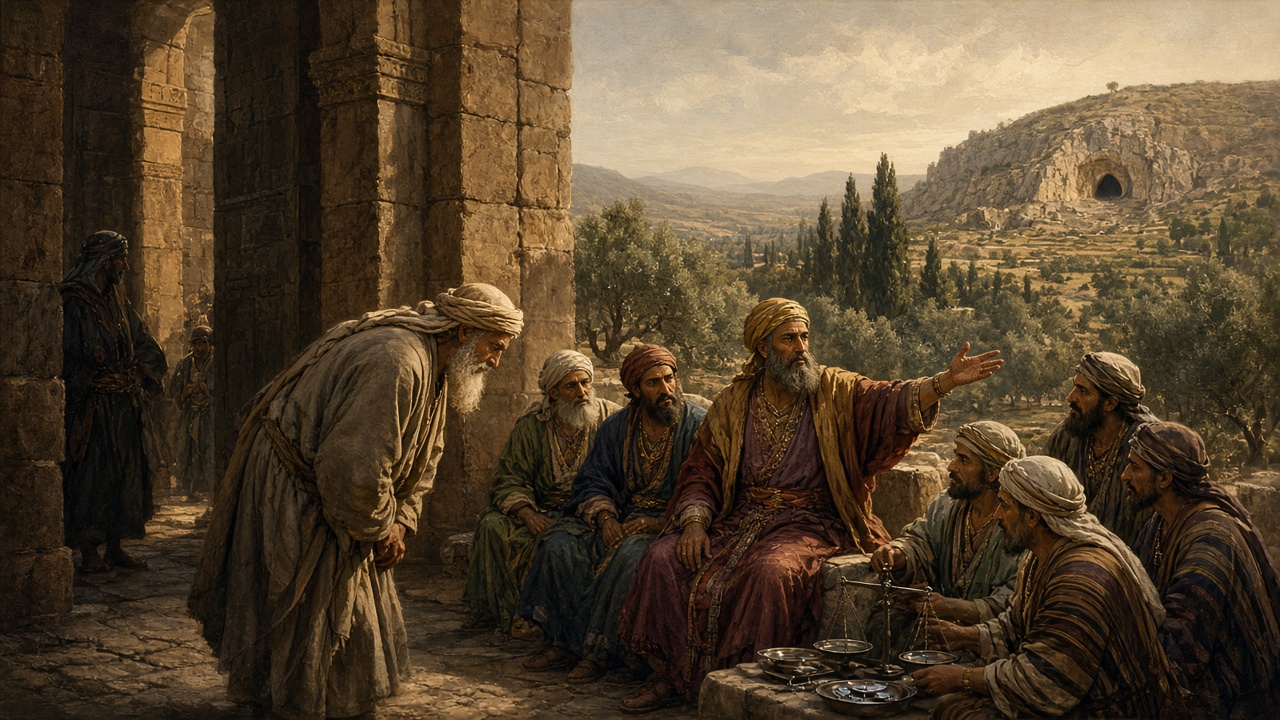
Sarah’s death and the cave of Machpelah
- Sarah died at the age of 127 in Kiriath-arba, that is, Hebron, in the land of Canaan. Easton's Bible Dictionary (1897) notes that this is the only place in Scripture where a woman’s age is recorded, and that her death led Abraham to buy the cave of Machpelah as a family burial place.Sources: the Bible text itself · Sarah
- Abraham told the sons of Heth—the Hittites, descended from Canaan through Heth and living near Hebron—that he was a foreigner among them and needed a burial site. At the city gate, before the Hittites gathered there, he bought the field and cave of Ephron son of Zohar for four hundred shekels of silver, weighed according to the merchants’ standard.Sources: the Bible text itself · Heth · Ephron
- The name Machpelah is explained as “portion” or “double cave.” The cave Abraham bought stood in Ephron’s field near Mamre, on a hillside east of Hebron, and the same place later received the bodies of Abraham and Sarah, Isaac and Rebekah, and Jacob and Leah.Sources: Machpelah · the Bible text itself
Notes written with AI assistance from open sources (Theographic Bible Metadata, CC BY-SA 4.0; Easton’s Bible Dictionary, public domain) and reviewed before publishing.
Places in this chapter
- Canaan · 32.767, 35.333 · verses 2, 19
- Hebron · Today: Tel Rumeida · 31.525, 35.102 · verses 2, 19
- Machpelah · Today: Cave of the Patriarchs · 31.525, 35.111 · verses 9, 17, 19
Only places identified with high confidence are shown (90% or more according to the scholarly sources compiled by OpenBible). Period map: DARE (Digital Atlas of the Roman Empire), CC BY 4.0; modern map: © OpenStreetMap contributors; places: OpenBible.info (CC BY 4.0).
Credits and license for this translation
Hset Hadròeh
The New Testament in the Hre language of Vietnam, translated by Baq Thi
Copyright © 2024 Baq Thi
Language: (Hre)
This translation is made available to you under the terms of the
Creative Commons Attribution Share-Alike license 4.0.
You have permission to share and redistribute this Bible translation in any format and to make reasonable revisions and adaptations of this translation, provided that:
You include the above copyright and source information.
If you make any changes to the text, you must indicate that you did so in a way that makes it clear that the original licensor is not necessarily endorsing your changes.
If you redistribute this text, you must distribute your contributions under the same license as the original.
Pictures included with Scriptures and other documents on this site are licensed just for use with those Scriptures and documents.
For other uses, please contact the respective copyright owners.
Note that in addition to the rules above, revising and adapting God's Word involves a great responsibility to be true to God's Word. See Revelation 22:18-19.
2026-07-18
Source: http://ebible.org/hrebt/ · eBible.org