Genesis 21
Hset Hadròeh · Tap a verse to see its cross-references.
Ha-uang ka Ysac.
1Chuaq Jêhowa trùh hmàih ka Sara tiaq qmang ka bàu ma khoe doe, rai broq ka Sara wop qmang ka bàu đeh ma khoe anoe. 2Sara oe jiang, ha-uang mòeq ngai kon calô ka Apraham jò hanam khoe craq, wop troq jò Boc Plình ma khoe dì deh. 3Apraham yiniq ka kon calô Sara ma khoe ha-uang ka rađeh la Ysac. 4Troq rahem hì, Apraham broq ramènh kat akia ka Ysac tiaq bàu Boc Plình ma khoe tanap thê. 5Apraham khoe jah mòeq hrinh hanam jò ma ha-uang Ysac kon haq. 6Sara doe: Boc Plình khoe aràng ka au bàu do lem bùi. Rìm ngai hìa dìq jah lem bùi bìac da au. 7haq doe tam: Cabô hùa doe ka Apraham kô èh Sara jah ta-ùq kon? Majah qmang aih au khoe ha-uang kon calô jò haq khoe craq pi nèn.
Hnan qnoh wa Aga wa Ich ma-ên …
8Kon qyoh yòng kàn hi cađac tôh. Wop hì Ysac cađac tôh, Apraham padon yineang kàn hu acaq manè. 9Sara hnoq kon calô da Aga, mangai Êdip, khoe ha-uang ka Apraham, halê do, 10haq doe ka Apraham: Hnan đac mangai hapŏng cadrì hloe xam kon haq lam beq, majah qmang aih kon da mangai hapŏng cadrì qmat wìa ka wiang jah waq kùng hang ti Ysac kon au. 11Bàu kô broq ka Apraham mangò ta manoh, taiq kon calô da rađeh. 12Mahaq Boc Plình doe ka Apraham: Ìh ùh dùh mangò dèh ka kon calô xam hapŏng cadrì ìh, Sara anoe qmang leq, tiaq qmang ka bàu haq ma doe; majah qmang aih enh Ysac qmat èh ma ha-uang loh moeq xinoe pòq yiniq ìh. 13Au hanoh broq ka kon calô da mangai hapŏng wìa moeq diac kàn, majah qmang aih haq hadai loh enh ìh.
14Apraham rìu sroeh, yŏc ƀênh xam moeq cabi diac am ka Aga; taqmac ƀài dahwèq aih ta plêh haq rai jao kon calô ka haq khoe aih hi thê lam. Aga loh lam, haq lam lìq lam làn tanòe gùng hawit Ƀê-e sêƀa. 15jò diac ta cabi khoe dìq haq đòeq kon qyoh haqngui ajang kon xèm long. 16cla haq haqngui tangèa yeo hangai ka aih jah qnah ta mòeq qmang pênh panenh; haq doe: Yôi! broq qmang leq au ma manaq hnoq kon qyoh cachìt! Haq haqngui tangèa ka aih rai crò hmoe.
17Boc Plình tàng bàu kon qyoh hmoe, aih ƀình plinh da Boc Plình oe ta trŏc hi creo ka Aga rai doe: Aga! Ìh i yiniq cleq qmat? Apaq yùq cleq majah qmang aih Boc Plình khoe tàng bàu kon qyoh hmoe ajang nòe haq ma kùi. 18Drah yòng dèch kon qyoh aih rai hnhu tì carùp haq, majah qmang aih au jah broq ka haq wìa moeq diac kàn. 19Khoe ka aih Boc plình pèch mat Aga; haq hnoq mòeq toq adràm diac, haq lam qmùc bình cabi am kon qyoh ôq. 20Boc Plình am xôq ramot ka kon qyoh aih, haq yòng kàn, oe tanòe hawit, rabiaq ka pênh panenh. 21Haq oe ta đùng hawit Pharan; miq haq ban ka haq mai aih la mangai gùng Êdip.
Apraham broq tajao ti Abimêlec …
22Ta qnhòng aih, bùa Abimêlec xam Phicôn, gàu bài cla craq lình, doe ka Apraham rameh: Boc Plình am ka ìh xôq ramot ta rìm yiniq ìh broq. 23Qmang aih, manòeq kô ìh yŏc yiniq Boc Plình đòeq hu hapah rameh: Ùh jò leq ìh qnùt au, kon au hloe xam xinoe au. Mahaq ìh broq alàng ka au xam ka gùng ìh qnang oe, moeq manoh la alàng tìah ka au khoe alàng ka ìh diq. 24Apraham doe: Au hùa hapah.
25Apraham mamùc ka bùa Abimêlec bìac adràm diac ƀài hapŏng da bùa khoe blah yŏc. 26Bùa Abimêlec hi doe: Au ùh hìa cabô ma khoe broq qmang aih, cla ìh ji ùh i doe ka au adroe, hì kô au qnang loq ka hloh.
27Khoe aih, Apraham rùp trìu xam ƀo dèch ka bùa Abimêlec, khoe aih wa hi tajao ka dabau. 28Apraham lah đòeq crài tapèh toq trìu caqmon adrùh enh cadrong; 29aih bùa Abimêlec hi bòch: Tapèh toq trìu caqmon adrùh lah đòeq crài qmat đòeq broq cleq? 30Haq padreo bàu doe: Ìh dì yŏc tapèh toq trìu tì kŏng cla au dèch ka ìh kô, đòeq hu panhìn cla au kô ma khoe chìa diac adràm kô. 31Aih ìq wì majah creo yiniq ajang kô la Ƀê-e Sêƀa, majah qmang aih ta aih wa baiq ngai khoe hapah ti dabau. 32Qmang aih wa tajao ti dabau ta Ƀê-e Sêƀa. Khoe aih Abimêlec xam Phicôn cwan gàu ƀài cla craq lình hi yòng hlài dèh tagùng Philitin. 33Apraham pìt mòeq xèm long me ta Ƀê-e Sêƀa, èh ta aih haq waiq dang yiniq Jêhowa aih la Boc plình halình mòeq đòe. 34Apraham oe ta Philitin dùnh hì dùnh mang.
Did you know?
Isaac’s birth, Hagar’s departure, and Beersheba
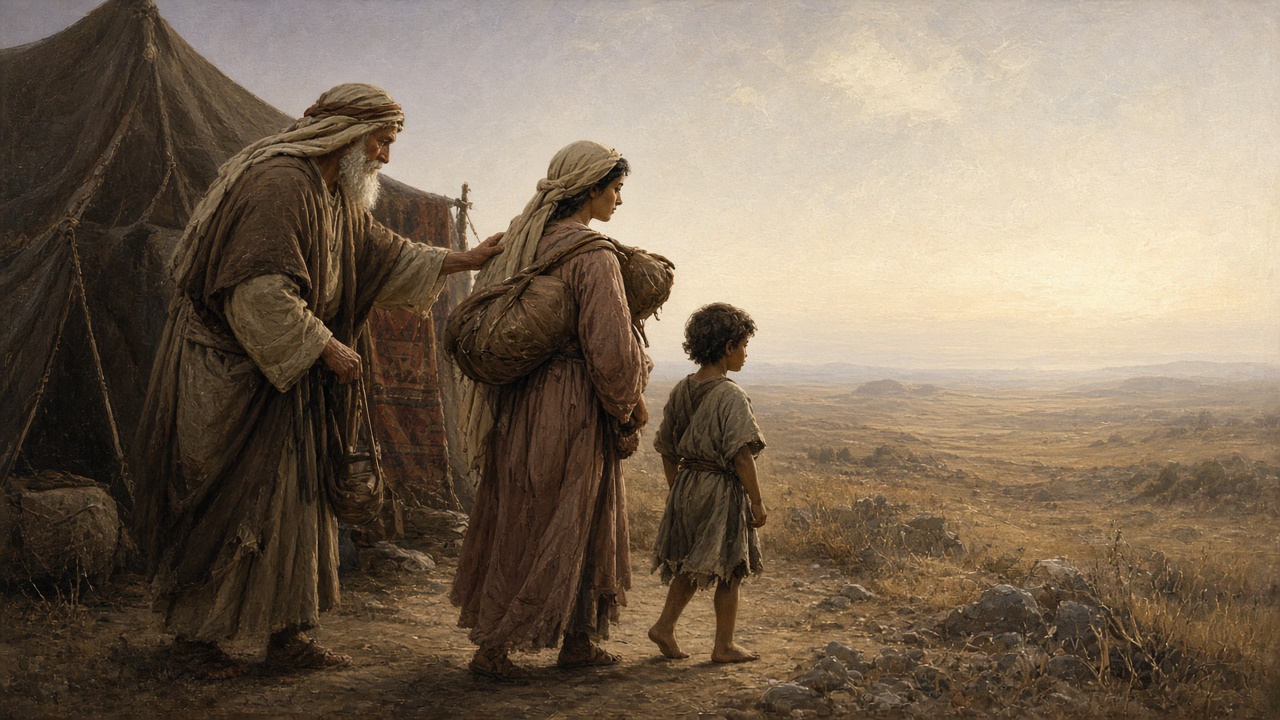
- Abraham was a hundred years old when Sarah bore him Isaac, their only son together, and he circumcised the child at eight days old, as God had commanded. Sarah said that God had made her laugh, and that everyone who heard of this would laugh with her. Easton's Bible Dictionary (1897) notes that a great feast was held when Isaac was weaned, probably when he was about two years old.Sources: the Bible text itself · Isaac
- Hagar, whose name is explained as “flight” or, according to others, “stranger,” was an Egyptian and Sarah’s handmaid, whom Sarah gave to Abraham as a secondary wife. After Isaac’s birth, Abraham sent Hagar and their son Ishmael into the Wilderness of Beersheba with bread and a skin of water. Ishmael later settled in the Wilderness of Paran, a desert tract in the northeastern Sinai Peninsula between the Arabah on the east and the wilderness of Shur on the west, became a great archer, and his mother got him a wife from Egypt.Sources: the Bible text itself · Hagar · Paran
- Beersheba, “well of the oath” or “well of seven,” was named when Abraham and Abimelech swore an oath there over a well that Abraham said he had dug; he set apart seven ewe lambs as a witness, and the two made a covenant. Phicol, chief captain of the army of Abimelech, the Philistine king of Gerar, entered that alliance with Abraham. Abraham then planted a tamarisk at Beersheba and lived for a long time in the land of the Philistines.Sources: the Bible text itself · Beersheba · Phichol
Notes written with AI assistance from open sources (Theographic Bible Metadata, CC BY-SA 4.0; Easton’s Bible Dictionary, public domain) and reviewed before publishing.
Places in this chapter
Only places identified with high confidence are shown (90% or more according to the scholarly sources compiled by OpenBible). Period map: DARE (Digital Atlas of the Roman Empire), CC BY 4.0; modern map: © OpenStreetMap contributors; places: OpenBible.info (CC BY 4.0).
Credits and license for this translation
Hset Hadròeh
The New Testament in the Hre language of Vietnam, translated by Baq Thi
Copyright © 2024 Baq Thi
Language: (Hre)
This translation is made available to you under the terms of the
Creative Commons Attribution Share-Alike license 4.0.
You have permission to share and redistribute this Bible translation in any format and to make reasonable revisions and adaptations of this translation, provided that:
You include the above copyright and source information.
If you make any changes to the text, you must indicate that you did so in a way that makes it clear that the original licensor is not necessarily endorsing your changes.
If you redistribute this text, you must distribute your contributions under the same license as the original.
Pictures included with Scriptures and other documents on this site are licensed just for use with those Scriptures and documents.
For other uses, please contact the respective copyright owners.
Note that in addition to the rules above, revising and adapting God's Word involves a great responsibility to be true to God's Word. See Revelation 22:18-19.
2026-07-18
Source: http://ebible.org/hrebt/ · eBible.org