Genesis 14
Hset Hadròeh · Tap a verse to see its cross-references.
Apram paclaih Lot...
1Qnhòng Amraphên, bùa Sêni-a, Ari-oc, bùa Êlê-asa, Ketrô Laome, bùa Êlam xam Tiđan bùa Gô-im, 2pôn bùa aih taqmùt ti dabau hu tablah ka Bêra bùa Sôđôm, Birêsa bùa Gômôro, Sinê-ap bùa Acma, Sêmeƀe bùa Xêƀô-im xam bùa Ƀêla aih la Xoa. 3Ƀài bùa kô tagop ti dabau trong dahông Siđim (aih la Diac raxìq cachìt) 4ta mòeq jàth baiq hanam ƀài bùa kô dìq oe enh qneq ka bùa Ketrô Laome, yàng èh trùh hanam mòeq jàt piq, wì haq hi yòng tablêq. 5Wop ta hanam mòeq jàt pôn, Ketrô Laome xam ƀài bùa ma mòeq bua da haq qnung ƀình lam tablah ka mangai Rêpha-im oe gùng Actêrot Cana-im, mangai Xuxin oe gùng Ham, mangai Ênim oe ta tamang Kiri-ata-im, 6xam mangai Hôrit oe trong wang Sê-iro, trùh hloe ta Ênbaran, ten ka đùng hawit. 7Khoe aih ƀài bùa qnung dèh ƀình wìh hlài, trùh ajang thòng diac kon yiniq haq la diac Hadrah, aih la Cađe, wì tàt jêh jàp trong gùng mangai Amalec, hloe xam mangai Amôrit oe ta Hasasôn Thama. 8Ƀài bùa Sôđom, Gômoro, Acma, Xêbô-im, xam bùa Ƀêla aih la Xoa, hi qnoh ƀình wì hi tàt rai broq traiq trong dahông Siđim. 9hu tablêq hlài ka Ketrô Laome, bùa Êlam, Tiđan bùa Gô-im, Amraphên bùa Sinêa xam Ari-oc bùa Êlê-asa. Pôn bùa tablêq ka padam.
10Jò aih ta dahông Siđim i bàc ƀài hlŏng nhùaq gam; bùa Sôđôm xam bùa Gômôro ùh blêq, cadàu clìh ta hlŏng aih, mangai leq ma claih hi cadàu tŏc tawang. 11Ƀè ma khoe blêq hi blah yŏc dìq dŏng kùng hang xam dahwèq da Sôđôm xam da Gômoro, khoe aih hi lam. 12Wì haq hadai rùp qnung hloe Lot aih mon da Apram, oe ta Sôđom. 13I mòeq ngai ma claih cadàu lam doe ka Apram, aih la mangai Hêbru. Apram oe tanòe xèm long rayai da Mamrê, mangai Amôrit, daq da Êcôn xam Ane; wì piq ngai kô i taƀan ka Apram. 14Jò Apram hìa doe mon rađeh wì khoe rùp, haq ràih yŏc dèh 318 ngai ma ha-uang hnim ta hnim haq ƀài mangai ma khoe tàp yôt, đòeq hu hnan tiaq ƀài bùa aih trùh hloe ta taneh Đan. 15Khoe aih Apram lah deh ƀài hapŏng, gòm jò damang hi canàt ƀài lình wì, hnan jêh trùh ta taneh Hôƀa oe ƀè qngeo ka Đamat. 16Haq gop yŏc hlài tôm dŏng kùng hang wì ma khoe blah atùng yŏc rai qnung ahlài dèh mon aih la Lot hloe kùng hang haq, xam ƀài gucadrì xam ƀài mangai qnoeq hlài.
17Atìq ka Apram jêh blêq Ketrô Laome xam ƀài bùa ma moeq bua ka haq, jò khoe blêq dang hlài, i bùa Sôđôm loh đìh haq ta dahông Sabe aih la dahông bùa.
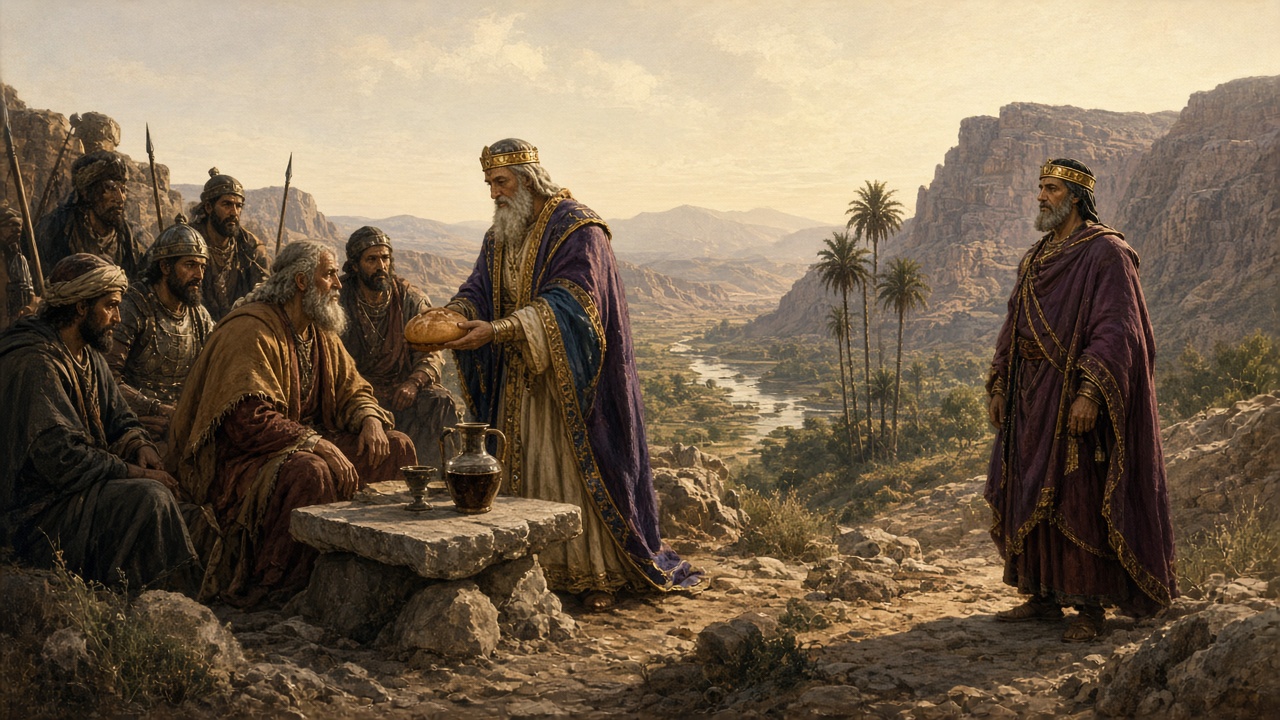
18Mênchi Xêđec, bùa Jêrusalem, thê qnoh ƀênh xam alac. Jò aih, bùa kô aih la pajàu da Boc Plình Dìq jaq Haqnhèq, 19Waiq xôq ramot am ka Apram haq doe rameh: Waiq Boc Plình Dìq jaq Haqnhèq, aih la Mangai ma broq plình crŏng taneh, am xôq ramot ka Apram! 20Joq troq ka manè qnàng Boc Plình Dìq jaq Haqnhèq khoe hataq mangai tablêq mùt ta tì kŏng ìh! khoe aih Apram yŏc mòeq phàn mòeq jàt ta ƀài ngè haq khoe blah yŏc jò khoe blêq wì tau hu dèch ka bùa aih. 21Bùa Sôđôm doe ka Apram: Drah jao mangai am ka au, kùng hang aih ìh hi yŏc. 22Apram padreo bàu rameh: Au dèch tì enh ngeà Boc Plình Dìq jaq Haqnhèq, Cla craq da plình crŏng taneh đòeq hapah; 23Waq toq dahwèq leq da bùa, yac ka mòeq hadrang brai, mòeq hadrang caxi jai, dua au ùh yŏc; yùq èh ìh loq doe: Canòm ka au kô Apram ma khoe jah padrŏng. 24enh gùng ka dahwèq leq wì kon qyoh khoe acaq, èh phàn da ƀài mangai ma lam ti au aih la Ane, Êcon xam Mamrê, da wì aih, wì haq yŏc deh ngè da wì haq.
Did you know?
The Campaign of the Four Kings
- Easton's Bible Dictionary (1897) identifies the four invading kings with names on ancient inscriptions: Chedorlaomer with Khudur-Lagamar of Elam, Amraphel with Khammu-rabi of Shinar (southern Chaldea), Arioch, king of Ellasar, with Eri-Aku of Larsa, and Tidal with Tudkhula. It explains Eri-Aku as an Elamite name meaning “servant of the moon-god,” later changed to Rimsin, and takes Goiim—“nations”—as Gutium, east of the Tigris and north of Elam.Sources: Chedorlaomer · Amraphel · Arioch (king of Ellasar) · Tidal
- The five local kings drew up for battle in the Valley of Siddim, which this chapter equates with the Salt Sea, and the valley was full of tar pits into which some of the fleeing men fell. Easton's Bible Dictionary places that valley at the south end of the Dead Sea, between Engedi and the cities of the plain, and calls the pits bitumen pits.Sources: the Bible text itself · Vale of Siddim
- Abram lived near the oaks of Mamre the Amorite, a brother of Eshcol and Aner, and the three were bound by treaty to him. Easton's Bible Dictionary calls Mamre and Eshcol Amorite chiefs and Aner a Canaanite chief, and notes that they joined Abram in pursuing Chedorlaomer and recovering Lot.Sources: the Bible text itself · Mamre · Eshcol · Aner
Notes written with AI assistance from open sources (Theographic Bible Metadata, CC BY-SA 4.0; Easton’s Bible Dictionary, public domain) and reviewed before publishing.
Places in this chapter
- Elam · 32.189, 48.258 · verses 1, 9
- Shinar · Today: Babylonia · 32.543, 44.422 · verses 1, 9
- Salt Sea · Today: Dead Sea · 31.500, 35.500 · verse 3
- Shaveh-kiriathaim · Today: within 1 km of Al Qurayyat · 31.541, 35.686 · verse 5
- Dan · Today: Tel Dan · 33.249, 35.652 · verse 14
- Damascus · 33.511, 36.306 · verse 15
- Valley of Shaveh · Today: intersection of Kidron Valley and Valley of Hinnom · 31.767, 35.236 · verse 17
- Salem · Today: Jerusalem · 31.777, 35.234 · verse 18
Only places identified with high confidence are shown (90% or more according to the scholarly sources compiled by OpenBible). Period map: DARE (Digital Atlas of the Roman Empire), CC BY 4.0; modern map: © OpenStreetMap contributors; places: OpenBible.info (CC BY 4.0).
Credits and license for this translation
Hset Hadròeh
The New Testament in the Hre language of Vietnam, translated by Baq Thi
Copyright © 2024 Baq Thi
Language: (Hre)
This translation is made available to you under the terms of the
Creative Commons Attribution Share-Alike license 4.0.
You have permission to share and redistribute this Bible translation in any format and to make reasonable revisions and adaptations of this translation, provided that:
You include the above copyright and source information.
If you make any changes to the text, you must indicate that you did so in a way that makes it clear that the original licensor is not necessarily endorsing your changes.
If you redistribute this text, you must distribute your contributions under the same license as the original.
Pictures included with Scriptures and other documents on this site are licensed just for use with those Scriptures and documents.
For other uses, please contact the respective copyright owners.
Note that in addition to the rules above, revising and adapting God's Word involves a great responsibility to be true to God's Word. See Revelation 22:18-19.
2026-07-18
Source: http://ebible.org/hrebt/ · eBible.org