Genesis 11
Hset Hadròeh · Tap a verse to see its cross-references.
Hnim cayòe Ƀaƀen.
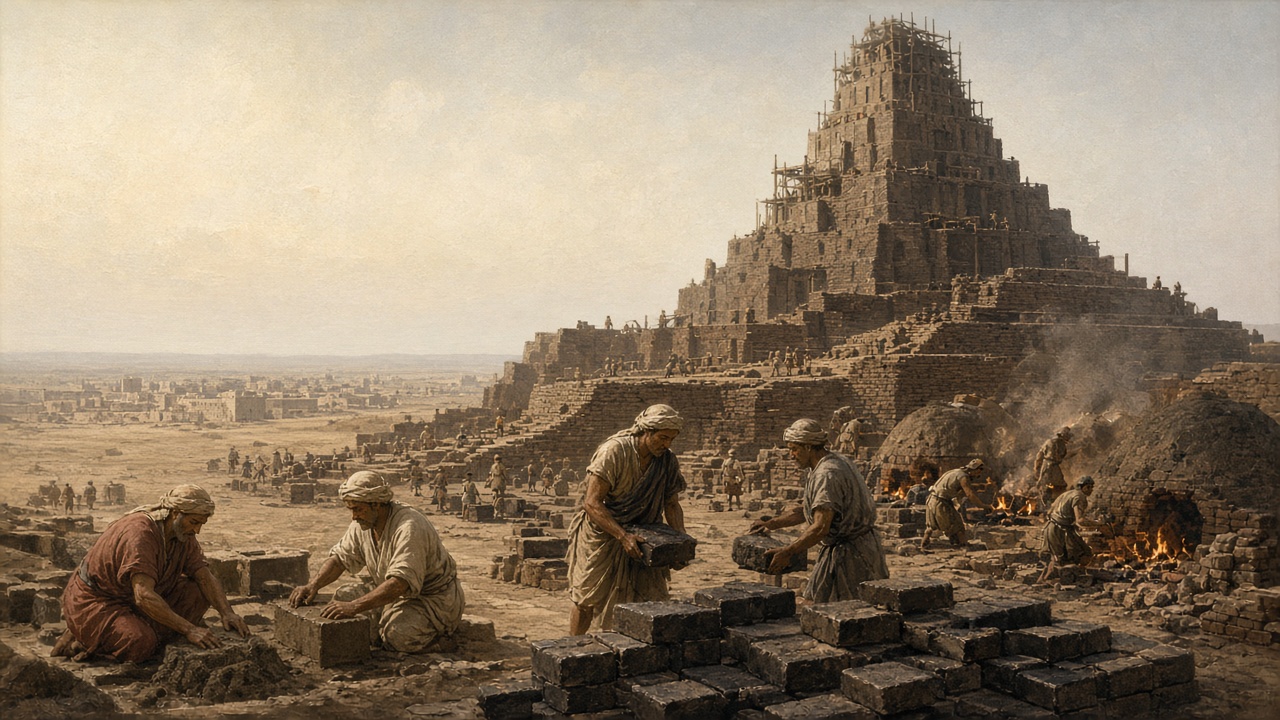
1Jò aih, dìq dŏng ka phù cròng capoch ta hatìah rai pajùm mòeq bàu. 2Yàng jò wì haq ma hi loh lam enh gùng mat mahì loh, wì haq glàm mòeq toq tamang tagùng Sinê-a, èh wì haq hi oe ta aih. 3Mangai kô anoe ka mangai tau: Beq! bèn broq gech bùh ta ùnh. Jò aih gech đòeq broq hmo, jan chai đòeq broq hô. 4Khoe aih wì haq doe: Beq bèn broq plài kàn rai paqnàng moeq toq hnim haqnhèq ma cayòe, dôq bui haq trùh qmòe trŏc; drah nhet ka broq đòeq jah broq qngah ka yiniq da bèn yùq èh loq ep prah priang jàp ta crŏng taneh kô. 5Jêhowa loh đòeq hu ngan plài xam hnim cayòe da kon magai ma broq aih. 6Jêhowa doe: Hacô, i mòeq adrech mangai raq hadai pajùm mòeq bàu tapoch; hatau bìac wì haq qnang broq, manòeq kô oe i cleq jah tàt ƀài yiniq wì haq ma khoe dì deh. 7Hêq! Bèn loh broq đòeq manhài bàu capoch da wì ha, dôq wì haq ùh loq tàng bàu mangai kô xam mangai tau. 8Khoe pang aih, Jêhowa broq ka kon mangai prah priang jàp crŏng taneh, èh wì haq hi hêq ka broq plài. 9Dài aih, majah creo ka plài aih la Ƀaƀen, majah qmang aih nòe aih Jêhowa broq ka manhài bàu capoch da kon mangai, enh aih haq broq ka kon mangai prai jàp crŏng taneh.
Kan cadraq da mangai Isorali enh Apraham trùh Jôsep.
10Sêlat jah 30 hanam, ha-uang ka Hêƀe. 15Atìq ka i Hêƀe. Sêlat oe rìh tam 430 hanam ha-uang kon calô cadrì.
16Hêƀe jah 34 hanam, ha-uang ka Ƀêlec. 17Atìq ka i Ƀêlec, Hêƀe oe rìh tam 430 hanam, ha-uang kon calô cadrì.
18Ƀêlec jah 30, ha-uang ka Rêhu. 19Atìq ka i Rêhu, Ƀêlec rìh tam jah 209 hanam ha-uang kon calô cadrì.
20Rêhu jah 32, ha-uang ka Sêruc. 21Atìq ka i Sêruc, Rêhu oe rìh tam jah 207 hanam ha-uang kon calô cadrì.
22Sêruc jah 32 hanam, ha-uang ka Nacô. 23Atìq ka i Nacô, Sêruc oe rìh jah 200 hanam, ha-uang kon calô cadrì.
24Nacô 29 hanam, ha-uang ka Tharê, 25Atìq ka i Tharê, Nacô rìh jah 119 hanam, ha-uang kon calô cadrì.
26Tharê jah 27 hanam ha-uang ka Apram, Nacô, Haran.
27Kô xinoe da Tharê: Tharê ha-uang ka Apram, Nacô xam Haran; Haran ha-uang ka Lot. 28Haran cachìt deh tagùng cla aih la Uro, aih la gùng Canđê, jò aih baq haq la Tharê oe rìh. 29Apram xam Nacô yŏc mai, mai da Apram yiniq haq Sarai, mai da Nacô yiniq haq Minca; Minca xam Dica aih dìq kon da Haran. 30Jò aih, Sarai xon ùh i ka kon.
31Tharê qnung Apram, kon calô cla haq, Lot kon da Haran, aih mon haq, xam Sarai mai da Apram aih la kon mai haq, dìq loh khoe ka Uro nòe gùng Canđê, đòeq lam trùh gùng Cana-an. Jò trùh ta Charan wì hi rìh oe ta aih.
32Tharê halình jah 205 hanam, khoe aih hi cachìth ta Charan.
Did you know?
Babel and the Road from Ur
- Travelers in this chapter settle on a plain in Shinar and build with baked brick and tar instead of stone and mortar. A dictionary treats Shinar as probably Babylonia or southern Mesopotamia, extending almost to the Persian Gulf, says the tower of Babel was built there, and describes the land's early inhabitants as people who made bricks and built cities.Sources: the Bible text itself · Shinar
- The unfinished city is named Babel because, the narrative says, there the Lord confused the language of the whole world and scattered its people. A dictionary explains the name as 'confusion' and suggests the tower was probably meant as a rallying-point on the wide plain of Shinar, after a migration from the uplands of Armenia, so the builders would not be scattered.Sources: the Bible text itself · Babel
- The chapter ends with Terah leaving Ur of the Chaldeans for Canaan with Abram, Sarai, and his grandson Lot, then settling in Haran, where he dies at 205; his son Haran had already died in Ur. A dictionary calls Ur that son's birthplace, the largest city of Shinar or northern Chaldea, and a center of trade and political power, and places Haran, now Harran and called Charran in the Greek Old Testament and in Acts, on the Belik, a Euphrates tributary in Upper Mesopotamia, where Abram stayed until Terah died.Sources: the Bible text itself · Terah · Ur of the Chaldees · Haran
Notes written with AI assistance from open sources (Theographic Bible Metadata, CC BY-SA 4.0; Easton’s Bible Dictionary, public domain) and reviewed before publishing.
Places in this chapter
- Shinar · Today: Babylonia · 32.543, 44.422 · verse 2
- Chaldea · 30.962, 46.104 · verses 28, 31
- Canaan · 32.767, 35.333 · verse 31
- Haran · Today: Harran · 36.864, 39.033 · verses 31, 32
Only places identified with high confidence are shown (90% or more according to the scholarly sources compiled by OpenBible). Period map: DARE (Digital Atlas of the Roman Empire), CC BY 4.0; modern map: © OpenStreetMap contributors; places: OpenBible.info (CC BY 4.0).
Credits and license for this translation
Hset Hadròeh
The New Testament in the Hre language of Vietnam, translated by Baq Thi
Copyright © 2024 Baq Thi
Language: (Hre)
This translation is made available to you under the terms of the
Creative Commons Attribution Share-Alike license 4.0.
You have permission to share and redistribute this Bible translation in any format and to make reasonable revisions and adaptations of this translation, provided that:
You include the above copyright and source information.
If you make any changes to the text, you must indicate that you did so in a way that makes it clear that the original licensor is not necessarily endorsing your changes.
If you redistribute this text, you must distribute your contributions under the same license as the original.
Pictures included with Scriptures and other documents on this site are licensed just for use with those Scriptures and documents.
For other uses, please contact the respective copyright owners.
Note that in addition to the rules above, revising and adapting God's Word involves a great responsibility to be true to God's Word. See Revelation 22:18-19.
2026-07-18
Source: http://ebible.org/hrebt/ · eBible.org