Exodus 5
Hset Hadròeh · Tap a verse to see its cross-references.
Wa Môise wa Arôn anoe ka Phara-ôn caqnaih mangai Isorali lam...
1Atìq ka aih, wa Môise wa Arôn lam doe ka Phara-ôn: Jêhowa Boc Plình da mangai Isorali i doe qmang kô: Caqnaih mangai da auh loh lam, đòeq wì haq hu wèq mòeq ramènh ka au tađùng hawit. 2Mahaq Phara-ôn tèu: Jêhowa aih ìq cabô au ma ep iu tiaq dèh bàu haq, caqnaih ka mangai Isorali loh lam? Au ùh qnì ka Jêhowa leq; au hadai ùh caqnaih mangai Isorali loh lam. 3Môise xam Arôn doe: Boc Plình da mangai Hêbru khoe loh ta nhèn. Manòeq kô caqnaih nhèn mùt tađùng hawit, qnah ta piq hì lam ka trong, đòeq hu dèch ramènh ka Chuaq Jêhowa Boc Plình nhèn, tàng ùh meh haq yŏc kan dài qnì chang jaoq qnì hu tabroq ka nhèn. 4Bùa Êdip doe: Wùih Môise xam Arôn! Hagleq chôp majah basrùq wì cađac yiniq broq qmang aih? Hlài broq da chôp bìac beq. 5Phara-ôn doe hòm: Ngan tau, mangai hi maxìa maxep qmang tau aih ka chôp khech tàt wì haq abroq. 6Hì aih raq Phara-ôn thê ƀài mangai pariaq xam ƀài mangai ngan abroq rameh: 7Pì pi dùh am ka wì hri đòeq broq gech qmang ka adroe nèh hòm; cla wì ha ep lam chaq deh. 8Mahaq pì pajaq ka wì haq sôq gech waq ka troq qmang ka jaq dùnh, ùh dùh xùch broq cleq; majaq qmang aih wì haq qmat aroh, chaq nen wiang doe: Beq! lam dèch ramènh ka Boc Plình bèn! 9Taqmòq yiniq broq ma trap ka wì haq đòeq wì haq jiang ka abroq aih èh pi hìaq tangèh trong bàu qnùt talìq hòm.
10Ƀài mangai pariaq xam ƀài mangai ma ti ngan abroq anoe ka mangai Isorali rameh: Phara-ôn doe qmang kô: Au pi am hri ka pì hòm. 11Cla pì loq chaq taleq chaq; mahaq ùh xùch yiniq broq ka pì yac ka toq biaq hnha. 12Manòeq kô, mangai Isorali hi lam jàp jìa ka gùng Êdip toch xèm hri qmau thai ka hri. 13Ƀài mangai broq gàu ƀài hapŏng toq bahuiq: Broq beq waq ka gêh ƀìac da pì, wop troq qmang ka maneh ma khoe pajaq ka pì, hì leq waq ka gêh meh, tìah ka jò ma oe am hri ka pì. 14Ƀài mangai Phara-ôn dèch wì haq broq mangai pariaq, jêh rai lech ka ƀài mangai Isorali wì haq ma khoe thê broq mangai ti ngan abroq rameh: Hagleq enh hì nèh trùh hì kô pì ma ùh gêh dèh ka yiniq broq gech qmang ka enh adroe nèh?
15Ƀài mangai ngan abroq ta mangai Isorali trùh doe ka Phara-ôn rameh: Gleq bùa ma tabroq dèh ka ƀài hapŏng qmang kô? 16Wì ùh am ka nhèn hri, aih ka xan thê nhèn qmang kô: Broq gech beq! Ngan kô ƀài hapŏng da ìh jah jìq đeh; yiniq lui kô oe ajang bùa. 17Mahaq bùa tèu: Pì qmat chŏc ƀài aroh, ƀài aroh! Dài aih pì majah chaq nen doe ka dabau: Beq bèn lam dech ramènh ka Chuaq Jêhowa! 18Manòeq kô chaq lam broq beq! Mahaq ùh i cabô am ka pì hri taleq, mahaq gech aih waq ka tôm taih.
19Qmang aih ƀài mangai ngan abroq da mangai Isorali loh ka rawè, majaq qmang aih wì i doe ka wì haq: Pì ùh jah baxùch sôq gech ma khoe pajaq ka wì, hì leq waq ka gêh dèh hì aih. 20Jò khoe loh enh Phara-ôn aih wì haq hnoq Môise xam Arôn khoe gòm ta-aih. 21aih wì haq hi doe: Chôp khoe broq ka nhèn wìa kan xua om enh ngèa ka Phara-ôn xam ƀài cwan, khoe qnèp chang ta tì wì haq đòeq hujêh đac nhèn. Waiq dang Jêhowa hadrah ngan chôp qmat. 22Môise wìh hlài ta Chuaq Jêhowa rai anoe: Waiq Chuaq! hagleq ìh ma khoe haƀo ka mangai Isorali? Chuaq thê au trùh broq cleq? 23Pang jò au ma lam glàm Phara-ôn, yŏc yiniq ìh hu anoe ka haq, aih kiang haq dalam ka wì kô, yàng Chuaq aih yi ùh i dèch baclaih dèh mangai da ìh.
Did you know?
Harder Work After Pharaoh's Refusal
- Easton's Bible Dictionary (1897) says the Pharaoh of the Exodus was probably Menephtah I, the fourteenth and eldest surviving son of Rameses II, but it treats the identification as still an open question: some scholars, it notes, favor Seti II, whose reign it describes as beginning peacefully and ending in sudden disaster. The entry says he resided at Zoan, where he received Moses and Aaron in the interviews recorded in Exodus.Sources: Pharaoh (of the Exodus) · the Bible text itself
- Easton's Bible Dictionary (1897) places Jacob's arrival in Egypt probably about 350 years before Moses was born. It says a Hyksos king, from a pastoral Semitic people of Asia and called a shepherd king, received the family favorably and assigned them Goshen, the best of the land; in this chapter Pharaoh treats the people of Israel, now numerous, as laborers he will not let go.Sources: Moses · the Bible text itself
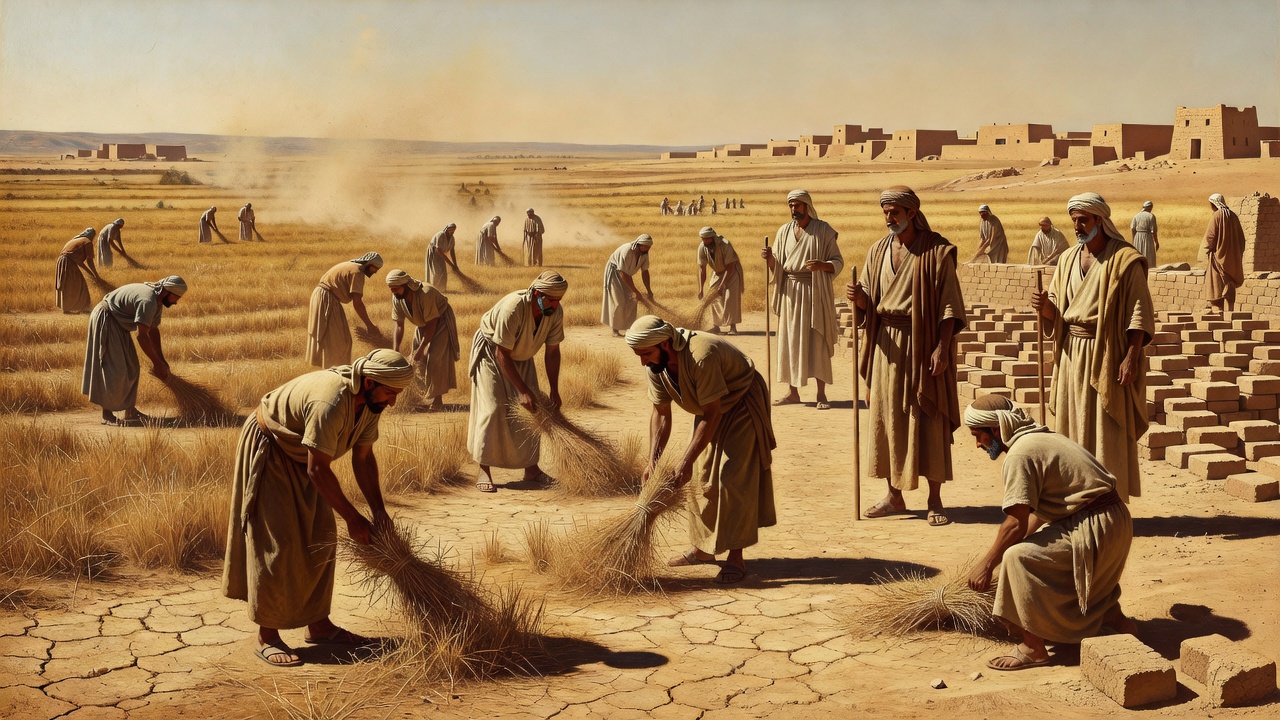
- Pharaoh answers the request to hold a feast in the wilderness by no longer supplying straw for the bricks, while still requiring the same daily quota. The people scatter through the land of Egypt to gather stubble, and the Israelite foremen whom Pharaoh's taskmasters had set over them are beaten when that quota is not met.Sources: the Bible text itself
Notes written with AI assistance from open sources (Theographic Bible Metadata, CC BY-SA 4.0; Easton’s Bible Dictionary, public domain) and reviewed before publishing.
Places in this chapter
Only places identified with high confidence are shown (90% or more according to the scholarly sources compiled by OpenBible). Period map: DARE (Digital Atlas of the Roman Empire), CC BY 4.0; modern map: © OpenStreetMap contributors; places: OpenBible.info (CC BY 4.0).
Credits and license for this translation
Hset Hadròeh
The New Testament in the Hre language of Vietnam, translated by Baq Thi
Copyright © 2024 Baq Thi
Language: (Hre)
This translation is made available to you under the terms of the
Creative Commons Attribution Share-Alike license 4.0.
You have permission to share and redistribute this Bible translation in any format and to make reasonable revisions and adaptations of this translation, provided that:
You include the above copyright and source information.
If you make any changes to the text, you must indicate that you did so in a way that makes it clear that the original licensor is not necessarily endorsing your changes.
If you redistribute this text, you must distribute your contributions under the same license as the original.
Pictures included with Scriptures and other documents on this site are licensed just for use with those Scriptures and documents.
For other uses, please contact the respective copyright owners.
Note that in addition to the rules above, revising and adapting God's Word involves a great responsibility to be true to God's Word. See Revelation 22:18-19.
2026-07-18
Source: http://ebible.org/hrebt/ · eBible.org