Exodus 14
Hset Hadròeh · Tap a verse to see its cross-references.
Phara-ôn qnat tiaq mangai Isorali …
1Chuaq Jêhowa doe ka Môise rameh: 2Drah thê mangai Isorali tawìh hlài broq traiq enh ngèa ka Phiha Hirôt, ta adreo wa Mitđôn wa diac raxìq. Pì broq traiq ten diac raxìq tajang ka Ƀa-an Sêphôn. 3Joq qnàng kô èh Phara-ôn hèm trùh mangai Isorali, haq doe: Wì aih khoe lac trong qnang glàm kan nan tađùng hawit. 4Au broq ka Phara-ôn cadoq manoh, haq hi hnan tiaq mangai Isorali. Mahaq taiq Phara-ôn xam ƀài lình haq aih raq, yiniq au aih èh jah qngah qngai; mangai Êdip jah loq Au kô raq Chuaq Jêhowa. Mangai Isorali broq tiaq qmang aih.
5Wì doe hlài ka bùa Êdip loq mangai Hêbru khoe loh lam. Phara-ôn xam ƀài cwan hi tablòq manoh ka mangai Isorali, wì doe: Bèn khoe broq cleq qmang aih, caqnaih mangai Isorali loh lam đòeq wì haq pi patìh ka bèn hòm qmòh? 6Phara-ôn palauq deh xê axêh rai qnung dèh ƀình lình. 7Haq aràng tiaq rađeh tadràu hrinh toq xê ma yeo lem dŏng xam dìq dŏng ƀài xê tagùng Êdip, rìm toq xê dìq i lình. 8Chuaq Jêhowa broq ka Phara-ôn, bùa Êdip cadoq manoh, hnan tiaq mangai Isorali; mahaq mangai Isorali loh lam qmòe ka hagau hagình. 9Mangai Êdip xam xê, xam lình kòe axêh xam lình da Phara-ôn dìq hnan tiaq mangai Isorali, glàm wì aih qnang broq traiq kênh diac raxìq, ten ka Phiha Hirôt, tangèa ka Ƀa-an Sêphôn. 10Jò Phara-ôn trùh khoe ten, mangai Isorali qngoc ngan hnoq mangai Êdip hnan tiaq, hi loh ka tarìt tariang, creo dang ka Chuaq Jêhowa. 11Wì haq trùh anoe ka Môise: Gùng Êdip ma ùh i nòe catùh hanang, dài ìh ma qnung nhèn mùt tanòe đùng hawit kô đòeq hu cachìt qmòh? Ìh qnoh nhèn loh khoe ka gùng Êdip hu broq cleq? 12Ùh xài tagùng Êdip nhèn khoe doe ka ìh qmang kô: Dôq da nhèn patìh ka mangai Êdip, majah qmang aih patìh ka mangai Êdip ma yi ùh hnau ka cachìt tagùng hawit kô? 13Môise padreo bàu ka mangai Isorali: Apaq yùq cleq, pì oe taqmat raq, hì da èh pì jah hnoq kan paclaih Chuaq Jêhowa broq am ka pì; majah qmang aih mangai Êdip pì ma ngan hnoq hì kô, pi jò leq oe hnoq hòm, 14i Chuaq Jêhowa tajêh am, pì toq oe ma hatinh raq.
Boc Plình anoe ka Môise loq đeh padon broq cleq ka Phara-ôn …
15Khoe aih Chuaq Jêhowa doe ka Môise: Gleq ìh majah creo dang au? Thê mangai Isorali lam beq; 16ìh dèch deh long dùi ta haqnhèq, hnhu tì enh qnhèq ka diac raxìq, đòeq lah diac broq baiq, aih èh mangai Isorali hi loh tadiac raxìq, cadiang lam qmang ka taneh go. 17Au kô èh broq ka mangai Êdip cadoq manoh qnat tiaq mangai Isorali loh tadiac, khoe aih èh yiniq au jah qngah qngai taiq Phara-ôn xam dìq dŏng ƀình lình, xê axêh xam lình kòe axêh da haq. 18Mangai Êdip hi jah loq joq qnàng Au kô raq Chuaq Jêhowa, jò au jah kan ranhòm taiq Phara-ôn xam xê axêh xam lình da haq. 19Atìq ka aih, ƀình plình da Boc plình ma khoe lam enh ngèa traiq lình Isorali wìh hlài lam atìq, jrang yùc ma xan lam enh ngèa traiq lình hanoh wìh loh yòng enh rù wì haq. 20Jrang yùc yòng ta adreo traiq da mangai Êdip xam traiq da mangai Isorali, yùc broq kan clam cluiq ka pah kô, damang sreo qngah ka pah tau; dài qngah ka mang baiq traiq ùh jah thia ten ka dabau.
Pùh pagat diac Raxìq Gòh …
21Khoe aih Môise hnhu tì tadiac raxìq, Chuaq Jêhowa qnong cayeo enh ƀè mahì loh hlui dêh qngah ka mang glua hacom diac qngah ka mang aih; Haq cwaih diac raxìq loh moeq trong taneh croh, diac lah baiq ƀè. 22Mangai Isorali loh tadiac raxìq lam tìah ka ta taneh go, diac yòng tìah ka panàt enh apah qngeo xam apah qma. 23Mangai Êdip hnan tiaq; ƀài axêh, ƀài xê axêh xam ƀài lình kòe axêh da Phara-ôn dìq tiaq loh qne diac raxìq. 24Meh oq! trùh ten qngah, Chuaq Jêhowa oe enh dalam ka jrang yùc xam ùnh, ngan hnoq traiq lình Êdip, hi broq ka wì loh ka manhài. 25Haq toeh da wì ƀlênh xê, broq ka wì tìc xê qmòe ka xa. Mangai Êdip doe ka dabau: Bèn ep cadàu ma khoe ka mangai Isorali beq, majah qmang aih Chuaq Jêhowa taƀlêq ka bèn am ka wì aih.
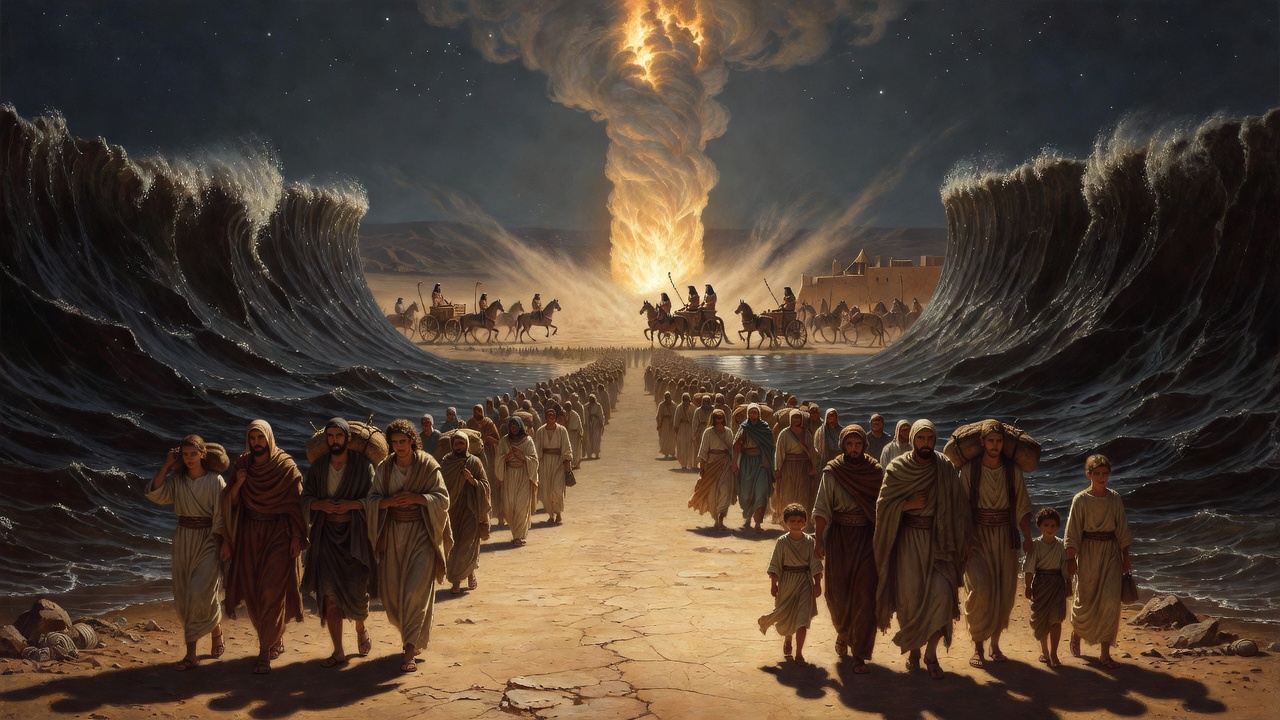
26Chuaq Jêhowa doe ka Môise qmang kô: Dèch da ìh tì enh qnhèq ka diac raxìq, diac hu ta-ùc glàp dŏng mangai Êdip, xê axêh xam lình kòe axêh da wì haq, 27Môise dèch dèh tì enh qnhèq diac raxìq, trùh qngah sroq èh diac hi ta-ùc bình hlài tadiac raxìq, mangai Êdip ma cadàu amot, aih diac tàt hlài wì; qmang aih Chuaq Jêhowa caqnhùt qnìh wì haq qne diac raxìq. 28Qmang aih diac wìh ta-ùc hlài làp dŏng ƀài xê, ƀài lình kòe axêh ƀài lình da Phara-ôn ma khoe hnan tiaq mangai Isorli loh tadiac raxìq, pi srong qmòe moeq ngai. 29Mahaq mangai Isorali lam qne diac raxìq tìah qmòe ka lam tago; diac broq wìa panàt pah qma xam pah qngeo. 30Ta hì aih, Chuaq Jêhowa dèch mangai Isorali claih enh tì kŏng mangai Êdip, wì aih hnoq mangai Êdip cachìt tabraih diac raxìq. 31Mangai Isorali hnoq bìac kàn kaiq Chuaq Jêhowa broq ka mangai Êdip, dài maloh ka iu yùq ka haq, lùi haq xam Môise aih la hapŏng haq.
Did you know?
Israel trapped between Pharaoh and the sea
- Israel was told to turn back and camp before Pi-hahiroth, between Migdol and the sea, directly opposite Baal-zephon, so that Pharaoh would think the wilderness had boxed them in. Pi-hahiroth means place where the reeds grow, though the Septuagint and the Coptic read farmstead, and Baal-zephon means Baal of the north.Sources: the Bible text itself · Pi-hahiroth · Baal-zephon
- Easton's Bible Dictionary (1897) describes Baal-zephon as an Egyptian town on the shores of the Gulf of Suez, probably modern Jebel Deraj or Kulalah on the western shore, and notes that Egyptian Baal-zapuna was a place of worship. Some have identified Pi-hahiroth with Ajrud, a fortress between Etham and Suez. The entry on Pi-hahiroth adds that the condition of the Isthmus of Suez at the time of the Exodus is not exactly known, so Pi-hahiroth and Israel's other camps in Egypt cannot be definitely located; the isthmus has been formed by deposits of the Nile.Sources: Baal-zephon · Pi-hahiroth
- Easton's Bible Dictionary (1897) says the Pharaoh of the Exodus was probably Menephtah I, the fourteenth and eldest surviving son of Rameses II, and that he resided at Zoan, where his interviews with Moses and Aaron recorded in Exodus took place. The same entry still treats it as an open question whether Seti II or his father Menephtah was that king, and notes that some judge the evidence to favor Seti II.Sources: Pharaoh (of the Exodus)
Notes written with AI assistance from open sources (Theographic Bible Metadata, CC BY-SA 4.0; Easton’s Bible Dictionary, public domain) and reviewed before publishing.
Places in this chapter
Only places identified with high confidence are shown (90% or more according to the scholarly sources compiled by OpenBible). Period map: DARE (Digital Atlas of the Roman Empire), CC BY 4.0; modern map: © OpenStreetMap contributors; places: OpenBible.info (CC BY 4.0).
Credits and license for this translation
Hset Hadròeh
The New Testament in the Hre language of Vietnam, translated by Baq Thi
Copyright © 2024 Baq Thi
Language: (Hre)
This translation is made available to you under the terms of the
Creative Commons Attribution Share-Alike license 4.0.
You have permission to share and redistribute this Bible translation in any format and to make reasonable revisions and adaptations of this translation, provided that:
You include the above copyright and source information.
If you make any changes to the text, you must indicate that you did so in a way that makes it clear that the original licensor is not necessarily endorsing your changes.
If you redistribute this text, you must distribute your contributions under the same license as the original.
Pictures included with Scriptures and other documents on this site are licensed just for use with those Scriptures and documents.
For other uses, please contact the respective copyright owners.
Note that in addition to the rules above, revising and adapting God's Word involves a great responsibility to be true to God's Word. See Revelation 22:18-19.
2026-07-18
Source: http://ebible.org/hrebt/ · eBible.org