Exodus 1
Hset Hadròeh · Tap a verse to see its cross-references.
About this book
About Exodus
- Easton's Bible Dictionary (1897) dates Israel's departure from Egypt to about 1490 B.C., four hundred and eighty years before Solomon's temple was built. How long they had sojourned there is disputed: Exodus 12:40 gives four hundred and thirty years, Genesis 15 speaks of about four hundred, and the Greek and Samaritan versions also count the years in Canaan, so some reckon only two hundred and fifteen years in Egypt.Sources: Easton: Exodus
- Easton's Bible Dictionary (1897) does not name the author of Exodus. The entry on Moses says Jacob and his sons went down into Egypt, probably about three hundred and fifty years before Moses was born, and that a Hyksos king, from a pastoral Semitic people of Asia who then ruled Egypt, settled them in Goshen. Moses later spent forty years in Midian, where that people pastured flocks on the Sinai peninsula, and became the son-in-law of Jethro, priest of Midian.Sources: Moses · Easton: Exodus · Midian · Jethro
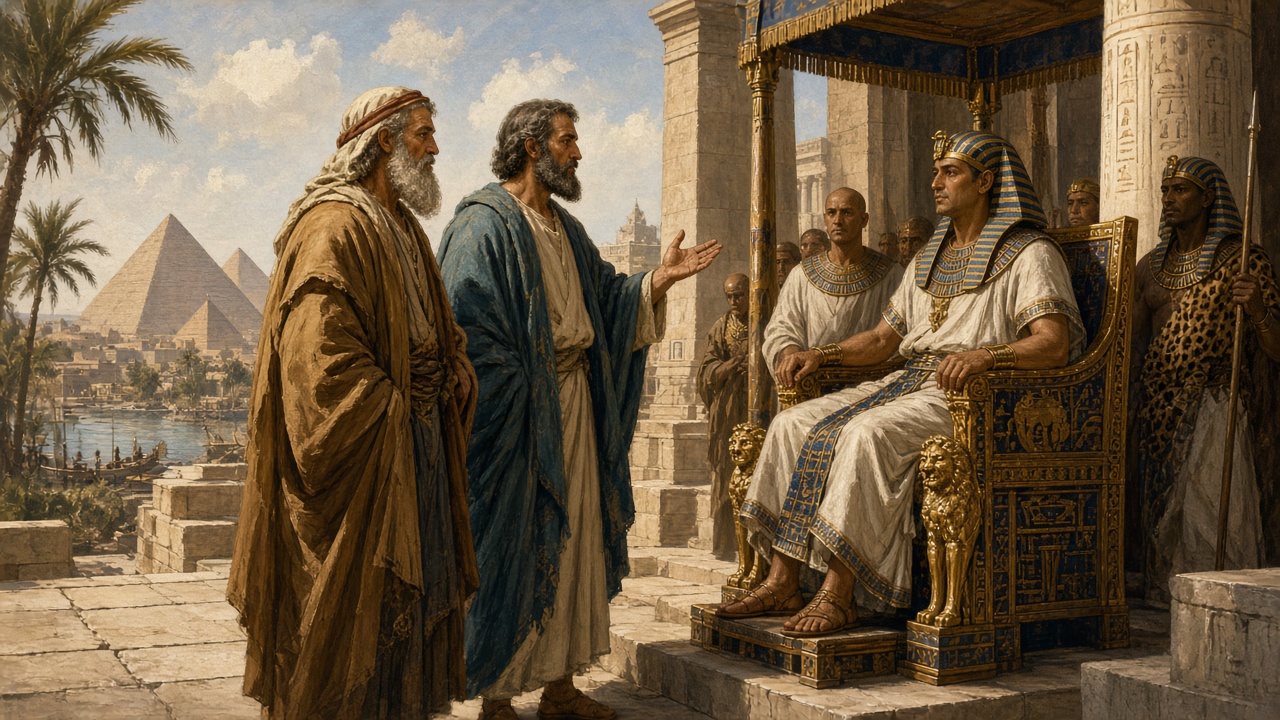
- Who was Pharaoh at the departure is also disputed. Easton's Bible Dictionary (1897) calls him probably Menephtah I, the fourteenth and eldest surviving son of Rameses II, who lived at Zoan and met Moses and Aaron there, while noting that some favor Seti II, whose reign began peacefully and ended in sudden disaster.Sources: Pharaoh (of the Exodus)
- The plagues, Easton writes, loosened Pharaoh's hold, and the Passover was instituted as a perpetual memorial, with the lamb's blood sprinkled on the doorposts. In the third month the people reached Mount Sinai, also called Horeb, about one hundred and fifty miles from the Red Sea, and camped there about a year. The last twenty-two chapters of Exodus record that stay, including the tabernacle, whose Holy Place had no opening for daylight and was lit only by the golden candlestick.Sources: Easton: Exodus · Mount Sinai · Holy Place
- Aaron, eldest son of Amram and Jochebed, was born in Egypt three years before Moses and was sent to meet him so the two could work together. At Rephidim, Joshua, also born in Egypt, commanded Israel's fighters when the Amalekites, a pastoral people living between the Dead Sea and the Red Sea, tried to bar their way.Sources: Aaron · Joshua · Amalek
Notes written with AI assistance from open sources (Theographic Bible Metadata, CC BY-SA 4.0; Easton’s Bible Dictionary, public domain) and reviewed before publishing.
Mangai Isorali broq dìc ta Êdip...
1Kô yiniq ƀài kon calô da Isorali, rìm ngai qnung dèh mangai tahnim rađeh lam tiaq Jacôp loh oe ta Êdip: 2Ruƀên, Simê-ôn, Lêwi, xam Juđa; 3Ysaca, Saƀulôn, xam Ƀêjamin, 4Đan, Neptali, Gat xam Ase. 5Ƀài mangai ha-uang loh enh Jacôp dìq dŏng jah tapèh jàt ngai; Jôsep khoe oe ta Êdip.
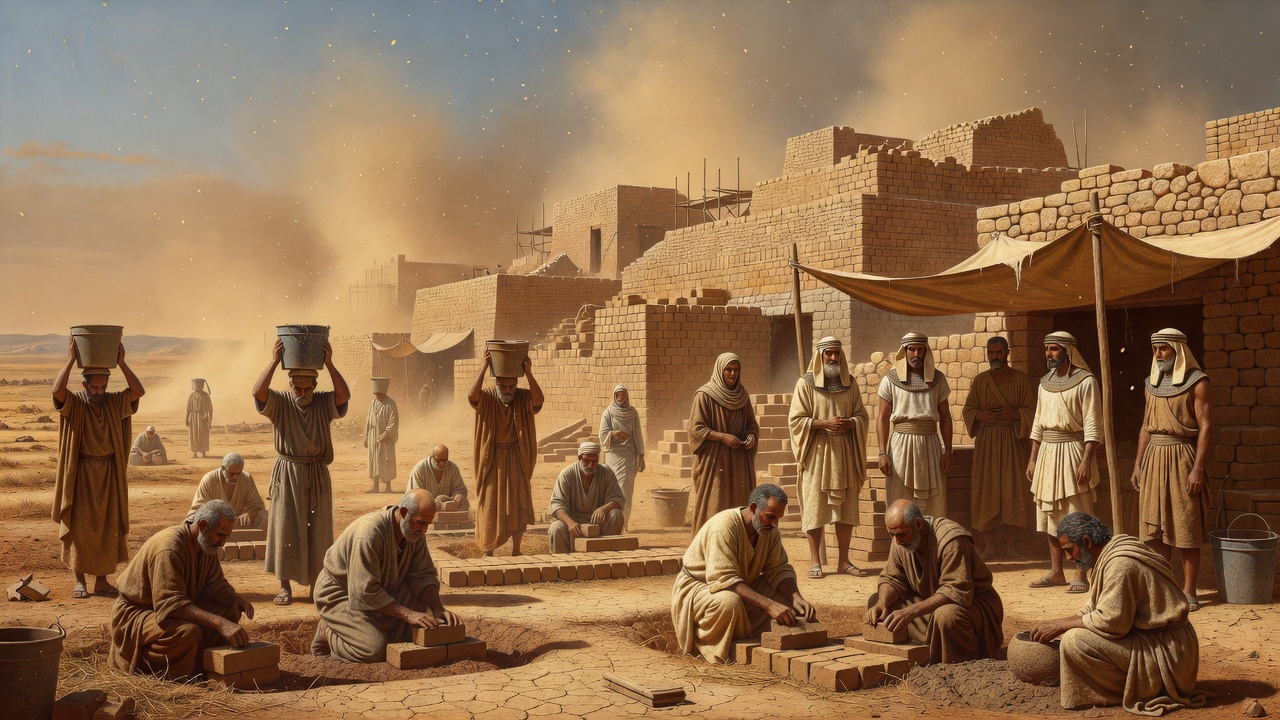
6Jò kô, Jôsep xam ƀài oh daq haq, xam dìq ka ngai qnhòng aih dìq cachìt dŏng. 7Mangai Isorali chèch lòe tam rai èh rai bàc haraya, loh ka rai èh rai padrŏng dêh; jàp jìa ka gùng. 8Atìq ka aih, ta diac Êdip i mòeq ngai neo tŏc broq bùa, ùh qnì ka Jôsep. 9Bùa doe dèh ka mangai tadiac da haq: Ngan kô, mangai Isorali bàc rai yi dêh hnau ka bèn. 10Beq bèn yŏc kan rabiaq hu tabroq ka wì haq, ùh meh èh wì loq bàc tam, tàng beq loq i kan tajêh tablah, wì haq loq taqmùt ka ƀài lình wì hu jêh hlài bèn khoe èh cadàu loh enh gùng bèn qmòh. 11Qmang aih wì dèch ƀài mangai broq gàu ƀài hapŏng đòeq hu panan mangai Isorali ep abroq xalep, wì xài than phôq Phithom xam Ramse đòeq broq kho ka Phara-ôn. 12Mahaq kiang mangai Êdip panan wì haq abroq xalep dàng leq aih kiang mangai Isorali bàc tam dàng aih. Mangai Êdip loh ka tagit ka mangai Isorali. 13Panan wì haq broq nhang dìq jaq. 14Broq ka mangai qnhòng aih rìh ta kan hamoq, majah qmang aih ep jôiq taneh, broq gech hloe xam rìm yiniq abroq qnoeq tagùng. Ƀài bìac aih mangai Êdip panan mangai isorali broq joq nhang dìq jaq.
15Bùa Êdip doe ka ƀài ƀamùq da mangai Hêbru, mòeq ngai yiniq Sipra, mòeq ngai yiniq haq Phu-a, 16rameh: Jò pì lam ngan mangai Hêbru ha-uang, waq toq hnoq kon calô aih broq đac dôq haq cachìt, tàng hnoq kon cadrì aih đòeq rìh. 17Mahaq ƀài ƀamùq iu yùq ka Boc Plình, ùh broq tiaq bàu da bùa Êdip tanap, rong ƀài kon calô rìh dŏng. 18Bùa Êdip creo ka ƀài ƀamùq rai bòch: Hagleq pì ma broq qmang aih, đòeq ka ƀài kon calô rìh dŏng? 19Ƀài bamùq padreo bàu: Aih pàng ƀài mangai gucadrì Hêbru ùh xài qmang ka mangai Êdip; majah qmang aih wì haq yeo dêh, khoe ha-uang adroe ka jò nhèn trùh. 20Boc Plình am xôq ramot ka ƀài ƀamùq, mangai Isorali chèch lòe tam loh ka raya rayùc. 21Qmang aih pàng ƀài ƀamùq iu yùq ka Boc Plình, dài haq majah broq ka hnim wì aih jah padrŏng.
22Phara-ôn qnoh ranenh kô am ka dìq dŏng mangai da haq: Waq toq kon calô da mangai Hêbru maneo ha-uang, khwênh qnìh dŏng tadiac; yàng ƀài kon cadrì aih rong rìh.
Did you know?
Israel's Growth and Oppression in Egypt
- Easton's Bible Dictionary (1897) says that the Hebrews in Egypt were under Joseph's protection for about seventy years, and that after his death their condition changed only gradually. It notes that the new king who did not know Joseph was generally supposed to be Aahmes I, whom Josephus calls Amosis, though discoveries of that time led the dictionary to conclude that he was Seti, after the Hyksos were driven out and the former dynasty restored.Sources: Pharaoh · the Bible text itself
- Set to forced labor, the Israelites built Pithom and Rameses as store cities for Pharaoh. Easton's Bible Dictionary (1897) explains Pithom as Egyptian Pa-Tum, 'house of Tum,' the sun-god, and calls it a treasure city built for Pharaoh Rameses II; it identifies the site with Tell-el-Maskhuta, where ruins of supposed grain-chambers were reported in 1883.Sources: Pithom · Raamses · the Bible text itself
- Pharaoh then commanded that every son born to the Hebrews be thrown into the river. Easton's Bible Dictionary (1897) notes that the name Nile does not appear in Scripture; the Old Testament calls that river Sihor, 'the black stream,' or simply 'the river,' as in Exodus 1:22.Sources: Nile · the Bible text itself
Notes written with AI assistance from open sources (Theographic Bible Metadata, CC BY-SA 4.0; Easton’s Bible Dictionary, public domain) and reviewed before publishing.
Places in this chapter
- Egypt · 30.129, 31.308 · verses 1, 5, 8, 15, 17, 18
- Nile · Today: Nile River · 31.465, 30.367 · verse 22
Only places identified with high confidence are shown (90% or more according to the scholarly sources compiled by OpenBible). Period map: DARE (Digital Atlas of the Roman Empire), CC BY 4.0; modern map: © OpenStreetMap contributors; places: OpenBible.info (CC BY 4.0).
Credits and license for this translation
Hset Hadròeh
The New Testament in the Hre language of Vietnam, translated by Baq Thi
Copyright © 2024 Baq Thi
Language: (Hre)
This translation is made available to you under the terms of the
Creative Commons Attribution Share-Alike license 4.0.
You have permission to share and redistribute this Bible translation in any format and to make reasonable revisions and adaptations of this translation, provided that:
You include the above copyright and source information.
If you make any changes to the text, you must indicate that you did so in a way that makes it clear that the original licensor is not necessarily endorsing your changes.
If you redistribute this text, you must distribute your contributions under the same license as the original.
Pictures included with Scriptures and other documents on this site are licensed just for use with those Scriptures and documents.
For other uses, please contact the respective copyright owners.
Note that in addition to the rules above, revising and adapting God's Word involves a great responsibility to be true to God's Word. See Revelation 22:18-19.
2026-07-18
Source: http://ebible.org/hrebt/ · eBible.org