Acts 13
Hset Hadròeh · Tap a verse to see its cross-references.
Phaulô xam Banaba hnài bàu lem ka mangai diac wì
1Oe ta Tagop Hadròeh Antiôt có bàc ngai pajàu xam mangai hnài, aih Basaba, Simeôn wì macreo dèh Nijê, Lusi-ut mangai gùng Syren, Manahem aih (oh ban da Hêrôt bùa qyoh), xam Saulo. 2Jò oh daq qnang kùh waiq Chuaq rai apàm ka acaq, Yiang Hadròeh thê: “Lah đòeq crài Banaba xam Saulo đòeq wa hi broq trong Au khoe creo wa broq. 3Atìq ka apàm ka acaq rai waiq khàn, oh daq roh tì enh qnhèq ka wa, khoe aih hi thê wa lam.
Oe ta Chipro
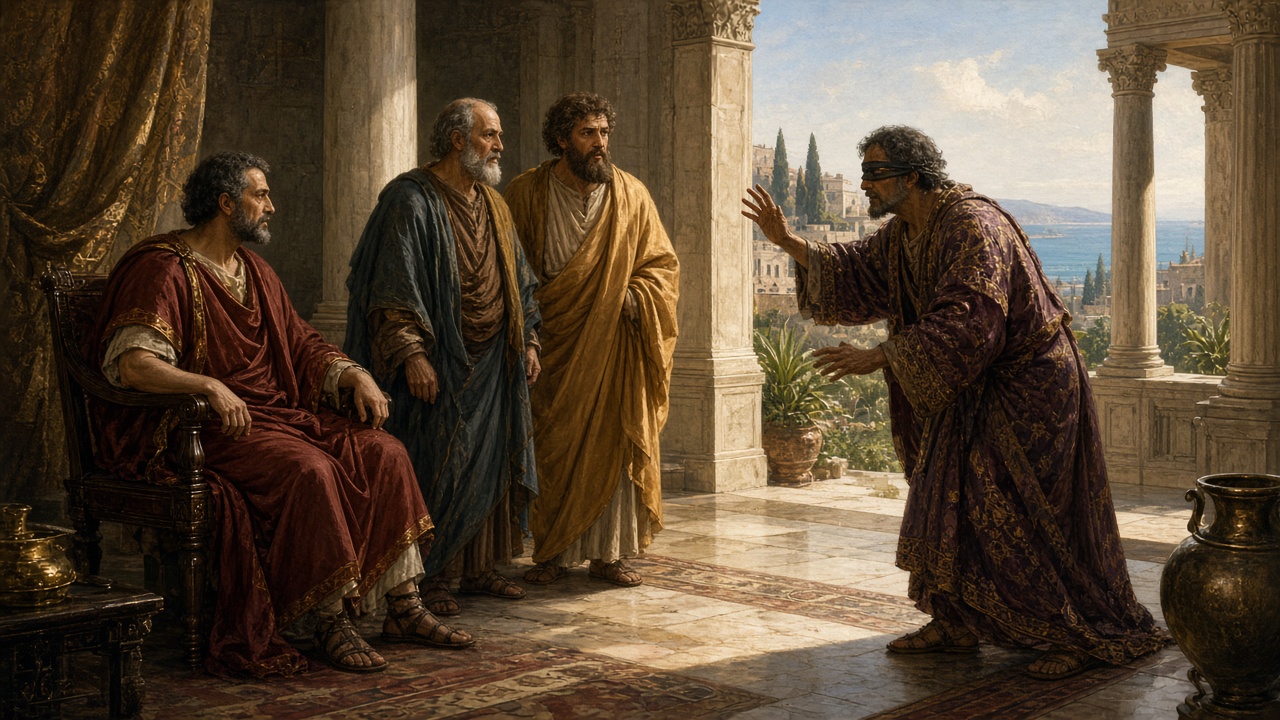
4Qmang aih, Jò Yiang Hadròeh khoe thê Banaba xam Saulo lam, wa loh ta Sêloxi, enh aih wa tŏc boang lam ta pleo Chipro. 5Jò wa khoe trùh ta Salamin, wa hnài trong Boc plình ta hnim tagop qyoh da mangai Juđa, Jon hadai lam hu wiang patìh ka wa. 6Wa lam dìq ka pleo aih trùh hloe ta Ƀaphô, wa glàm mòeq ngai Juđa, mangai aih i canàih, aih mangai pajàu qnùt, yiniq haq Ƀajêsu, 7oe ti mangai tình truàng yiniq haq Sêjut-Phaulut, mangai tình truàng kô khun rabiaq dìq jaq. Haq akhen ka Banaba xam Saulo trùh, haq enh bòch tamàng đeh trong Boc Plình. 8Mahaq Êlima, mangai pajàu i canàih (aih ngìah yiniq haq), tàt wa aih, ti àu chaq trong dôq cwan tình truàng ùh lùi. 9Khoe aih, Saulo wì ma loq creo Phaulô bình ha lùih Yiang Hadròeh, ngan tajang ka Êlima rai doe: 10“Wùih, mangai bình bauq kan gôpla, kan dù meh, kon da kiac chŏc jròng, taƀlêq ka kan taq atoq, ìh ùh hêq ka enh toq troq đac trong jang da Chuaq qmòh? 11Manòeq kô Chuaq dèch kŏng taƀlêq ka ìh, kô èh ìh jah lua mat, pi hnoq mat mahì toq ƀiaq hì.” Tajòe hloe jò aih raq, i kan clam cluiq gùp dŏng haq, haq ti tawìh dudan đòeq chaq mangai tìc rađeh. 12Jò cwan tình truàng hnoq qmang aih, haq hi lùi, haq hamàih dìq cajaq ka bàu da Chuaq.
Oe ta Antiôt gùng Bisiđi
13Phaulô xam deh bua tŏc boang enh Baphô lam ta Ƀetjê trong gùng Bamphi-li. Mahaq Jon cađac wa, đòeq hlài ta Jêrusalem. 14Wa aih hòm, loh Ƀetjê wa ƀoe trong lam trùh Antiôt gùng Bisi-đi, Troq hì Sabat, wa mùt haqngui ta hnim tagop qyoh. 15Bu hêq ka đŏc ta hset ranenh xam ƀài hset pajàu, wì craq wèq hnim tagop qyoh doe ka wa haq: “Wa daq! Tàng joq loq i ƀiaq nà bàu đòeq anoe hnài oh daq, anoe beq.”
16Phaulô hi yòng, gwàih tì ka oh daq, haq doe: “Dìq ka oh daq Isorali xam mangai loq iu yùq Boc Plình, tamàng kô! 17Boc Plình da mangai Isorali kô, khoe ràih kan cadraq bèn, broq ka wì aih chèch lòe jò wì haq oe đeh tanòe taneh diac wì, aih diac Êdip, yŏc cwìang itai kàn qnoh wì loh enh gùng aih. 18Jah ta pôn jàt hanam, haq chìuq àt ka kan ùh wìa da wì aih nòe braih kàn. 19Jò khoe raliang qnìh cađac tapèh diac ta Cana-an, yŏc taneh wì aih aq am dèh ka mangai da haq. 20Khoe èh, qnah ta pôn hrinh padam jàt hanam tìa aih, Boc Plình am ka wì aih ƀài mangai hadrah trùh hloe ta qnhòng pajàu Samuên. 21Jò aih wì bòch ka haq am ka wì mòeq ngai broq bùa, Haq am ka wì Saulo kon da Kit, nang noe Bênjamin, broq bùa wèq wì haq aih pôn jàt hanam. 22Khoe èh haq cađac bùa aih, dèch Đawit broq bùa, anoe trùh Đawit Boc plình doe: “Au khoe chaq hnoq Đawit kon da Jêse, aih mangai lem ka manoh au, haq aih èh ma broq tiaq rìm yiniq au enh thê haq broq. 23Tiaq qmang ka bàu khoe tèu đòeq adroe, enh nang noe haq aih èh Boc Plình ma hi padèch am ka magai Isorali mòeq Ngai Dèch, aih Chuaq Jesus Christ. 24Adroe ka Chuaq Jesus trùh, Jon khoe hnài ranenh ƀaptem da kan loq raxach am mangai Isorali. 25Jò Jon qnang pagêh dèh yiniq broq, haq doe: “Pì xoh au kô ìq cabô? Au ùh xài mangai pì qnang ti chaq. Mahaq i mòeq ngai trùh atìq ka au, au ùh tajì ka jah broq đeh mangai lêh caxy jep haq aih.”
26Yôi oh daq bèn kô aih mangai kon xau da Apraham xam mangai ma loq iu yùq ka Boc Plình, bàu bahìa trùh kan dèch kô khoe anoe am ka bèn. 27Majah qmang aih xam cwan xam mangai oe ta Jêrusalem ùh canau loq ka Chuaq Jesus kô, aih ìq raq jò wì ma tahadrah ka haq, wì haq khoe broq gêh bàu ƀài mangai pajàu wì haq ma loq đŏc ta hì Sabat. 28Yac ka wì chèh chaq ta haq wì ùh loh qmòeq yiniq lui cleq ma troq ka cachìt, mahaq dua wì àu bòch dôq Philat jêh cađac haq. 29Jò wì broq khoe xìt rìm trong ma khoe achìh trùh haq, wì hi qnoh haq enh long pagat, èh catùh hanang haq ta ralùng. 30Mahaq Boc Plình khoe broq haq rìh hlài enh kan cachìt. 31Ƀài mangai ma tiaq haq enh Galili tŏc trùh Jêrusalem jah hnoq haq bàc hì, wì aih manoèq kô qnang anoe hu panhìn haq am ka mangai bèn. 32Da nhèn kô hòm, anoe am ka oh daq bàu lem, aih la bàu Boc Plình ma khoe tèu am ka kan cadraq bèn rameh: 33Boc Plình khoe broq ka Chuaq Jesus rìh hlài, qmang aih khoe xìt bàu haq ma tèu am ka bèn, aih ƀài kon xau da kan cadraq bèn, wop qmang ka bàu khoe achìh ta hset Calêu Plình:
“Kon kô kon calô da au,
hì kô au khoe hauang kon.”
34Boc Plình broq ka Chuaq Jesus rìh hlài enh kan cachìt, qmang aih dôq chac haq ùh jò leq om hnhung hòm, qmang ka Boc Plình khoe doe: “Au am ka pì bàu hadròeh cajap, am xôq ramot au ma khoe tèu ka Đawit.” 35Ajang brong qnoeq hòm doe: “Ìh ùh dôq dèh Mangai Hadròeh ìh hnoq kan om taleq.” 36Jò Đawit oe rìh, broq tiaq bàu Boc Plình thê, khoe aih cachìt, haq khoe jah catùh dèh ti kan cadraq, hanang haq khoe om. 37Mahaq Mangai Boc plình ma broq ka haq rìh hlài enh kan cachìt ùh om taleq. 38Qmang aih, oh daq au, bèn khòh loq rameh: Canòm ka Chuaq Jesus aih raq, kan baclaih yiniq lui khoe jah anoe am ka pì; 39èh canòm ka haq aih raq waq toq cabô lùi aih hi jah kan taq atoq, rìm trong tiaq ranenh da Môise ùh broq ka mangai leq jah kan taq atoq. 40Aih ìq, drah wèq rađeh dôq bàu khoe achìh ta hset pajàu ùh hìaq trùh ka pì:
41“Wùih! mangai ma loq halê meh,
ngan beq, drah loq crè rai lùng pac beq;
Majah qmang aih au padon broq mòeq yiniq oe ta qnhòng da pì,
Yac ka i cabô anoe hlài ka pì, dua pì ùh lùi.”
42Wa aih cadiang loh enh hnim tagop qyoh, wì akhen ka wa trùh hì Sabat atìq hnài tam bàu aih. 43Jò khoe hêq enh tagop, i bàc ngai neo tiaq trong Juđa, tiaq Phaulô xam Banaba, wa capoch tuàng ti wì rai pariaq wì oe ma cajap ta kan loq waq Boc Plình.
44Hì sabat atìq, wì ta aih tagop ten dìq ka dabau đòeq ta màng bàu Chuaq. 45Yàng ƀài mangai Juđa hnoq mangai bàc qmang aih ta manoh wì bình chàu kan tagit, wì haq tàih cađac bàu Phaulô rai capoch qmèq hloe ka haq. 46Phaulô xam Banaba hi doe hloe ka wì: Nhèn ep hnài bàu Boc Plình ka pì adroe òeq, mahaq pì khoe ùh tamàng, pì hnoq rađeh ùh tajì đòeq jah kan rìh halình mòeq đòe, kô èh nhèn tawìh ta mangai diac wì. 47Majah qmang aih Chuaq i thê nhèn rameh:
“Au dèch pì broq kan qngah am bàc diac,
Dôq pì aràng kan dèch trùh jàp caqnàm plình”.
48Mangai diac wì tàng anoe qmang aih wì toq lem bùi manè apôi bàu da Chuaq, mangai leq ma khoe jah padon đòeq ka kan rìh halình mòeq đòe, dìq lùi dŏng.
49Trong da Chuaq hlàng jàp gùng aih. 50Mahaq mangai Juđa baxrùq ƀài mangai gucadrì padrŏng kan tagùng aih xam ƀài mangai ratauq, tirùp Phaulô xam Banaba, khoe aih hnan đac wa loh khoe dèh ka gùng. 51Wa aih tangèa ta wì, hapùih caqnìh blo top ta jo wa, Khoe hi lam ta Ycôni. 52Wì mangai tiaq hŏc jah ùc bình kan lem bùi xam Yiang Hadròeh.
Did you know?
The mission sent from Antioch
- Easton's Bible Dictionary (1897) describes Antioch in Syria as ranking third, after Rome and Alexandria, among the cities of the Roman empire; the church there set Barnabas and Saul apart. Among its prophets and teachers were Simeon called Niger, a surname meaning black, perhaps from a dark complexion, and Lucius of Cyrene, in North Africa.Sources: Antioch (Syria) · the Bible text itself · Simeon · Lucius
- At Paphos, the capital of Cyprus and the residence of the Roman governor, a Jewish sorcerer named Bar-Jesus, also called Elymas, an Arabic name meaning magician or sorcerer, tried to turn the proconsul Sergius Paulus from the faith. It is here that Saul is also called Paul; Easton's Bible Dictionary (1897) says the name Paul was probably given to him in infancy for use in the Gentile world, while Saul was his Hebrew home-name.Sources: Paphos · Elymas · Paul · the Bible text itself
- Sent from Antioch, they went down to Seleucia, the city's seaport near the mouth of the Orontes, and sailed to Cyprus; later they landed at Perga, the capital of Pamphylia, on the river Cestrus. There John left them and returned to Jerusalem; his Roman name, Mark, gradually came to replace his Jewish name, and he was a cousin of Barnabas.Sources: Seleucia · Perga · John Mark · the Bible text itself
Notes written with AI assistance from open sources (Theographic Bible Metadata, CC BY-SA 4.0; Easton’s Bible Dictionary, public domain) and reviewed before publishing.
Places in this chapter
- Antioch · Today: Antioch on the Orontes · 36.227, 36.172 · verse 1
- Cyrene · 32.821, 21.851 · verse 1
- Cyprus · 35.000, 33.000 · verse 4
- Seleucia · Today: Seleucia Pieria · 36.124, 35.922 · verse 4
- Salamis · 35.185, 33.902 · verse 5
- Paphos · Today: New Paphos · 34.756, 32.404 · verses 6, 13
- Jerusalem · 31.777, 35.234 · verses 13, 27, 31
- Pamphylia · 37.000, 31.000 · verse 13
- Perga · 36.960, 30.854 · verses 13, 14
- Antioch · Today: Antioch in Pisidia · 38.306, 31.189 · verse 14
- Pisidia · 38.306, 31.189 · verse 14
- Egypt · 30.129, 31.308 · verse 17
- Canaan · 32.767, 35.333 · verse 19
- Galilee · 32.760, 35.527 · verse 31
- Iconium · Today: Konya · 37.872, 32.492 · verse 51
Only places identified with high confidence are shown (90% or more according to the scholarly sources compiled by OpenBible). Period map: DARE (Digital Atlas of the Roman Empire), CC BY 4.0; modern map: © OpenStreetMap contributors; places: OpenBible.info (CC BY 4.0).
Credits and license for this translation
Hset Hadròeh
The New Testament in the Hre language of Vietnam, translated by Baq Thi
Copyright © 2024 Baq Thi
Language: (Hre)
This translation is made available to you under the terms of the
Creative Commons Attribution Share-Alike license 4.0.
You have permission to share and redistribute this Bible translation in any format and to make reasonable revisions and adaptations of this translation, provided that:
You include the above copyright and source information.
If you make any changes to the text, you must indicate that you did so in a way that makes it clear that the original licensor is not necessarily endorsing your changes.
If you redistribute this text, you must distribute your contributions under the same license as the original.
Pictures included with Scriptures and other documents on this site are licensed just for use with those Scriptures and documents.
For other uses, please contact the respective copyright owners.
Note that in addition to the rules above, revising and adapting God's Word involves a great responsibility to be true to God's Word. See Revelation 22:18-19.
2026-07-18
Source: http://ebible.org/hrebt/ · eBible.org