Genesis 25
परमेश्वर उन वचन · Tap a verse to see its cross-references.
अब्राहम उन अन्य वंशज
1आग अब्राहम मात्त ऊंद आर्त से मदा माळदुन यार्द हेसुर कतूरा ईरोद. 2आकिन से जिम्रान, योक्षान, मदना, मिद्यान, यिशबाक, अदिक शूह पैदा आदुर. 3योक्षान देल शबा अदिक ददान पैदा आदुर; अदिक ददान उन वंश दा अश्शूरी, लतूशी, अदिक लुम्मी लॉकुर आदुर. 4मिद्यान उन पार एपा, एपेर, हनोक, अबीदा, अदिक एल्दा आदुर, ईंदुर सप्पा कतूरा अन चिकोर आदुर.
5इसहाक उक रा अब्राहम तान सप्पा येनारा कोट्टुन. 6लेकीन तान रखैल उन चिकोरी, थ्वाळा थ्वाळा कोटकु तान जीत्ता जीवन दा तान पार इसहाक उन हात्ती टु पूर्व दिशा दा कळु कोंडुन.
अब्राहम उन मृत्यु
7अब्राहम उन पुरा ऊमर ऊंद सौ पचहत्तर वर्ष इन आत. 8अब्राहम उन दीर्घायु आगा कारण मतलब पुरा हाळाबाट अवस्था दा जीव बीटोत; अदिक आव तान लॉकुर दा होगकु सीकेदुन. 9आऊन पार इसहाक अदिक इश्माएल, हित्ती सोहर उन पार एप्रोन इन मम्रे अन्द पूर्व दिशा अन्द जागा दा, जो मकपेला अन गुफा ईरोद, अल आऊक मुण्ण कोट्टुर; 10मतलब जो जागा अब्राहम हित्तीगोळ हाती टु कोंडीदुन; अल्या अब्राहम, अदिक आऊन हिंग्स सारा, येढ्ढु मुंदरी मुण्ण कोटकु आत. 11अब्राहम उन सोत्तुर बाद्दा, परमेश्वर आऊन पार इसहाक उक आशीष कोट्टुन, जो आ समय लहैरोई हेसुर इन भाँय इन हात्ती ईरतोगोन.
इश्माएल उन वंशावली
12अब्राहम उन पार इश्माएल जो सारा अन मिस्त्री दासी हाजिरा देल पैदा आगीदुन, आऊन ईद वंशावली आद. 13इश्माएल उन चिकोर्द हेसुर अदिक वंशावली ईद हुन: मतलब इश्माएल उन धोळ पार नबायोत, बाक केदार, अदबएल, मिबसाम, 14मिश्मा, दूमा, मस्सा, 15हदद, तेमा, यतूर, नापीश, अदिक केदमा. 16इश्माएल उन चिकोर ईंदुरा आदुर, अदिक ईंदुरवा हेसुर इन अनुसार ईंदुर ऊरानव, अदिक छावनीगोळ हेसुर भी बीद्दव; अदिक ईंदुर अच हन्नेळ मुंदुर तान तान कुल इन प्रधान आदुर. 17इश्माएल उन पुरा ऊमर ऊंद सौ सैंतीस वर्ष इन आत; आग आव सोतोदुन, अदिक तान सोतकु पुर्वजगोळ दा होगकु सीकेदुन. 18अदिक आऊन वंश हवीला से शूर ताका, जो मिस्त्र द्याश इन पूर्व अश्शूर इन हादी मा आद, बसुसेदुर; अदिक आदुर्द भाग आदुर्द सप्पा वार्टुर न्याड्या दा बिदकु आद.
याकूब अदिक एसाव उन जनम
19अब्राहम उन पार इसहाक उन वंशावली ईद हुन; अब्राहम से इसहाक पैदा आदुन; 20अदिक इसहाक चालीस वर्ष इनव आगकु रिबका अक, जो पद्दनराम इन वासी, अरामी बतूएल इन पोर, अदिक अरामी वंशीय लाबान इन आकतींग ईरोर, मदा माळदुन. 21इसहाक उन हिंग्स रा बाँझ ईरोर इदुरसाटी आव तान हिंग्स उन दी टु यहोवा से विनती माळदुन; अदिक आऊन विनती केळदुन, ई प्रकार आऊन हिंग्स रिबका गर्भवती ईत्तुर. 22चिकोर आकिन गर्भ दा आबुर दाबुर इक धक्का कोळतेला ईरतोगोर. आग रिबका अंदुर, “ईद येन आगेत्याद नान सांगुळ?” अदिक आक यहोवा से केळली होदुर.
23यहोवा आकिन से अंदुन,
“नीन गर्भ दा येढ्ढ जातीगोळ आव,
आंदुर दा टु येढ्ढ समूह अन लॉकुर होटकु अलग आदार;
ऊंद समूह अन लॉकुर दुसरा से येक्कुल ताकतवर आदार,
अदिक धोड्डेव श्याण्णेव उन स्यावा माळ्यान.”
24याग आकिन दुख इन समय बत्त, रा आकिन गर्भ दा जुळवा चिकोर ईरोर. 25जो पयला पार आदुन आव क्याचांद ईरोन, अदिक आऊन पुरा शरीर चुट्टगोळ देल तुमकु ईरोद; ईद कारण आऊन हेसुर एसाव ईटकु आत. 26ईदुर बाद्दा आऊन वार्ट उन जनम आत, जो तान कय देल तान वार्ट एसाव उन काल हुडुकु ईरोन; आग आऊन हेसुर याकूब ईटकु आत. याग रिबका आऊक जनम कोट्टुर आग इसहाक साठ वर्ष इन ईरोन.
एसाव उन द्वारा धोळ वार्ट उन अधिकार मारोद
27बाक आ चिकोर धोड्डेर आगली कुरतुर अदिक एसाव रा वनवासी आगकु चालाक शिकार आळावाळा आगेदुन, लेकीन याकूब सीधा मंळसा ईरोन, अदिक ड्यारागोळ दा ईरतोगोन. 28एसाव इसहाक उन प्यारा ईरोन यतिकी इसहाक उक मांस हापाळ वळ्लीद हततोगोद, लेकीन याकूब रिबका अन प्यारा ईरोन.
29ऊंद घन याग याकूब कम बेक्की दा येनारा बेईसोन, आग एसाव आळी टु बंदुन अदिक आव हापाळ हस्तकु ईरोन. 30आव याकूब से अंदुन, “नानी हापाळ हसू हत्याद; नी जो बेईसीत्या, जल्दी माळकु अदुर दा टु नानी येनारा तीनली कोळ.” ईदा कारण आद कि आऊक एदोम भी अनकु आग्याद.
31लेकीन याकूब आऊन से अंदुन, “पयले नी तान धोळ आगोद अधिकार नानी कोळ.”
32एसाव अंदुन, “नोळ, हसु देल नान जीव होळेत्याद; धोळ आगोद अधिकार देल नानी येन फायदा आद?”
33लेकीन याकूब अंदुन, “रा पयले नी नान से कसम ताकोम.”
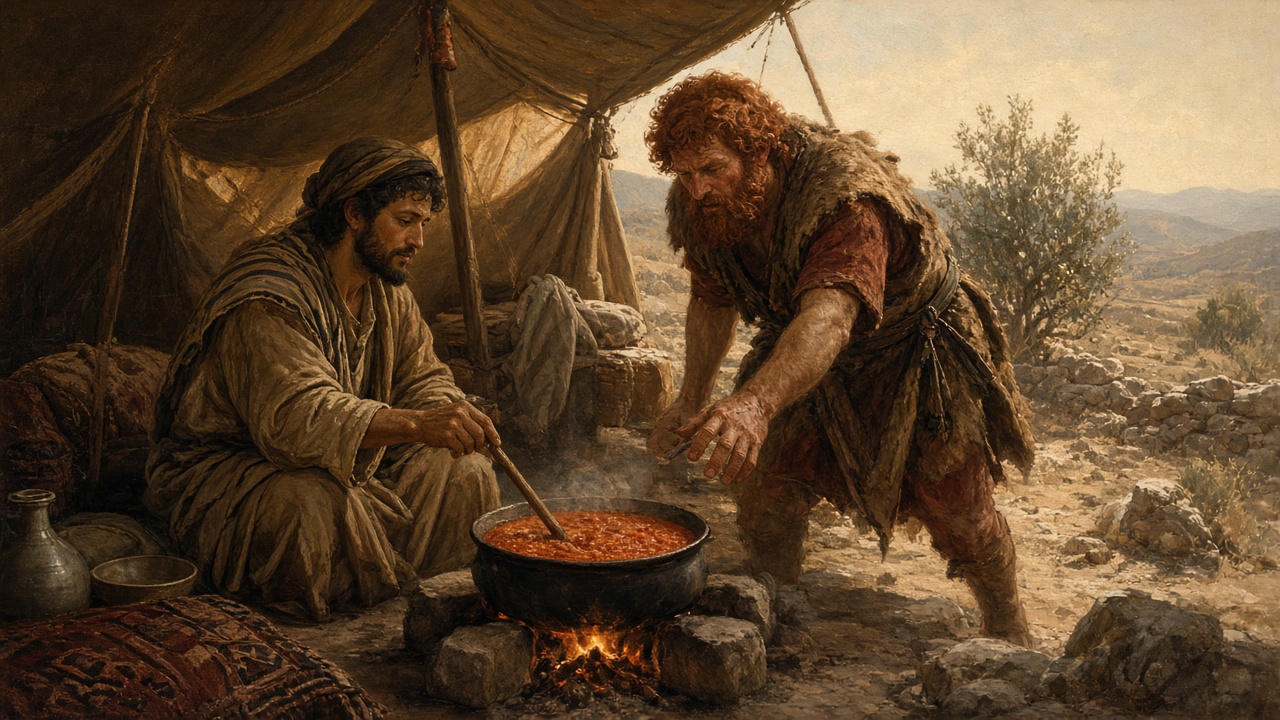
आग एसाव कसम तीनकु तान धोळ आगोद अधिकार याकूब उन कय दा मार कोंडुन. 34आग याकूब एसाव उक येनारा रोट्टी अदिक बेईस्द मसूर इन ताग्गा कोट्टुन. एसाव तिंदुन कुळदुन, अदिक येदकु होटोदुन. ई प्रकार एसाव तान धोळ आगोद अधिकार इक तुच्छ सम्सदुन.
Did you know?
Abraham’s heirs and the twin brothers
- Keturah, whose name Easton's Bible Dictionary (1897) explains as “incense,” is introduced here as another wife of Abraham. That dictionary says he probably married her after Sarah’s death, though her nationality is unknown, and notes that 1 Chronicles calls her a concubine. She bore him six sons, including Jokshan and Midian, the father of the Midianites; while Abraham was still alive he gave gifts to the sons of his concubines and sent them away from Isaac to the land of the east.Sources: Keturah · Midian · the Bible text itself
- Isaac and Ishmael together buried Abraham in the cave of Machpelah near Mamre, in the field Abraham had bought from Ephron the Hittite, where Sarah already lay. Easton's Bible Dictionary (1897) explains Machpelah as “portion” or “double cave,” set on a hillside east of Hebron and facing Mamre, a place called the oaks—or, in a margin, the terebinths—of Mamre.Sources: Machpelah · Mamre · the Bible text itself
- Esau, Rebekah’s firstborn twin, was born red and covered with hair like a fur coat. Easton's Bible Dictionary (1897) links the further name Edom, “red,” to the red lentil stew for which he sold his birthright, and explains Jacob as “one who follows on another’s heels” or “supplanter,” matching the report that Jacob was born grasping Esau’s heel. Esau grew up as a skillful hunter and a man of the field, while Jacob was a quiet man who stayed at home.Sources: Esau (Edom) · Jacob (Israel) · the Bible text itself
Notes written with AI assistance from open sources (Theographic Bible Metadata, CC BY-SA 4.0; Easton’s Bible Dictionary, public domain) and reviewed before publishing.
Places in this chapter
- East · Today: region around Amman · 31.955, 35.934 · verse 6
- Machpelah · Today: Cave of the Patriarchs · 31.525, 35.111 · verse 9
- Negeb · 31.245, 34.841 · verse 11
- Assyria · 36.359, 43.153 · verse 18
- Egypt · 30.129, 31.308 · verse 18
Only places identified with high confidence are shown (90% or more according to the scholarly sources compiled by OpenBible). Period map: DARE (Digital Atlas of the Roman Empire), CC BY 4.0; modern map: © OpenStreetMap contributors; places: OpenBible.info (CC BY 4.0).
Credits and license for this translation
परमेश्वर उन वचन The Holy Bible in the Holiya language of India: परमेश्वर उन खरा वचन copyright © 2020 The Word for the World International Language: Gohllaru (Holiya) Contributor: The Word for the World International परमेश्वर उन वचन हाळोद नियम, 2025 The Old Testament Books in Holiya Language The Word for the World International This translation is made available to you under the terms of the Creative Commons Attribution Share-Alike license 4.0. You have permission to share and redistribute this Bible translation in any format and to make reasonable revisions and adaptations of this translation, provided that: You include the above copyright and source information. If you make any changes to the text, you must indicate that you did so in a way that makes it clear that the original licensor is not necessarily endorsing your changes. If you redistribute this text, you must distribute your contributions under the same license as the original. Pictures included with Scriptures and other documents on this site are licensed just for use with those Scriptures and documents. For other uses, please contact the respective copyright owners. Note that in addition to the rules above, revising and adapting God's Word involves a great responsibility to be true to God's Word. See Revelation 22:18-19. 2025-07-11
Source: http://ebible.org/hoy/ · eBible.org