John 6
God Lavayiyat Aṅ Puhuvasiwni · Tap a verse to see its cross-references.
Jesus Feeds the Five Thousand
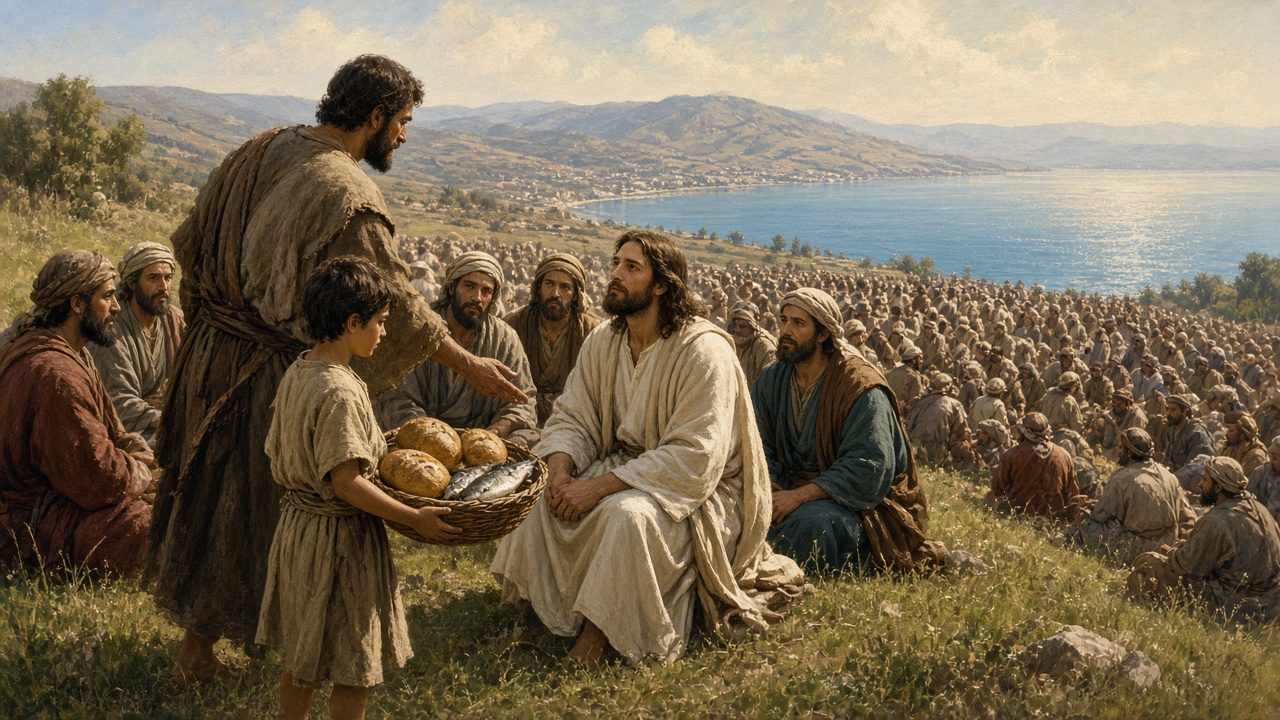
1Iit atsve pu’ Jesus Galileet ep wuhkovatuphat Tiberias yan piw túṅwantiwhqat ayoqwat yama. 2Noqw sinom qaan’ewakw hintaqam put aṅkya, pam tūtuyyaqamuy amuhpa’ k̇ātatayhpiy tumaltaqw aw yórikyaqe ōviy’o. 3Noqw Jesus tsomomiq wupqe, put aw nánatuwnayaqamuy amumum pepeq qatuptu. 4Noqw Jew‐sinmuy tuiwiam Amutsva‐Yūmosanihqat ep nōviwhqat aw hayiṅwiwta. 5Noqw Jesus kwuhpukqe, sinmuy qaan’ewakw hintaqamuy put aw ökiwtaqamuy amumi yórikqe, Philip aw paṅqawu: Ya itam sen haqam tunöstuiyaqw ima nȫnösani? 6Noqw pay pam put aw hin hepqe ōviy kita, pay pi as pam hinhtiniqey nāp navoti’taqe ōviy’o. 7Noqw Philip put aw paṅqawu: Pay as pi kurs itam lȫp sunat sīvat akw pölavikit tuiye’, itam nāto kurs hin pumuy sohsokmuy hiṅsakw nopnayani. 8Noqw suhk̇a put aw nánatuwnaqa Andrew, it Simon Peter tupkoat, Jesus aw paṅqawu: 9Hak yep tiyohya tsivot söhövosvölavikit nitkay’va, pu lȫqmuy tsākw pākiwhtuyu; noqw ya pam sinmuy k̇aysiwhqamuy amumi hímuu? 10Noqw Jesus paṅqawu: Uma sinmuy yesvanayani. Noqw pep a’nö tūsaqa; noqw ōviy sinom paṅ yesva, tsivót‐sikip sōmorit pahsa’haqam tahtaqtu. 11Pu Jesus pölavikit ömahtaqe, put ep hihlayhtit, put aw nánatuwnayaqamuy amumi put oya; noqw puma aṅ yesqamuy amuhpa put o’ya, pu pākiwhtuy pīwu, hihsa’haqam nānawaknaqat pahsaa. 12Noqw pumuy ȫöyaqw, pam put aw nánatuwnayaqamuy amumi paṅqawu: Uma yóṅoyhput akwsiṅwqat tsovalayani, noqw qa himu hovalniwni. 13Noqw ōviy puma tsivot söhövosvölavikit aṅqw yóṅoyhput nȫnösaqamuy akwsiṅwpuyamuy tsovalayaqe, pakwt lȫq sihk̇ay’taqat tutsáysivut aṅ opomnaya. 14Noqw Jesus k̇ātatayhpit tumaltaqw, sinom aw yórikyaqe, paṅqaqwa: Pay kurs pas antsa i’ tāqa God lavay’ayaat tūwaqatsit aw pitúniqa. 15Noqw puma put awye’, pas öqalay akw put moṅwtapyaniqat Jesus māmatsqe pay nāla piw tsomot aqwhaqamii.
Jesus Walks on the Water
16Noqw tapkiqw put aw nánatuwnayaqam wuhkovatuphat aw hanhqe, 17Pākihut aqw yuṅt pāvaqe Capernaum aqwya; noqw nuṅwu qatālawvaqw, nāt Jesus qa pitu. 18Noqw pumuy panwisq, a’nö hukvaqw pāhu a’nö hoṅvanta. 19Noqw ōviy puma pāhut aṅqe’ kwetstiwisqe payhp, sen nālöp tutskwatuwanit pahsavohaqami hoyóyoykuyaqw, Jesus pāvaqe waymak̇aṅw pākihut aw hayiṅwna. Noqw pam panmaqw, puma put tutwaqe pas tsātsawna. 20Noqw pam pumuy amumi paṅqawu: Pay nūu, uma qa tsawiniwyuṅwni. 21Pahsat pu puma hahlayhtotiqe, put pākihut aqw panaya; noqw pahsat pay pākihu pumuy haqami hoyóyototaqat aqw pitu.
The People Seek Jesus
22Noqw qavoṅvaqw sinom wuhkovatuphat ayaqwat huruhtotiqam ura pay suhk̇a pākihu pápiqniqw put u’naya; noqw ura Jesus aw nánatuwnayaqam put aqw yuṅqw, pay ura Jesus pumuy qa amumum put aqw paki, noqw pay puma nanalt ahpiyya. 23Noqw pay pētu pākihu Tiberius aṅqwyaqam paṅso öki, ura Tutuyqawhqa haqam pölavikit ep hahlayhtit tūnopnaqat paṅsoo. 24Noqw sinom Jesus‐nik̇aṅw pu put aw nánatuwnayaqamuy pep qa tutwaqe, pākihut aṅ yuṅt, Jesus hepwisqe Capernaum ep öki.
Jesus the Bread of Life
25Nihqe puma wuhkovatuphat yupqöyveq put tutwaqe, aw paṅqaqwa: Tutuqaynaqa, ya um hisat peqw pitu? 26Jesus lavayhtiqe pumuy amumi paṅqawu: Pas antsaa, pas antsa nu umumi paṅqawni: Uma k̇ātutmalat aw yórikyaqey qa paniqw nuy hepnumya, pi uma pölavikit nȫnösaqe ȫöyaqe ōviy’o. 27Uma nȫsiwhqat pay súlawhtiṅwuqat qa put ōviy tumalay’yuṅwni. Uma nȫsiwhqat qatsit qaso’taqat aniwnaqat ōviy tumalay’yuṅwni; put hapi nu’ Sinot Tiat umuy máqani. Pi Ina God öqalay akw nuy tuvoylata. 28Noqw puma put aw paṅqaqwa: Noqw itam hihta tumalat hintsatsk̇e’ God tayawnayani? 29Jesus lavayhtiqe amumi paṅqawu: Uma hapi hakiy God aṅqw távihqat aw tūtuptsiwe’, yan God tayawnayani. 30Pahsat pu puma put aw paṅqaqwa: Noqw ya um hihta akw put pantaqat itamumi mahtaknaqw itam aw yórikye’ ūmi tūtuptsiwani? Um hihta tumalay’ta? 31Itanam pi ura qayēsiwhpuve hihta mennat nōnova; ōviy pi yan pey’ta: Pam ōveqatsit aṅqw pumuy tunösmaqa, yan’i. 32Pahsat pu Jesus pumuy amumi paṅqawu: Pas antsaa, pas antsa nu umumi paṅqawni: Qa Moses pút pölavikit ōveqatsit aṅqw umuy maqa; noqw Ina hapi pas antsa pölavikit ōveqatsit aṅqwnihqat umuy maqa. 33Pi ōveqatsit aṅqw hawhqa hapi God aṅqw pölavikit anta, pam hapi sinmuy qatsit huylawu. 34Pahsat pu puma put aw paṅqaqwa: Tutuyqawhqa, um okiw sutsep itamuy it pölavikit huylawni. 35Noqw Jesus amumi paṅqawu: Nu hapi pölaviki hakiy qatsit máqaṅwuqa; inumi pítuhqa soon hisat tsöṅmokni, pu inumi tuptsiwhqa soon hisat pānaqmokni. 36Noqw pi nu ura umumi paṅqawu: Uma as inumi yórikyak̇ahk̇aṅw qa tūtuptsiwa. 37Sohsoyam Inay aṅqw inumi noiwyaqam inumiyani, noqw ason hak inuminiqw, soon nu put ayo tūvani. 38Nu qa nāp itunatyay hintsakniqe ōveqatsit aṅqw hāwi, nu Inay nuy aṅqw távihqat tunatyayat hintsakniqe ōviy’o. 39Noqw i’ hapi Inay nuy aṅqw távihqat tunatyaata: Nu sohsokmuy hakimuy put ahpiy inumi noiwyaqamuy qa hihtawat kwayht, nuhtuṅk talöṅvaqat ep pumuy ahoy tātaynani. 40Noqw i’ hapi nuy aṅqw távihqat tunatyaata: Sohsoyam Tiyat aw yórikyak̇ahk̇aṅw, put aw tūtuptsiwaqam qatsit qaso’taqat makiwyani; noqw nu nuhtuṅk talöṅvaqat ep pumuy ahoy tātaynani. 41Pahsat pu Jew‐sinom put aw qayan unaṅway hiṅqaqwa, pam pölaviki ōveqatsit aṅqw hawhqey ura paṅqawhq ōviy’o. 42Nihqe puma paṅqaqwa: Ya qa i’ Jesus, it Joseph tíata? Itam put náyat‐nik̇aṅw pu yuyat pumuy tuwi’yuṅwa. Noqw ya hintaqw ōviy pam ōveqatsit aṅqw hawhqey paṅqawlawu? 43Noqw ōviy Jesus lavayhtiqe amumi paṅqawu: Uma qa nānahpa’ qaán umuh’unaṅway hiṅqaqwani. 44Pas Ina nuy aṅqw távihqa hakiy pan unaṅwtoynaqw, pam‐sa inumini; noqw nu nuhtuṅk talöṅvaqat ep put ahoy tātaynani. 45Pi ura God lavay’aymuyatuy pēniyamuy aṅ yan pey’ta: Pu puma sohsoyam God aṅqw tutuqayyani, yan’i. Paniqw ōviy sohsoyam Inay aṅqw nanaptak̇aṅw pu tūqayyaqam inumi ökiwta. 46Pay k̇a hak hisat Inay aw yórikqat nu qa paṅqawu, hal i’ hak God aṅqw pítuhqa, pam‐sa Inay aw yóriki’ta. 47Pas antsaa, pas antsa nu umumi paṅqawni: Inumi tuptsiwhqa hapi qatsit qaso’taqat pay makiway’ta. 48Nu hapi pölaviki sinmuy qatsit máqaṅwuqa. 49Pay as pi umanam qayēsiwhpuve hihta mennat nȫnösat, pay qa yēse. 50Nu hapi i’ pölaviki ōveqatsit aṅqw hawhqa, it pölavikit aṅqw nösqa qa mokniqat ōviy’o. 51Nu hapi taytaqa pölaviki ōveqatsit aṅqw hāwi; it pölavikit aṅqw nösqa sutsep qátuni. Noqw nu pölavikit lavayhtiqe itokoy paṅqawu; put hapi nu sinmuy amuṅem távini, puma yesniqat ōviy’o. 52Noqw ōviy Jew‐sinom put ep nāṅwuy’yuṅqe, paṅqaqwa: Ya sen i’ hin itamuy tokoy nopnani? 53Pahsat pu Jesus amumi paṅqawu: Pas antsaa, pas antsa nu umumi paṅqawni: Pas uma Sinot Tiyat tokoyat qa nȫnösak̇aṅw, pu put uṅwáyat qa hikwye’ uma umuh’unaṅwpeq qatsit ṅastayani. 54Itokoy tūmoytak̇aṅw, pu iuṅway hīhikwqa hapi qatsit qa so’taqat pay himuy’ta, noqw nu nuhtuṅk talöṅvaqat ep put ahoy tātaynani. 55Pi itoko pas antsa nȫsiwhqa, pu iuṅwa pas antsa hīhikwaqa. 56Itokoy tūmoytak̇aṅw pu iuṅway hīhikwqa inuhpe qatu; noqw nu put ep qatu. 57Pi Ina qátuhqa nuy aṅqw tavi; noqw nu put ahpiy qatu; noqw pay pan hapi hak nuy tūmoytaqa nuy akw qátuni. 58I’ hapi pám himu pölaviki ōveqatsit aṅqw hāwi; pam it mennat umunamuy amuhpiy nȫsiwhqat qa panta; ura puma put aṅqw nȫnösat, pay qa sutsep yēse. It pölavikit aṅqw nösqa hapi pas sutsep qátuni. 59Pam Capernaum ep tsotsvalkive sinmuy tutuqaynak̇aṅw, yan lavayhti.
The Words of Eternal Life
60Noqw ōviy k̇aysiwhqam put aw nánatuwnayaqam it nanaptaqe paṅqaqwa: Pam hihta pas nuhtsel’ewakw itamuy tutuqayna; ya sen hak aṅ kuytani? kitota. 61Noqw put aw nánatuwnayaqam it ep qaan’unaṅway hiṅqaqwaqw, Jesus unaṅwpeq navoti’taqe, amumi paṅqawu: Ya i’ umumi qalomátöqti? 62Noqw tis kurs k̇a nu Sinot Tiat ōveqatsit ep qátuṅwuqey aqw wuptoqw, uma aw yórikye’, pahsat uma hin wūwayani? 63Pi Hikwsi hapi hakiy taytoynaṅwu; hakiy tokoat qa hihta ápiniṅwu; nu umumi hihta lavayhtiqw, pam pantaqa hikwsit aṅqwnihqe sinmuy qatsíhuylawu. 64Noqw pi uma haqawat qa tūtuptsiwa. Pi hakim put aw qa tuptsiwni’yuṅqat Jesus pay navoti’ta, pu hak momṅwituy amumi put mātapniqata. Pam sinmuy tutuqaynativaqey aṅqaqw pūvut sohsok navoti’ta. 65Pahsat pu pam paṅqawu: Paniqw hapi ōviy nu ura umumi paṅqawu: Pas Ina hakiy qa pan unaṅwtoynaqw, soon pam hak inumini. 66Yantaqat atsve put aw nánatuwnayamuy amuṅaqw wūhaqnihqam put mātatve; nihqe pāpu qa amum hinnumya. 67Noqw pahsat pu Jesus imuy pakwt lȫq sihk̇ay’taqamuy amumi paṅqawu: Noqw ya uma nuhtum inuṅaqw ahpiyyani? 68Noqw pahsat pu Simon Peter lavayhtiqe paṅqawu: Tutuyqawhqa, noqw itam hakiy awyani? Pi um pi lavayit qatsit qaso’taqat aniwnaqat lalvaya. 69Noqw pay itam tūtuptsiwaqe, um pas pam hak Christ God qátuhqat Tíatnihqat qapēvewnaya. 70Noqw Jesus amumi paṅqawu: Ya nu umuy pakwt lȫq sihk̇ay’taqamuy qa namorsta? Noqw uma haqawa Nukpanat akw tuyqawiwta. 71Pam hakiy Simon tiyat Judas Iscariot paṅqawu. Pam hapi as imuy pakwt lȫq sihk̇ay’taqamuy amumum tōnawk̇aṅw Jesus momṅwituy amumi mātapniniqw ōviy’o.
Did you know?
The Bread of Life
- In this chapter John calls the lake both the Sea of Galilee and the Sea of Tiberias. Easton's Bible Dictionary describes it as twelve and a half miles long and from four to seven and a half miles wide, with its surface 682 feet below the Mediterranean. Tiberias, on the western shore, is said to have been founded by Herod Antipas in A.D. 16 and named for the emperor Tiberius; some boats from that city landed near the place where the people had eaten the bread.Sources: the Bible text itself · Sea of Galilee · Tiberias
- That evening the disciples set out by boat for Capernaum, and the next day the crowd crossed and found Jesus there. He delivered the teaching about the bread of life in the synagogue at Capernaum. Easton's Bible Dictionary notes that the city, not mentioned in the Old Testament, became Jesus' own city after his expulsion from Nazareth and was the scene of many episodes in his ministry.Sources: the Bible text itself · Capernaum
- As the crowd drew near, Jesus asked Philip where they could buy bread, a question the narrative says was meant to test him, for Jesus already knew what he would do. Philip, like Andrew and Peter, was from Bethsaida; he answered that two hundred denarii would not buy enough for each person to have a small piece. Andrew, Peter's brother, then pointed out a boy with five barley loaves and two small fish, and Easton's Bible Dictionary, citing this exchange among other passages, says Philip seems to have held a prominent place among the apostles.Sources: the Bible text itself · Phillip the Apostle · Andrew · Simon Peter
Notes written with AI assistance from open sources (Theographic Bible Metadata, CC BY-SA 4.0; Easton’s Bible Dictionary, public domain) and reviewed before publishing.
Places in this chapter
Only places identified with high confidence are shown (90% or more according to the scholarly sources compiled by OpenBible). Period map: DARE (Digital Atlas of the Roman Empire), CC BY 4.0; modern map: © OpenStreetMap contributors; places: OpenBible.info (CC BY 4.0).
Credits and license for this translation
God Lavayiyat Aṅ Puhuvasiwni
New Testament in Hopi (US:hop:Hopi)
copyright © 2012 Wycliffe Bible Translators, Inc.
Language: Hopi
Translation by: Wycliffe Bible Translators, Inc.
Hopi [hop], USA
Copyright Information
© 2012, Wycliffe Bible Translators, Inc. All rights reserved.
This translation text is made available to you under the
terms of the Creative Commons License: Attribution-Noncommercial-No Derivative Works.
( http://creativecommons.org/licenses/by-nc-nd/3.0/ )
In addition, you have permission to port the text to different file formats, as long as you
do not change any of the text or punctuation of the Bible.
You may share, copy, distribute, transmit, and extract portions
or quotations from this work, provided that you include the above copyright
information:
You must give Attribution to the work.
You do not sell this work for a profit.
You do not make any derivative works that change any of the actual words or punctuation of the Scriptures.
Permissions beyond the scope of this license may be
available if you contact
us with your request.
The New Testament
in Hopi
© 2012, Wycliffe Bible Translators, Inc. All rights reserved.
This translation is made available to you under the terms of the
Creative Commons Attribution-Noncommercial-No Derivatives license 4.0.
You may share and redistribute this Bible translation or extracts from it in any format, provided that:
You include the above copyright and source information.
You do not sell this work for a profit.
You do not change any of the words or punctuation of the Scriptures.
Pictures included with Scriptures and other documents on this site are licensed just for use with those Scriptures and documents.
For other uses, please contact the respective copyright owners.
2014-04-25
Source: http://ebible.org/hopNT/ · eBible.org