Hebrews 3
God Lavayiyat Aṅ Puhuvasiwni · Tap a verse to see its cross-references.
Jesus Greater than Moses
1Noqw ōviy’o itupkomu, uma God tímatu, piw put tímatnihqey pan hinwisniqey aw wáṅwayniwya. Kurs uma Jesus Christ itahtuptsiwniy itamumi kwusivaniqe ōviy ayaiwtaqat aw wūwayani, itamuṅem God awwat mohpeq moṅw’iwtaqat aw’i. 2God hihta aw put taviqw, aṅ ahsupoq pam suan hinma, ura hin Moses God tímuyatuy amumi pās tunatyawmaqat pan’i. 3Pi Jesus hapi Moses epnihqe pas pavan k̇aptsiwtaniqey hihk̇ay’ta, pi kīvituy mohpeqnihqa put amum yesqamuy amuhpenihqe pas pavan k̇aptsitiwa. 4Pi sohsokmuy kīvituy amuṅaqw suhk̇a mohpeqniṅwu. Noqw sohsok hihta aw mohpeqnihqa hapi i’ God. 5Noqw Moses tumal’ayat an God tímuyatuy amumi mohpeq wúnuhqe súan tumalay’ta; nihqe God itamumi hin lavayhtiniqat pam aṅwu pay tuawi’ta. 6Noqw pay Christ God tíatnik̇aṅw tímuyatuy amumi mohpeq wunu, nihqe suan tumalay’ta. Noqw itam God tímatu, kurs yūmosa put qapēvewnayee, pu hahlayk̇ahk̇aṅw hihta aw yórikyaniqey tunatyayat qa wílekni’yuṅwee.
A Rest for God’s People
7Yanta hápiniqw, ōviy ura Qahováriwtaqa Hikwsi paṅqawu: Kurs uma pu’ tāwat ep put tönayat nanapte’ 8Uma qa nāwuko’naṅwtotani. Ura umunam qayēsiwhpuvehaqam inumi rohomhtotiqe nuy puhtsemoknaya. 9Ura puma inumi hepya, piw inumi tuwantota, lȫp sunat yahsaṅwuy aṅ itumalay aw taywisk̇ahk̇aṅwo; noqw uma qa amún hinhtotini. 10Paniqw ōviy nu ephaqam qatsívaptsiwyuṅqamuy amuhpe qahahlayhtiqe paṅqawu: Puma yūmosa unaṅwpeq inuṅaqw lahsiwyuṅwa, pu puma haqe’ itunatyay qa tuwi’yuṅwa. 11Noqw ōviy nu itsívutiqe pas öqalat pan lavayhti: Pay puma pas nawus soon haqam nāsuṅwnayaniqey aw ökini. Ura pan pey’ta. 12Noqw ōviy’o itupkomu, uma nānami tunatyaltotini, taq nāp hisat sen hak God pas qátuhqat aṅqw lahse’, qalomá’naṅway akw God pēvewintini. 13Uma nāqavo nāökwhantani, nāt umuṅem qénitniq’ö, taq sen umuṅaqw haqawa qaanhtiput unatwiyat ahpiy a’nö unaṅwtini. 14Ura itam Christ aw tūtuptsiwa. Nihqe kurs itam qa haqami naṅ’eknaye’, yūmosa itahtuptsiwniy aṅ hinwise’, itam put amum sohsok hihta makiwyani. 15Ura nu paṅqawhq tutuvenit ep yan pey’ta: Kurs uma pu’ tāwat ep put tönayat nanapte’ uma qa nāwuko’naṅwtotani. Ura umunam inumi rohomhtoti. Noqw uma qa amún hinhtotini, yan’i. 16Taq ura haqawat as nanaptat, put puhtsemoknaya, nīk̇aṅw pay qa sohsoyam Moses amum Egypt aṅqw nö́ṅakqam panhtoti. 17Noqw ya hakim lȫp sunat yahsaṅwuy aṅ put unaṅwmoknaya? Pay ima hakim piw qaanhtotiqe, qayēsiwhpuvehaqam súlawhti. 18Noqw ya pam hakimuy amumi pas qa öwílvayhtiqe pas soon haqam nāsuṅwnayaniqey aw ökiniqat paṅqawu? Imuy aṅ qatuptsiwni’yuṅqamuy amumii. 19Noqw ōviy pay hapi puma pas qa tuptsiwyaqe soon paṅso yuṅni.
Did you know?
Greater Glory Than Moses
- Hebrews asks its readers to fix their attention on Jesus, the apostle and high priest they confess. He was faithful to the one who appointed him, just as Moses was faithful in all God's house, but Jesus is counted worthy of greater glory than Moses, as the builder of a house has greater honor than the house. Moses was faithful as a servant; Christ is faithful as the Son over God's house.Sources: the Bible text itself
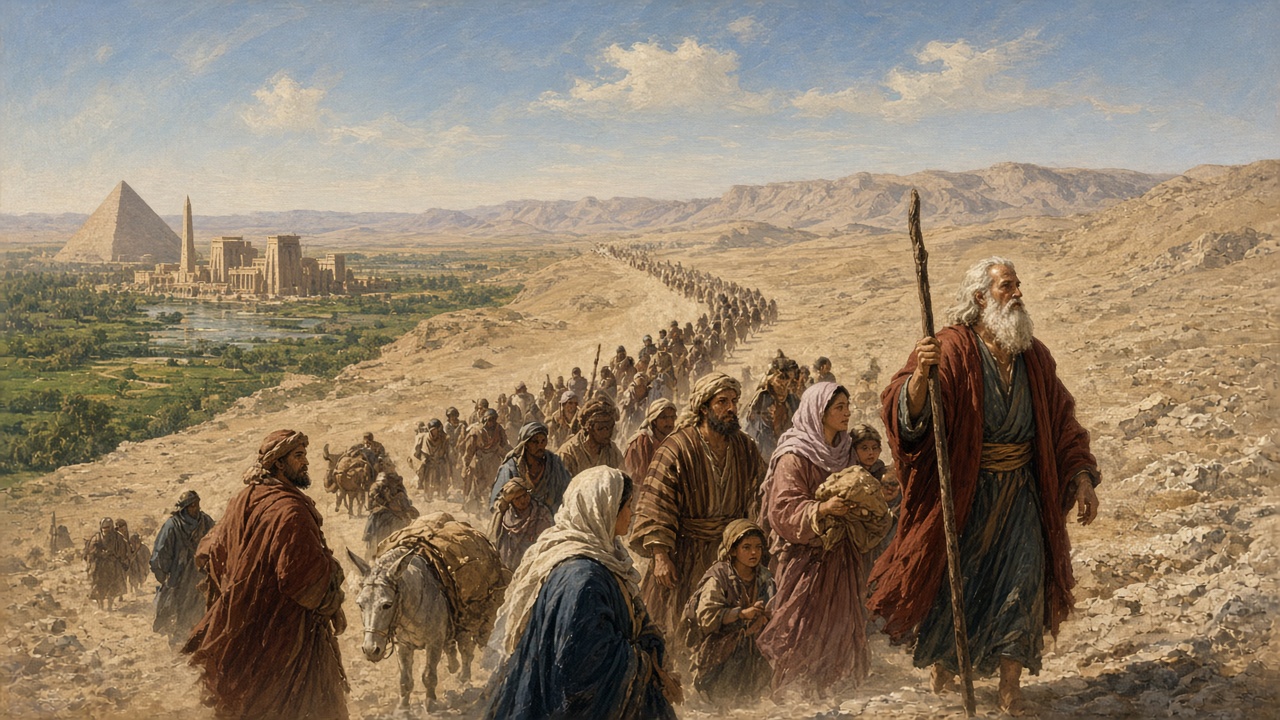
- The warning looks back to the people Moses led out of Egypt. For forty years in the wilderness they tested God, who was angry with that generation and swore they would never enter his rest; their bodies fell in the wilderness. The chapter says that unbelief kept them from entering.Sources: the Bible text itself
- Egypt, the land they left with Moses, is the land of the Nile and the pyramids. Easton's Bible Dictionary (1897) explains the name Moses as Drawn, or links it with the Egyptian word mesu, meaning son.Sources: the Bible text itself · Egypt · Moses
Notes written with AI assistance from open sources (Theographic Bible Metadata, CC BY-SA 4.0; Easton’s Bible Dictionary, public domain) and reviewed before publishing.
Places in this chapter
- Egypt · 30.129, 31.308 · verse 16
Only places identified with high confidence are shown (90% or more according to the scholarly sources compiled by OpenBible). Period map: DARE (Digital Atlas of the Roman Empire), CC BY 4.0; modern map: © OpenStreetMap contributors; places: OpenBible.info (CC BY 4.0).
Credits and license for this translation
God Lavayiyat Aṅ Puhuvasiwni
New Testament in Hopi (US:hop:Hopi)
copyright © 2012 Wycliffe Bible Translators, Inc.
Language: Hopi
Translation by: Wycliffe Bible Translators, Inc.
Hopi [hop], USA
Copyright Information
© 2012, Wycliffe Bible Translators, Inc. All rights reserved.
This translation text is made available to you under the
terms of the Creative Commons License: Attribution-Noncommercial-No Derivative Works.
( http://creativecommons.org/licenses/by-nc-nd/3.0/ )
In addition, you have permission to port the text to different file formats, as long as you
do not change any of the text or punctuation of the Bible.
You may share, copy, distribute, transmit, and extract portions
or quotations from this work, provided that you include the above copyright
information:
You must give Attribution to the work.
You do not sell this work for a profit.
You do not make any derivative works that change any of the actual words or punctuation of the Scriptures.
Permissions beyond the scope of this license may be
available if you contact
us with your request.
The New Testament
in Hopi
© 2012, Wycliffe Bible Translators, Inc. All rights reserved.
This translation is made available to you under the terms of the
Creative Commons Attribution-Noncommercial-No Derivatives license 4.0.
You may share and redistribute this Bible translation or extracts from it in any format, provided that:
You include the above copyright and source information.
You do not sell this work for a profit.
You do not change any of the words or punctuation of the Scriptures.
Pictures included with Scriptures and other documents on this site are licensed just for use with those Scriptures and documents.
For other uses, please contact the respective copyright owners.
2014-04-25
Source: http://ebible.org/hopNT/ · eBible.org